Kirjojen hintavertailu – 12 859 828 kirjaa ja 27 kauppaa

Kirjailija

Norman Mailer

Kirjat ja teokset yhdessä paikassa: 69 kirjaa, julkaisuja vuosilta 1989–2026, suosituimpiin kuuluu Marilyn. Vertaile teosten hintoja ja tarkista saatavuus suomalaisista kirjakaupoista.

69 kirjaa

Kirjojen julkaisuvuodet: 1989–2026.

Tough Guys Don't Dance

Tough Guys Don't Dance

Norman Mailer

Ballantine Books Inc.
2014
pokkari
Norman Mailer peers into the recesses and buried virtues of the modern American male in a brilliant crime novel that transcends genre. When Tim Madden, an unsuccessful writer living on Cape Cod, awakes with a gruesome hangover, a painful tattoo on his upper arm, and a severed female head in his marijuana stash, he has almost no memory of the night before. As he reconstructs the missing hours, Madden runs afoul of retired prizefighters, sex addicts, mediums, former cons, a world-weary ex-girlfriend, and his own father, old now but still a Herculean figure. Stunningly conceived and vividly composed, "Tough Guys Don't Dance "represents Mailer at the peak of his powers. Praise for "Tough Guys Don't Dance"" " "Spectacular . . . Norman Mailer] makes every word count, like a master knife thrower zinging stilettos in a circle around your head."--"People" "As brash, brooding and ultimately mesmerizing as the author himself . . . Mailer strikes a] dazzling balance between humor and horror."--New York "Daily News"" " "A first-rate page-turner of a murder mystery . . . full of great characters, littered with dead bodies and replete with plausible suspects."--"Chicago Tribune"" " " "Tough Guys Don't Dance"] has that charming Mailer bravado."--"The New York Times" Praise for Norman Mailer " Norman Mailer] loomed over American letters longer and larger than any other writer of his generation."--"The New York Times" "A writer of the greatest and most reckless talent."--"The New Yorker" "Mailer is indispensable, an American treasure."--"The Washington Post" "A devastatingly alive and original creative mind."--"Life" "Mailer is fierce, courageous, and reckless and nearly everything he writes has sections of headlong brilliance."--"The New York Review of Books" "The largest mind and imagination in modern] American literature . . . Unlike just about every American writer since Henry James, Mailer has managed to grow and become richer in wisdom with each new book."--"Chicago Tribune" "Mailer is a master of his craft. His language carries you through the story like a leaf on a stream."--"The Cincinnati Post" "From the Paperback edition."
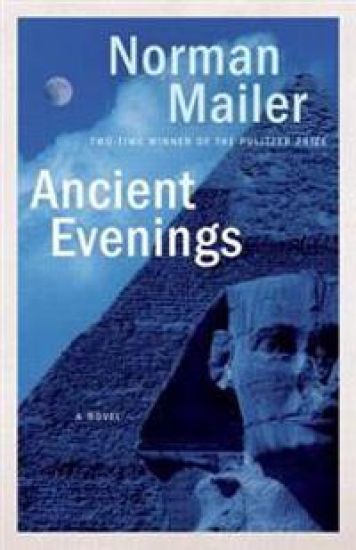
Ancient Evenings

Ancient Evenings

Norman Mailer

Ballantine Books Inc.
2014
pokkari
Norman Mailer's dazzlingly rich, deeply evocative novel of ancient Egypt breathes life into the figures of a lost era: the eighteenth-dynasty Pharaoh Rameses and his wife, Queen Nefertiti; Menenhetet, their creature, lover, and victim; and the gods and mortals that surround them in intimate and telepathic communion. Mailer's reincarnated protagonist is carried through the exquisite gardens of the royal harem, along the majestic flow of the Nile, and into the terrifying clash of battle. An extraordinary work of inventiveness, "Ancient Evenings" lives on in the mind long after the last page has been turned. Praise for "Ancient Evenings"" " "Astounding, beautifully written . . . a leap of imagination that crosses three millennia to Pharaonic Egypt."--"USA Today" "Mailer makes a miraculous present out of age-deep memories, bringing to life the rhythms, the images, the sensuousness of a lost time."--"The New York Times"" " "Mailer's Egypt is a haunting and magical place. . . . The reader wallows in the scope, depth, the sheer magnitude and--yes--the fertility of his imagination."--"The Washington Post Book World"" " "An enormous pyramid of a novel reminiscent of] Thomas Pynchon's "Gravity's Rainbow "and Carlos Fuentes's "Terra Nostra.""--"Los Angeles Herald Examiner"" "Praise for Norman Mailer " Norman Mailer] loomed over American letters longer and larger than any other writer of his generation."--"The New York Times" "A writer of the greatest and most reckless talent."--"The New Yorker" "Mailer is indispensable, an American treasure."--"The Washington Post" "A devastatingly alive and original creative mind."--"Life" "Mailer is fierce, courageous, and reckless and nearly everything he writes has sections of headlong brilliance."--"The New York Review of Books" "The largest mind and imagination in modern] American literature . . . Unlike just about every American writer since Henry James, Mailer has managed to grow and become richer in wisdom with each new book."--"Chicago Tribune" "Mailer is a master of his craft. His language carries you through the story like a leaf on a stream."--"The Cincinnati Post"
The Fight

The Fight

Norman Mailer

Random House Trade
2013
nidottu
In 1974 in Kinshasa, Za re, two African American boxers were paid five million dollars apiece to fight each other. One was Muhammad Ali, the aging but irrepressible "professor of boxing." The other was George Foreman, who was as taciturn as Ali was voluble. Observing them was Norman Mailer, a commentator of unparalleled energy, acumen, and audacity. Whether he is analyzing the fighters' moves, interpreting their characters, or weighing their competing claims on the African and American souls, Mailer's grasp of the titanic battle's feints and stratagems--and his sensitivity to their deeper symbolism--makes this book a masterpiece of the literature of sport. Praise for The Fight "Exquisitely refined and attenuated . . . a] sensitive portrait of an extraordinary athlete and man, and a pugilistic drama fully as exciting as the reality on which it is based."--The New York Times "One of the defining texts of sports journalism. Not only does Mailer recall the violent combat with a scholar's eye . . . he also makes the whole act of reporting seem as exciting as what's occurring in the ring."--GQ "Stylistically, Mailer was the greatest boxing writer of all time."--Chuck Klosterman, Esquire "One of Mailer's finest books."--Louis Menand, The New Yorker Praise for Norman Mailer " Norman Mailer] loomed over American letters longer and larger than any other writer of his generation."--The New York Times "A writer of the greatest and most reckless talent."--The New Yorker "Mailer is indispensable, an American treasure."--The Washington Post "A devastatingly alive and original creative mind."--Life "Mailer is fierce, courageous, and reckless and nearly everything he writes has sections of headlong brilliance."--The New York Review of Books "The largest mind and imagination in modern] American literature . . . Unlike just about every American writer since Henry James, Mailer has managed to grow and become richer in wisdom with each new book."--Chicago Tribune "Mailer is a master of his craft. His language carries you through the story like a leaf on a stream."--The Cincinnati Post
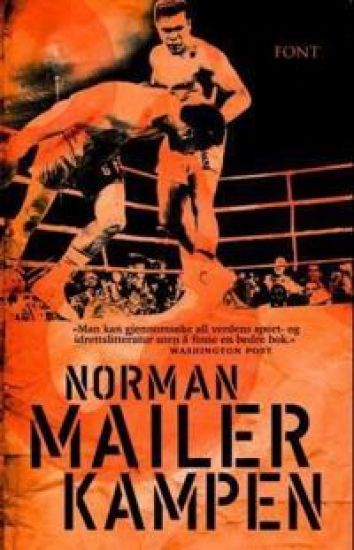
Kampen

Kampen

Norman Mailer

Font
2012
pokkari
Begivenhetene utspiller seg i Kinshasa, hovedstaden i Zaire. Datoen er 30. oktober 1974. I det ene hjørnet står den regjerende verdensmesteren i tungvekt George Foreman, fryktet for sin enorme slagstyrke. I det andre hjørnet står Muhammad Ali, bokseren som ble fratatt mestertittelen uten å ha tapt en eneste kamp. Norman Mailer er dramaets tredje hovedperson. Han dekker verdensbegivenheten for Playboy Magazine, og i ukene før kampen rapporterer han fra de to kamphanenes leire, fra Kinshasas støvete gater og fra hotellet hvor det internasjonale pressekorpset er innkvartert. Mailer går tett på begivenhetene, og beskriver stemningen før og under kampen. Han briljerer med sin kunnskap om boksing, og gir en usedvanlig levende og nærgående skildring av trenere, sparringspartnere, promotorer, pressefolk og supportere. Men han benytter også anledningen til å reflektere over afrikansk stammepsykologi, kolonialisme, islam (Ali er muslim) og afroamerikansk kultur. Da kampdagen endelig opprinner skifter fortellingen gir. Mailer tilbringer de siste timene med Ali og hans følge. Han er med dem i bussen til stadion og helt inn i garderoben før Foreman og Ali entrer ringen foran 60.000 elleville tilskuere. "Kampen" er et mesterlig innblikk i historiens største sportsbegivenhet, en knock-out av en bok! "Man kan gjennomsøke all verdens sport- og idrettslitteratur uten å finne en bedre bok." -- Washington Post"
The Presidential Papers

The Presidential Papers

Norman Mailer

Literary Licensing, LLC
2012
sidottu
The Presidential Papers, written by Norman Mailer, is a collection of essays, speeches, and interviews that revolve around the American presidency. The book covers a range of topics, from the 1960 election and John F. Kennedy's presidency to the Watergate scandal and Richard Nixon's resignation. Mailer also offers his opinions on the role of the media in politics, the Vietnam War, and the state of American society in the 1970s. The book is a reflection on the political and social climate of the time, and Mailer's writing style is both insightful and provocative. The Presidential Papers is a must-read for anyone interested in American politics and history. This scarce antiquarian book is a facsimile reprint of the old original and may contain some imperfections such as library marks and notations. Because we believe this work is culturally important, we have made it available as part of our commitment for protecting, preserving, and promoting the world's literature in affordable, high quality, modern editions, that are true to their original work.
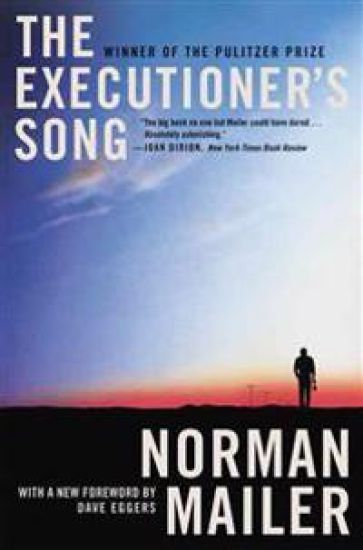
The Executioner's Song

The Executioner's Song

Norman Mailer

Grand Central Publishing
2012
nidottu
In this Pulitzer Prize-winning classic, a convicted killer becomes the first prisoner to be executed in the United States. The Executioner's Song follows the true story of cold-blooded murderer Gary Gilmore, who, after being tried and convicted, insisted on being executed for his crimes. To do so, he fought a system intent on keeping him alive long after it sentenced him to death. Norman Mailer tells Gilmore's story with impressive authority and compassion. The Executioner's Song is a trip down the wrong side of the tracks, right into the heart of American loneliness and violence-it is impossible to put down and difficult to forget.
The Faith of Graffiti

The Faith of Graffiti

Norman Mailer; Jon Naar

Dey Street Books
2010
nidottu
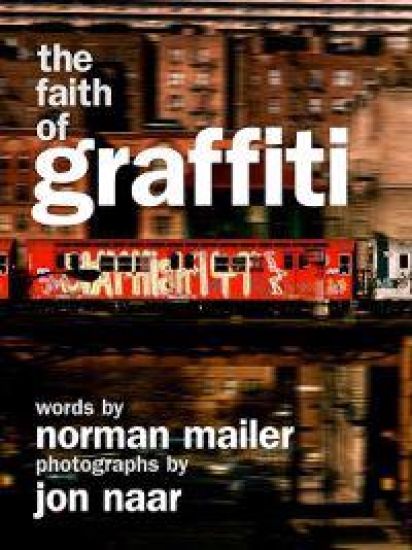
The Faith of Graffiti is the classic, definitive look at the birth of graffiti as an art form, pairing the fascinating 1974 essay by Norman Mailer--National Book Award and two-time Pulitzer Prize-winning author of The Naked and the Dead and The Executioner's Song--with the stunning, iconic photography of internationally acclaimed photographer Jon Naar. Back in print for the first time in three decades and expanded with 32 pages of additional photos, The Faith of Graffiti is a landmark in the history of street art: an essential, contemporary, and still-relevant meditation, in words and pictures, on the meaning of identity, property, and city life.
Slottet i skogen

Slottet i skogen

Norman Mailer

Font
2009
pokkari
Boken følger livet til Hitler-slekten i tre generasjoner. Forfatteren skildrer slektshistorien; fra ekteskapene, incesten, konfliktene og dødsfallene, til lille Adolfs fødsel i 1889, og hans første 15 leveår som var preget av en dominerende og tyrannisk far og en kjærlig og overbeskyttende mor. Har bibliografi.
On God

On God

Norman Mailer

Random House Inc
2008
pokkari
"I see God," wrote Norman Mailer, "as a Creator, as the greatest artist. I see human beings as His most developed artworks." In these moving, amusing, and probing dialogues conducted in the years before his death, Mailer establishes his own system of belief, rejecting both organized religion and atheism. He avows that sensual pleasures were bestowed on us by God; he finds fault with the Ten Commandments; and he holds that technology was the Devil's most brilliant creation. In short, Mailer is original and unpredictable in this inspiring journey, in which "God needs us as much as we need God." Praise for "On God"" " " Norman Mailer's] theology is not theoretical to him. After eight decades, it is what he believes. He expects no adherents, and does not profess to be a prophet, but he has worked to forge his beliefs into a coherent catechism."--"New York" "The glory of an original mind in full provocation."--"USA Today"" " "At once illuminating and exciting . . . a chance to see Mailer's intellect as well as his lively conversational style of speech."--"American Jewish Life"" " "Remarkable . . . Mailer's] a believer--in his own fashion. . . . He has made God] into a complex character."--"The Globe and Mail"" "Praise for Norman Mailer " Norman Mailer] loomed over American letters longer and larger than any other writer of his generation."--"The New York Times" "A writer of the greatest and most reckless talent."--"The New Yorker" "Mailer is indispensable, an American treasure."--"The Washington Post" "A devastatingly alive and original creative mind."--"Life" "Mailer is fierce, courageous, and reckless and nearly everything he writes has sections of headlong brilliance."--"The New York Review of Books" "The largest mind and imagination in modern] American literature . . . Unlike just about every American writer since Henry James, Mailer has managed to grow and become richer in wisdom with each new book."--"Chicago Tribune" "Mailer is a master of his craft. His language carries you through the story like a leaf on a stream."--"The Cincinnati Post"
The Castle in the Forest

The Castle in the Forest

Norman Mailer

Random House Inc
2007
pokkari
The final work of fiction from Norman Mailer, a defining voice of the postwar era, is also one of his most ambitious, taking as its subject the evil of Adolf Hitler. The narrator, a mysterious SS man in possession of extraordinary secrets, follows Adolf from birth through adolescence and offers revealing portraits of Hitler's parents and siblings. A crucial reflection on the shadows that eclipsed the twentieth century, Mailer's novel delivers myriad twists and surprises along with characteristically astonishing insights into the struggle between good and evil that exists in us all. Praise for The Castle in the Forest "This remarkable novel about the young Adolf Hitler, his family and their shifting circumstances, is Mailer's most perfect apprehension of the absolutely alien. . . . Mailer doesn't inhabit these historical figures so much as possess them."--The New York Times Book Review "Terrifically creepy . . . an icy and convincing portrait of the dictator as a young sociopath."--Entertainment Weekly "The work of a bold and confident writer who may yet be seen as the preeminent novelist of our time . . . a source of tremendous narrative pleasure . . . Every character . . . lives and breathes."--South Florida Sun-Sentinel "Blackly hilarious, beautifully written . . . The Castle in the Forest] has vigor, excitement, humor and vastness of spirit."--The New York Observer Praise for Norman Mailer " Norman Mailer] loomed over American letters longer and larger than any other writer of his generation."--The New York Times "A writer of the greatest and most reckless talent."--The New Yorker "Mailer is indispensable, an American treasure."--The Washington Post "A devastatingly alive and original creative mind."--Life "Mailer is fierce, courageous, and reckless and nearly everything he writes has sections of headlong brilliance."--The New York Review of Books "The largest mind and imagination in modern] American literature . . . Unlike just about every American writer since Henry James, Mailer has managed to grow and become richer in wisdom with each new book."--Chicago Tribune "Mailer is a master of his craft. His language carries you through the story like a leaf on a stream."--The Cincinnati Post From the Hardcover edition.
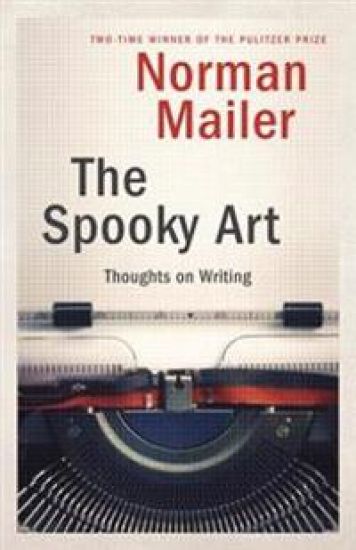
The Spooky Art

The Spooky Art

Norman Mailer

Random House Inc
2004
pokkari
"Writing is spooky," according to Norman Mailer. "There is no routine of an office to keep you going, only the blank page each morning, and you never know where your words are coming from, those divine words." In The Spooky Art, Mailer discusses with signature candor the rewards and trials of the writing life, and recommends the tools to navigate it. Addressing the reader in a conversational tone, he draws on the best of more than fifty years of his own criticism, advice, and detailed observations about the writer's craft. Praise for The Spooky Art "The Spooky Art shows Mailer's brave willingness to take on demanding forms and daunting issues. . . . He has been a thoughtful and stylish witness to the best and worst of the American century."--The Boston Globe "At his best--as artists should be judged--Mailer is indispensable, an American treasure. There is enough of his best in this book for it to be welcomed with gratitude."--The Washington Post " The Spooky Art] should nourish and inform--as well as entertain--almost any serious reader of the novel."--Baltimore Sun "The richest book ever written about the writer's subconscious."--The Philadelphia Inquirer "Striking . . . entrancingly frank."--Entertainment Weekly Praise for Norman Mailer " Norman Mailer] loomed over American letters longer and larger than any other writer of his generation."--The New York Times "A writer of the greatest and most reckless talent."--The New Yorker "A devastatingly alive and original creative mind."--Life "Mailer is fierce, courageous, and reckless and nearly everything he writes has sections of headlong brilliance."--The New York Review of Books "The largest mind and imagination in modern] American literature . . . Unlike just about every American writer since Henry James, Mailer has managed to grow and become richer in wisdom with each new book."--Chicago Tribune "Mailer is a master of his craft. His language carries you through the story like a leaf on a stream."--The Cincinnati Post From the Hardcover edition.
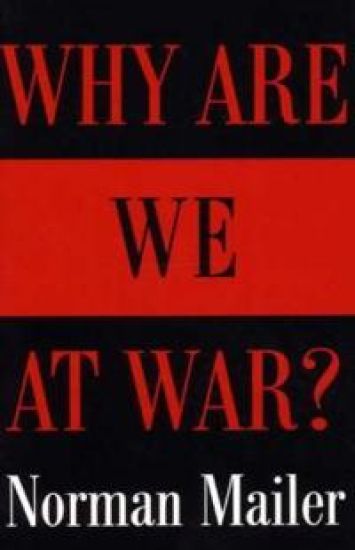
Why Are We at War?

Why Are We at War?

Norman Mailer

Random House USA Inc
2003
pokkari
In the tradition of his bestselling Why Are We in Vietnam?, Pulitzer Prize-winning author Norman Mailer presents a lucid and hard-hitting argument about George W. Bush and his quest for empire. Why Are We at War? brilliantly assesses and scrutinizes the Bush administration’s words and actions leading up to the current crisis, as Mailer masterfully builds his case that Bush is pursuing war not in the name of security or anti-terrorism or human rights, but in an undeclared but fully realized ambition of imperialism. For more than 50 years, Norman Mailer, through both fiction and nonfiction, has persistently exposed the folly of the powerful and the mighty. Beginning with his debut masterpiece, The Naked and the Dead, Mailer has told the truth about war and why men fight. Why Are We at War? is classic Mailer on the subject he knows best: the gravity of the battlefield and the grand hubris of the men who send their soldiers there. Based in part on Mailer’s much discussed essay “Only in America,” which appeared in the March 27, 2003, issue of The New York Review of Books, Why Are We at War? will help thousands of people answer the sobering question: “How did it come to this?”
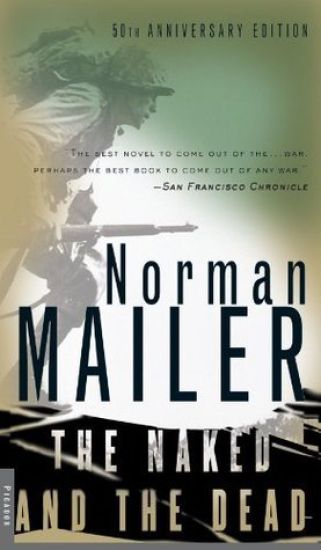
The Naked and the Dead: 50th Anniversary Edition, with a New Introduction by the Author
Hailed as one of the finest novels to come out of the Second World War, The Naked and the Dead received unprecedented critical acclaim upon its publication and has since become part of the American canon. This fiftieth anniversary edition features a new introduction created especially for the occasion by Norman Mailer. Written in gritty, journalistic detail, the story follows an army platoon of foot soldiers who are fighting for the possession of the Japanese-held island of Anopopei. Composed in 1948, The Naked and the Dead is representative of the best in twentieth-century American writing.
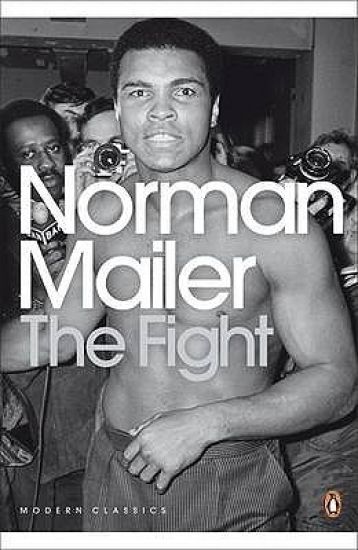
The Fight

The Fight

Norman Mailer

Penguin Classics
2000
pokkari

Halvin toimitettuna 17,40 €

From one of the major innovators of New Journalism, Norman Mailer's The Fight is the real-life story of a clash between two of the world's greatest boxers, both in and out of the ring, published in Penguin Modern Classics. Norman Mailer's The Fight focuses on the 1974 World Heavyweight Boxing Championship in Kinshasa, Zaire. Muhammad Ali met George Foreman in the ring. Foreman's genius employed silence, serenity and cunning. He had never been defeated. His hands were his instrument, and 'he kept them in his pockets the way a hunter lays his rifle back into its velvet case'. Together the two men made boxing history in an explosive meeting of two great minds, two iron wills and monumental egos.'"If ever a fighter had been able to demonstrate that boxing was a twentieth-century art, it must be Ali", says Norm, and his achievement in this masterly book is of a similar order, demonstrating that writing about sport can also be a twentieth-century art'Geoff Dyer, New Statesman'Probably no one has written about boxing better than Mailer has'Guardian
The Gospel According to the Son

The Gospel According to the Son

Norman Mailer

Random House USA Inc
1999
pokkari
Norman Mailer fused fact and fiction to create indelible portraits of such figures as Marilyn Monroe, Gary Gilmore, and Lee Harvey Oswald. In The Gospel According to the Son, Mailer reimagines, as no other modern author has, the key character of Western history. Here is Jesus Christ's story in his own words: the discovery of his divinity and the painful, powerful journey to accepting and expressing it, "as if I were a man enclosing another man within." In its brevity and piercing simplicity, it may be Mailer's most accessible, direct, and heartfelt work. Praise for The Gospel According to the Son "Quietly penetrating . . . Norman Mailer's] gospel is written in a direct, rather relaxed English that yet has an eerie, neo-Biblical dignity."--John Updike, The New Yorker "A book of considerable intellectual force . . . The writer's powerful mind works in a specialized way, not by theological argumentation but by telling or retelling a story."--The New York Review of Books "Challenges readers on the religious right and the atheist left with equally rich interpretive tasks."--The Dallas Morning News "An informed and believable work of fiction . . . of what may have been going through the mind of Jesus during his epic ministry."--San Francisco Chronicle Praise for Norman Mailer " Norman Mailer] loomed over American letters longer and larger than any other writer of his generation."--The New York Times "A writer of the greatest and most reckless talent."--The New Yorker "Mailer is indispensable, an American treasure."--The Washington Post "A devastatingly alive and original creative mind."--Life "Mailer is fierce, courageous, and reckless and nearly everything he writes has sections of headlong brilliance."--The New York Review of Books "The largest mind and imagination in modern] American literature . . . Unlike just about every American writer since Henry James, Mailer has managed to grow and become richer in wisdom with each new book."--Chicago Tribune "Mailer is a master of his craft. His language carries you through the story like a leaf on a stream."--The Cincinnati Post
The Time Of Our Time

The Time Of Our Time

Norman Mailer

Abacus
1999
pokkari
THE TIME OF OUR TIME is a selection of Mailer's best work, chosen by Mailer himself, and ingeniously arranged as a literary retrospective. It is a masterly, boisterous portrait of our times, seen through the fiction and reportage of a great writer. Included are passages from THE NAKED AND THE DEAD, THE ARMIES OF THE NIGHT and THE EXECUTIONER'S SONG, as well as many of his other works and his best-known magazine pieces from Marilyn Monroe to Madonna. This giant omnibus is a testament to Mailer's enormous energies, his vast curiosity, and his amazing talent and amounts almost to a self-chosen literary 'autobiography'.
The Gospel According To The Son
For 2,000 years, the brief ministry of a young Nazarene preacher has remained the largest single determinant of Western civilisation's triumphs and disasters. In THE GOSPEL ACCORDING TO THE SON, Norman Mailer gives the protagonist of one of the greatest tragedies of all time a chance to tell the story of his life in his own words. 'Is God speaking to me?' Jesus asks, 'or am I hearing voices? If the voices are from God, why has he chosen me as His son? and if they are not from God, then who gave me the power to perform these miracles?' This is a gripping account of a man thrust forward by the visions he receives and the miracles he enacts until he has come to the very limit of human possibilities. In THE GOSPEL ACCORDING TO THE SON, one of the world's greatest living writers has brought us a remarkable book - by turns poetic and tragic and, to our surprise and pleasure, suspenseful.