Kirjojen hintavertailu – 12 903 725 kirjaa ja 27 kauppaa

Kirjailija

Norman Stone

Kirjat ja teokset yhdessä paikassa: 13 kirjaa, julkaisuja vuosilta 1992–2021, suosituimpiin kuuluu Geopolitikens återkomst : striden om framtidens historia. Vertaile teosten hintoja ja tarkista saatavuus suomalaisista kirjakaupoista.

13 kirjaa

Kirjojen julkaisuvuodet: 1992–2021.

Geopolitikens återkomst : striden om framtidens historia

Geopolitikens återkomst : striden om framtidens historia

Jeremy Black; Philip Bobbitt; Michael Broers; Roger Crowley; Gregory Feifer; Noah Feldman; Jonathan Fenby; David Frum; Gabriel Gorodetsky; Peter Heather; Josef Joffe; Anna-Lena Laurén; John H. Maurer; Sean McMeekin; Walter Russell Mead; Richard Miles; Fraser Nelson; Richard Overy; Lincoln Paine; Andrew Preston; Morris Rossabi; Charly Salonius-Pasternak; Norman Stone; Barry Strauss; Mikael Wigell

Bokförlaget Stolpe
2021
sidottu
Det var inte länge sedan idén om att vi nått historiens slut vann kraft och spridning: tanken att människans sociokulturella evolution nått fram till en punkt där den knappast kunde nå längre. Ett kvartssekel senare verkar denna optimism ha försvunnit. I stället bevittnar vi nu geopolitikens återkomst. Ett tjugotal experter utforskar i denna antologi hur vi hamnade där vi är idag men också vart vi kan tänkas vara på väg. Huvudredaktörer är Kurt Almqvist och Alexander Linklater.
Hungary

Hungary

Norman Stone

Profile Books Ltd
2019
pokkari

Halvin toimitettuna 19,40 €

The victors of the First World War created Hungary from the ruins of the Austro-Hungarian empire, but, in the centuries before, many called for its creation. Norman Stone traces the country's roots from the traditional representative councils of land-owning nobles to the Magyar nationalists of the nineteenth century and the first wars of independence. Hungary's history since 1918 has not been a happy one. Economic collapse and hyperinflation in the post-war years led to fascist dictatorships and then Nazi occupation. Optimism at the end of the Second World War ended when the Iron Curtain descended, and Soviet tanks crushed the last hopes for independence in 1956 along with the peaceful protests in Budapest. Even after the fall of the Berlin Wall, consistent economic growth has remained elusive. This is an extraordinary history - unique yet also representative of both the post-Soviet bloc and of nations forged from the fall of empires.
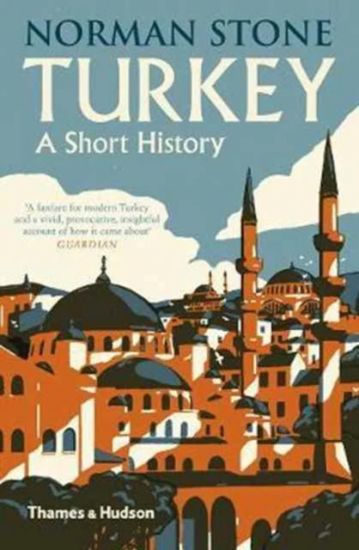
Turkey

Turkey

Norman Stone

Thames Hudson Ltd
2017
nidottu

Halvin toimitettuna 20,90 €

From the eminent historian Norman Stone, who has lived and worked in the country since 1997, comes this concise survey of Turkey’s relations with its immediate neighbours and the wider world from the 11th century to the present day. Stone deftly conducts the reader through this story, from the arrival of the Seljuks in Anatolia in the eleventh century to today’s thriving republic. It is an historical account of epic proportions, featuring rapacious leaders such as Genghis Khan and Tamerlane through the glories of Sultan Süleyman the Magnificent to Kemal Atatürk, the reforming genius and founder of modern Turkey. At its height, the Ottoman Empire was a superpower that brought Islam to the gates of Vienna. Stone examines the reasons for the empire’s long decline and shows how it gave birth to the modern Turkish republic, where east and west, religion and secularism, tradition and modernity still form vibrant elements of national identity. Norman Stone brilliantly draws out the larger themes of Turkey’s history, resulting in a book that is a masterly exposition of the historian’s craft.
World War Two

World War Two

Norman Stone

Penguin Books Ltd
2014
pokkari
A pacy, compelling and penetrating account - from the great Norman Stone'The best short primer on the war in twenty years' Andrew RobertsNorman Stone's gripping book tells the narrative of the Second World War in as brief a compass as possible, making a sometimes familiar story utterly fresh and arresting. As with his highly acclaimed World War One: A Short History, there is a compelling sense of a terrible story unfolding, of a sceptical and humorous intelligence at work, and a wish to convey to an audience who may well have no memory of the conflict just how high the stakes were.
World War Two

World War Two

Norman Stone

Basic Books
2013
sidottu
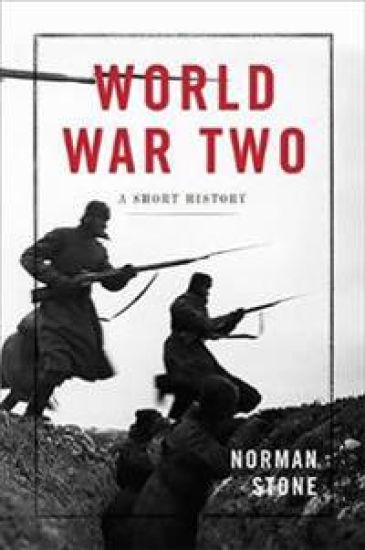
After the unprecedented destruction of the Great War, the world longed for a lasting peace. The victors, however, valued vengeance even more than stability and demanded a massive indemnity from Germany in order to keep it from rearming. The results, as eminent historian Norman Stone describes in this authoritative history, were disastrous. In World War Two , Stone provides a remarkably concise account of the deadliest war of human history, showing how the conflict roared to life from the ashes of World War One. Adolf Hitler rode a tide of popular desperation and resentment to power in Germany, promptly making good on his promise to return the nation to its former economic and military strength. He bullied Europe into giving him his way, and in so doing backed the victors of the Great War into a corner. Following the invasion of Poland in 1939, Britain and France declared war on Germany,a decision that, Stone argues, was utterly irrational. Yet Hitler had driven the world mad, and the rekindling of European hostilities soon grew to a conflagration that spread across the globe, fanned by political and racial ideologies more poisonous,and weaponry more destructive,than the world had ever seen. With commanding expertise, Stone leads readers through the escalation, climax, and mournful denouement of this sprawling conflict. World War Two is an invaluable contribution to our understanding of the twentieth century and its defining struggle.
The Atlantic and Its Enemies

The Atlantic and Its Enemies

Norman Stone

Penguin Books Ltd
2011
pokkari
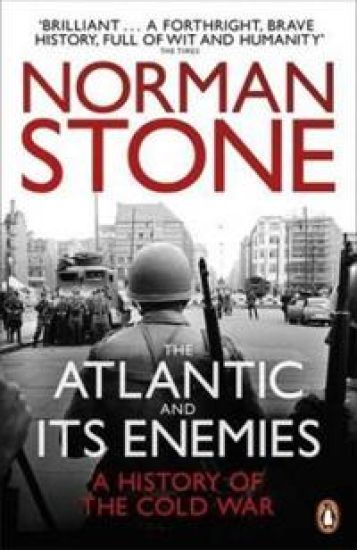
The Atlantic and its Enemies is Norman Stone's personal, uncompromising and provocative history of how the West 'won' the Cold War. For decades after the end of the Second World War, most of the globe either laboured under Communist rule or else was lost in a violent stagnancy that seemed doomed to permanence. For every Atlantic success there seemed to be a dozen Communist or Third World successes, as the USSR and its proxies, whether in Berlin, Cuba, Vietnam or China, crushed dissent and humiliated the United States on both military and cultural grounds. Then, suddenly, the Atlantic won - economically, ideologically, militarily - with astonishing speed and comprehensiveness. With wit and brio, Norman Stone's The Atlantic and its Enemies offers a unique perspective on events, from Vietnam to glasnost, and draws on his own experiences - such as his time in a Slovak prison - to show both the tragedy and the absurdity of the struggle that divided the world for over forty years. 'Opinionated, mischievous, enthralling ... an exhilarating read' Boyd Tonkin, Independent 'Lively, idiosyncratic, rollicking' Geoffrey Wheatcroft, Observer 'Masterly ... the one book that anyone who wants to understand the Cold War must read' John Gray, New Statesman 'A swashbuckling survey of the cold war' Mark Mazower, Financial Times '[Stone] has a terrific eye for detail, bringing to life everything from the ruins of Germany to Ronald Reagan's White House with a wonderfully waspish turn of phrase' Economist Norman Stone is one of Britain's most celebrated historians. He is the author of The Eastern Front, 1914-1917, Hitler: An Introduction, Europe Transformed and World War One: A Short History.
World War One

World War One

Norman Stone

Basic Books
2010
pokkari

Halvin toimitettuna 29,00 €

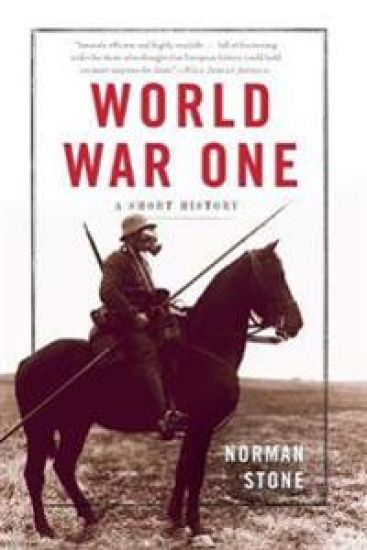
The First World War was the overwhelming disaster from which everything else in the twentieth century stemmed. Fourteen million combatants died, four empires were destroyed, and even the victors' empires were fatally damaged. World War I took humanity from the nineteenth century forcibly into the twentieth,and then, at Versailles, cast Europe on the path to World War II as well. In World War One , Norman Stone, one of the world's greatest historians, has achieved the almost impossible task of writing a terse and witty short history of the war. A captivating, brisk narrative, World War One is Stone's masterful effort to make sense of one of the twentieth century's pivotal conflicts.
World War One

World War One

Norman Stone

Penguin Books Ltd
2008
pokkari

Halvin toimitettuna 23,90 €

'Do we need another history of the First World War? The answer in the case of Norman Stone's short book is, yes - because of its opinionated freshness and the unusual, sharp facts that fly about like shrapnel' Literary ReviewIn 1914 a new kind of war, and a new kind of world, came about. Fourteen million combatants died, a further twenty million were wounded, four empires were destroyed and even the victors' empires were fatally damaged. The First World War marked a revolution in the technology of slaughter as trench warfare, artillery barrages, tanks and chemical warfare made their mark on the battlefield for the first time. The sheer complexity and scale of the war have encouraged historians to write books on a similar scale. But in only 140 pages, Norman Stone distils a lifetime of teaching, arguing and thinking to reframe the overwhelming disaster whose aftershocks shaped the rest of the twentieth century. 'Bold, provocative and witty ... one of the outstanding historians of our age' Spectator'Entertaining and insightful ... one of the handful of living historians who can write with style and wit' Tibor Fischer, Sunday Telegraph, Books of the Year
The Management and Practice of Public Relations
Public Relations is one business function an organisation cannot decide it does not want. The only option is whether to manage PR as a conscious and deliberate activity, or to leave it to chance and hope for the best - a sure route to bad public relations. In this text the author provides a comprehensive survey and analysis of PR drawing on a variety of illustrations and case histories and referring to a whole battery of techniques. It will be essential reading for students and others wishing to understand the dynamics and importance of Public Relations.
The Eastern Front 1914-1917

The Eastern Front 1914-1917

Norman Stone

Penguin Books Ltd
1998
pokkari

Halvin toimitettuna 18,70 €

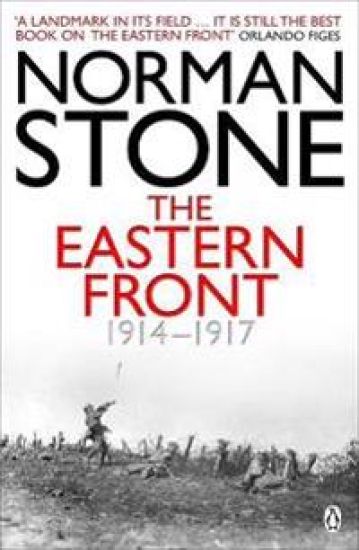
A groundbreaking historical study, Norman Stone's The Eastern Front 1914-1917 was the very first authoritative account of the Russian Front in the First World War to be published in the West. In this now-classic history he dispels the myths surrounding a still relatively little-known aspect of the war, showing how inefficiency rather than economic shortage led to Russia's desperate privations and eventual retreat. He also interprets the connection between the war and the chaos that followed, arguing that although fighting had almost ceased by the end of 1916, Russia was still in turmoil - undergoing a period of change that would inexorably lead towards revolution. 'A landmark in its field ... it is still the best book on the eastern front' Orlando Figes 'A classic account ... that even after thirty years remains essential reading' Sunday Times 'Without question one of the classics of post-war historical scholarship' Niall Ferguson 'One of the outstanding historians of our age' Spectator 'Fills an enormous gap in our knowledge and understanding of the Great War' Sunday Telegraph Norman Stone is one of Britain's most celebrated historians. He is the author of The Atlantic and its Enemies, Hitler: An Introduction, Europe Transformed and World War One: A Short History.