Kirjojen hintavertailu – 12 859 818 kirjaa ja 27 kauppaa

Kirjailija

Norman Wirzba

Kirjat ja teokset yhdessä paikassa: 20 kirjaa, julkaisuja vuosilta 2003–2025, suosituimpiin kuuluu Plough Quarterly No. 38 - Repair. Vertaile teosten hintoja ja tarkista saatavuus suomalaisista kirjakaupoista.

20 kirjaa

Kirjojen julkaisuvuodet: 2003–2025.

Plough Quarterly No. 38 - Repair

Plough Quarterly No. 38 - Repair

Rowan Williams; Makoto Fujimura; Stephanie Saldaña; Adam Nicholson; Hannah Rose Thomas; Narine Abgaryan; Leah Libresco Sergeant; Norman Wirzba; Benjamin Crosby; Kurt Armstrong; Philip Britts

PLOUGH PUBLISHING HOUSE
2023
nidottu
Our writers celebrate the work of repair – of objects, relationships, communities, and landscapes – and reckon with its limits. Consumers campaign for a “right to repair” in protest of products’ wasteful “planned obsolescence.” Repair cafés spring up, in which old-timers teach greenhorns to mend clothes and appliances. But much more than our possession stand in need of repair. For some, the Jewish phrase tikkun olam – to repair the world – may have become little more than a secular social justice mandate, not unlike the Christian cliché “God has no hands but ours.” Yet while we wait on God to repair the cosmos, there are indeed countless ways one can participate in this work, whether one is a mother, a handyman, a farmer, an artist, an teacher, or a pastor. The work may not be glamorous, but it calls forth our creativity and holds its own rewards. On this theme: - A handyman settles for humble work and doesn’t wish more for his children. - A mother mends her daughters’ clothes into extravagant works of arts. - A pastor in a declining denomination asks where to start repairing the church. - A farmer says a restored landscape will be more than it was before. - Yazidi, Rohingya, and Uyghur survivors of sexual violence find ways to reclaim their dignity. - Painter Makoto Fujimura says artists don’t fight culture wars, they make culture. - Prisoners and staff say prisons don’t rehabilitate, but education in prison just might. - A schoolteacher says education requires family, school, and community. - A church that prays in the language of Jesus, scattered by war, lives on in new places. Plough Quarterly features stories, ideas, and culture for people eager to apply their faith to the challenges we face. Each issue includes in-depth articles, interviews, poetry, book reviews, and art.
Gode Gud välsigna maten amen : En bok om bordsbön

Gode Gud välsigna maten amen : En bok om bordsbön

Johanna Gustavsson; Joel Halldorf; Esther Kazen; Anne Lamott; Kristian Lundberg; Åsa Molin; John Sjögren; Norman Wirzba

Libris förlag
2018
sidottu
Tack för maten! Bordsbönen kan vid en första anblick verka obetydlig. Men en enkel bordsbön kan i längden hjälpa oss att se på våra kroppar, på naturen och på våra bordsgrannar med mer tacksamhet och ödmjukhet. Den kan påminna oss om att inte ta livet, maten och varandra för givna. Bordsbönen är som en hemlig skatt. Gode Gud välsigna maten, amen innehåller: - Över 60 bordsböner för olika tillfällen, både klassiska och nyskrivna, för vuxna och för barn, vissa tonsatta och andra illustrerade. - Festfixarknep, fakta, samtalstips för barnen, vännerna eller gästerna, roliga bordslekar och mycket mer. - Fördjupande texter om ämnen kopplade till bordsbön, som tacksamhet, tillit och jämlikhet. Tankar kring frågor som: Ska vi be bordsbön när vi har besök? Hur gör vi när vi äter på restaurang? Vad har egentligen bordsbönen för funktion om måltider mest är förknippade med ångest eller konflikter? Medverkande: Johanna Gustavsson, bokscout och litteraturvetare, Joel Halldorf, docent i kyrkohistoria samt kultur- och ledarskribent, Esther Kazen, pastor och generalsekreterare för Sveriges ekumeniska kvinnoråd, Anne Lamott, amerikansk författare och talare, Kristian Lundberg, författare och litteraturkritiker, Lina Mattebo, journalist, skribent och redaktör, Åsa Molin, teol kand, lärare och författare, John Sjögren, kulturskribent, litteraturkritiker och författare och Norman Wirzba, brittisk professor i teologi, ekologi och lantliv samt låtskrivare, bönskrivare och illustratör Josephine Flatebö.
Love's Braided Dance

Love's Braided Dance

Norman Wirzba

YALE UNIVERSITY PRESS
2025
pokkari

Halvin toimitettuna 21,50 €

A moving exploration of the place of hope in the world today, drawing on agrarian principles In this series of meditations, Norman Wirzba recasts hope not as something people have, like a vaccine to prevent pain and trouble, but as something people do. Hope evaporates in conditions of abandonment and abuse. It grows in contexts of nurture and belonging. Hope ignites when people join in what Wendell Berry calls “love’s braided dance”—a commitment to care for one another and our world. Through personal narratives and historical examples, Wirzba explores what sustains hope and why it so often seems absent from our vision of the future. The vitality of hope, he maintains, depends on a collective commitment to care for the physical world (its soils and waters, plants and animals, homes and neighborhoods) and to promote the moral, aesthetic, and spiritual ideals that affirm life as good, beautiful, and sacred. Engaging with such contemporary topics as climate change, AI and social media, and the intensifying refugee crises and drawing on the wisdom of James Baldwin, Archbishop Desmond Tutu, Robin Wall Kimmerer, Martha Graham, and others, Wirzba offers a powerful argument for hope as a way of life in which people are intimately and practically joined with all the living.
Love's Braided Dance

Love's Braided Dance

Norman Wirzba

YALE UNIVERSITY PRESS
2025
sidottu

Halvin toimitettuna 25,20 €

A moving exploration of the place of hope in the world today, drawing on agrarian principles In this series of meditations, Norman Wirzba recasts hope not as something people have, like a vaccine to prevent pain and trouble, but as something people do. Hope evaporates in conditions of abandonment and abuse. It grows in contexts of nurture and belonging. Hope ignites when people join in what Wendell Berry calls “love’s braided dance”—a commitment to care for one another and our world. Through personal narratives and historical examples, Wirzba explores what sustains hope and why it so often seems absent from our vision of the future. The vitality of hope, he maintains, depends on a collective commitment to care for the physical world (its soils and waters, plants and animals, homes and neighborhoods) and to promote the moral, aesthetic, and spiritual ideals that affirm life as good, beautiful, and sacred. Engaging with such contemporary topics as climate change, AI and social media, and the intensifying refugee crises and drawing on the wisdom of James Baldwin, Archbishop Desmond Tutu, Robin Wall Kimmerer, Martha Graham, and others, Wirzba offers a powerful argument for hope as a way of life in which people are intimately and practically joined with all the living.
Agrarian Spirit

Agrarian Spirit

Norman Wirzba

UNIVERSITY OF NOTRE DAME PRESS
2024
nidottu
This refreshing work offers a distinctly agrarian reframing of spiritual practices to address today's most pressing social and ecological concerns. For thousands of years most human beings drew their daily living from, and made sense of their lives in reference to, the land. Growing and finding food, along with the multiple practices of home maintenance and the cultivations of communities, were the abiding concerns that shaped what people understood about and expected from life. In Agrarian Spirit, Norman Wirzba demonstrates how agrarianism is of vital and continuing significance for spiritual life today. Far from being the exclusive concern of a dwindling number of farmers, this book shows how agrarian practices are an important corrective to the political and economic policies that are doing so much harm to our society and habitats. It is an invitation to the personal transformation that equips all people to live peaceably and beautifully with each other and the land. Agrarian Spirit begins with a clear and concise affirmation of creaturely life. Wirzba shows that a human life is inextricably entangled with the lives of fellow animals and plants, and that individual flourishing must always include the flourishing of the habitats that nourish and sustain our life together. The book explores how agrarian sensibilities and responsibilities transform the practices of prayer, perception, mystical union, humility, gratitude, and hope. Wirzba provides an elegant and compelling account of spiritual life that is both attuned to ancient scriptural sources and keyed to addressing the pressing social and ecological concerns of today. Scholars and students of theology, ecotheology, and spirituality, as well as readers interested in agrarian and environmental studies, will gain much from this book.
Agrarian Spirit

Agrarian Spirit

Norman Wirzba

UNIVERSITY OF NOTRE DAME PRESS
2022
sidottu
This refreshing work offers a distinctly agrarian reframing of spiritual practices to address today's most pressing social and ecological concerns. For thousands of years most human beings drew their daily living from, and made sense of their lives in reference to, the land. Growing and finding food, along with the multiple practices of home maintenance and the cultivations of communities, were the abiding concerns that shaped what people understood about and expected from life. In Agrarian Spirit, Norman Wirzba demonstrates how agrarianism is of vital and continuing significance for spiritual life today. Far from being the exclusive concern of a dwindling number of farmers, this book shows how agrarian practices are an important corrective to the political and economic policies that are doing so much harm to our society and habitats. It is an invitation to the personal transformation that equips all people to live peaceably and beautifully with each other and the land. Agrarian Spirit begins with a clear and concise affirmation of creaturely life. Wirzba shows that a human life is inextricably entangled with the lives of fellow animals and plants, and that individual flourishing must always include the flourishing of the habitats that nourish and sustain our life together. The book explores how agrarian sensibilities and responsibilities transform the practices of prayer, perception, mystical union, humility, gratitude, and hope. Wirzba provides an elegant and compelling account of spiritual life that is both attuned to ancient scriptural sources and keyed to addressing the pressing social and ecological concerns of today. Scholars and students of theology, ecotheology, and spirituality, as well as readers interested in agrarian and environmental studies, will gain much from this book.
This Sacred Life

This Sacred Life

Norman Wirzba

Cambridge University Press
2021
pokkari

Halvin toimitettuna 28,70 €

In a time of climate change, environmental degradation, and social injustice, the question of the value and purpose of human life has become urgent. What are the grounds for hope in a wounded world? This Sacred Life gives a deep philosophical and religious articulation of humanity's identity and vocation by rooting people in a symbiotic, meshwork world that is saturated with sacred gifts. The benefits of artificial intelligence and genetic enhancement notwithstanding, Norman Wirzba shows how an account of humans as interdependent and vulnerable creatures orients people to be a creative, healing presence in a world punctuated by wounds. He argues that the commodification of places and creatures needs to be resisted so that all life can be cherished and celebrated. Humanity's fundamental vocation is to bear witness to God's love for creaturely life, and to commit to the construction of a hospitable and beautiful world.
This Sacred Life

This Sacred Life

Norman Wirzba

Cambridge University Press
2021
sidottu
In a time of climate change, environmental degradation, and social injustice, the question of the value and purpose of human life has become urgent. What are the grounds for hope in a wounded world? This Sacred Life gives a deep philosophical and religious articulation of humanity's identity and vocation by rooting people in a symbiotic, meshwork world that is saturated with sacred gifts. The benefits of artificial intelligence and genetic enhancement notwithstanding, Norman Wirzba shows how an account of humans as interdependent and vulnerable creatures orients people to be a creative, healing presence in a world punctuated by wounds. He argues that the commodification of places and creatures needs to be resisted so that all life can be cherished and celebrated. Humanity's fundamental vocation is to bear witness to God's love for creaturely life, and to commit to the construction of a hospitable and beautiful world.
Plough Quarterly No. 20 - The Welcome Table

Plough Quarterly No. 20 - The Welcome Table

Edwidge Danticat; Sarah Ruden; Daniel Larison; Norman Wirzba; Luci Shaw; Elizabeth Genovise; Philip Britts; Aidan Hartley; Leah Libresco; Uk-Bae Lee; Johannes Meier; Richard Joyner; Ellesa Clay High; Claudio Oliver; Jane Sloan Peters

Plough Publishing House
2019
pokkari
Food – how it’s grown, how it’s shared – makes us who we are. This issue traces the connections between farm and food, between humus and human. According to the first book of the Bible, tending the earth was humankind’s first task: “The Lord God planted a garden in Eden, in the east; and there he put the man whom he had formed” (Gen. 2:8). The desire to get one’s hands dirty raising one’s own food, then, doesn’t just come from modern romanticism, but is built into human nature. The title, “The Welcome Table,” comes from a spiritual first sung by enslaved African-Americans. The song refers to the Bible’s closing scene, the wedding feast of the Lamb described in the Book of Revelation, to which every race, tribe, and tongue are invited – a divine pledge of a day of freedom and freely shared plenty, of earth renewed and humanity restored. In the case of food, the symbol is the substance. Every meal, if shared generously and with radical hospitality, is already now a taste of the feast to come. Also in this issue: poetry by Luci Shaw; reviews of books by Julia Child, Robert Farrar Capon, Peter Mayle, Albert Woodfox, and Maria von Trapp; and art by Michael Naples, Sieger Köder, Carl Juste, André Chung, Ángel Bracho, Winslow Homer, Raymond Logan, Sybil Andrews, Cameron Davidson, and Jason Landsel. Plough Quarterly features stories, ideas, and culture for people eager to put their faith into action. Each issue brings you in-depth articles, interviews, poetry, book reviews, and art to help you put Jesus’ message into practice and find common cause with others.
Food and Faith

Food and Faith

Norman Wirzba

Cambridge University Press
2018
sidottu
This book provides a comprehensive theological framework for assessing the significance of eating. Drawing on diverse theological, philosophical, and anthropological insights, it offers fresh ways to evaluate food production and consumption practices as they are being worked out in today's industrial food economy. Unlike books that focus primarily on vegetarianism and hunger-related concerns, this book broadens the scope of consideration to include the sacramental character of eating, the deep significance of hospitality, the meaning of death and sacrifice, the Eucharist as the place of inspiration and orientation, the importance of saying grace, and the possibility of eating in heaven. Throughout, eating is presented as a way of enacting fidelity between persons, between people and fellow creatures, and between people and Earth. Food and Faith demonstrates that eating is of profound economic, moral, and spiritual significance. Revised throughout, this edition includes a new introduction and two chapters, as well as updated bibliography. The additions add significantly to the core idea of creaturely membership and hospitality through discussion of the microbiome revolution in science, and the daunting challenge of the Anthropocene.
Food and Faith

Food and Faith

Norman Wirzba

Cambridge University Press
2018
pokkari

Halvin toimitettuna 29,00 €

This book provides a comprehensive theological framework for assessing the significance of eating. Drawing on diverse theological, philosophical, and anthropological insights, it offers fresh ways to evaluate food production and consumption practices as they are being worked out in today's industrial food economy. Unlike books that focus primarily on vegetarianism and hunger-related concerns, this book broadens the scope of consideration to include the sacramental character of eating, the deep significance of hospitality, the meaning of death and sacrifice, the Eucharist as the place of inspiration and orientation, the importance of saying grace, and the possibility of eating in heaven. Throughout, eating is presented as a way of enacting fidelity between persons, between people and fellow creatures, and between people and Earth. Food and Faith demonstrates that eating is of profound economic, moral, and spiritual significance. Revised throughout, this edition includes a new introduction and two chapters, as well as updated bibliography. The additions add significantly to the core idea of creaturely membership and hospitality through discussion of the microbiome revolution in science, and the daunting challenge of the Anthropocene.
From Nature to Creation – A Christian Vision for Understanding and Loving Our World

From Nature to Creation – A Christian Vision for Understanding and Loving Our World

Norman Wirzba; James Smith

Baker Academic, Div of Baker Publishing Group
2015
nidottu
How does Christianity change the way we view the natural world? In this addition to a critically acclaimed series, renowned theologian Norman Wirzba engages philosophers, environmentalists, and cultural critics to show how the modern concept of nature has been deeply problematic. He explains that understanding the world as creation rather than as nature or the environment makes possible an imagination shaped by practices of responsibility and gratitude, which can help bring healing to our lands and communities. By learning to give thanks for creation as God's gift of life, Christians bear witness to the divine love that is reconciling all things to God. Named a "Best Theology Book of 2015," Englewood Review of Books"Best Example of Theology in Conversation with Urgent Contemporary Concerns" for 2015, Hearts & Minds Bookstore
Being-in-Creation

Being-in-Creation

Bruce Ellis Benson; Norman Wirzba

Fordham University Press
2015
pokkari
What is the proper relationship between human beings and the more-than-human world? This philosophical question, which underlies vast environmental crises, forces us to investigate the tension between our extraordinary powers, which seem to set us apart from nature, even above it, and our thoroughgoing ordinariness, as revealed by the evolutionary history we share with all life. The contributors to this volume ask us to consider whether the anxiety of unheimlichkeit, which in one form or another absorbed so much of twentieth-century philosophy, might reveal not our homelessness in the cosmos but a need for a fundamental belongingness and implacement in it.
Being-in-Creation

Being-in-Creation

Bruce Ellis Benson; Norman Wirzba

Fordham University Press
2015
sidottu
What is the proper relationship between human beings and the more-than-human world? This philosophical question, which underlies vast environmental crises, forces us to investigate the tension between our extraordinary powers, which seem to set us apart from nature, even above it, and our thoroughgoing ordinariness, as revealed by the evolutionary history we share with all life. The contributors to this volume ask us to consider whether the anxiety of unheimlichkeit, which in one form or another absorbed so much of twentieth-century philosophy, might reveal not our homelessness in the cosmos but a need for a fundamental belongingness and implacement in it.
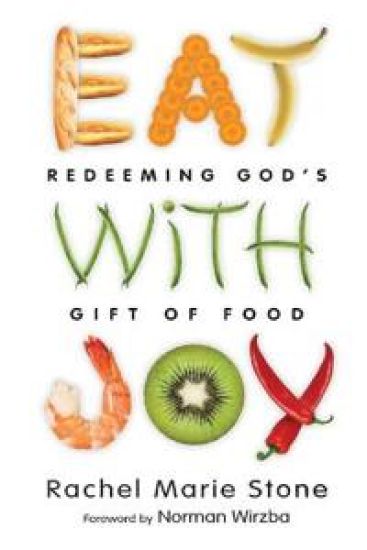
Eat with Joy – Redeeming God`s Gift of Food

Eat with Joy – Redeeming God`s Gift of Food

Rachel Marie Stone; Norman Wirzba

Inter-Varsity Press,US
2013
nidottu
Christianity Today Book Award Winner Food is the source of endless angst and anxiety. We struggle with obesity and eating disorders. Reports of agricultural horror stories give us worries about whether our food is healthy, nutritious or justly produced. It's hard to know if our food is really good for us or for society. Our relationship with food is complicated to say the least. But God intended for us to delight in our food. Rachel Stone calls us to rediscover joyful eating by receiving food as God's good gift of provision and care for us. She shows us how God intends for us to relate to him and each other through food, and how our meals can become expressions of generosity, community and love of neighbor. Eating together can bring healing to those with eating disorders, and we can make wise choices for sustainable agriculture. Ultimately, redemptive eating is a sacramental act of culture making through which we gratefully herald the feast of the kingdom of God. Filled with practical insights and some tasty recipes, this book provides a Christian journey into the delight of eating. Come to the table, partake of the Bread of Life—and eat with joy.
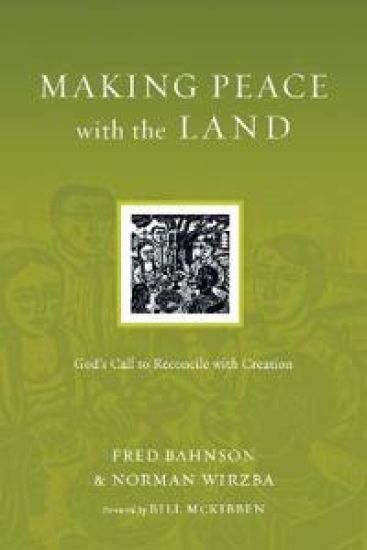
Making Peace with the Land – God`s Call to Reconcile with Creation

Making Peace with the Land – God`s Call to Reconcile with Creation

Fred Bahnson; Norman Wirzba; Bill McKibben

Inter-Varsity Press,US
2012
nidottu
God is reconciling all things in heaven and on earth. We are alienated not only from one another, but also from the land that sustains us. Our ecosystems are increasingly damaged, and human bodies are likewise degraded. Most of us have little understanding of how our energy is derived or our food is produced, and many of our current industrialized practices are both unhealthy for our bodies and unsustainable for the planet. Agriculturalist Fred Bahnson and theologian Norman Wirzba declare that in Christ, God reconciles all bodies into a peaceful, life-promoting relationship with one another. Because human beings are incarnated in material, bodily existence, we are necessarily interdependent with plants and animals, land and sea, heaven and earth. The good news is that redemption is cosmic, with implications for agriculture and ecology, from farm to dinner table. Bahnson and Wirzba describe communities that model cooperative practices of relational life, with local food production, eucharistic eating and delight in God's provision. Reconciling with the land is a rich framework for a new way of life. Read this book to start down the path to restoring shalom and experiencing Jesus' kingdom of shared abundance, where neighbors are fed and all receive enough.
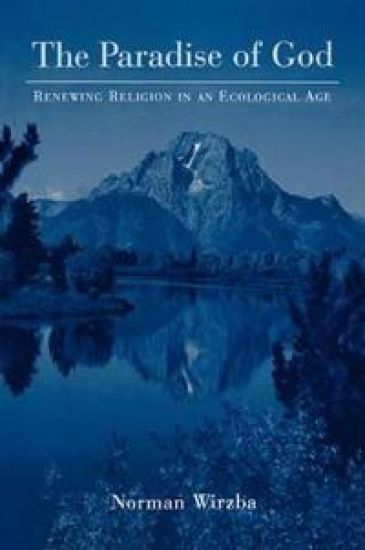
The Paradise of God

The Paradise of God

Norman Wirzba

Oxford University Press Inc
2007
nidottu
It has become a commonplace that Biblical religion bears a heavy share of responsibility for our past negligence towards the environment. In this provocative book, Norman Wirzba argues that the Biblical doctrine of creation actually holds the key to a true understanding of our place in the environment and our responsibility toward it. Wirzba contends that an adequate response to environmental destruction depends on a new formulation of ourselves as part of a larger whole, rather than as radically free individuals. Drawing on the work of biblical scholars, ecologists, agrarians, philosophers, theologians, and cultural critics, Wirzba presents a compelling vision of a new religious environmentalism.
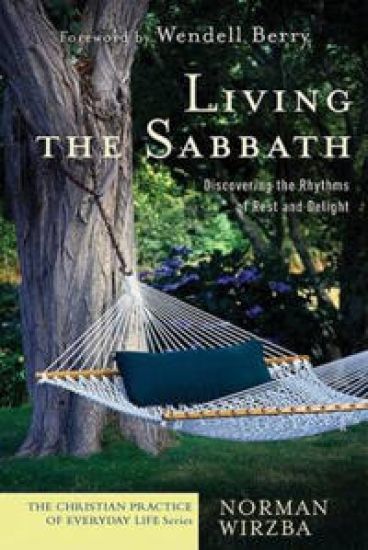
Living the Sabbath – Discovering the Rhythms of Rest and Delight

Living the Sabbath – Discovering the Rhythms of Rest and Delight

Norman Wirzba; Wendell Berry

Brazos Press, Div of Baker Publishing Group
2006
nidottu
Sabbath is one day a week when we should rest from our otherwise harried lives, right? In Living the Sabbath, Norman Wirzba leads us to a much more holistic and rewarding understanding of Sabbath-keeping. Wirzba shows how Sabbath is ultimately about delight in the goodness that God has made--in everything we do, every day of the week. With practical examples, Wirzba unpacks what that means for our daily lives at work, in our homes, in our economies, in school, in our treatment of creation, and in church. This book will appeal to clergy and laypeople alike and to all who are seeking ways to discover the transformative power of Sabbath in their lives today.
The Paradise of God

The Paradise of God

Norman Wirzba

Oxford University Press Inc
2003
sidottu
In this provocative book, Norman Wirzba argues that the doctrine of creation--as presented in the Bible and as developed through the centuries--actually holds the key to a true understanding of our place in the environment and our responsibility toward it. Wirzba contends that an adequate response to environmental destruction depends on a new formulation of ourselves as part of a larger whole, rather than as radically free individuals. Drawing on the work of biblical scholars, ecologists, agrarians, philosophers, theologians, and cultural critics, Wirzba develops a comprehensive worldview that grows out of the idea that the world is God's creation.
The Art Of The Commonplace

The Art Of The Commonplace

Wendell Berry; Norman Wirzba

Counterpoint
2003
nidottu

Halvin toimitettuna 20,30 €

"Here is a human being speaking with calm and sanity out of the wilderness. We would do well to hear him."  The Washington Post Book WorldArt of the Commonplace gathers twenty essays by Wendell Berry that offer an agrarian alternative to our dominant urban culture. Grouped around five themes an agrarian critique of culture, agrarian fundamentals, agrarian economics, agrarian religion, and geo-biography these essays promote a clearly defined and compelling vision important to all people dissatisfied with the stress, anxiety, disease, and destructiveness of contemporary American culture. Why is agriculture becoming culturally irrelevant, and at what cost? What are the forces of social disintegration and how might they be reversed? How might men and women live together in ways that benefit both? And, how does the corporate takeover of social institutions and economic practices contribute to the destruction of human and natural environments? Through his staunch support of local economies, his defense of farming communities, and his call for family integrity, Berry emerges as the champion of responsibilities and priorities that serve the health, vitality and happiness of the whole community of creation.