Kirjojen hintavertailu – 12 903 724 kirjaa ja 27 kauppaa

Kirjailija

Norrin M. Ripsman

Kirjat ja teokset yhdessä paikassa: 14 kirjaa, julkaisuja vuosilta 2002–2026, suosituimpiin kuuluu Understanding Near Crises and Escalation in World Politics. Vertaile teosten hintoja ja tarkista saatavuus suomalaisista kirjakaupoista.

Nimi esiintyy myös muodoissa: Norrin M Ripsman

14 kirjaa

Kirjojen julkaisuvuodet: 2002–2026.

Understanding Near Crises and Escalation in World Politics

Understanding Near Crises and Escalation in World Politics

Steven E. Lobell; Patrick James; Scott A. Silverstone; Victor Asal; Kyle Beardsley; Edward Gonzalez; Norrin M. Ripsman

TAYLOR FRANCIS LTD
2025
nidottu

Halvin toimitettuna 64,60 €

This book introduces the near crisis phase of conflict and escalation. These time-sensitive disputes between states, and even with violent non-state actors, do not involve significant risk of military escalation, at least in the moment. Investigating how and why some near crises escalate, while others do not, requires an explanation of the different dynamics of international disputes and the policy tools that states and international institutions can employ. We ask an expanded set of questions about specific cases and general patterns of conflict behavior, such as: why did Israeli leaders respond to Hezbollah’s 2006 cross-border raid with escalation, resulting in the Second Lebanon War, while in previous instances the Israelis limited their retaliation? Why didn’t the 2015 Iranian Ballistic Missile Test or the 1995 Norwegian Black Brant Missile Launch escalate, while the 2009 North Korea Missile Movement and the 1995 Taiwan Straits dispute tipped into a full-blown crisis, and why did the 2008 Russia-Georgia conflict escalate from near crisis to war? We use primary sources and newly created data on near crises to answer these questions and others. The overall conclusion is that an ounce of prevention at the near crisis phase is worth a pound of cure in averting a full-blown crisis or war. This book will be of great interest to students of security studies, conflict studies, foreign policy, and international relations.
Understanding Near Crises and Escalation in World Politics

Understanding Near Crises and Escalation in World Politics

Steven E. Lobell; Patrick James; Scott A. Silverstone; Victor Asal; Kyle Beardsley; Edward Gonzalez; Norrin M. Ripsman

TAYLOR FRANCIS LTD
2025
sidottu
This book introduces the near crisis phase of conflict and escalation. These time-sensitive disputes between states, and even with violent non-state actors, do not involve significant risk of military escalation, at least in the moment. Investigating how and why some near crises escalate, while others do not, requires an explanation of the different dynamics of international disputes and the policy tools that states and international institutions can employ. We ask an expanded set of questions about specific cases and general patterns of conflict behavior, such as: why did Israeli leaders respond to Hezbollah’s 2006 cross-border raid with escalation, resulting in the Second Lebanon War, while in previous instances the Israelis limited their retaliation? Why didn’t the 2015 Iranian Ballistic Missile Test or the 1995 Norwegian Black Brant Missile Launch escalate, while the 2009 North Korea Missile Movement and the 1995 Taiwan Straits dispute tipped into a full-blown crisis, and why did the 2008 Russia-Georgia conflict escalate from near crisis to war? We use primary sources and newly created data on near crises to answer these questions and others. The overall conclusion is that an ounce of prevention at the near crisis phase is worth a pound of cure in averting a full-blown crisis or war. This book will be of great interest to students of security studies, conflict studies, foreign policy, and international relations.

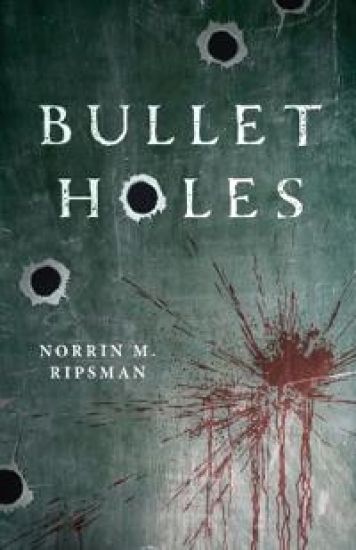
Bullet Holes

Bullet Holes

Norrin M Ripsman

Next Chapter
2026
pokkari
It's the weekend of Manny's bar mitzvah. But even though this is a festive occasion, there is tension in the house. The family has experienced tragedy - Manny's twin, Danny, was killed in a school shooting less than a year ago. Now, with the extended family and guests over, the family attempts to celebrate - but Danny's absence and deep intra-familial political and religious divides threaten their marriages, their relationships, and the bar mitzvah. Bullet Holes is a novel of the moment, reminding us of the humanity that is lost when we fail to see past political and ideological divisions.
Song Book

Song Book

Norrin M Ripsman

Cassowary Publications
2024
pokkari
Music shapes our world, gives it meaning. The songs we love are indelibly connected in our consciousness to crucial events, to powerful emotions, to that which we have lost. Though written by others, they chronicle our own lives, have unique and profound connotations for each listener. The song that recalls our first love. The blues we played to ease the pain of a break-up. The lyrics that invariably bring tears to our eyes. The stirring tunes and muscular brass that help us celebrate. Their enduring melodies and accompanying lyrics help us to understand ourselves, to make sense of our experiences. They remind us that we are not alone in our joys and our sorrows. Songbook is a collection of fictional short stories that reflect the profound influence of rock music and its lyrics on the author's life. Many stories draw their inspiration from the poetic lyrics of classic songs. Others explore what the songs we sing reveal about our personalities, our choices, the nature of a modern world. As a book, the stories - about a chance meeting on a Voyageur bus, a surprising mishap in the delivery room, love in the age of climate change, a mysterious satchel left in the back seat of an airport limousine, and many others - explore the hopes, fears, disappointments, weaknesses and redemptions that make us human.
Neoclassical Realist Theory of International Politics

Neoclassical Realist Theory of International Politics

Norrin M. Ripsman; Jeffrey W. Taliaferro; Steven E. Lobell

Oxford University Press Inc
2016
nidottu
Since Gideon Rose's 1998 review article in the journal World Politics and especially following the release of Lobell, Ripsman, and Taliaferro's 2009 edited volume Neoclassical Realism, the State, and Foreign Policy, neoclassical realism has emerged as major theoretical approach to the study of foreign policy on both sides of the Atlantic. Proponents of neoclassical realism claim that it is the logical extension of the Kenneth Waltz's structural realism into the realm of foreign policy. In Neoclassical Realist Theory of International Relations, Norrin M. Ripsman, Jeffrey W. Taliaferro, and Steven E. Lobell argue that neoclassical realism is far more than an extension of Waltz's structural realism or an effort to update the classical realism of Hans Morgenthau, E. H. Carr, and Henry Kissinger with the language of modern social science. Rejecting the artificial distinction that Waltz draws between theories of international politics and theories of foreign policy, the authors contend neoclassical realism can explain and predict phenomena ranging from short-term crisis-behavior, to foreign policy, to patterns of grand strategic adjustment by individual states up to long-term patterns of international outcomes. It is, therefore, a more powerful theory of international politics than structural realism. Yet it is also a more intuitively satisfying approach than liberal Innenpolitik theories or constructivism. The authors detail the variables and assumptions of neoclassical realist theory, address various aspects of theory construction and methodology, lay out the areas of convergence and sharp disagreement with other leading theoretical approaches -- liberalism, constructivism, analytic eclecticism, and foreign policy analysis (FPA) --- and demonstrate how neoclassical realist theory can be used to resolve longstanding puzzles and debates in international relations theory.
Peacemaking from Above, Peace from Below

Peacemaking from Above, Peace from Below

Norrin M. Ripsman

Cornell University Press
2016
sidottu
In Peacemaking from Above, Peace from Below, Norrin M. Ripsman explains how regional rivals make peace and how outside actors can encourage regional peacemaking. Through a qualitative empirical analysis of all the regional rivalries that terminated in peace treaties in the twentieth century—including detailed case studies of the Franco-German, Egyptian-Israeli, and Israeli-Jordanian peace settlements—Ripsman concludes that efforts to encourage peacemaking that focus on changing the attitudes of the rival societies or democratizing the rival polities to enable societal input into security policy are unlikely to achieve peace. Prior to a peace treaty, he finds, peacemaking is driven by states, often against intense societal opposition, for geostrategic reasons or to preserve domestic power. After a formal treaty has been concluded, the stability of peace depends on societal buy-in through mechanisms such as bilateral economic interdependence, democratization of former rivals, cooperative regional institutions, and transfers of population or territory. Society is largely irrelevant to the first stage but is critical to the second. He draws from this analysis a lesson for contemporary policy. Western governments and international organizations have invested heavily in efforts to promote Israeli-Palestinian and Indo-Pakistani peace by promoting democratic values, economic exchanges, and cultural contacts between the opponents. Such attempts to foster peace are likely to waste resources until such time as formal peace treaties are concluded between longtime adversaries.
Neoclassical Realist Theory of International Politics

Neoclassical Realist Theory of International Politics

Norrin M. Ripsman; Jeffrey W. Taliaferro; Steven E. Lobell

Oxford University Press Inc
2016
sidottu
Since Gideon Rose's 1998 review article in the journal World Politics and especially following the release of Lobell, Ripsman, and Taliaferro's 2009 edited volume Neoclassical Realism, the State, and Foreign Policy, neoclassical realism has emerged as major theoretical approach to the study of foreign policy on both sides of the Atlantic. Proponents of neoclassical realism claim that it is the logical extension of the Kenneth Waltz's structural realism into the realm of foreign policy. In Neoclassical Realist Theory of International Relations, Norrin M. Ripsman, Jeffrey W. Taliaferro, and Steven E. Lobell argue that neoclassical realism is far more than an extension of Waltz's structural realism or an effort to update the classical realism of Hans Morgenthau, E. H. Carr, and Henry Kissinger with the language of modern social science. Rejecting the artificial distinction that Waltz draws between theories of international politics and theories of foreign policy, the authors contend neoclassical realism can explain and predict phenomena ranging from short-term crisis-behavior, to foreign policy, to patterns of grand strategic adjustment by individual states up to long-term patterns of international outcomes. It is, therefore, a more powerful theory of international politics than structural realism. Yet it is also a more intuitively satisfying approach than liberal Innenpolitik theories or constructivism. The authors detail the variables and assumptions of neoclassical realist theory, address various aspects of theory construction and methodology, lay out the areas of convergence and sharp disagreement with other leading theoretical approaches -- liberalism, constructivism, analytic eclecticism, and foreign policy analysis (FPA) --- and demonstrate how neoclassical realist theory can be used to resolve longstanding puzzles and debates in international relations theory.
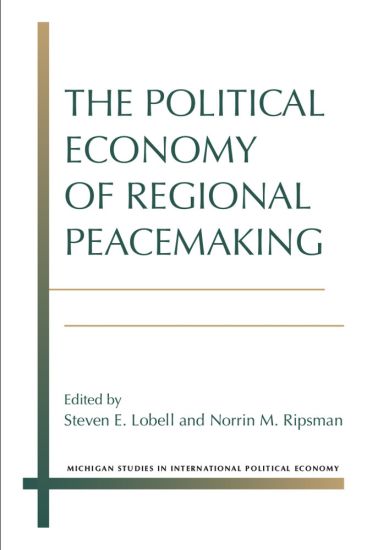
The Political Economy of Regional Peacemaking

The Political Economy of Regional Peacemaking

Steven E. Lobell; Norrin M. Ripsman

The University of Michigan Press
2016
nidottu
In The Political Economy of Regional Peacemaking, scholars examine the efficacy of trade agreements, economic sanctions, and other strategies of economic statecraft for the promotion of peace both between rival states and across conflict-ridden regions more generally. In the introduction, Steven E. Lobell and Norrin M. Ripsman pose five central questions: (1) What types of economic statecraft, including incentives and sanctions, can interested parties employ? (2) Who are the appropriate targets in the rival states—state leaders, economic and social elites, or society as whole? (3) When should specific economic instruments be used to promote peace—prior to negotiations, during negotiations, after signature of the treaty, or during implementation of the treaty? (4) What are the limits and risks of economic statecraft and economic interdependence? (5) How can economic statecraft be used to move from a bilateral peace agreement to regional peace? The chapters that follow are grouped in three sections, corresponding to the three stages of peacemaking: reduction or management of regional conflict; peacemaking or progress toward a peace treaty; and maintenance of bilateral peace and the regionalization of the peace settlement. In each chapter, the contributors consider the five key questions from a variety of methodological, historical, cultural, and empirical perspectives, drawing data from the Pacific, the Middle East, Europe, Asia, and Latin America. The conclusion expands on several themes found in the chapters and proposes an agenda for future research.
The Political Economy of Regional Peacemaking

The Political Economy of Regional Peacemaking

Steven E. Lobell; Norrin M. Ripsman

The University of Michigan Press
2016
sidottu
In The Political Economy of Regional Peacemaking, scholars examine the efficacy of trade agreements, economic sanctions, and other strategies of economic statecraft for the promotion of peace both between rival states and across conflict-ridden regions more generally. In the introduction, Steven E. Lobell and Norrin M. Ripsman pose five central questions: (1) What types of economic statecraft, including incentives and sanctions, can interested parties employ? (2) Who are the appropriate targets in the rival states—state leaders, economic and social elites, or society as whole? (3) When should specific economic instruments be used to promote peace—prior to negotiations, during negotiations, after signature of the treaty, or during implementation of the treaty? (4) What are the limits and risks of economic statecraft and economic interdependence? (5) How can economic statecraft be used to move from a bilateral peace agreement to regional peace? The chapters that follow are grouped in three sections, corresponding to the three stages of peacemaking: reduction or management of regional conflict; peacemaking or progress toward a peace treaty; and maintenance of bilateral peace and the regionalization of the peace settlement. In each chapter, the contributors consider the five key questions from a variety of methodological, historical, cultural, and empirical perspectives, drawing data from the Pacific, the Middle East, Europe, Asia, and Latin America. The conclusion expands on several themes found in the chapters and proposes an agenda for future research.
Economic Statecraft and Foreign Policy

Economic Statecraft and Foreign Policy

Jean-Marc F. Blanchard; Norrin M. Ripsman

Routledge
2015
nidottu
This book develops a unified theory of economic statecraft to clarify when and how sanctions and incentives can be used effectively to secure meaningful policy concessions. High-profile applications of economic statecraft have yielded varying degrees of success. The mixed record of economic incentives and economic sanctions in many cases raises important questions. Under what conditions can states modify the behaviour of other states by offering them tangible economic rewards or by threatening to disrupt existing economic relations? To what extent does the success of economic statecraft depend on the magnitude of economic penalties and rewards? In order to answer these questions, this book develops two analytic models: one weighs the threats economic statecraft poses to the Target’s Strategic Interests (TSI); while the other (stateness) assesses the degree to which the target state is insulated from domestic political pressures that senders attempt to generate or exploit. Through a series of carefully crafted case studies, including African apartheid and Japanese incentives to obtain the return of the Northern Territories, the authors demonstrate how their model can yield important policy insights in regards to contemporary economic sanctions and incentives cases, such as Iran and North Korea. This book will be of much interest to students of statecraft, sanctions, diplomacy, foreign policy, and international security in general.
Economic Statecraft and Foreign Policy

Economic Statecraft and Foreign Policy

Jean-Marc F. Blanchard; Norrin M. Ripsman

Routledge
2013
sidottu
This book develops a unified theory of economic statecraft to clarify when and how sanctions and incentives can be used effectively to secure meaningful policy concessions. High-profile applications of economic statecraft have yielded varying degrees of success. The mixed record of economic incentives and economic sanctions in many cases raises important questions. Under what conditions can states modify the behaviour of other states by offering them tangible economic rewards or by threatening to disrupt existing economic relations? To what extent does the success of economic statecraft depend on the magnitude of economic penalties and rewards? In order to answer these questions, this book develops two analytic models: one weighs the threats economic statecraft poses to the Target’s Strategic Interests (TSI); while the other (stateness) assesses the degree to which the target state is insulated from domestic political pressures that senders attempt to generate or exploit. Through a series of carefully crafted case studies, including African apartheid and Japanese incentives to obtain the return of the Northern Territories, the authors demonstrate how their model can yield important policy insights in regards to contemporary economic sanctions and incentives cases, such as Iran and North Korea. This book will be of much interest to students of statecraft, sanctions, diplomacy, foreign policy, and international security in general.
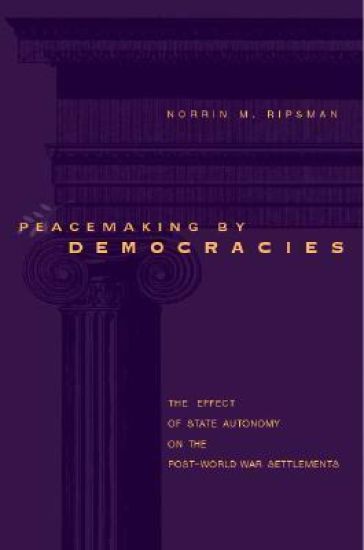
Peacemaking by Democracies

Peacemaking by Democracies

Norrin M. Ripsman

Pennsylvania State University Press
2002
pokkari
When theorists explain how democracies conduct foreign policy, they tend to ignore or downplay differences and assume that democratic governments all behave similarly. Challenging this assumption, Norrin Ripsman breaks down the category of "democracy" to argue that differences in structural autonomy among democratic states have a lot to do with how foreign security policies are chosen and international negotiations are carried out. Concluding with an examination of the implications of these findings for security policy in contemporary democracies, Peacemaking by Democracies combines innovation in international relations theory with careful primary research in historical archives.