Kirjojen hintavertailu – 12 859 824 kirjaa ja 27 kauppaa
Kirjailija
Norshahril Saat
Kirjat ja teokset yhdessä paikassa: 8 kirjaa, julkaisuja vuosilta 2017–2026, suosituimpiin kuuluu Trending Islam. Vertaile teosten hintoja ja tarkista saatavuus suomalaisista kirjakaupoista.
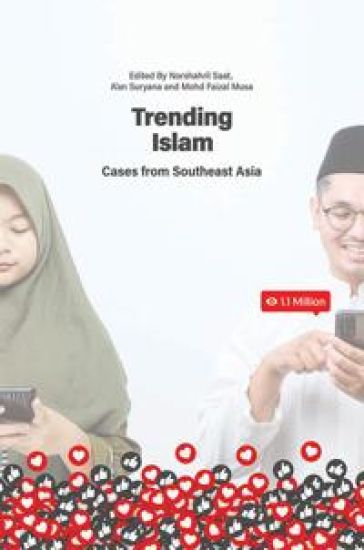
Trending Islam maps and discusses key personalities, groups or institutions that influence Muslims in the region. This book dedicates more space to discuss the role of the Internet in disseminating religious discourses. Internet's role, in particular the use of social media either to advance interpretations of Islamic ideas or to gain influence in the public sphere, is becoming more significant as it allows information to spread faster and wider. While not discounting traditional issues such as extremism and terrorism, matters that continue to affect many people's lives in the region, the book delves into the interaction between violent and non-violent extremism and the liberal and progressive responses to them. Trending Islam covers the transmission of Islam in several countries and some case studies.
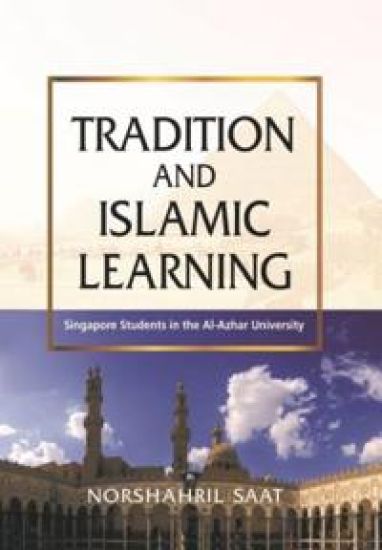
The Al-Azhar University remains the top destination for Southeast Asian students pursuing an Islamic studies degree. The university, built in the last millennium, has been able to withstand competition from modern universities across the globe and continues to produce influential Islamic studies graduates. What are the motivations of students pursuing a degree at Al-Azhar? What are the challenges they face? Are they certain of their future and career opportunities upon their return to Singapore? This book combines both qualitative and quantitative analysis of former and current students at the Al-Azhar University. It not only hopes to develop more critical analysis of returning Al-Azhar graduates but also attempts to understand the deeper connections between Muslims in Southeast Asia, particularly Singapore, and the Middle East.
Youths in Southeast Asia have been active in making their voices heard in politics and in society, both online and offline. However, comparative studies on their civic engagement across the region remain wanting. The survey drew responses from 3,081 participants, attaining a generally balanced representation of female and male respondents, and of students from STEM (Science, Technology, Engineering and Mathematics) and non-STEM majors. Respondents were evenly spread across the ages of 18 and 24.
The Suharto (1966-98) government of Indonesia and the Mahathir (1981-2003) government of Malaysia both launched Islamisation programmes, upgrading and creating religious institutions. The author argues that, while generally ulamas, or religious teachers, had to support state ideologies, they sometimes succeeded in capturing the state by influencing policies in their favour. The author builds his argument on strong fieldwork data, especially interviews, and he engages in critical discussion of comparative politics paradigms and the concept of capture.
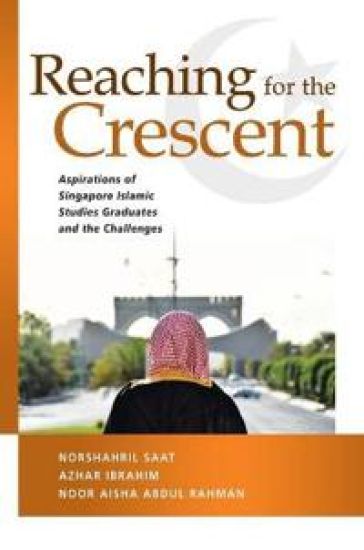
Islamic religious teachers (asatizah) and scholars (ulama) play a significant role in providing spiritual leadership for the Singapore Malay/Muslim community. Lately, the group has been cast under the spotlight over a range of issues, from underperformance in the national examination, their ability to integrate into the broader society, exposure to radical and conservative ideas such as Salafism from the Middle East, and unemployment. Reaching for the Crescent examines a growing segment within the group, namely Islamic studies graduates, who obtained their degrees from universities in the Middle East and neighbouring Malaysia and Indonesia. It identifies factors that condition the proliferation of Islamic studies graduates in Singapore, examine the dominant religious institutionsthey attend, the nature of Islamic education they received, and their challenges. It tackles the impact of their religious education on the spiritual life and well-being of the community. Based on qualitative and quantitative data collected, the book calls for a rethinking of a prevailing discourse of Arabization of Singapore Muslims and academic approaches that focus on madrasah education and Islam through the security lens.
Examines how the Indonesian Ministry of Religious Affairs has been managed under President Joko Widodo (Jokowi) from 2014 to the present. The book highlights similarities and differences in Jokowi's control of the influential ministry compared to his predecessors.
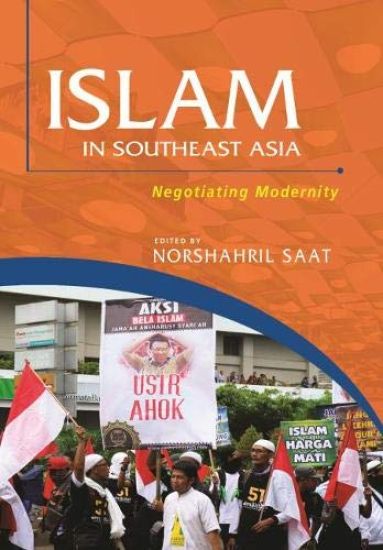
"Islam in the Malay world of Southeast Asia or Islam Nusantara, as it has come to be known, had for a long time been seen as representing the more spiritual and Sufi dimension of Islam, thereby striking a balance between the exoteric and the esoteric. This image of 'the smiling face of Islam' has been disturbed during the last decades with increasing calls for the implementation of Shari'ah, conceived of in a narrow manner, intolerant discourse against non-Muslim communities, and hate speech against minority Muslims such as the Shi'ites. There has also been what some have referred to as the Salafization of Sunni Muslims in the region. The chapters of this volume are written by scholars and activists from the region who are very perceptive of such trends in Malay world Islam and promise to improve our understanding of developments that are sometimes difficult to grapple with." --Professor Syed Farid Alatas, Department of Sociology, Faculty of Arts and Social Sciences, National University of Singapore "Perceptions of Southeast Asian Islam are increasingly contested. On the one hand, much of the international community continues to laud the region's Muslims as among the most 'moderate' and 'inclusive' in the world. On the other hand, stories about creeping Wahhabism and escalating jihadist threats abound in media reporting, often accompanied by commentary that the nature of Southeast Asian Islam is becoming more radical, less tolerant and more 'Arabized'. In this volume, a range of Muslim scholars and activists from Indonesia, Malaysia and Singapore reflect upon developments in their communities and seek to bring greater nuance to our understanding of these complex religio-cultural and political changes. This book opens up authentic regional perspectives on Islam's contemporary role." --Assoc. Professor Greg Fealy, Department of Political and Social Change, Australian National University
The Suharto (1966-98) government of Indonesia and the Mahathir (1981-2003) government of Malaysia both launched Islamisation programmes, upgrading and creating religious institutions. The author argues that, while generally ulamas, or religious teachers, had to support state ideologies, they sometimes succeeded in ŸcapturingŒ the state by influencing policies in their favour. The author builds his argument on strong fieldwork data, especially interviews, and he engages in critical discussion of comparative politics paradigms and the concept of capture.