Kirjojen hintavertailu – 12 880 278 kirjaa ja 26 kauppaa

Kirjailija

Olaf Kolditz

Kirjat ja teokset yhdessä paikassa: 9 kirjaa, julkaisuja vuosilta 1996–2018, suosituimpiin kuuluu Computational Geotechnics. Vertaile teosten hintoja ja tarkista saatavuus suomalaisista kirjakaupoista.

9 kirjaa

Kirjojen julkaisuvuodet: 1996–2018.

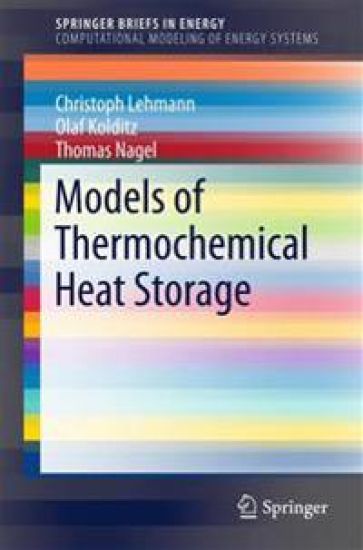
Models of Thermochemical Heat Storage

Models of Thermochemical Heat Storage

Christoph Lehmann; Olaf Kolditz; Thomas Nagel

Springer International Publishing AG
2018
nidottu
Thermochemical gas-solid reactions, as well as adsorption processes, are currently of significant interest for the design of heat storage systems. This book provides detailed models of these reactions and processes that account for heat and mass transport, chemical and physical reactions, and possible local thermal non-equilibrium. The underlying scientific theory behind the models is explained, laboratory tests are simulated, and methods for high-performance computing are discussed. Applications ranging from seasonal domestic heat storage to diurnally operating systems in concentrating solar power facilities are considered in these models, which are not available through any other sources. Finally, an outlook on future developments highlights emerging technologies.
Computational Geotechnics

Computational Geotechnics

Thomas Nagel; Norbert Böttcher; Uwe-Jens Görke; Olaf Kolditz

Springer International Publishing AG
2017
nidottu
In this book, effective computational methods to facilitate those pivotal simulations using open-source software are introduced and discussed with a special focus on the coupled thermo-mechanical behavior of the rock salt. A cohesive coverage of applying geotechnical modeling to the subsurface storage of hydrogen produced from renewable energy sources is accompanied by specific, reproducible example simulations to provide the reader with direct access to this fascinating and important field. Energy carriers such as natural gas, hydrogen, oil, and even compressed air can be stored in subsurface geological formations such as depleted oil or gas reservoirs, aquifers, and caverns in salt rock. Many challenges have arisen in the design, safety and environmental impact assessment of such systems, not the least of which is that large-scale experimentation is not a feasible option. Therefore, simulation techniques are central to the design and risk assessment of these and similar geotechnicalfacilities.
Geoenergy Modeling II

Geoenergy Modeling II

Haibing Shao; Philipp Hein; Agnes Sachse; Olaf Kolditz

Springer International Publishing AG
2016
nidottu
This book is dedicated to the numerical modeling of shallow geothermal systems. The utilization of shallow geothermal energy involves the integration of multiple Borehole Heat Exchangers (BHE) with Ground Source Heat Pump (GSHP) systems to provide heating and cooling. The modeling practices explained in this book can improve the efficiency of these increasingly common systems. The book begins by explaining the basic theory of heat transport processes in man-made as well as natural media. . These techniques are then applied to the simulation of borehole heat exchangers and their interaction with the surrounding soil. The numerical and analytical models are verified against analytical solutions and measured data from a Thermal Response Test, and finally, a real test site is analyzed through the model and discussed with regard to BHE and GSHP system design and optimization.
Geoenergy Modeling I

Geoenergy Modeling I

Norbert Böttcher; Norihiro Watanabe; Uwe-Jens Görke; Olaf Kolditz

Springer International Publishing AG
2016
nidottu
This introduction to geothermal modeling deals with flow and heat transport processes in porous and fractured media related to geothermal energy applications. Following background coverage of geothermal resources and utilization in several countries, the basics of continuum mechanics for heat transport processes, as well as numerical methods for solving underlying governing equations are discussed. This examination forms the theoretical basis for five included step-by-step OpenGeoSys exercises, highlighting the most important computational areas within geothermal resource utilization, including heat diffusion, heat advection in porous and fractured media, and heat convection. The book concludes with an outlook on practical follow-up contributions investigating the numerical simulation of shallow and deep geothermal systems.
OpenGeoSys-Tutorial

OpenGeoSys-Tutorial

Agnes Sachse; Karsten Rink; Wenkui He; Olaf Kolditz

Springer International Publishing AG
2015
nidottu
This tutorial on the application of the open-source software OpenGeoSys (OGS) in computational hydrology is based on a one-week training course at the Helmholtz Centre for Environmental Research in Leipzig, Germany. It provides general information regarding hydrological and groundwater flow modeling and the pre-processing and step-by-step model setups of a case study with OGS and related components such as the OGS Data Explorer. The tutorial also illustrates the application of pre- and post-processing tools such as ArcGIS and ParaView. This book is intended primarily for graduate students and applied scientists who deal with hydrological-system analysis and hydrological modeling. It is also a valuable source of information for practicing hydrologists wishing to further their understanding of the numerical modeling of coupled hydrological-hydrogeological systems. This tutorial is the first in a series that will present further OGS applications in environmental sciences.
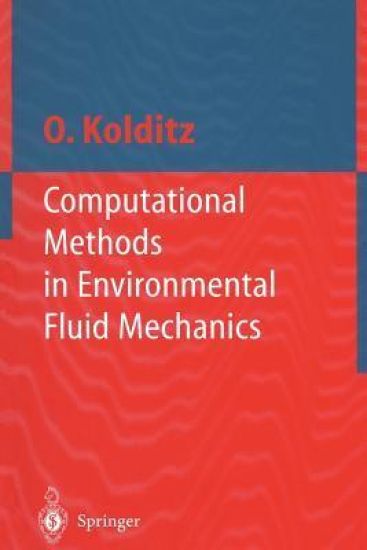
Computational Methods in Environmental Fluid Mechanics

Computational Methods in Environmental Fluid Mechanics

Olaf Kolditz

Springer-Verlag Berlin and Heidelberg GmbH Co. K
2011
nidottu
Fluids, play an important role in environmental systems, appearing as surface water in rivers, lakes, and coastal regions or in the subsurface as well as in the atmosphere. Mechanics of environmental fluids is concerned with fluid motion, associated mass and heat transport in addition to deformation processes in subsurface systems. In this textbook the fundamental modelling approaches based on continuum mechanics for fluids in the environment are described, including porous media and turbulence. Numerical methods for solving the process governing equations and its object-oriented computer implementation are discussed and illustrated with examples. Finally the application of computer models in civil and environmental engineering is demonstrated.
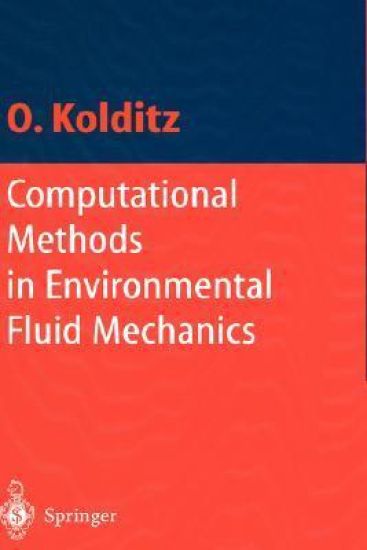
Computational Methods in Environmental Fluid Mechanics

Computational Methods in Environmental Fluid Mechanics

Olaf Kolditz

Springer-Verlag Berlin and Heidelberg GmbH Co. K
2002
sidottu
Fluids, play an important role in environmental systems, appearing as surface water in rivers, lakes, and coastal regions or in the subsurface as well as in the atmosphere. Mechanics of environmental fluids is concerned with fluid motion, associated mass and heat transport in addition to deformation processes in subsurface systems. In this textbook the fundamental modelling approaches based on continuum mechanics for fluids in the environment are described, including porous media and turbulence. Numerical methods for solving the process governing equations and its object-oriented computer implementation are discussed and illustrated with examples. Finally the application of computer models in civil and environmental engineering is demonstrated.