Kirjojen hintavertailu – 12 903 725 kirjaa ja 27 kauppaa

Kirjailija

Olaudah Equiano

Kirjat ja teokset yhdessä paikassa: 103 kirjaa, julkaisuja vuosilta 1789–2026, suosituimpiin kuuluu The Interesting Narrative of the Life of Olaudah Equiano, Or Gustavus Vassa, The African. Vertaile teosten hintoja ja tarkista saatavuus suomalaisista kirjakaupoista.

103 kirjaa

Kirjojen julkaisuvuodet: 1789–2026.

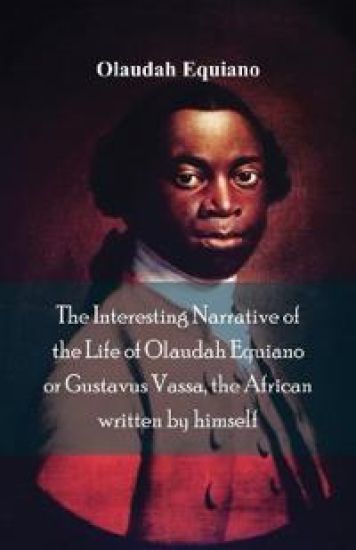
The Interesting Narrative of the Life of Olaudah Equiano, or Gustavus Vassa, the African. Written by Himself. Eighth Edition Enlarged
The 18th century was a wealth of knowledge, exploration and rapidly growing technology and expanding record-keeping made possible by advances in the printing press. In its determination to preserve the century of revolution, Gale initiated a revolution of its own: digitization of epic proportions to preserve these invaluable works in the largest archive of its kind. Now for the first time these high-quality digital copies of original 18th century manuscripts are available in print, making them highly accessible to libraries, undergraduate students, and independent scholars. Rich in titles on English life and social history, this collection spans the world as it was known to eighteenth-century historians and explorers. Titles include a wealth of travel accounts and diaries, histories of nations from throughout the world, and maps and charts of a world that was still being discovered. Students of the War of American Independence will find fascinating accounts from the British side of conflict. ++++The below data was compiled from various identification fields in the bibliographic record of this title. This data is provided as an additional tool in helping to insure edition identification: ++++British LibraryT136630With lists of subscribers. The frontispiece dated: March 1, 1789. Norwich: printed for, and sold by the author, 1794. xxxiv, 2],360p., plates: port.; 12
The Interesting Narrative of the Life of Olaudah Equiano, or Gustavus Vassa, the African. Written by Himself. Seventh Edition Enlarged
The 18th century was a wealth of knowledge, exploration and rapidly growing technology and expanding record-keeping made possible by advances in the printing press. In its determination to preserve the century of revolution, Gale initiated a revolution of its own: digitization of epic proportions to preserve these invaluable works in the largest archive of its kind. Now for the first time these high-quality digital copies of original 18th century manuscripts are available in print, making them highly accessible to libraries, undergraduate students, and independent scholars. Rich in titles on English life and social history, this collection spans the world as it was known to eighteenth-century historians and explorers. Titles include a wealth of travel accounts and diaries, histories of nations from throughout the world, and maps and charts of a world that was still being discovered. Students of the War of American Independence will find fascinating accounts from the British side of conflict. ++++The below data was compiled from various identification fields in the bibliographic record of this title. This data is provided as an additional tool in helping to insure edition identification: ++++British LibraryT136632P.xxxvi misnumbered xxvi. With lists of subscribers. The frontispiece dated: March 1, 1789. London: printed for, and sold by the author, 1793. xxvi i.e.xxxvi], 2],360p., plates: port.; 12
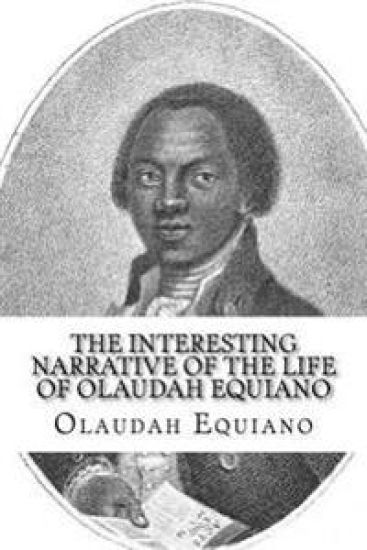
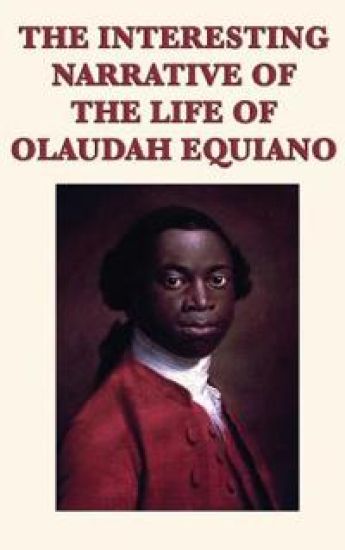
The Interesting Narrative of the Life of Olaudah Equiano, Or Gustavus Vassa, The African Written By Himself
Olaudah Equiano known in his lifetime as Gustavus Vassa was a freed slave of Igbo extraction from the eastern part of present-day Nigeria, who supported the British movement to end the slave trade. His autobiography, published in 1789, helped in the creation of the Slave Trade Act 1807 which ended the African slave trade for Britain and its colonies. This book has been deemed as a classic and has stood the test of time. The book has been considered by academicians and scholars of great significance and value to literature. This forms a part of the knowledge base for future generations.
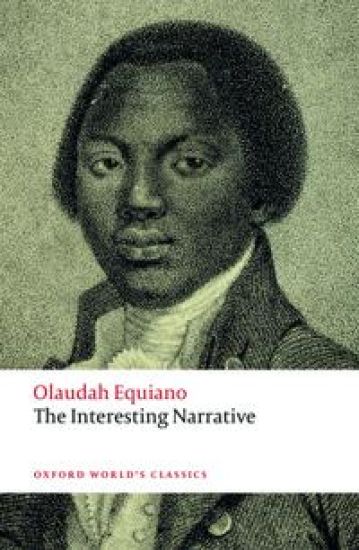
The Interesting Narrative

The Interesting Narrative

Olaudah Equiano

Oxford University Press
2018
nidottu
'I hope the slave trade may be abolished. I pray it may be an event at hand.' Published a few days before the British parliament first debated the abolition of the slave trade in 1789, Olaudah Equiano's Interesting Narrative gives the author's account of his enslavement after his childhood kidnapping in Africa, and his journey from slavery to freedom. Equiano was slave to a captain in the Royal Navy, and later to a Quaker merchant, and he vividly depicts the appalling treatment of enslaved people at sea and on land. He takes part in naval engagements, is shipwrecked, and has other exciting adventures on his travels to the Caribbean, America, and the Arctic. Equiano claimed his own freedom and became an important abolitionist, but his Narrative is much more than merely a political pamphlet. The most important African autobiography of the eighteenth century, it has achieved an increasingly central position among the century's great works of literature. The introduction to this edition surveys recent debates about Equiano's birthplace and identity, and considers his campaigning role and literary achievements.
The Interesting Narrative of the Life of Olaudah Equiano: Or Gustavus Vassathe African. Written by Himself
The Interesting Narrative of the Life of Olaudah Equiano. . . . VOLUME II. EVERY day now brought me nearer my freedom, and I was impatient till we proceeded again to sea, that I might have an opportunity of getting a sum large enough to purchase it. I was not long ungratified; for, in the beginning of the year 1766, my master bought another sloop, named the Nancy, the largest I had ever seen. She was partly laden, and was to proceed to Philadelphia; our Captain had his choice of three, and I was well pleased he chose this, which was the largest; for, from his having a large vessel, I had more room, and could carry a larger quantity of goods with me. Accordingly, when we had delivered our old vessel, the Prudence, and completed the lading of the Nancy, having made near three hundred per cent, by four barrels of pork I brought from Charlestown, I said in as large a cargo as I could, trusting to God's providence to prosper my undertaking. With these views I failed for Philadelphia. On our passage, when we drew near the land, I was for the first time surprised at the fight of some whales, having never seen any such large sea monsters before; and as we failed by the land one morning I saw a puppy whale close by the vessel; it was about the length of a wherry boat, and it followed us all the day till we got within the Capes. We arrived safe and in good time at Philadelphia, and I sold my goods there chiefly to the Quakers.
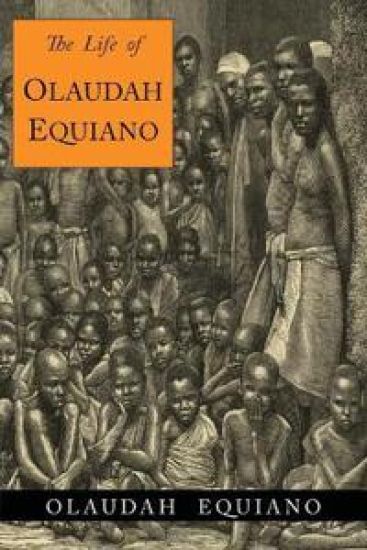
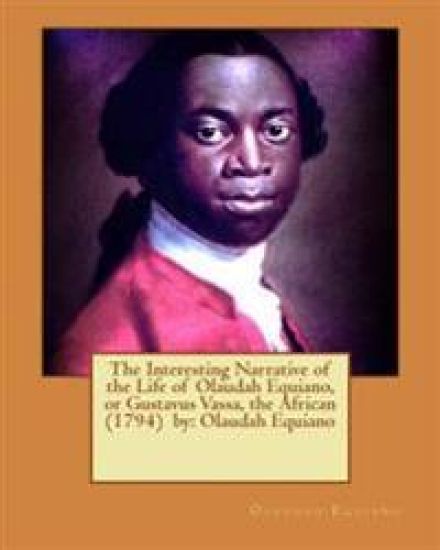
The interesting narrative of the life of Olaudah Equiano: Gustavus Vassa the african

The interesting narrative of the life of Olaudah Equiano: Gustavus Vassa the african

Olaudah Equiano

Createspace Independent Publishing Platform
2016
nidottu
Olaudah Equiano, born around 1745 in Isseke in Biafra in Nigeria today and died in Cambridgeshire March 31, 1797, better known in its time as the Gustave Vasa1, was a slave, freed, sailor and British writer calviniste1 of African origin, who lived mainly in the British colonies of America and the United Kingdom. According to his autobiographie, Equiano, son of a wealthy family Igbo, was abducted by two men and a woman (slave hunters) of an opposing tribe in Nigeria and became a slave at the age of ten or eleven years . Transferred to Barbados, it was acquired by a British officer he accompanied Virginia and England. We renamed it by giving it the name derisively of the Swedish king Gustav Vasa. Equiano became his master seaman and served during the Seven years. Sold to a dealer he bought it on July 11, 1766, his freedom for forty books1. He exercised the function of barber in London in 1767, before embarking again to successively joining New England, Nicaragua and the Arctic regions in the expedition led by the British naturalist John Constantine Phipps in 1773. He became an influential figure in the abolition of slavery and accompanied the installation of the first former black slaves to Freetown in Sierra Leone. The fight was not always successful. Thus, in 1783, with Granville Sharp, he sought to advance the abolitionist cause, arguing that a slave was not on a ship, a "commodity" like others. Indeed, the owner of the slave ship Zong, which the captain had been "forced" in 1781 to jettison its cargo of 132 slaves affected by a pid mie to avoid contagion, addressed to the British courts to determine s it was legitimate that it be compensated by his insurance as could be in this case when it came to animals. Despite the efforts of Equiano and Sharp, the Lord Chief Justice Mansfield, concludes that "so shocking that it was, if the slave was exactly similar to that of horses." At the request of abolitionist Olaudah Equiano published his autobiography in 1789, as The Interesting Narrative of the Life of Olaudah Equiano, or Gustavus Vassa the African, written by himself, one of the few live testimony of the slave trade by of those having lived as qu'esclave. He tells the heartbreak that was the separation from his family, his fear of children, the conditions of his life as a slave. This testimony widely used by the British abolitionist movement and whose dissemination contributed greatly to fame of the former slave. Thus, Equiano knows a portrait he did run to 17807. It is represented as a young man in red wig and dress. The fact that this portrait has long been attributed to a painter of English high society of the eighteenth century, Joshua Reynolds, is an index of its fame to the end of his life
The Interesting Narrative of the Life of Olaudah Equiano, Or Gustavus Vassa, The African (Large Print)
The Interesting Narrative of the Life of Olaudah Equiano, Or Gustavus Vassa, The African, first published in 1789, is the autobiography of Olaudah Equiano. The narrative is argued to be a variety of styles, such as a slavery narrative, travel narrative, and spiritual narrative. The book describes Equiano's time spent in enslavement, and documents his attempts at becoming an independent man through his study of the Bible, and his eventual success in gaining his own freedom and in business thereafter. The Interesting Narrative of the Life of Olaudah Equiano was one of the first widely read slave narratives. Eight editions were printed during the author's lifetime, and it was translated into Dutch and German. The structure and rhetorical strategies of the book were influential and created a model for subsequent slave narratives. The different kinds of aspects and ideas in his narrative, such as travel, religion, and slavery, cause some readers to debate what kind of narrative his writing is: a slavery narrative, a spiritual narrative, or a travel narrative. The work has proven so influential in the study of African and African American literature, that it is frequently taught in both English literature and History classrooms in universities. The work has also been republished in the influential Heinemann African Writers Series. - Wikipedia NOTE: This copy notably contains volume 1 and 2 of the narrative. This also contains a table of contents and page numbers. LARGE PRINT
The Interesting Narrative of the Life of Olaudah Equiano, Or Gustavus Vassa, The African

The Interesting Narrative of the Life of Olaudah Equiano, Or Gustavus Vassa, The African

Olaudah Equiano

Createspace Independent Publishing Platform
2016
nidottu
The Interesting Narrative of the Life of Olaudah Equiano, Or Gustavus Vassa, The African, first published in 1789, is the autobiography of Olaudah Equiano. The narrative is argued to be a variety of styles, such as a slavery narrative, travel narrative, and spiritual narrative. The book describes Equiano's time spent in enslavement, and documents his attempts at becoming an independent man through his study of the Bible, and his eventual success in gaining his own freedom and in business thereafter. The Interesting Narrative of the Life of Olaudah Equiano was one of the first widely read slave narratives. Eight editions were printed during the author's lifetime, and it was translated into Dutch and German. The structure and rhetorical strategies of the book were influential and created a model for subsequent slave narratives. The different kinds of aspects and ideas in his narrative, such as travel, religion, and slavery, cause some readers to debate what kind of narrative his writing is: a slavery narrative, a spiritual narrative, or a travel narrative. The work has proven so influential in the study of African and African American literature, that it is frequently taught in both English literature and History classrooms in universities. The work has also been republished in the influential Heinemann African Writers Series. - Wikipedia NOTE: This copy notably contains volume 1 and 2 of the narrative. It also contains a table of contents and page numbers. SMALL PRINT
The Interesting Narrative of the Life of Olaudah Equiano, or Gustavus Vassa, the African Written by Himself
The author's account of his country, and their manners and customs-Administration of justice-Embrenche-Marriage ceremony, and public entertainments-Mode of living-Dress-Manufactures Buildings-Commerce-Agriculture-War and religion-Superstition of the natives-Funeral ceremonies of the priests or magicians-Curious mode of discovering poison-Some hints concerning the origin of the author's countrymen, with the opinions of different writers on that subject.a