Kirjojen hintavertailu – 12 859 828 kirjaa ja 27 kauppaa

Kirjailija

Olav Hammer

Kirjat ja teokset yhdessä paikassa: 13 kirjaa, julkaisuja vuosilta 2003–2024, suosituimpiin kuuluu Polemical Encounters. Vertaile teosten hintoja ja tarkista saatavuus suomalaisista kirjakaupoista.

13 kirjaa

Kirjojen julkaisuvuodet: 2003–2024.

New Religious Movements and Comparative Religion

New Religious Movements and Comparative Religion

Olav Hammer; Karen Swartz

Cambridge University Press
2024
sidottu
This Element provides an introduction to a number of less frequently explored approaches based upon the comparative study of religions. New religions convey origin myths, present their particular views of history, and craft Endtime scenarios. Their members carry out a vast and diverse array of ritual activities. They produce large corpuses of written texts and designate a subset of these as a sacrosanct canon. They focus their attention on material objects that can range from sacred buildings to objects from the natural world that are treated in ritualized fashion. The reason for this fundamental similarity between older and newer religions is briefly explored in terms of the cognitive processes that underlie religious concepts and practices. A final section returns to the issue of how such shared processes take specific shapes in the context of modern, Western societies.
New Religious Movements and Comparative Religion

New Religious Movements and Comparative Religion

Olav Hammer; Karen Swartz

Cambridge University Press
2024
pokkari

Halvin toimitettuna 30,00 €

This Element provides an introduction to a number of less frequently explored approaches based upon the comparative study of religions. New religions convey origin myths, present their particular views of history, and craft Endtime scenarios. Their members carry out a vast and diverse array of ritual activities. They produce large corpuses of written texts and designate a subset of these as a sacrosanct canon. They focus their attention on material objects that can range from sacred buildings to objects from the natural world that are treated in ritualized fashion. The reason for this fundamental similarity between older and newer religions is briefly explored in terms of the cognitive processes that underlie religious concepts and practices. A final section returns to the issue of how such shared processes take specific shapes in the context of modern, Western societies.
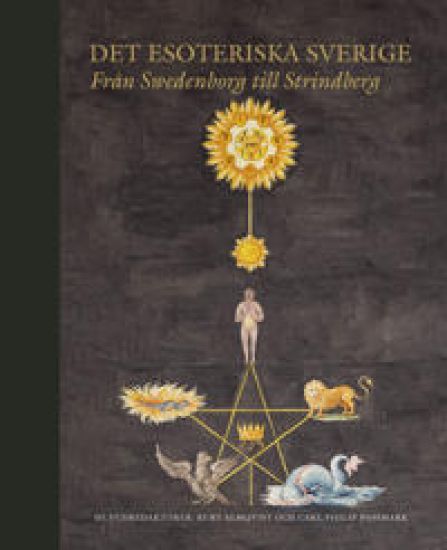
Det esoteriska Sverige : från Swedenborg till Strindberg

Det esoteriska Sverige : från Swedenborg till Strindberg

Eva Haettner Aurelius; Henrik Bogdan; David Dunér; Per Faxneld; Niclas Franzén; Anders Hallengren; Olav Hammer; Karin Ström Lehander; Martin Liljekvist; Elisabeth Mansén; Svante Nordin; Simon Sorgenfrei; Per Stille; Karen Swartz

Bokförlaget Stolpe
2023
sidottu
Hilma af Klint och August Strindberg var båda esoteriker, men vad är esoterism? Under senare delen av 1800-talet kom så kallade esoteriska strömningar att etablera sig i kulturella och intellektuella kretsar i Europa, inte minst i Sverige. Hemliga läror, riter och praktiker som alkemi, astrologi, ockultism och teosofi där tron på ett korresponderande kosmos, en levande natur och transmutationsupplevelser dominerar. Men esoterismen sträcker sig betydligt längre tillbaka i den svenska historien. Trots att de esoteriska idéströmningarna länge utpekades av kyrkan som kätteri och därför verkade i det dolda, har de haft betydande inflytande på den svenska kulturen. I denna antologi samlar vi några av Sveriges främsta experter inom ämnet för att utforska esoterismens historia i Sverige och hur dess riter, praktiker och traditioner kom att influera författare och konstnärer som August Strindberg, Selma Lagerlöf, Viktor Rydberg, Hilma af Klint, Tyra Kleen och Carl Milles.
Religious Innovation in the Hellenistic and Roman Periods

Religious Innovation in the Hellenistic and Roman Periods

Olav Hammer; Mikael Rothstein

Cambridge University Press
2023
pokkari
The scholarly study of new religious movements focuses on the contemporary period, but religious innovation is nothing new. This Element explores a historical epoch characterized by a multitude of emergent religious concepts and practices – the Hellenistic and Roman periods. A precondition for the intense degree of religious innovation during this time was a high level of cultural exchange. Religious elements crossed porous cultural borders and were adapted to suit new purposes. The resulting amalgams were presented in a vast corpus of texts, largely produced by a literate elite. Charismatic leaders played a particularly important role in creating new religious options and were described in genres that were infused with ideological agendas. Novel religious developments were accepted by the Roman authorities unless suspected of undermining the social order. The rise of one of the many new religions of the period, Christianity, ultimately changed the religious landscape in profound ways.
The Handbook of Religions in Ancient Europe

The Handbook of Religions in Ancient Europe

Lisbeth Bredholt Christensen; Olav Hammer; David Warburton

Routledge
2020
nidottu

Halvin toimitettuna 63,90 €

"The Handbook of Religions in Ancient Europe" surveys the major religious currents of Europe before Christianity - the first continental religion with hegemonic ambition - wiped out most local religions. The evidence - whether archaeological or written - is notoriously difficult to interpret, and the variety of religions documented by the sources and the range of languages used are bewildering. The "Handbook" brings together leading authorities on pre-Christian religious history to provide a state-of-the-art survey. The first section of the book covers the Prehistoric period, from the Paleolithic to the Bronze Age. The second section covers the period since writing systems began. Ranging across the Mediterranean and Northern, Celtic and Slavic Europe, the essays assess the archaeological and textual evidence. Dispersed archaeological remains and biased outside sources constitute our main sources of information, so the complex task of interpreting these traces is explained for each case. The "Handbook" also aims to highlight the plurality of religion in ancient Europe: the many ways in which it is expressed, notably in discourse, action, organization, and material culture; how it is produced and maintained by different people with different interests; how communities always connect with or disassociate from adjunct communities and how their beliefs and rituals are shaped by these relationships. The "Handbook" will be invaluable to anyone interested in ancient History and also to scholars and students of Religion, Anthropology, Archaeology, and Classical Studies.
The Handbook of Religions in Ancient Europe

The Handbook of Religions in Ancient Europe

Lisbeth Bredholt Christensen; Olav Hammer; David Warburton

Acumen Publishing Ltd
2013
sidottu
"The Handbook of Religions in Ancient Europe" surveys the major religious currents of Europe before Christianity - the first continental religion with hegemonic ambition - wiped out most local religions. The evidence - whether archaeological or written - is notoriously difficult to interpret, and the variety of religions documented by the sources and the range of languages used are bewildering. The "Handbook" brings together leading authorities on pre-Christian religious history to provide a state-of-the-art survey. The first section of the book covers the Prehistoric period, from the Paleolithic to the Bronze Age. The second section covers the period since writing systems began. Ranging across the Mediterranean and Northern, Celtic and Slavic Europe, the essays assess the archaeological and textual evidence. Dispersed archaeological remains and biased outside sources constitute our main sources of information, so the complex task of interpreting these traces is explained for each case. The "Handbook" also aims to highlight the plurality of religion in ancient Europe: the many ways in which it is expressed, notably in discourse, action, organization, and material culture; how it is produced and maintained by different people with different interests; how communities always connect with or disassociate from adjunct communities and how their beliefs and rituals are shaped by these relationships. The "Handbook" will be invaluable to anyone interested in ancient History and also to scholars and students of Religion, Anthropology, Archaeology, and Classical Studies.
Mystik och andlighet : kritiska perspektiv

Mystik och andlighet : kritiska perspektiv

Mattias Dahlén; Antoon Geels; Olav Hammer; Anne-Christine Hornborg; Dan Larhammar; Jessica Moberg; Willy Pfändtner; Simon Sorgenfri; David Thurfjell; Åsa Trulsson

Dialogos Förlag
2013
nidottu
Att definiera sig som andlig men inte religiös har blivit allt vanligare under efterkrigstiden och är en inställning vi ofta förknippar med new age eller nyandlighet. Medan religion för tankarna till förstelnade institutioner, rigida normer och yttre auktoritet, ses andlighet istället som ett individuellt och kreativt förhållande till högre makter och olika religiösa traditioner. Med detta är inte nödvändigtvis någonting nytt, utan snarare ett förhållande till religion som vuxit fram under lång tid. I boken spåras dessa tendenser tillbaka genom historien. Bokens olika författare erbjuder religions- och naturvetenskapliga perspektiv på mystiska, esoteriska och andliga traditioner, med fokus på det samtida Europa och Nordamerika. Såväl forskningen som samtida företeelser skärskådas. Bokens tio författare är framstående forskare i religionshistoria och andra ämnen, verksamma vid universitet och högskolor i Sverige och utomlands.
På spaning efter helheten : new Age - en ny folktro
En våg av nyandlighet, new age, sveper sedan ett par årtionden fram över Sverige och den övriga västvärlden. Stora grupper av människor är intresserade av reinkarnation, healing, astrologi, UFO:n, meditation och mystik. På spaning efter helheten gavs ut första gången 1997 och var då något helt nytt: den första balanserade, populärvetenskapliga översikten över new age på svenska. Denna andra upplaga, som först utkom 2004, är grundligt reviderad för att ta hänsyn till den slående förändring som nyandligheten på senare år har genomgått. Från att ha varit ett intresse för en generation av sökare har new age allt mer införlivats som en självklar del av samtidskulturen. Dessutom tar boken hänsyn till den strida ström av kunskaper vi med tiden har fått om nyandligheten och dess plats i vårt samhälle. Den nya upplagan av På spaning efter helheten svarar liksom sin föregångare på de mest grundläggande frågorna: Vad ingår i de nyandliga strömningarna? Varifrån kommer idéerna? Var har den nyandliga världsbilden sin plats i det moderna samhället? Den är skriven för en bred allmänhet som är nyfiken på astrologins, parapsykologins eller alternativmedicinens stora uppsving. Olav Hammer är professor i religionshistoria vid Syddansk Universitet i Odense, Danmark.
Religion: I Psyke Og Samfund

Religion: I Psyke Og Samfund

Olav Hammer; Jesper Sorensen

AARHUS UNIVERSITY PRESS
2010
nidottu
Umiddelbart er religion en gade. Hvordan lykkes det at overbevise folk om radikalt usandsynlige pastande som, at en mand fra PalAestina var guddommelig, at mennesker af lav kaste skabtes af det mytiske urmenneske Purushas fodder, og at visse sygdomme skyldes, at en usynlig blAeksprutte er trAengt ind i kroppen? Det er jo, hvad kristne, hinduer og nogle folk pa Salomonoerne i det sydlige Stillehav faktisk tror. I Religion - i psyke og samfund kigger to religionsforskere indad i den menneskelige hjerne, tilbage i menneskets udviklingshistorie og ud pa verdens mangfoldige religiose praksisser for at forsta og beskrive det mangesidige og mAerkvAerdige fAenomen religion. Der stilles skarpt pa fAellestrAek og forskelle, og pa baggrund af menneskets evolution indkredses den drivkraft, der far menensker over hele verden til ogsa i dag at bruge enorme ressourcer pa at udfore tilsyneladende meningslose ritualer - og far dem til at acceptere afsavn som faste og nul sex, besvAerligheder som lange vandreture og udenadslAere og lidelser som omskAering og selvpiskning. Bogen leverer dermed pa en gang det store overblik over et af menneskelivets mest komplekse og forbloffende fAenomener og en frisk analyse fra kognitionsforskningens frontlinje.
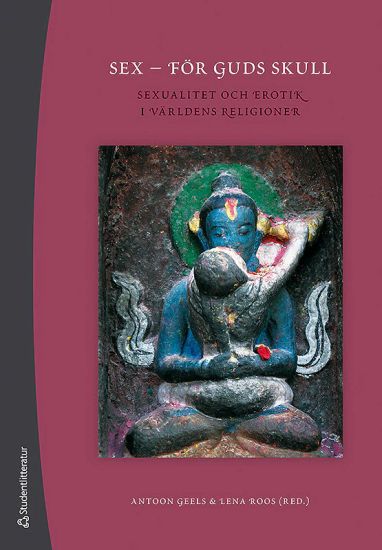
Sex - för guds skull

Sex - för guds skull

Sólveig Anna Bóasdóttir; Martin Gansten; Olav Hammer; Katarina Plank; Jonas Svensson

Studentlitteratur
2010
nidottu
Sexualitet, erotik och religion är ämnen som angår oss alla. Ibland ställs de i motsats till varandra: sex och erotik är världsligt medan religion tillhör en andlig sfär. Men så är det naturligtvis långt ifrån alltid – tänk bara på den passionerade erotiska poesi som finns i världens religioner, från sumeriska dikter till Höga visan i Bibeln och persisk kärlekslyrik. I Sex – för Guds skull diskuteras bland annat olika religioners syn på kroppen och föreställningar om sex före äktenskapet, homosexualitet och celibat. På vilka sätt har världsreligionerna satt upp gränser för att kontrollera sexualiteten? Författarna tar också upp frågan om sakral sexualitet som en spegling av den gudomliga världen och ger exempel på attityder till sexualitet inom nya religiösa rörelser. Sex – för Guds skull vänder sig till studerande i religionsvetenskap, sexologi, antropologi och etnologi. Boken är också av intresse för den som i sitt yrke behöver kunskap om olika religioners inställning till sex och erotik, till exempel journalister, socionomer och vårdpersonal.
Polemical Encounters

Polemical Encounters

Olav Hammer; Kocku Stuckrad

Brill
2007
sidottu
In its historical development from late antiquity to the present, western esotericism has repeatedly been the issue of polemical discourse. This volume engages the polemical structures that underlie both the identities within and the controversy about esoteric currents in European history. From Jewish and Christian kabbalah through heretical discourse and interconfessional polemics in early modernity to the legitimization of esoteric identity in modern culture, the 12 chapters, accompanied by an editors’ introduction, provide a cornucopia of relevant cases that are interpreted in a framework of polemical discourse and ‘Othering’. This volume sheds new light on the ultimately polemical structure of western esotericism and thus opens new vistas for further research into esoteric discourse.
Med gudomlig auktoritet : om religionens kraft i politiken

Med gudomlig auktoritet : om religionens kraft i politiken

Catharina Raudvere; Olav Hammer; Jan Hjärpe; Leif Stenberg; Stefan Arvidsson

Makadam förlag
2004
nidottu
Istanbul, Jerusalem, New York, Madrid. Vår omvärld bubblar och sjuder av konflikter och kolliderande intressen med kopplingar till religiösa frågor som inte alltid är begripliga för sekulariserade nordbor. I denna antologi gör religionsvetare, -historiker och -sociologer gemensam sak med statsvetare och idéhistoriker för att ge oss ett nödvändigt religiöst och historiskt perspektiv på dagens politiska verklighet. Det är verkligen inte ett nytt problem: alltsedan antiken har religion använts för att legitimera makt, markera identitet och egga till motstånd. Boken gör ett tvärsnitt genom tid och geografi, för att belysa hur religionens kraft i politiska frågor ser ut på olika håll i världen: från kristdemokratins Tyskland till återupplivade indianska religioner i nordamerikanska reservat, från Napoleons strävanden att "civilisera" Egypten till sekulariseringsprocessen i dagens Turkiet.
Claiming Knowledge

Claiming Knowledge

Olav Hammer

Brill
2003
nidottu
This volume deals with the transformation of religious creativity in the late modern West. Its point of departure is a set of esoteric beliefs, from Theosophy to the New Age. It shows how these traditions have adapted to the cultural givens of each successive epoch. The claims of each movement have been buttressed by drawing on various structural characteristics of late modernity. The advance of science has resulted in attempts to claim scientific status for religious beliefs. Globalization has given rise to massive loans from other cultures, but also to various strategies to radically reinterpret foreign elements. Individualism has led to an increasing reliance on experience as a source of legitimacy. The analytical tools applied to understanding religious modernization shed light on changes that are fundamentally reshaping many religious traditions. This publication has also been published in hardback, please click here for details.