Kirjojen hintavertailu – 12 903 725 kirjaa ja 27 kauppaa

Kirjailija

Oleg Grabar

Kirjat ja teokset yhdessä paikassa: 15 kirjaa, julkaisuja vuosilta 1988–2023, suosituimpiin kuuluu Muqarnas, Volume 6. Vertaile teosten hintoja ja tarkista saatavuus suomalaisista kirjakaupoista.

15 kirjaa

Kirjojen julkaisuvuodet: 1988–2023.

The Mediation of Ornament

The Mediation of Ornament

Oleg Grabar

PRINCETON UNIVERSITY PRESS
2023
pokkari
How ornamentation enables a direct and immediate encounter between viewers and art objectsBased on universal motifs, ornamentation occurs in many artistic traditions, though it reaches its most expressive, tangible, and unique form in the art of the Islamic world. The Mediation of Ornament shares a veteran art historian’s love for the sheer sensuality of Islamic ornamentation, but also uses this art to show how ornament serves as a consistent intermediary between viewers and artistic works from all cultures and periods. Oleg Grabar analyzes early and medieval Islamic objects, ranging from frontispieces in Yemen to tilework in the Alhambra, and compares them to Western examples, treating all pieces as testimony of the work, life, thought, and emotion experienced in one society. The Mediation of Ornament is essential reading for admirers of Islamic art and anyone interested in the ways of perceiving and understanding the arts more broadly.
Early Islamic Art, 650–1100

Early Islamic Art, 650–1100

Oleg Grabar

Routledge
2018
nidottu
Early Islamic Art, 650-1100 is the first in a set of four volumes of studies by Oleg Grabar. Between them they bring together more than eighty articles, studies and essays, work spanning half a century. Each volume takes a particular section of the topic, the three subsequent volumes being entitled: Islamic Visual Culture, 1100-1800; Islamic Art and Beyond; and Jerusalem. Reflecting the many incidents of a long academic life, they illustrate one scholar's attempt at making order and sense of 1400 years of artistic growth. They deal with architecture, painting, objects, iconography, theories of art, aesthetics and ornament, and they seek to integrate our knowledge of Islamic art with Islamic culture and history as well as with the global concerns of the History of Art. In addition to the articles selected, each volume contains an introduction which describes, often in highly personal ways, the context in which Grabar's scholarship developed and the people who directed and mentored his efforts. The present volume concentrates primarily on documents provided by archaeology understood in its widest sense, and including the study of texts with reference to monuments or to the contexts of these monuments. The articles included represent major contributions to the understanding of the formative centuries of Islamic art, focusing on the Umayyad (661-750) and Fatimid (969-1171) dynasties in Greater Syria and in Egypt, and on the Mediterranean or Iranian antecedents of early Islamic art. Historical, cultural, and religious themes, including the role of court ceremonies, the growth of cities, and the importance of the Qur'an, are introduced to help explain how a new art was formed in the central lands of the Near East and how its language can be retrieved from visual or written sources.
The Coinage of the Tulunids: Numismatic Notes and Monographs, No. 139
The Coinage of the Tulunids: Numismatic Notes and Monographs, No. 139 is a book written by Oleg Grabar that explores the history and coinage of the Tulunids, a dynasty that ruled Egypt and Syria during the 9th and 10th centuries. The book provides a detailed analysis of the coins minted by the Tulunids, including their designs, inscriptions, and metallurgical properties. It also examines the political and economic context in which the coins were produced, shedding light on the Tulunids' relations with neighboring states and their role in the wider Islamic world. The book is an invaluable resource for historians, numismatists, and anyone interested in the history of the Middle East. This scarce antiquarian book is a facsimile reprint of the old original and may contain some imperfections such as library marks and notations. Because we believe this work is culturally important, we have made it available as part of our commitment for protecting, preserving, and promoting the world's literature in affordable, high quality, modern editions, that are true to their original work.
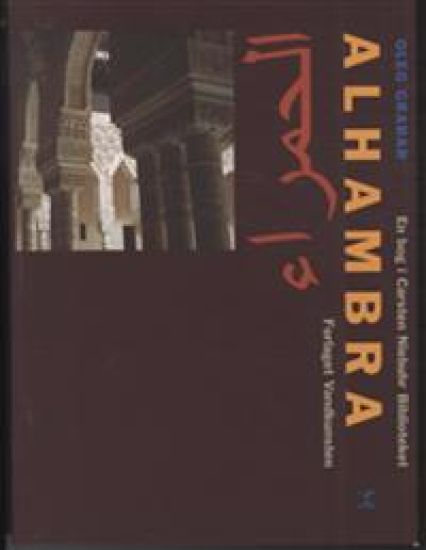
Alhambra

Alhambra

Oleg Grabar

-
2011
nidottu
Oleg Grabars nyklassiske værk om Alhambra fokuserer på den vigtige rolle som arkitekturen har i den islamiske civilisation. Ikke mindst manifesterer den islamiske livsform sig i boligen, fra den simple lerhytte i ørkenbyen til fyrstens strålende residens. Og dette på samme vis i alle samfundslag: Gårdanlæg, afskærmet mod omverdenen og al udsmykning vendt indefter, hvor vandet indgår som en vigtig komponent. Selv om forfatteren lægger hovedvægten på Alhambra, bringer han samtidigt læseren vidt omkring i den islamiske verden, og han påviser, i hvor høj grad denne kulturs fælles grundlag afspejler sig i bygningskunsten fra Atlanterhavet til Indien. At dette bedst af alle steder kan studeres i Andalusien, i det kristne Europa, skyldes navnlig bygningernes autencitet og gode bevaringstilstand. Bogens mange fotografier er optaget af arkitekt, professor Hans Munk Hansen, som har rejst og fotograferet i den muslimske verden i et halvt århundrede.
Ars Orientalis V3: The Arts of Islam and the East

Ars Orientalis V3: The Arts of Islam and the East

Oleg Grabar; Max Loehr

Literary Licensing, LLC
2011
sidottu
Ars Orientalis V3: The Arts Of Islam And The East is a comprehensive volume that explores the art and culture of the Islamic world and the East. Written by the renowned art historian Oleg Grabar, the book covers a wide range of topics, including Islamic architecture, calligraphy, painting, ceramics, textiles, and metalwork. The author delves into the historical and cultural context of these art forms, examining the influences that shaped their development and the meanings they convey. The book is richly illustrated with color photographs and reproductions of artwork, providing readers with a visual feast of the stunning creations of the Islamic world. Whether you are a student of art history, a lover of Islamic culture, or simply interested in exploring the beauty of the East, Ars Orientalis V3 is an essential read. Contributing Authors Include Richard Ettinghausen, Aschwin Lippe, Kurt Erdmann, And Many Others. This scarce antiquarian book is a facsimile reprint of the old original and may contain some imperfections such as library marks and notations. Because we believe this work is culturally important, we have made it available as part of our commitment for protecting, preserving, and promoting the world's literature in affordable, high quality, modern editions, that are true to their original work.
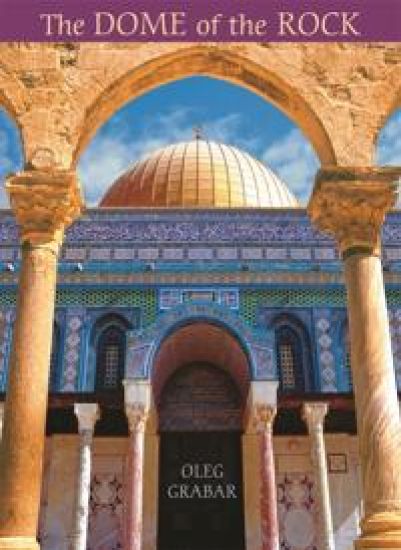
The Dome of the Rock

The Dome of the Rock

Oleg Grabar

The Belknap Press
2006
sidottu
The story of the Dome of the Rock is told in this presentation that combines what is known of the beautiful Muslim shrine in Jerusalem's Old City from the perspectives and recollections of past observers with the broader historical, cultural, and aesthetic implications of the monument.
Islamic Art and Beyond

Islamic Art and Beyond

Oleg Grabar

Variorum
2006
sidottu
Islamic Art and Beyond is the third in a set of four volumes of studies on Islamic art by Oleg Grabar. Between them they bring together more than eighty articles, studies and essays, work spanning half a century by a master of the field. Each volume takes a particular section of the topic, the three other volumes being entitled: Early Islamic Art, 650-1100; Islamic Visual Culture, 1100-1800; and Jerusalem. Reflecting the many incidents of a long academic life, they illustrate one scholar's attempt at making order and sense of 1400 years of artistic growth. They deal with architecture, painting, objects, iconography, theories of art, aesthetics and ornament, and they seek to integrate our knowledge of Islamic art with Islamic culture and history as well as with the global concerns of the History of Art. In addition to the articles selected, each volume contains an introduction which describes, often in highly personal ways, the context in which Grabar's scholarship developed and the people who directed and mentored his efforts. The articles in the present volume illustrate how the author's study of Islamic art led him in two directions for a further understanding of the arts. One is how to define Islamic art and what impulses provided it with its own peculiar forms and dynamics of growth. Was it a faith or a combination of social, historical, and cultural events? And how has 'Islamic art' impacted on the contemporary arts of the Islamic world? The other issue is that of the meanings to be given to forms like domes, so characteristic of Islamic art, or to terms like symbol, signs, or aesthetic values in the arts, especially when one considers the contemporary world. The Islamic examples allow for the development of new intellectual positions for the history and criticism of the arts everywhere.
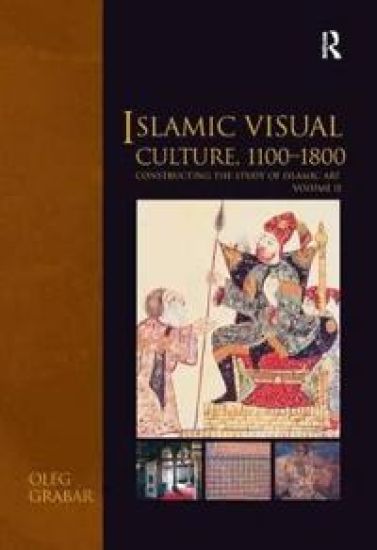
Islamic Visual Culture, 1100–1800
Islamic Visual Culture, 1100-1800 is the second in a set of four volumes of studies on Islamic art by Oleg Grabar. Between them they bring together more than eighty articles, studies and essays, work spanning half a century by a master of the field. Each volume takes a particular section of the topic, the three other volumes being entitled: Early Islamic Art 650-1100; Islamic Art and Beyond; and Jerusalem. Reflecting the many incidents of a long academic life, they illustrate one scholar's attempt at making order and sense of 1400 years of artistic growth. They deal with architecture, painting, objects, iconography, theories of art, aesthetics and ornament, and they seek to integrate our knowledge of Islamic art with Islamic culture and history as well as with the global concerns of the History of Art. In addition to the articles selected, each volume contains an introduction which describes, often in highly personal ways, the context in which Grabar's scholarship developed and the people who directed and mentored his efforts. The focus of the present volume is on the key centuries - the eleventh through fourteenth - during which the main directions of traditional Islamic art were created and developed and for which classical approaches of the History of Art were adopted. Manuscript illustrations and the arts of objects dominate the selection of articles, but there are also forays into later times like Mughal India and into definitions of area and period styles, as with the Mamluks in Egypt and the Ottomans, or into parallels between Islamic and Christian medieval arts.
Jerusalem

Jerusalem

Oleg Grabar

Ashgate Publishing Limited
2005
sidottu
Jerusalem is the final volume in a set of four selections of studies on Islamic art by Oleg Grabar. Between them they bring together more than eighty articles, studies and essays, work spanning half a century by a master of the field. Each volume takes a particular section of the topic, the three others being entitled: Early Islamic Art 650-1100, Islamic Visual Culture, 1100-1800, and Islamic Art and Beyond. Reflecting the many incidents of a long academic life, they illustrate one scholar's attempt at making order and sense of 1400 years of artistic growth. They deal with architecture, painting, objects, iconography, theories of art, aesthetics and ornament, and they seek to integrate our knowledge of Islamic art with Islamic culture and history as well as with the global concerns of the History of Art. In addition to the articles selected, each volume contains an introduction which describes, often in highly personal ways, the context in which Grabar's scholarship developed and the people who directed and mentored his efforts. The focus of this volume is what is now known as the Old City of Jerusalem. This plays a unique role in Islamic culture, as a city whose physical shape was created by a succession of Muslim rulers on a base created by the Roman empire. And then Jerusalem shelters the Dome of the Rock, the first major building sponsored by a Muslim patron and one of the masterpieces of medieval architecture. Yet it is a building whose original purpose is still obscure. The articles selected for this volume represent nearly half a century of concern, by one of the world's foremost authorities on the subject, for this extraordinary city, for its buildings, and for the nexus of meanings associated with them.
Early Islamic Art, 650–1100

Early Islamic Art, 650–1100

Oleg Grabar

Ashgate Publishing Limited
2005
sidottu
Early Islamic Art, 650-1100 is the first in a set of four volumes of studies by Oleg Grabar. Between them they bring together more than eighty articles, studies and essays, work spanning half a century. Each volume takes a particular section of the topic, the three subsequent volumes being entitled: Islamic Visual Culture, 1100-1800; Islamic Art and Beyond; and Jerusalem. Reflecting the many incidents of a long academic life, they illustrate one scholar's attempt at making order and sense of 1400 years of artistic growth. They deal with architecture, painting, objects, iconography, theories of art, aesthetics and ornament, and they seek to integrate our knowledge of Islamic art with Islamic culture and history as well as with the global concerns of the History of Art. In addition to the articles selected, each volume contains an introduction which describes, often in highly personal ways, the context in which Grabar's scholarship developed and the people who directed and mentored his efforts. The present volume concentrates primarily on documents provided by archaeology understood in its widest sense, and including the study of texts with reference to monuments or to the contexts of these monuments. The articles included represent major contributions to the understanding of the formative centuries of Islamic art, focusing on the Umayyad (661-750) and Fatimid (969-1171) dynasties in Greater Syria and in Egypt, and on the Mediterranean or Iranian antecedents of early Islamic art. Historical, cultural, and religious themes, including the role of court ceremonies, the growth of cities, and the importance of the Qur'an, are introduced to help explain how a new art was formed in the central lands of the Near East and how its language can be retrieved from visual or written sources.
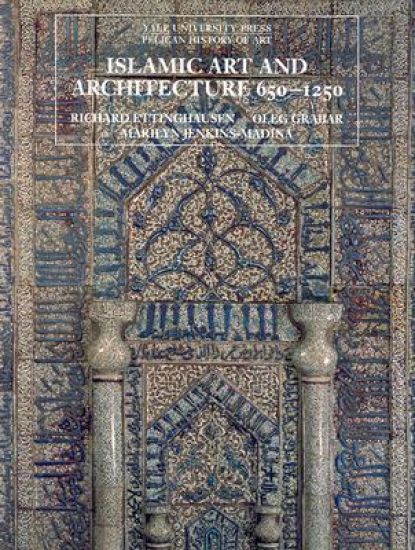
Islamic Art and Architecture, 650–1250

Islamic Art and Architecture, 650–1250

Richard Ettinghausen; Oleg Grabar; Marilyn Jenkins-Madina

Yale University Press
2003
pokkari
This richly illustrated book provides an unsurpassed overview of Islamic art and architecture from the seventh to the thirteenth centuries, a time of the formation of a new artistic culture and its first, medieval, flowering in the vast area from the Atlantic to India. Inspired by Ettinghausen and Grabar’s original text, this book has been completely rewritten and updated to take into account recent information and methodological advances. The volume focuses special attention on the development of numerous regional centers of art in Spain, North Africa, Egypt, Syria, Anatolia, Iraq, and Yemen, as well as the western and northeastern provinces of Iran. It traces the cultural and artistic evolution of such centers in the seminal early Islamic period and examines the wealth of different ways of creating a beautiful environment. The book approaches the arts with new classifications of architecture and architectural decoration, the art of the object, and the art of the book. With many new illustrations, often in color, this volume broadens the picture of Islamic artistic production and discusses objects in a wide range of media, including textiles, ceramics, metal, and wood. The book incorporates extensive accounts of the cultural contexts of the arts and defines the originality of each period. A final chapter explores the impact of Islamic art on the creativity of non-Muslims within the Islamic realm and in areas surrounding the Muslim world.
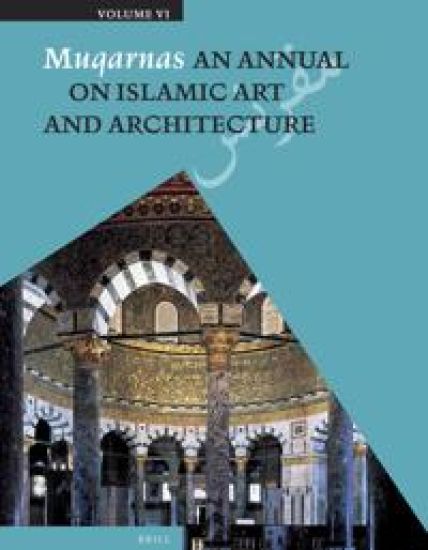
Muqarnas, Volume 6

Muqarnas, Volume 6

Oleg Grabar

BRILL
1990
nidottu
Muqarnas: An Annual on the Visual Cultures of the Islamic World is sponsored by The Aga Khan Program for Islamic Architecture at Harvard University and the Massachusetts Institute of Technology, Cambridge, Massachusetts. In Muqarnas articles are published on all aspects of Islamic visual culture, historical and contemporary, as well as articles dealing with unpublished textual primary sources.
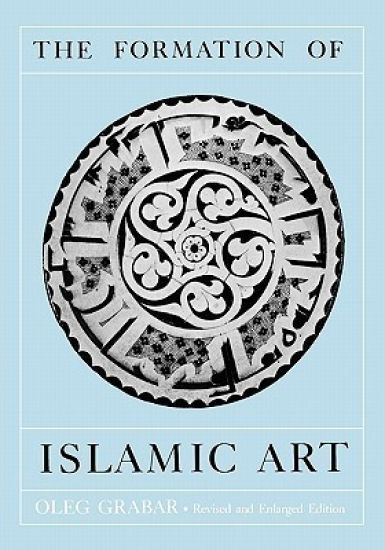
The Formation of Islamic Art

The Formation of Islamic Art

Oleg Grabar

Yale University Press
1988
pokkari
This classic work on the nature of early Islamic art has now been brought up to date in order to take into consideration material that has recently come to light. In a new chapter, Oleg Grabar develops alternate models for the formation of Islamic art, tightens its chronology, and discusses its implications for the contemporary art of the Muslim world. Reviews of the first edition: “Grabar examines the possible ramifications of sociological, economic, historical, psychological, ecological, and archaeological influences upon the art of Islam. . . [He] explains that Islamic art is woven from the threads of an Eastern, Oriental tradition and the hardy, surviving strands of Classical style, and [he] illustrates this web by means of a variety of convincing and well-chosen examples.”—Art Bulletin “A book of absorbing interest and immense erudition. . . All Islamic archaeologists and scholars will thank Professor Grabar for a profound and original study of an immense and complex field, which may provoke controversy but must impress by its mastery and charm by its modesty.”—Times Literary Supplement “Oleg Grabar, in this book of exceptional subtlety and taste, surveys and extends his own important contributions to the study of early Islamic art history and works out an original and imaginative approach to the elusive and complex problems of understanding Islamic art.”—American Historical Review