Kirjojen hintavertailu – 12 903 725 kirjaa ja 27 kauppaa

Kirjailija

Oliver Caviglioli

Kirjat ja teokset yhdessä paikassa: 7 kirjaa, julkaisuja vuosilta 2003–2022, suosituimpiin kuuluu Hur du får dina elever att lära sig : en visuell guide. Vertaile teosten hintoja ja tarkista saatavuus suomalaisista kirjakaupoista.

7 kirjaa

Kirjojen julkaisuvuodet: 2003–2022.

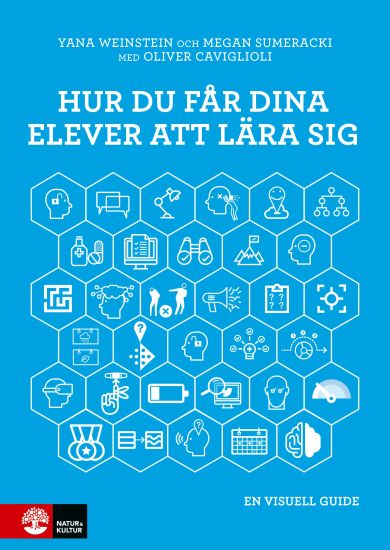
Hur du får dina elever att lära sig : en visuell guide

Hur du får dina elever att lära sig : en visuell guide

Yana Weinstein; Megan Sumeracki; Oliver Caviglioli

Natur Kultur Läromedel och Akademi
2019
nidottu
Med Oliver Cavigliolis fantastiska illustrationer som visuell guide beskriver Hur du får dina elever att lära sig hur lärare kan använda kognitiv psykologi i klassrummet. Boken gör upp med seglivade missuppfattningar om inlärning och visar varför det är problematiskt att lita på sin intuition i undervisning. Den visar hur vårt minne, vår uppmärksamhet och vår perception fungerar generellt och i klassrumsmiljö. Författarna tar upp sex forskningsbaserade strategier för effektiv inlärning, bland annat interfoliering och elaborering. Boken innehåller många exempel och forskningsstudier som förklarar och inspirerar och en mängd konkreta verktyg. Boken riktar sig både till verksamma lärare och till lärarstudenter på alla nivåer. Den kan också med fördel läsas av universitets- och högskolelärare och studenter. Yana Weinsteinär verksam vid University of Massachusetts, USA. Megan Sumerackiär verksam vid Rhode Island College, USA. Oliver Caviglioli har skolbakgrund, men är nu utbildningsdesigner. Jonas Olofsson, docent och universitetslektor i psykologi vid Stockholms universitet, har fackgranskat och skrivit förord till den svenska utgåvan. Sagt om boken:"Intressanta är de forskningsbaserade strategier som presenteras i avsnitt som berör planering av studier, förståelseutveckling och kunskapsförstärkning. Fördelad inlärning och interfoliering är strategier som ger insikt i hur elever medvetet kan forma sina studier på ett effektivt sätt. Bokens styrka är att den kan bidra till att skapa evidensbaserad undervisning." Katharina Jacobsson, BTJ-häftet nr 1, 2020.
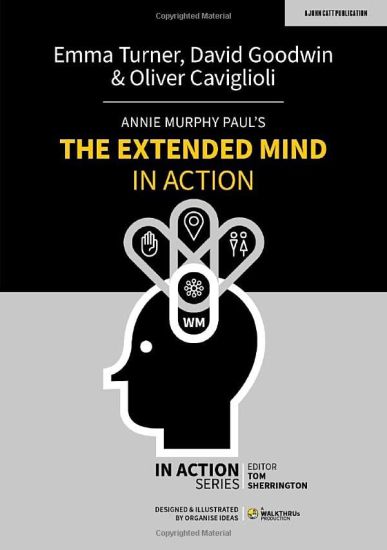
Annie Murphy Paul's The Extended Mind in Action

Annie Murphy Paul's The Extended Mind in Action

David Goodwin; Emma Turner; Oliver Caviglioli

Hachette Learning
2022
nidottu
The Extended Mind by award-winning science writer, Annie Murphy Paul, is not an out-and-out education book. But it is entirely focused on how learning and thinking happen, illustrating how a multi-modal approach to cognition can widen points of access to intellectual activity. Using evidence from cognitive science, neuroscience, and psychology, The Extended Mind might broaden your understanding of human cognition. The findings of Annie Murphy Paul parallel those of cognitive load theorists: memory is at the core of cognition, and the body, the environment and other people enrich learning. In this book, Emma Turner, David Goodwin, and Oliver Caviglioli demonstrate how teachers can help their students augment their thinking with their bodies (embodied cognition), external tools (situated cognition) and the people around them (distributed cognition). To ease your concerns, you will read how the works of several eminent researchers validate claims put forward. Teachers and leaders of all education phases will find this book enlightening; using practical strategies and cases studies, the authors highlight opportunities to enrich students’ learning by widening points of access to intellectual activity.
Organise Ideas: Thinking by Hand, Extending the Mind

Organise Ideas: Thinking by Hand, Extending the Mind

David Goodwin; Oliver Caviglioli

Hachette Learning
2021
nidottu

Halvin toimitettuna 30,40 €

The central purpose of this book is to help teachers organise ideas through the use of graphic organisers. Over 35 such word-diagrams are: organised into a system to help select the right tool for the job; described for rapid understanding of their strengths; and explained for step-by-step construction. Over 50 teachers each have a double-page spread in which they reveal how they use them in their teaching — across the full age range and span of subjects. A further section of the book demonstrates how to use these word-diagrams most effectively by partnering them with other teaching strategies, such as retrieval practice, writing, speaking and listening, teacher explanations, advance organisers, scaffolding, remote learning and more. The pages are illustrated to the same quality and quantity in Oliver’s previous book, Dual Coding with Teachers, its natural companion. A must-have textbook for every teacher that transcends contemporary ideological allegiances and fads.
Dual Coding for Teachers

Dual Coding for Teachers

Oliver Caviglioli

John Catt Educational Ltd
2019
nidottu

Halvin toimitettuna 31,60 €

As part of the discovery of cognitive science, teachers are waking up to the powers of dual coding - combining words with visuals in your teaching. But cognitive scientists aren't graphic designers, and so their books don't show teachers how to be competent in producing effective visuals. There is a huge gap between what we know about dual coding and the skills needed to practice it effectively in the classroom. Until now. Dual Coding With Teachers is a breakthrough educational book. No other book has been designed with both cognitive science and graphic principles in mind. Every page contains diagrams, infographics, illustrations and graphic organisers. The book is designed to cater for both the busy teacher in a rush, as well as the research-hungry colleague. Over 35 teachers, teacher developers, psychologists and information designers are profiled, each with a double-page spread, highlighting their dual coding practice. The author, Oliver Caviglioli, is uniquely placed to bridge the gap between education and graphic design. A former special school head teacher, Oliver learned design principles from an early age from his architect and typographer father. Four decades of reading educational research has found its visual expression in this spectacular, image-rich book.
Understanding How We Learn

Understanding How We Learn

Yana Weinstein; Megan Sumeracki; Oliver Caviglioli

Routledge
2018
sidottu
Educational practice does not, for the most part, rely on research findings. Instead, there’s a preference for relying on our intuitions about what’s best for learning. But relying on intuition may be a bad idea for teachers and learners alike. This accessible guide helps teachers to integrate effective, research-backed strategies for learning into their classroom practice. The book explores exactly what constitutes good evidence for effective learning and teaching strategies, how to make evidence-based judgments instead of relying on intuition, and how to apply findings from cognitive psychology directly to the classroom. Including real-life examples and case studies, FAQs, and a wealth of engaging illustrations to explain complex concepts and emphasize key points, the book is divided into four parts: Evidence-based education and the science of learningBasics of human cognitive processesStrategies for effective learningTips for students, teachers, and parents. Written by "The Learning Scientists" and fully illustrated by Oliver Caviglioli, Understanding How We Learn is a rejuvenating and fresh examination of cognitive psychology's application to education. This is an essential read for all teachers and educational practitioners, designed to convey the concepts of research to the reality of a teacher's classroom.
Understanding How We Learn

Understanding How We Learn

Yana Weinstein; Megan Sumeracki; Oliver Caviglioli

Routledge
2018
nidottu

Halvin toimitettuna 33,50 €

Educational practice does not, for the most part, rely on research findings. Instead, there’s a preference for relying on our intuitions about what’s best for learning. But relying on intuition may be a bad idea for teachers and learners alike. This accessible guide helps teachers to integrate effective, research-backed strategies for learning into their classroom practice. The book explores exactly what constitutes good evidence for effective learning and teaching strategies, how to make evidence-based judgments instead of relying on intuition, and how to apply findings from cognitive psychology directly to the classroom. Including real-life examples and case studies, FAQs, and a wealth of engaging illustrations to explain complex concepts and emphasize key points, the book is divided into four parts: Evidence-based education and the science of learningBasics of human cognitive processesStrategies for effective learningTips for students, teachers, and parents. Written by "The Learning Scientists" and fully illustrated by Oliver Caviglioli, Understanding How We Learn is a rejuvenating and fresh examination of cognitive psychology's application to education. This is an essential read for all teachers and educational practitioners, designed to convey the concepts of research to the reality of a teacher's classroom.
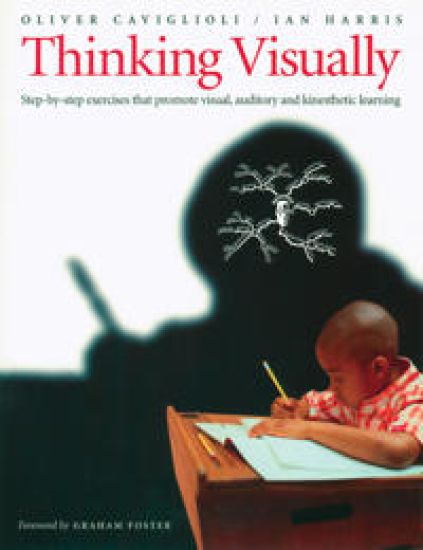
Thinking Visually: Step-By-Step Exercises That Promote Visual, Auditory, and Kinesthetic Learning
Maps have been used for centuries to help orient us in the physical world, yet they can also be useful tools for making sense of the more abstract world of thought. This remarkable book explores visual techniques for helping students understand how they think so they can become more effective learners. Thinking Visually combines the latest research with effective classroom practices that offer new possibilities for teachers and students.