
Kirjojen hintavertailu – 12 859 819 kirjaa ja 27 kauppaa

Kirjailija

Oliver Clarkson

Kirjat ja teokset yhdessä paikassa: 2 kirjaa, julkaisuja vuodelta 2026, suosituimpiin kuuluu Finding Elizabeth Hitchener (1783–1821). Vertaile teosten hintoja ja tarkista saatavuus suomalaisista kirjakaupoista.

2 kirjaa

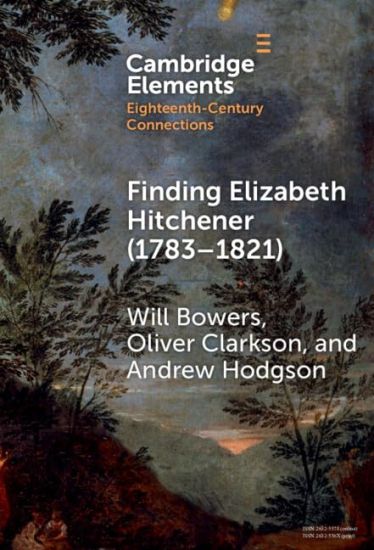
Finding Elizabeth Hitchener (1783–1821)

Finding Elizabeth Hitchener (1783–1821)

Will Bowers; Oliver Clarkson; Andrew Hodgson

Cambridge University Press
2026
sidottu
Elizabeth Hitchener (1783–1821) is best known to literary history for a brief but intense friendship with Percy Bysshe Shelley, during which he declared her 'the sister of my soul'. When, in 1812, the friendship fell apart, Shelley turned on her. She was, he said, 'an ugly, hermaphroditical beast of a woman'. He labelled her 'The Brown Demon'. This Element is the first biographical and critical study of a schoolmistress, letter-writer, and poet, whose achievements transcend Shelley's denigrating characterisation. Drawing on fresh archival research, it uncovers a wealth of new information about Hitchener's life and shows how she benefitted from and engaged with late-eighteenth century traditions of radical and proto-feminist thought. It offers both a revisionary account of Hitchener's correspondence with Shelley-based on newly edited manuscripts-and her achievements as a poet, attending in particular to the generic and argumentative complexity of her topographical poem The Weald of Sussex (1822).
Finding Elizabeth Hitchener (1783–1821)

Finding Elizabeth Hitchener (1783–1821)

Will Bowers; Oliver Clarkson; Andrew Hodgson

Cambridge University Press
2026
pokkari
Elizabeth Hitchener (1783–1821) is best known to literary history for a brief but intense friendship with Percy Bysshe Shelley, during which he declared her 'the sister of my soul'. When, in 1812, the friendship fell apart, Shelley turned on her. She was, he said, 'an ugly, hermaphroditical beast of a woman'. He labelled her 'The Brown Demon'. This Element is the first biographical and critical study of a schoolmistress, letter-writer, and poet, whose achievements transcend Shelley's denigrating characterisation. Drawing on fresh archival research, it uncovers a wealth of new information about Hitchener's life and shows how she benefitted from and engaged with late-eighteenth century traditions of radical and proto-feminist thought. It offers both a revisionary account of Hitchener's correspondence with Shelley-based on newly edited manuscripts-and her achievements as a poet, attending in particular to the generic and argumentative complexity of her topographical poem The Weald of Sussex (1822).