Kirjailija
Oliver D. Crisp
Kirjat ja teokset yhdessä paikassa: 33 kirjaa, julkaisuja vuosilta 2005–2023, suosituimpiin kuuluu Jonathan Edwards's Moral Thought and Its British Context. Vertaile teosten hintoja ja tarkista saatavuus suomalaisista kirjakaupoista.
Nimi esiintyy myös muodoissa: Oliver D Crisp
33 kirjaa
Kirjojen julkaisuvuodet: 2005–2023.
In Jonathan Edwards on God and Creation, Oliver Crisp considers two central themes in Edwards's thought, namely, his doctrine of God and his understanding of the created order, and how God and creation interrelate. Crisp argues that Edwards offers some truly original insights on these twin loci that have important implications for current theological discussion. What emerges is a picture of Edwards's understanding of God's relationship to the created order that differs in important respects from those offered by several influential recent interpreters. Crisp does not flinch from showing where Edwards made mistakes as well as where he offers fresh insights. Edwards is shown to be at once relevant to current discussion of issues like perfect being theology, panentheism, divine freedom or union with Christ, while remaining something of an idiosyncratic figure whose idealism and commitment to an uncompromising theological determinism can seem out of step with certain modern sensibilities. But, argues Crisp, even if we disagree with the conclusions Edwards reaches, which sometimes jar with our own intuitions about the divine nature or the created order, the clarity, rigor and sheer originality of his thinking offer an important set of themes and ideas with which contemporary theologians can fruitfully engage as they set about the task of constructive theology.
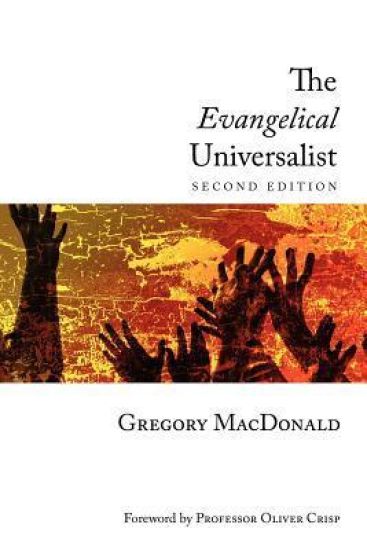
The Evangelical Universalist
Gregory MacDonald; Oliver D Crisp
Cascade Books
2012
pokkari
Halvin toimitettuna 31,30 €
Constructive contemporary theology requires serious engagement with the theologians of the past. This book offers a series of studies in the Christology of key representatives in the Reformed tradition engaging their thought for contemporary dogmatics. Thinkers from each of the five centuries in which Reformed theology has flourished are represented - John Calvin; John Owen; Jonathan Edwards; William Shedd; Donald Baillie; and Kathryn Tanner - each of whom in different ways challenge conventional accounts of Christology. The book is organized thematically, linking historic and contemporary discussions of Christology in theology and philosophy by engaging the thinking of these theologians in a collegial way, using their work as means of promoting constructive systematic theology today. Oliver Crisp presents an important contribution to broadening our understanding of Reformed theology by showing how important theologians have taken views often at odds with 'textbook' accounts of the tradition. Written in an accessible style, this book will appeal to a wide range of readers, including upper-level undergraduates, graduate students and scholars of Christian theology, philosophy and religious studies.
Oliver Crisp offers a set of essays that analyze the significance and contribution of several great thinkers in the Reformed tradition, ranging from John Calvin and Jonathan Edwards to Karl Barth. Crisp explains how these thinkers navigated pressing theological issues and how contemporary readers can draw relevant insights from the tradition.
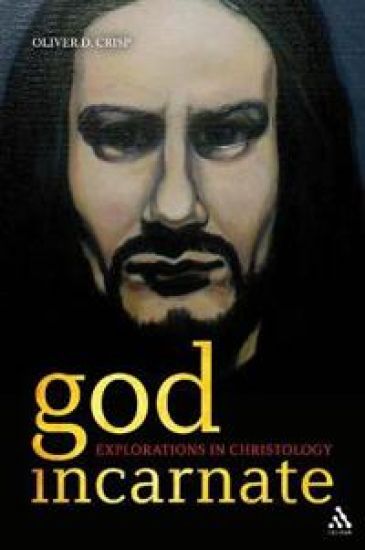
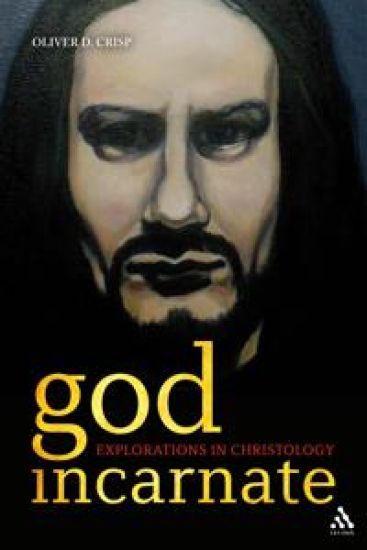
The doctrine of the incarnation is one of the central and defining dogmas of the Christian faith. In this text, Oliver Crisp builds upon his previous work, Divinity and Humanity: The Incarnation Reconsidered (Cambridge, 2007). In God Incarnate, he explores the Incarnation further and covers issues he did not deal with in his previous book. This work attempts to further the project of setting out a coherent account of the Incarnation by considering key facets of this doctrine, as parts of a larger, integrated, doctrinal whole. Throughout, he is concerned to develop a position in line with historic Christianity that is catholic and ecumenical in tone, in line with the contours of the Reformed theological tradition within which his own work falls. And, like its predecessor, this book will draw upon philosophical and theological resources to make sense of the problems the doctrine faces.
William G. T. Shedd has been hailed as one of America's most important dogmatic theologians. Yet, until now there has been no systematic study of his work. In this volume two central themes in his theology are explored with particular emphasis upon the philosophical issues Shedd's work raises and his significance as a dialogue partner for contemporary theologians.
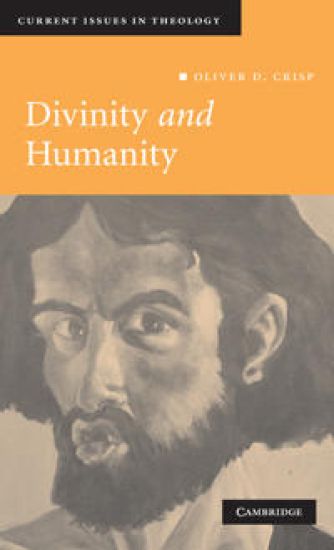
The doctrine of the Incarnation lies at the heart of Christianity. But the idea that 'God was in Christ' has become a much-debated topic in modern theology. Oliver Crisp addresses six key issues in the Incarnation defending a robust version of the doctrine, in keeping with classical Christology. He explores perichoresis, or interpenetration, with reference to both the Incarnation and Trinity. Over two chapters Crisp deals with the human nature of Christ and then provides an argument against the view, common amongst some contemporary theologians, that Christ had a fallen human nature. He considers the notion of divine kenosis or self-emptying, and discusses non-Incarnational Christology, focusing on the work of John Hick. This view denies Christ is God Incarnate, regarding him as primarily a moral exemplar to be imitated. Crisp rejects this alternative account of the nature of Christology.
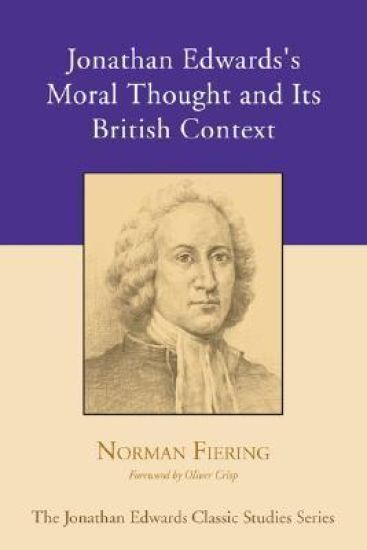
Jonathan Edwards's Moral Thought and Its British Context
Norman Fiering; Oliver D Crisp
Wipf Stock Publishers
2006
pokkari
The problems of moral philosophy were a central preoccupation of literate people in eighteenth-century America and Britain. It is not surprising, then, that Jonathan Edwards was drawn into a colloquy with some of the major ethicists of the age. Moral philosophy in this era was so all-encompassing in its claims that it encroached seriously on traditional religion. In response, Edwards presented a detailed analysis and criticism of secular moral philosophy in order to demonstrate its inadequacy, and he formulated a system that he believed was demonstrably superior to the existing secular systems. In this comprehensive study, Norman Fiering skillfully integrates Edwards's work on ethics into seventeenth- and eighteenth-century British and Continental philosophy and isolates Edwards's particular contributions to the ethical thought of his time. In addition, Fiering traces the chronological development of Edwards's thought, showing the relationship between his wide reading and his writing.
Jonathan Edwards (1703-1758) is widely regarded as America's greatest philosopher-theologian. In the last half century there has been a resurgence of interest in Edwards' work from historians, theologians and philosophers, aided by the publication of the Yale edition of Edwards' Works. Edwards' thinking on sin has long been a mystery to scholars trying to fit his thought into the traditional categories of Reformed theology. What this study shows is that Edwards' theory of sin was an original contribution to philosophical theology, which can only be understood when read on its own terms as a philosophical theory about the nature of sin, its origin and transmission. This constitutes a substantial contribution to the literature on Edwards and, more broadly, to philosophical theology in general.