Kirjojen hintavertailu – 12 903 735 kirjaa ja 27 kauppaa

Kirjailija

Oliver Green

Kirjat ja teokset yhdessä paikassa: 9 kirjaa, julkaisuja vuosilta 2012–2023, suosituimpiin kuuluu Shell Art & Advertising. Vertaile teosten hintoja ja tarkista saatavuus suomalaisista kirjakaupoista.

9 kirjaa

Kirjojen julkaisuvuodet: 2012–2023.

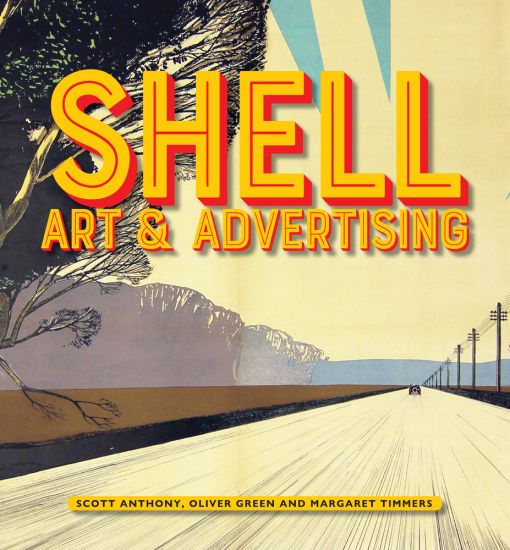
Shell Art & Advertising

Shell Art & Advertising

Scott Anthony; Oliver Green; Margaret Timmers

Lund Humphries Publishers Ltd
2021
sidottu
Exploring Shell's remarkable advertising archive, which includes an extensive poster collection, as well as film, cartoon graphics and guidebooks, this book is the first to present a comprehensive overview of the company's artistic heritage. The key contributions made by some major artists and designers including Paul Nash, Graham Sutherland, Ben Nicholson and Edward McKnight Kauffer are highlighted and beautifully reproduced from original archive material, and broader questions are explored, such as Shell's position within contemporary debates regarding the aesthetics of 'Commercial Art'. By delving into the ways in which Shell's publicity was conceived, commissioned and disseminated in the 20th century, the authors examine the historical and social contexts of Shell’s advertising and assess the work's broader cultural significance in shaping an era defined by travel, prosperity and mass democracy.
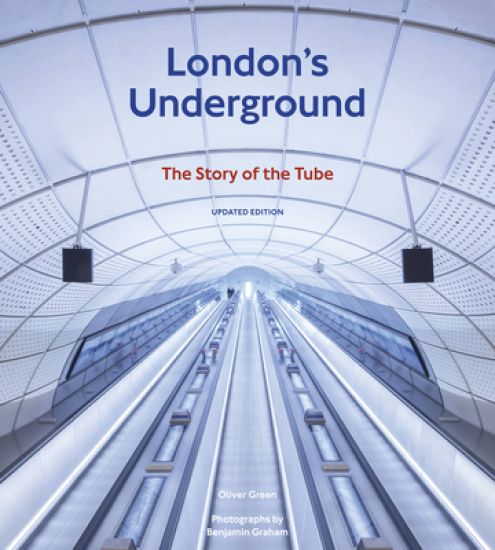
London's Underground

London's Underground

Oliver Green

Quarto Publishing Plc
2023
sidottu
It is impossible to imagine London without the Tube: the beating heart of the city, the Underground shuttles over a billion passengers each year below its busy streets and across its leafy suburbs. The distinctive roundel, colour-coded maps and Johnston typeface have become design classics, recognised and imitated worldwide. Opening in 1863, the first sections were operated by steam engines, yet throughout its long history the Tube has been at the forefront of contemporary design, pioneering building techniques, electrical trains and escalators, and business planning. Architects such as Leslie W. Green and Charles Holden developed a distinctively English version of Modernism, and the latest stations for the Jubilee line extension, Overground and Elizabeth line carry this aesthetic forward into the twenty-first century. In this major work published in association with Transport for London, Tube expert Oliver Green traces the history of the Underground, following its troubles and triumphs, its wartime and peacetime work, and the essential part it has played in shaping London’s economy, geography, tourism and identity. Specially commissioned photography by Benjamin Graham (UK Landscape Photographer of the Year 2017) brings the story to life in vivid portraits of London Underground’s stations, tunnels and trains.
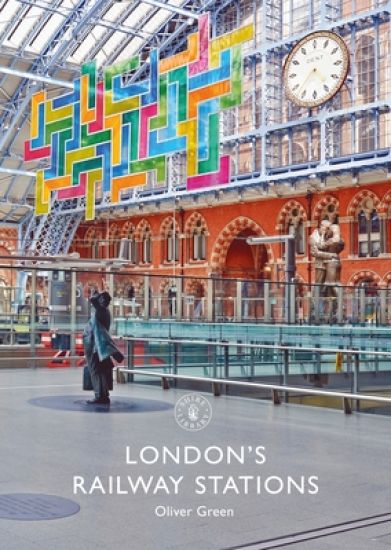
London's Railway Stations

London's Railway Stations

Oliver Green

BLOOMSBURY PUBLISHING PLC
2022
nidottu
An illustrated historical tour of London's 13 great railway termini, on a clockwise circuit from Paddington to Victoria. London’s railway termini are among the most recognisable and familiar landmarks in the city. Famed for their bustling platforms and architectural innovation, they comprise a fascinating mixture of Neo-Gothic exuberance and purposeful modernity. Though each owes its existence to a long-extinct Victorian railway company, these stations continue to be central to London life, with millions of visitors passing through every year. This historical whistlestop tour takes you on a circuit of London’s thirteen great railway termini, from Paddington, through King’s Cross, to Victoria. Ranging from the earliest stations to the latest restorations and ongoing developments, this beautifully illustrated book examines both their legacy and their future.
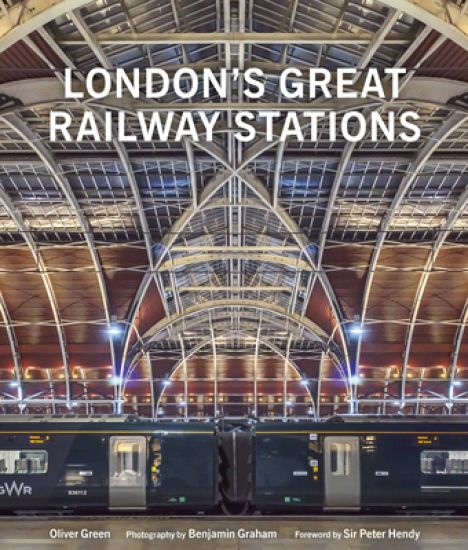
London's Great Railway Stations

London's Great Railway Stations

Oliver Green

Frances Lincoln Publishers Ltd
2021
sidottu

Halvin toimitettuna 34,30 €

This lavish photographic history of the most beautiful and historic railway stations in London tells a story of power, progress and innovation, from the beginning of steam age to the teeming commuter hubs of today. London has more mainline railway stations than any other city in the world and many of them are amongst its grandest architectural monuments. Its earliest terminals opened in the late 1830s when lines between the capital and the regions were built in the first railway boom. The original station at London Bridge, the capital’s first passenger terminus, was opened in December 1836, six months before Queen Victoria came to the throne. The last main line to London, the Great Central Railway to Marylebone, was opened in March 1899, two years before Victoria died. Ever since they originally opened, these stations have been at heart of London life and activity and have dominated the architectural landscape. Many are now in the midst of major reconstructions and are the centrepieces for the transformation of whole swathes of London, from Paddington to King's Cross. This comprehensive story combines a historical overview, archive illustrations and specially commissioned photography, covering the origins of the earliest stations up to the latest reconstructions and renovations. Written by the expert author Oliver Green, this is an essential gift for anyone interested in the history of London and its transport.
London Buses

London Buses

Oliver Green

Amberley Publishing
2019
nidottu
The bright red double-decker bus has become an icon of London. It is now a unique and instantly recognisable international symbol of Britain’s capital city. But its origins go back nearly 200 years to a quite different single-deck vehicle. This was George Shillibeer’s Omnibus, which he first put on the streets in 1829. A reliable motor bus, the B-type, first appeared in 1910, and had replaced all the city’s horse buses by 1914. A succession of ever-improving buses followed. The final design for London Transport was the classic Routemaster (RM), introduced in the late 1950s and not finally retired from normal service until 2005. By this time London’s modern buses were essentially almost identical to buses everywhere else. However, in 2010 the Mayor of London held a competition to find a distinctive successor to the RM. The winning design by Thomas Heatherwick Associates, built by Wrightbus, was launched in 2012. The New Routemaster combines the curved elegance and comfort of the original RM with essential modern features such as low floor access and a hybrid diesel-electric drive unit. This book is part of the Britain’s Heritage series, which provides definitive introductions to the riches of Britain’s past, and is the perfect way to get acquainted with London buses in all their variety.
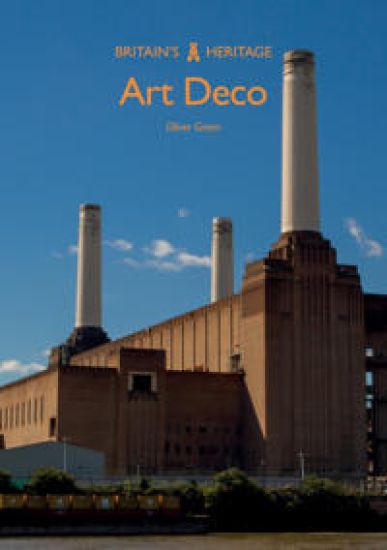
Art Deco

Art Deco

Oliver Green

Amberley Publishing
2018
nidottu
Art deco refers to a striking range of decorative design styles that emerged in the early twentieth century and comes from the influential 1925 Paris International Exhibition of Decorative Arts. Spreading from Paris, it became particularly associated with American industrial design and the décor of Hollywood. The style became connected with leisure and entertainment in the jazz age, giving cinemas, hotels and department stores across Britain a touch of Hollywood glamour. It was an eclectic modernism that had no clear boundaries and could be applied to anything from a suburban bathroom to a new power station or an ocean liner. By the 1930s, deco was morphing into the smooth curves of streamlining – a style that emphasised the speed of modern cars, trains and airliners. But this luxury decoration had no place in wartime. After burning brightly for less than fifteen years, art deco style disappeared with the outbreak of the Second World War. This book is part of the Britain’s Heritage series, which provides definitive introductions to the riches of Britain’s past, and is the perfect way to get acquainted with art deco in all its variety.
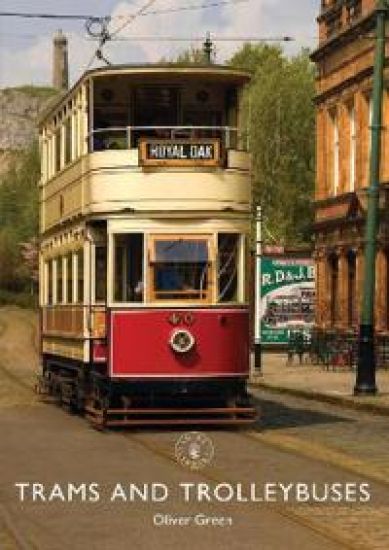
Trams and Trolleybuses

Trams and Trolleybuses

Oliver Green

Shire Publications
2018
nidottu
From the horse-drawn trams of the nineteenth century to the larger electric models of the early twentieth, this reliable form of public transport revolutionised town travel by making it affordable enough for working people to use. From the 1930s, the rise of the trolleybus, which also picked up power from overhead cables but ran without expensive tracks, looked set to supersede the tram – but ultimately, by the 1950s, both fell victim to motor buses and private cars. However, since the 1980s the environmental benefits of light rail have encouraged a growing comeback for trams on our crowded and polluted city streets. Using beautiful contemporary photographs, this is the fascinating story of the rise, fall and revival of this everyday, yet sometimes controversial, mode of urban transport.
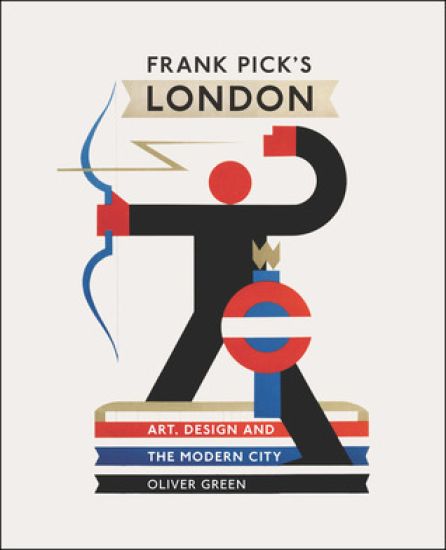
Frank Pick's London

Frank Pick's London

Oliver Green

V A Publishing
2013
sidottu
As managing director of the London Underground in the 1920s and the first chief executive of London Transport, Frank Pick (1878-1941), had more influence on the look of twentieth century London than any other individual. Frank Pick's London offers a unique overview of Pick's passionate belief in the social and civic value of applied art and design and its impact on London. Frank Pick's London explores an extraordinary contribution to the everyday experience of modern London. Pick commissioned now familiar publicity posters from the likes of Paul Nash, Edward Bawden, Graham Sutherland and Edward McKnight Kauffer, iconic upholstery fabrics by Marion Dorn and architecture by Charles Holden for the extension of the Piccadilly line. Pick's awareness of urban design is still with us today and can be traced through to the architecture of the Jubilee Line, the Crossrail project and Thomas Heatherwick's new bus for London.
The Tube

The Tube

Oliver Green

Shire Publications
2012
sidottu
Mind the gap and jump aboard this fascinating history of the world's oldest and greatest underground railway. On seven guided journeys, travel through time and observe at first hand the influence of great Underground architects, such as Charles Holden and Sir Norman Foster, and how the stations have changed - but also how many things have stayed the same.