
Kirjailija
Oliver La Farge
Kirjat ja teokset yhdessä paikassa: 19 kirjaa, julkaisuja vuosilta 2004–2026, suosituimpiin kuuluu Laughing Boy. Vertaile teosten hintoja ja tarkista saatavuus suomalaisista kirjakaupoista.
19 kirjaa
Kirjojen julkaisuvuodet: 2004–2026.

Laughing Boy is a novel by Oliver La Farge, published in 1929. It is set in the American Southwest in the early 20th century and tells the story of a young Navajo man named Laughing Boy and his romance with Slim Girl, a fellow Navajo who has been influenced by white culture. The novel explores themes of cultural conflict, identity, and love as Laughing Boy tries to reconcile his traditional Navajo upbringing with the pressures of assimilation into American society. The story portrays the struggles and resilience of Native Americans during a time of significant change. La Farge's Laughing Boy won the Pulitzer Prize for Fiction in 1930 and remains an important work for depicting Navajo life and culture. Oliver La Farge's work bridges literature and anthropology, offering insights into the complexities of Native American life during cultural upheaval. While his writing has been celebrated, it has also been critiqued for portraying Indigenous characters through a non-Native lens.
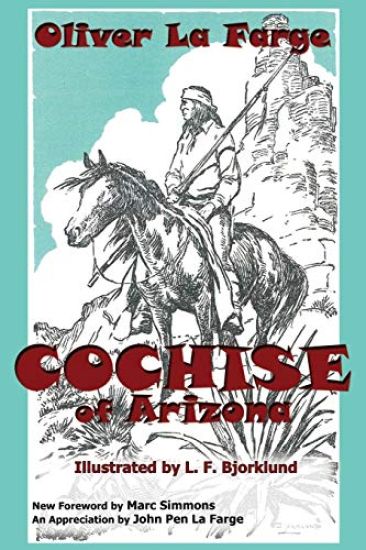

This is the true story, told in fictional form, of one of the greatest of all American Indian chiefs, Cochise of the Chiricahua Apaches. Indians were once thought of as warlike, and the encroaching white men as wanting peace, but it was the white men who forced Cochise into war against his will. History tells us that Cochise and his tiny band of warriors not only held the United States Army at bay for more than ten years, but they were often on the offensive. It is a heroic and extraordinary story. The story ends with the equally extraordinary way in which peace was made, when Major General Howard, the bible-reading soldier, and Cochise, the religious-minded warrior, found that they could trust each other. The many illustrations are by L. F. Bjorklund, well-known for the accuracy of his interpretation of Indian scenes.

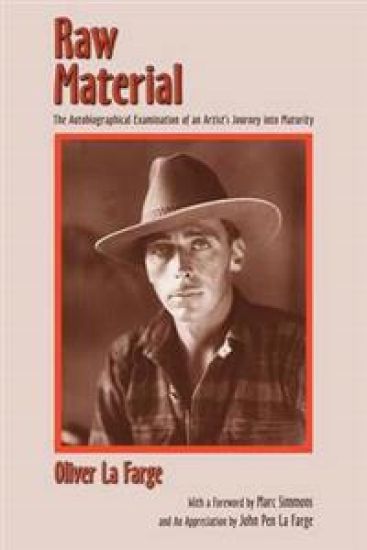
From 1950 until just before his death in 1963, Pulitzer Prize winner (for Laughing Boy) Oliver La Farge wrote weekly columns for The Santa Fe New Mexican-a total of some 350,000 words. A collection of these writings was edited in 1966 by his friend, Winfield Townley Scott and published as "The Man With the Calabash Pipe." As Scott says in his introduction, "Though often in the background, and with much said relevant to anywhere in America, a strong sense of place permeates these essays, whatever their matter. The Southwest in general, Santa Fe in particular, became his locus classicus-or his pulpit." Sometimes the "observations" that take place in some of the pieces in this collection are between La Farge and his alter ego, the "Man With the Calabash Pipe," thus the title of the book, and they are marvels of rueful humor. In others the author enjoys his talks with his imaginary friend, Horned Husband Kachina Chief from Awatovi. In writing about Santa Fe, La Farge scolded, reprimanded, corrected, reminded, berated, bemoaned, rejoiced in, and urged on the town in a dozen moods, always out of a fierce devotion. His comments on "Writing the Language" are salutatory as well as amusing. Then, in and out of these essays wanders that Man With the Calabash Pipe-a sardonic bachelor who refuses to light his heater since a likeable mouse is in residence underneath it. Scott continues, "... I think any reader who never had to the luck to know Oliver La Farge will touch the man as nowhere else in his work save perhaps that revealing autobiography, Raw Material; and will be touched and will come to feel the overtones of a unique, complex individual."
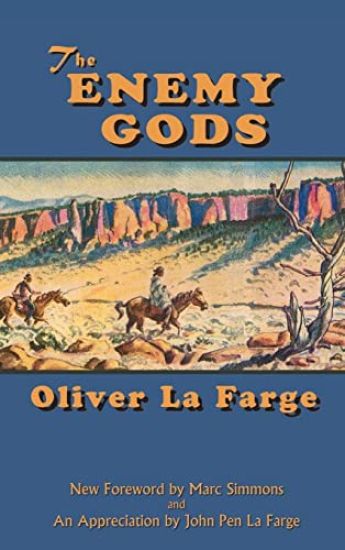
In his first book, the Pulitzer Prize novel "Laughing Boy," Oliver La Farge gave us a superb lyrical story of Navajo Indian life. In the fullness of his maturity as a writer, he later returned to the Navajo scene with "The Enemy Gods," a richer, deeper book than he had written before and its theme, both an absorbing story and a living social document, is nearer to his heart. It centers around Myron Begay-Divine Arrow is his Indian name-a young Navajo who is apparently won away from his tribe until he believes that he can solve the problem of life by making an imitation white man out of himself. Never able to escape from what he really is-a potential leader of his own people-he becomes more and more confused until he finally breaks down and commits murder. As one under a curse, Myron instinctively goes back into the Navajo country where he drifts as a lost soul. Through a series of superb scenes, the story rises to the final emotional crisis leading to the solution of his life.
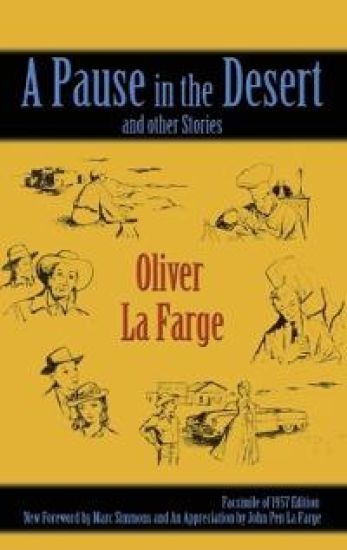
Oliver La Farge covers many aspects of everyday life in these sixteen stories, which range from an old man facing death alone in the Mexican bush to some boys facing the responsibilities of life at St. Peter's school; from the science fiction world of computing machines to the world of gourmets; and from the violent death of a man off the Rhode Island coast to the quiet death of a marriage in New Mexico. The variety of stories in this wide-ranging collection are sure to fit the taste and mood and any reader interested in the human condition through the clear grace of La Farge's timeless writing.
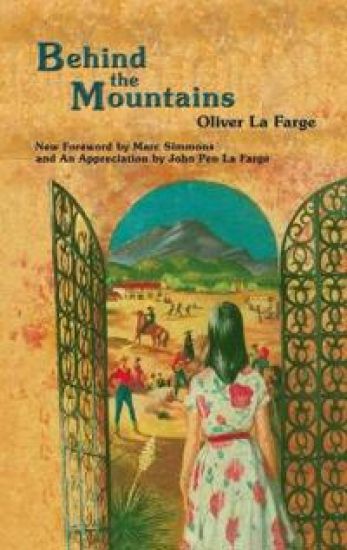
Imagine yourself in a secluded green valley high in the mountains of northern New Mexico. You are one of a large family who own a sheep and cattle ranch surrounding the little village of Rociada. Your father, a Spaniard, is the revered and distinguished Jos Baca, and your mother, Do a Marguerite, is of French descent. Everyone in the village loves and respects your family as their patrones, appealing to them in times of trouble and bringing them gifts at Christmas. Out of the everyday life of the Baca family, the village people, their customs and superstitions, Oliver La Farge has drawn, for example, the touching story of young Pino's disillusionment with his hero, the horse thief Pascual. Or there is the account of the wedding shoes that pinched until the bride was in tears. Then there is Carmen's discovery of treachery in the unlit hovel of the blind religious and the amusing tale of how Pino was punished for his arrogance the night the Archbishop came to dinner. But beneath this rippling surface of adventure, tenderness, and humor rides the gradual encroachment of the outside world on Rociada, one of the last survivals of the ancient Spanish way of life in the United States. Finally, this idyllic village succumbs to the invasion of tourists and the machine, and Rociada becomes only a dream of the past. Of his many books, "Behind the Mountains" has earned the affection of Santa Feans and New Mexicans, who continue to regard the book as a regional classic. Santa Fe has changed a great deal-more than most people are prepared to acknowledge-since Oliver La Farge died. The small-town atmosphere with "its warmth and rewards" he often spoke of and admired is swiftly becoming a thing of the past. But with his name appropriately enshrined over the doorway of a library in Santa Fe, perhaps the Modern Age will not be inclined to forget his love for the city and for the people of the American Southwest.
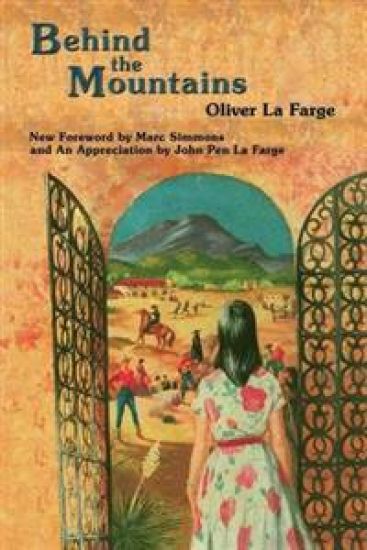
Imagine yourself in a secluded green valley high in the mountains of northern New Mexico. You are one of a large family who own a sheep and cattle ranch surrounding the little village of Rociada. Your father, a Spaniard, is the revered and distinguished Jos Baca, and your mother, Do a Marguerite, is of French descent. Everyone in the village loves and respects your family as their patrones, appealing to them in times of trouble and bringing them gifts at Christmas. Out of the everyday life of the Baca family, the village people, their customs and superstitions, Oliver La Farge has drawn, for example, the touching story of young Pino's disillusionment with his hero, the horse thief Pascual. Or there is the account of the wedding shoes that pinched until the bride was in tears. Then there is Carmen's discovery of treachery in the unlit hovel of the blind religious and the amusing tale of how Pino was punished for his arrogance the night the Archbishop came to dinner. But beneath this rippling surface of adventure, tenderness, and humor rides the gradual encroachment of the outside world on Rociada, one of the last survivals of the ancient Spanish way of life in the United States. Finally, this idyllic village succumbs to the invasion of tourists and the machine, and Rociada becomes only a dream of the past. Born in 1901, Oliver Hazard Perry La Farge is ranked among the literary lions of Southwestern letters. Since he died in 1963, his reputation has continued to grow and new honors have been added to his name. "Laughing Boy," a novel of Navajo life, won the Pulitzer Prize in 1930, putting his name in lights before he was 30. Of his many books, "Behind the Mountains" has earned the affection of Santa Feans and New Mexicans, who continue to regard the book as a regional classic. Santa Fe has changed a great deal-more than most people are prepared to acknowledge-since Oliver La Farge died. The small-town atmosphere with "its warmth and rewards" he often spoke of and admired is swiftly becoming a thing of the past. But with his name appropriately enshrined over the doorway of a library in Santa Fe, perhaps the Modern Age will not be inclined to forget his love for the city and for the people of the American Southwest.
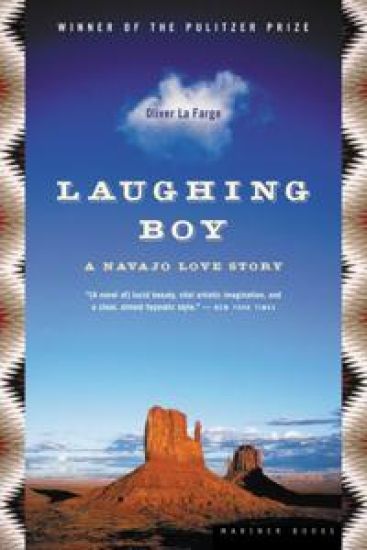
Winner of the Pulitzer Prize“A romantic idyll played out in the rhythms and meanings of a vanished Navajo world." —Denver PostAn enduring American classic, Oliver La Farge's award-winning first novel captures the essence of the Southwest in the early twentieth century. Laughing Boy is a model member of his tribe. Raised in old traditions, skilled in silver work, and known for his prowess in the wild horse races, he does the Navajos of T’o Tlakai proud. But times are changing. It is 1914, and the first car has just driven into their country. Then, Laughing Boy meets Slim Girl—and despite her “American” education and the warnings of his family, he gives in to desire and marries her. As Laughing Boy and Slim Girl settle away from traditional villages—their different upbringings clashing within both their relationship and the ever-encroaching culture around them—each of their worlds are thrown into a heart-wrenching turmoil of love, honor, hope, and heritage.“Compelling in its strength and simplicity, and its fidelity to the deepest impulses of human nature,” Laughing Boy is an unprecedented look at both the Navajo culture and the enduring legacy of tradition and loss that all Americans share (New York Times).