Kirjailija
Oliver O'Donovan
Kirjat ja teokset yhdessä paikassa: 21 kirjaa, julkaisuja vuosilta 1984–2024, suosituimpiin kuuluu Amor Dei. Vertaile teosten hintoja ja tarkista saatavuus suomalaisista kirjakaupoista.
21 kirjaa
Kirjojen julkaisuvuodet: 1984–2024.
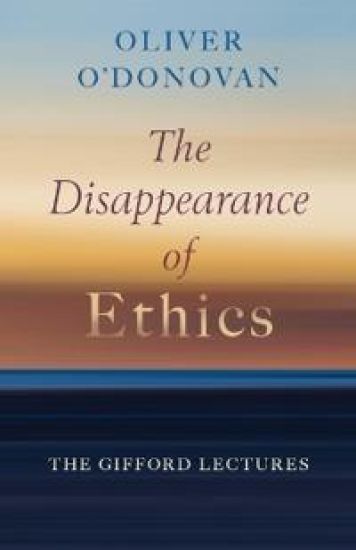
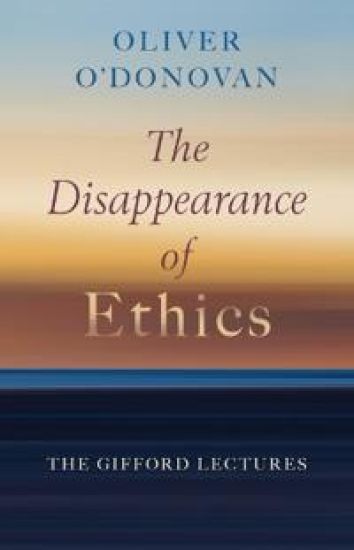
The capstone lectures of esteemed ethicist Oliver O'Donovan What is the future of ethics? Oliver O'Donovan addresses a discipline in crisis in The Disappearance of Ethics. Based on the 2021 Gifford Lectures, this book contends that contemporary ethics has lost its object (good), frontier (time), and agent (person). O'Donovan traces the development of these concepts from Greek philosophy through early Christianity, the Enlightenment, and into the modern era. Engaging with a range of thinkers including Aristotle, Augustine of Hippo, Max Scheler, Karl Barth, and more, O'Donovan shows how ethics has lost its heart and how the field can regain its purpose. He completes his lectures by integrating theology and philosophy to recover ethics. Contemplating theological concepts such as creation, divine law, and justification undergirds ethics by generating "existential wonder." With characteristic warmth and scholarly precision, O'Donovan reinvigorates ethical argument with theological insight. Scholars and students of Christian ethics will find his lectures equally provocative and inspiring.
Oliver O'Donovan's Ethics as Theology project began with Self, World, and Time, an "induction" into Christian ethics as ordered reflection on moral thinking within the life of faith. Volume 2, Finding and Seeking, shifted the focus to the movement of moral thought from a first consciousness of agency to the time that determines the moment of decision. In this third and final volume of his magnum opus, O'Donovan turns his attention to the forward horizon with which moral thinking must engage. Moral experience, he argues, is necessarily two-directional, looking both back at responsibility and forward at aims. The Pauline triad of theological virtues (faith, love, and hope) describes a form of responsibility, and its climax in the sovereignty of love opens the way to a definitive teleology. Entering into Rest offers O'Donovan's mature reflections on questions that have engaged him throughout his career and provides a synoptic view of many of his main themes.
This is the second of three volumes in Oliver O'Donovan's masterful -Ethics as Theology- project. In his first volume -- Self, World, and Time -- O'Donovan discusses Christian ethics as an intellectual discipline in relation to the humanities, especially philosophy, theology, and behavioral studies, and in relation to the Christian gospel. In Finding and Seeking O'Donovan traces the logic of moral thought from self-awareness to decision through the virtues of faith, hope, and love. Blending biblical, historico-theological, and contemporary ideas in its comprehensive survey, this second volume continues O'Donovan's splendid study in ethics as theology and adds significantly to his previous theoretical reflection on Christian ethics.
Self, World, and Time takes up the question of the form and matter of Christian ethics as an intellectual discipline. What is it about? How does Christian ethics relate to the humanities, especially philosophy, theology, and behavioral studies? How does its shape correspond to the shape of practical reason? In what way does it participate in the proclamation of the gospel of Jesus Christ? Oliver O'Donovan discusses ethics with self, world, and time as foundation poles of moral reasoning, and with faith, love, and hope as the virtues anchoring the moral life. Blending biblical, historico-theological, and contemporary ideas in its comprehensive survey, Self, World, and Time is an exploratory study that adds significantly to O'Donovan's previous theoretical reflections on Christian ethics.
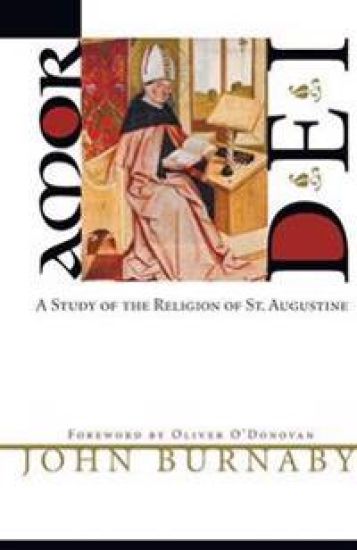
Amor Dei — a study of the religion of St Augustine —was first published as the Hulsean Lectures for 1938 when John Burnaby was a classics Fellow of Trinity College, Cambridge. Later, after ordination he became Regius Professor of Divinity in 1952 until his retirement. Professor Oliver O'Donovan, in his Foreword to this new paperback re-issue says of the author: `. . . he had found in Augustine of Hippo a Christian whose thought was large enough for a modern believer to devote a lifetime to. A new generation of Burnaby's readers will sense something of that largeness, and will, I hope, also appreciate the largeness of the sympathy that could communicate it so well.'
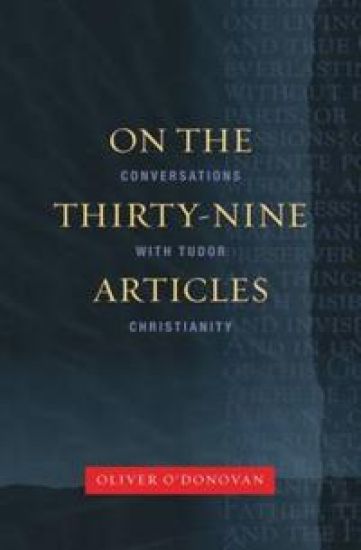
The Thirty-Nine Articles, together with the Book of Common Prayer, form the foundation of Anglican theology. Yet there are very few extended treatments of them. Oliver O'Donovan relates the Articles to the exhilarating and troubled century in which they took shape. He also shows how the distinctive insights and values of a past age relate to the demands of today's world. 'What I propose in this case - is not to talk solely about the Articles, but to talk about God, mankind (sic!), and redemption, the central matters of the Christian faith, and to take the Tudor authors with me as companions in discussion. Two voices will be speaking - each raising the questions that Christian faith in his time forces upon him.' Here is a new edition of his book on one of the key texts of Anglican identity by one of the UK's leading theologians. The book has been out of print for some time and there have been repeated calls for a new edition with a new introduction which engages with more recent developments and offers the text to a new generation.
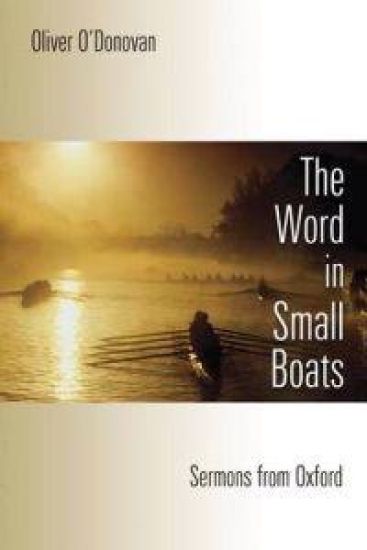
Oliver O'Donovan has been preaching and teaching for over three decades, committed to the perpetual voyage of service to the word of God. The Word in Small Boats offers thirty-two select sermons that he preached over the course of some twenty years as Canon of Christ Church Cathedral, Oxford.
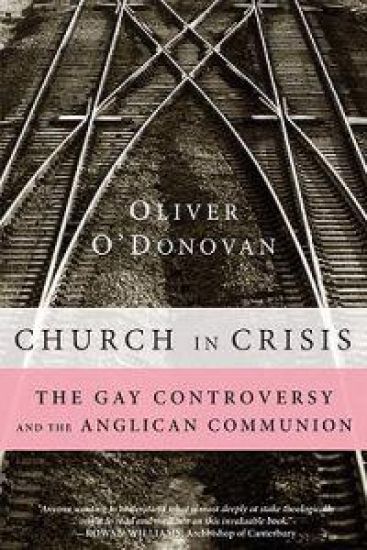
Church in Crisis: The Gay Controversy and the Anglican Communion
Oliver O'Donovan
Cascade Books
2008
nidottu
What if the challenge gay men and women present the church with is not emancipatory but hermeneutic? Suppose that at the heart of the problem there is the magna quaestio, the question about the gay experience, its sources and its character, that gays must answer for themselves: how this form of sensibility and feeling is shaped by its social context and how it can be clothed in an appropriate pattern of life for the service of God and discipleship of Christ? But suppose, too, that there is another question corresponding to it, which non-gay Christians need to answer: how and to what extent this form of sensibility and feeling has emerged in specific historical conditions, and how the conditions may require, as an aspect of the pastoral accommodation that changing historical conditions require, a form of public presence and acknowledgment not hitherto known? These two questions come together as a single question: how are we to understand together the particularity of the age in which we are given to attest God's works?
Church in Crisis: The Gay Controversy and the Anglican Communion
Oliver O'Donovan
Cascade Books
2008
sidottu
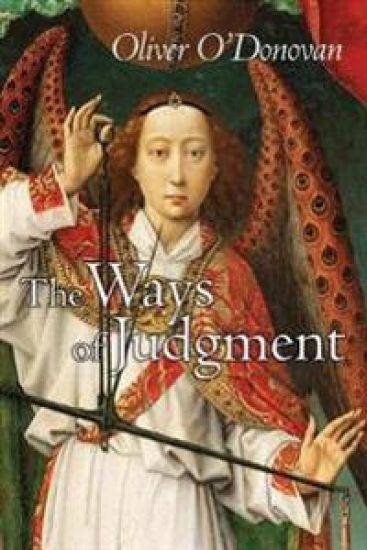
The Ways of Judgment
Oliver O'Donovan
William B Eerdmans Publishing Co
2008
nidottu
Halvin toimitettuna 41,10 €
The trial, conviction, and death of an innocent man 2,000 years ago have particular resonance today. Atrocities from around the world shake us nearly every day, and we all experience trials in our own lives too. In this book the former Archbishop of Canterbury looks in depth at the trial of Jesus, using it to teach readers how to face the challenges of life in today's trying times. Bringing the biblical accounts of Jesus' trial vividly to life, Rowan Williams highlights what can be learned about Jesus from each of the four Gospel portraits. Mark shows a mysterious figure revealed as the Son of God. Matthew describes the Wisdom of God tried by foolish men. Luke presents a divine stranger. John speaks of the paradox of divinity submitting to judgement. These illuminating discussions are followed by a reflection on Christian martyrdom and a meditation on tyranny, freedom, and truth. A set of discussion questions and a thought-provoking prayer after each chapter make Christ on Trial an ideal book for study groups. Throughout the book Williams draws not only from the Bible but also from fiction, drama, and current events, pointing up ways in which society today continues to put Christ on trial. Even more, he argues that all Christians stand with Jesus before a watching world. Though we may not be directly confronted with death, we are nevertheless called daily to respond to the falsehood of such lures as power, influence, and prestige. Several words aptly describe this book by Rowan Williams: Profound. Incisive. Literary. Contemporary. Relevant. Prophetic. Christ on Trial will move and change those who read it.
The primal destruction of man was self-love. There is no one who does not love himself; but one must search for the right love and avoid the warped. Indeed you did not love yourself when you did not love the God who made you. These three sentences set side by side show why the problem of self-love in St. Augustine of Hippo constitutes a problem. Self-love is loving God; it is also hating God. Self-love is common to all men; it is restricted to those who love God. Mutually incompatible assertions about self-love jostle one another and demand to be reconciled. --from the Introduction In saying that self-love finds its only true expression in love of God Augustine is formulating in one of many possible ways a principle fundamental to his metaphysical and ethical outlook, namely that moral obligation derives from an obligation to God which is at the same time a call to self-fulfillment. --from the Conclusion Some thinkers never become unimportant; some topics always repay renewed attention. St. Augustine is such a thinker; self-love is such a topic. It is, therefore, good that Oliver O'Donovan's analysis of the problem of self-love in Augustine's thought is again in print and available for study. It is a careful unraveling of the development of Augustine's thinking on self-love, and it is also an important guide for our own attempts to probe various aspects of one of the most complicated problems in the moral life. --Gilbert Meilaender Duesenberg Professor in Christian Ethics Valparaiso University, and author of The Way That Leads There: Augustinian Reflections on the Christian Life (2006) Few people in the last thirty years have done more than Oliver O'Donovan to make Augustine a living, breathing source for Christian moral reflection. With the increasing recognition that deep confusion about love lies at the heart of modernity's pathos and with renewed attention being paid to the nature of love in all its personal, social, and ontological dimensions, the recovery of Augustine's profound insights has become an urgent matter. The re-issue of this seminal work is thus both timely and important. --Michael Hanby Assistant Professor of Theology, Honors College Baylor University, and author of Augustine and Modernity (2003). Oliver O'Donovan is Professor of Christian Ethics and Practical Theology at the University of Edinburgh. He is the author of numerous books including Resurrection and Moral Order (1986), The Desire of Nations (1996), and The Ways of Judgment (2005).
Bonds of Imperfection
Oliver O'Donovan; Joan Lockwood O'Donovan
William B Eerdmans Publishing Co
2003
nidottu
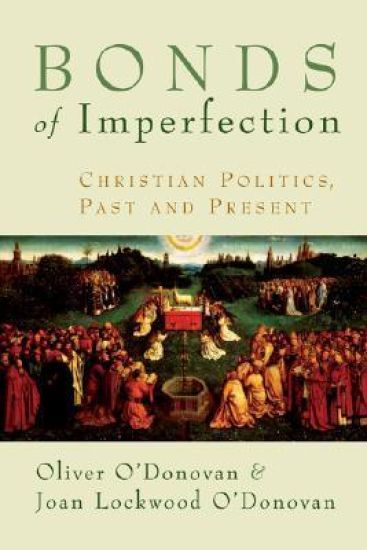
Two of today's leading experts on the Christian political tradition plumb significant moments in premodern Christian political thought, using them in original and adventurous ways to clarify, criticize, and redirect contemporary political perspectives and discussions. Drawing on the Bible and the Western history of ideas, Oliver and Joan Lockwood O'Donovan explore key Christian voices on "the political" - political action, political institutions, and political society. Covered here are Bonaventure, Thomas, Ockham, Wycliff, Erasmus, Luther, Grotius, Barth, Ramsey, and key modern papal encyclicals. The authors' discussion takes them across a wide range of political concerns, from economics and personal freedom to liberal democracy and the nature of statehood. Ultimately, these insightful essays point to political judgment as the strength of the past theological tradition and its eclipse as the weakness of present political thought.
Leading political theologian Oliver O'Donovan here takes a fresh look at some traditional moral arguments about war. Modern Christians differ widely on this issue. A few hold that absolute pacifism is the only viable Christian position, others subscribe in various ways to concepts of 'just war' developed out of a Western tradition that arose from the legacies of Augustine and Aquinas, while others still adopt more pragmatically realist postures. Professor O'Donovan re-examines questions of contemporary urgency including the use of biological and nuclear weapons, military intervention, economic sanctions, war crimes trials and the roles of the Geneva Convention, international conventions and the UN. His enquiry opens with a challenging dedication to the new Archbishop of Canterbury and proceeds to shed new light on vital topics with which the Archbishop and others will be very directly engaged. It should be read by anyone concerned with the ethics of warfare.
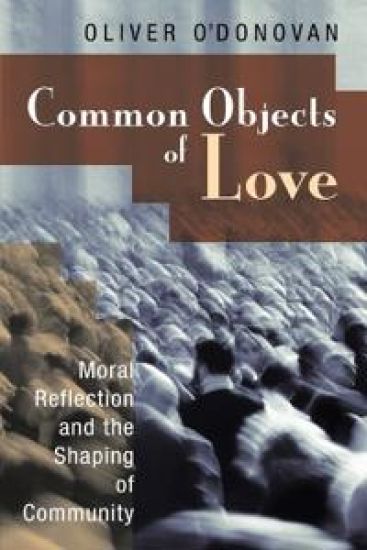
In Common Objects of Love Oliver O'Donovan, widely respected as one of today's wisest and most articulate Christian ethicists, takes readers on a journey of thought. Yet this journey, he warns, does not "circle comfortably around its subject like a pleasant afternoon stroll, but sets out for a far country." The purpose of the journey is to trace "what unifies a multitude of human agents into a community of action and experience sustained over time." The book's central theme, which arises out of Augustine's idea that we know only as we love, is that moral reflection, or the identification of objects of love, has effect in organized community. This perspective provides a fruitful resolution to the traditional Aristotelian dichotomy of theoretical and practical reason and directs us as to how we may think "from truths of Christian faith to conclusions in Christian action." O'Donovan's interest in this theme lies especially with its political possibilities, as he explores how love is key to the organization and coherence of political society. Beginning with some lighthearted puzzles about teaching ethics, O'Donovan explores a series of related historical and current issues - the iconoclastic controversy of the ninth century, the nature of ethical deliberation, the deleterious role of publicity in late-modern liberal society, and more - and he offers some reflections on the events of September 11, 2001. It is with John of Patmos, finally, that O'Donovan brings his journey of thought to an evangelical conclusion, one that rests on the narrative of the fall and redemption of society and of the vindication of created order in the coming of God's kingdom. Originating as the 2001 Stob Lectures delivered at Calvin College and Seminary, Common Objects of Love provides a thought-provoking look at social and political behavior as it is - or should be - informed by Christian love.
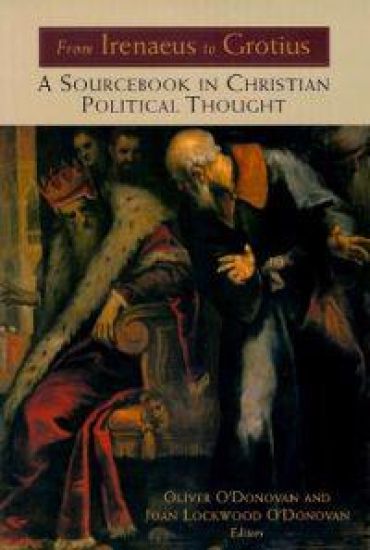
A reference tool that provides an overview of the history of Christian political thought with selections from second century to the seventeenth century. From the second century to the seventeenth, from Irenaeus to Grotius, this unique reader provides a coherent overview of the development of Christian political thought. The editors have collected readings from the works of over sixty-five authors, together with introductory essays that give historical details about each thinker and discuss how each has contributed to the tradition of Christian political thought. Complete with important Greek and Latin texts available here in English for the first time, this volume will be a primary resource for readers from a wide range of interests.
The Desire of the Nations
Oliver O'Donovan
Cambridge University Press
1999
pokkari
Halvin toimitettuna 45,70 €
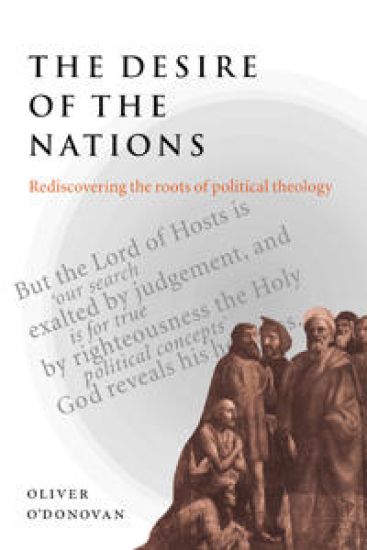
Political theology as we know it today reacts against the attempt to insulate theology from political theory which has generally characterised the modern era. But its own intellectual parentage in the idealist historicism of the nineteenth century has left it still entrammelled in the suspicions and inhibitions from which it has wanted to break free. Oliver O’Donovan contends that to pass beyond suspicion and totalised criticism of politics and to achieve a positive reconstruction of political thought, theology must reach back behind the modern tradition, achieving a fuller, less selective reading of the Scriptures and learning from an older politico-theological discourse which flourished in the patristic, medieval and Reformation periods. Central to that discourse was a series of questions about authority, generated by Jesus’ proclamation of the Kingdom of God. This book, now published in paperback, makes an important contribution to contemporary political theology and Christian ethics.
Political theology as we know it today reacts against the attempt to insulate theology from political theory which has generally characterised the modern era. But its own intellectual parentage in the idealist historicism of the nineteenth century has left it still entrammelled in the suspicions and inhibitions from which it has wanted to break free. Oliver O'Donovan contends that to pass beyond suspicion and totalised criticism of politics and to achieve a positive reconstruction of political thought, theology must reach back behind the modern tradition, achieving a fuller, less selective reading of the Scriptures and learning from an older politico-theological discourse which flourished in the patristic, medieval and Reformation periods. Central to that discourse was a series of questions about authority, generated by Jesus' proclamation of the Kingdom of God. This book, now published in paperback, makes an important contribution to contemporary political theology and Christian ethics.
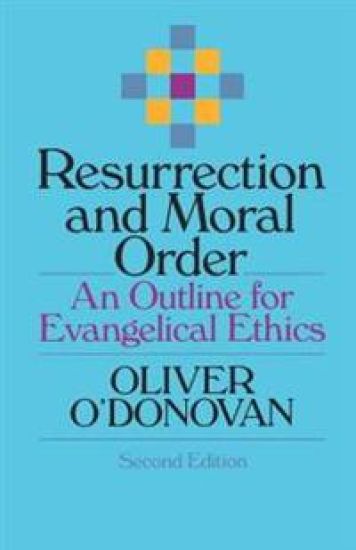
In this seminal work Oliver O'Donovan delineates a convincing theological ethics from an evangelical standpoint that illumines such important concepts as freedom, authority, nature, history, and revelation. For this revised edition O'Donovan has added a substantial prologue that, taking account of critical responses to the first edition, more fully locates his argument and position in relation to some current alternatives.