Kirjailija
Oliver Sacks
Kirjat ja teokset yhdessä paikassa: 99 kirjaa, julkaisuja vuosilta 1991–2026, suosituimpiin kuuluu Briefe von Oliver Sacks. Vertaile teosten hintoja ja tarkista saatavuus suomalaisista kirjakaupoista.
99 kirjaa
Kirjojen julkaisuvuodet: 1991–2026.
Oliver Sacks died in August 2015 at his home in Greenwich Village, surrounded by his close friends and family. He was 82. He spent his final days doing what he loved: playing the piano, swimming, enjoying smoked salmon – and writing . . . As Dr Sacks looked back over his long, adventurous life his final thoughts were of gratitude. In a series of remarkable, beautifully written and uplifting meditations, in Gratitude Dr Sacks reflects on and gives thanks for a life well lived, and expresses his thoughts on growing old, facing terminal cancer and reaching the end. I cannot pretend I am without fear. But my predominant feeling is one of gratitude. I have loved and been loved; I have been given much and I have given something in return; I have read and travelled and thought and written. I have had an intercourse with the world, the special intercourse of writers and readers. Above all, I have been a sentient being, a thinking animal, on this beautiful planet, and that in itself has been an enormous privilege and adventure.

A deeply moving testimony and celebration of how to embrace life. No writer has succeeded in capturing the medical and human drama of illness as honestly and as eloquently as Oliver Sacks. During the last few months of his life, he wrote a set of essays in which he movingly explored his feelings about completing a life and coming to terms with his own death. "A series of heart-rending yet ultimately uplifting essays.... A lasting gift to readers." --The Washington Post "It is the fate of every human being," Sacks writes, "to be a unique individual, to find his own path, to live his own life, to die his own death." Together, these four essays form an ode to the uniqueness of each human being and to gratitude for the gift of life. "My predominant feeling is one of gratitude. I have loved and been loved. I have been given much and I have given something in return. Above all, I have been a sentient being, a thinking animal, on this beautiful planet, and that in itself has been an enormous privilege and adventure." --Oliver Sacks "Oliver Sacks was like no other clinician, or writer. He was drawn to the homes of the sick, the institutions of the most frail and disabled, the company of the unusual and the 'abnormal.' He wanted to see humanity in its many variants and to do so in his own, almost anachronistic way--face to face, over time, away from our burgeoning apparatus of computers and algorithms. And, through his writing, he showed us what he saw." --Atul Gawande, author of Being Mortal
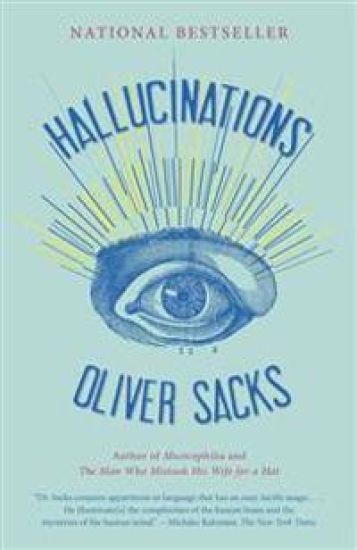
Have you ever seen something that wasn't really there? Heard someone call your name in an empty house? Sensed someone following you and turned around to find nothing? Hallucinations don't belong wholly to the insane. Much more commonly, they are linked to sensory deprivation, intoxication, illness, or injury. In some conditions, hallucinations can lead to religious epiphanies or even the feeling of leaving one's own body. Humans have always sought such life-changing visions, and for thousands of years have used hallucinogenic compounds to achieve them. In Hallucinations, with his usual elegance, curiosity, and compassion, Dr Oliver Sacks weaves together stories of his patients and of his own mind-altering experiences to illuminate what hallucinations tell us about the organization and structure of our brains, how they have influenced every culture's folklore and art, and why the potential for hallucination is present in us all, a vital part of the human condition.
From the bestselling author of "Musicophilia "and "The Man Who Mistook His Wife for a Hat," a provocative investigation into hallucinations--auditory, visual, tactile, olfactory--their many guises, their physiological sources, and their personal and cultural resonances. Hallucinations, for most people, imply madness. But there are many different types of non-psychotic hallucinations caused by various illnesses or injuries, by intoxication--even, for many people, by falling asleep. From the elementary geometrical shapes that we see when we rub our eyes to the complex swirls and blind spots and zigzags of a visual migraine, hallucination takes many forms. At a higher level, hallucinations associated with the altered states of consciousness that may come with sensory deprivation or certain brain disorders can lead to religious epiphanies or conversions. Drawing on a wealth of clinical examples from his own patients as well as historical and literary descriptions, Oliver Sacks investigates the fundamental differences and similarities of these many sorts of hallucinations, what they say about the organization and structure of our brains, how they have influenced every culture's folklore and art, and why the potential for hallucination is present in us all.
NATIONAL BESTSELLER - The "poet laureate of medicine" (The New York Times) and author of The Man Who Mistook His Wife for a Hat weaves together stories of mind-altering experiences to reveal what they tell us about our brains, our folklore and culture, and why the potential for hallucination exists in us all. "Sacks has turned hallucinations from something bizarre and frightening into something that seems part of what it means to be a person. His book, too, is a medical and human triumph." --The Washington Post "An absorbing plunge into a mystery of the mind." --Entertainment Weekly To many people, hallucinations imply madness, but in fact they are a common part of the human experience. These sensory distortions range from the shimmering zigzags of a visual migraine to powerful visions brought on by fever, injuries, drugs, sensory deprivation, exhaustion, or even grief. Hallucinations doubtless lie behind many mythological traditions, literary inventions, and religious epiphanies. Drawing on his own experiences, a wealth of clinical cases from among his patients, and famous historical examples ranging from Dostoevsky to Lewis Carroll, the legendary neurologist Oliver Sacks investigates the mystery of these sensory deceptions: what they say about the working of our brains, how they have influenced our folklore and culture, and why the potential for hallucination is present in all humans.
For more than a quarter of a century, Ildefonso, a Mexican Indian, lived in total isolation, set apart from the rest of the world. He wasn't a political prisoner or a social recluse, he was simply born deaf and had never been taught even the most basic language. Susan Schaller, then a twenty-four-year-old graduate student, encountered him in a class for the deaf where she had been sent as an interpreter and where he sat isolated, since he knew no sign language. She found him obviously intelligent and sharply observant but unable to communicate, and she felt compelled to bring him to a comprehension of words. The book vividly conveys the challenge, the frustrations, and the exhilaration of opening the mind of a congenitally deaf person to the concept of language. This second edition includes a new chapter and afterword.
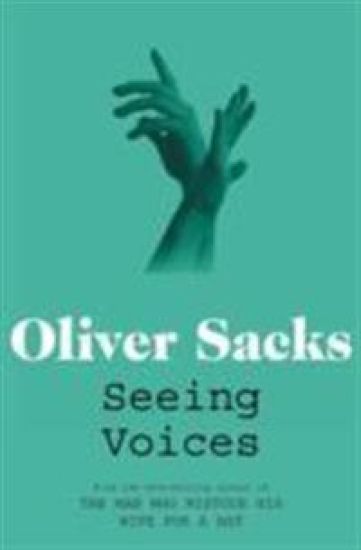
'Seeing Voices is both a history of the deaf and an account of the development of an extraordinary and expressive language' – Evening Standard Imaginative and insightful, Seeing Voices by Oliver Sacks offers a way into a world that is, for many people, alien and unfamiliar – for to be profoundly deaf is not just to live in a world of silence, but also to live in a world where the visual is paramount. In this remarkable book, Sacks explores the consequences of this, including the different ways in which the deaf and the hearing impaired learn to categorize their respective worlds – and how they convey and communicate those experiences to others.
Oliver Sacks, the bestselling author of Awakenings and The Man Who Mistook His Wife for a Hat, is most famous for his studies of the human mind: insightful and beautifully characterized portraits of those experiencing complex neurological conditions. However, he has another scientific passion: the fern . . . Since childhood Oliver has been fascinated by the ability of these primitive plants to survive and adapt in many climates. Oaxaca Journal is the enthralling account of his trip, alongside a group of fellow fern enthusiasts, to the beautiful province of Oaxaca, Mexico. Bringing together Oliver’s endless curiosity about natural history and the richness of human culture with his sharp eye for detail, this book is a captivating evocation of a place, its plants, its people, and its myriad wonders.‘Light and fast-moving, unburdened by library research but filled with erudition’ – New Yorker
'Sacks is rightly renowned for his empathy . . . anyone with a taste for the exotic will find this beautifully written book highly engaging' – Sunday Times Always fascinated by islands, Oliver Sacks is drawn to the Pacific by reports of the tiny atoll of Pingelap, with its isolated community of islanders born totally colour-blind; and to Guam, where he investigates a puzzling paralysis endemic there for a century. Along the way, he re-encounters the beautiful, primitive island cycad trees – and these become the starting point for a meditation on time and evolution, disease and adaptation, and islands both real and metaphorical in The Island of the Colour-Blind.
As with his previous bestseller, The Man Who Mistook His Wife for a Hat, in An Anthropologist on Mars Oliver Sacks uses case studies to illustrate the myriad ways in which neurological conditions can affect our sense of self, our experience of the world, and how we relate to those around us. Writing with his trademark blend of scientific rigour and human compassion, he describes patients such as the colour-blind painter or the surgeon with compulsive tics that disappear in the operating theatre; patients for whom disorientation and alienation – but also adaptation – are inescapable facts of life.'An inexhaustible tourist at the farther reaches of the mind, Sacks presents, in sparse, unsentimental prose, the stories of seven of his patients. The result is as rich, vivid and compelling as any collection of short fictional stories' – Independent on Sunday
From "the poet laureate of medicine" and national bestselling author of Awakenings comes a fascinating investigation of Southern Mexico that explores the origins of chocolate and mescal, pre-Columbian culture and hallucinogens, and the peculiar passions of botanists. "Light and fast-moving. . . . Among the botanical and anthropological observations, one catches glimpses of Sacks's inner life: his preoccupation with dualities, his nearly Victorian sense of modesty, his fascination with the world around him." --The New YorkerSince childhood, Oliver Sacks was fascinated by ferns: an ancient class of plants able to survive and adapt in many climates. Along with a delightful group of fellow fern aficionados--mathematicians, poets, artists, and assorted botanists and birders--he embarked on an exploration of Southern Mexico, a region that is also rich in human history and culture. Combining Sacks's enthusiasm for natural history and the richness of humanity with his sharp and observant eye for detail, Oaxaca Journal is a rare treat.
NATIONAL BESTSELLER - From "the poet laureate of medicine" (The New York Times) and the author of the classic The Man Who Mistook his Wife for a Hat comes a fascinating exploration of the remarkable, unpredictable ways that our brains cope with the loss of sight by finding rich new forms of perception. "Elaborate and gorgeously detailed.... Again and again, Sacks invites readers to imagine their way into minds unlike their own, encouraging a radical form of empathy." --Los Angeles TimesWith compassion and insight, Dr. Oliver Sacks again illuminates the mysteries of the brain by introducing us to some remarkable characters, including Pat, who remains a vivacious communicator despite the stroke that deprives her of speech, and Howard, a novelist who loses the ability to read. Sacks investigates those who can see perfectly well but are unable to recognize faces, even those of their own children. He describes totally blind people who navigate by touch and smell; and others who, ironically, become hyper-visual. Finally, he recounts his own battle with an eye tumor and the strange visual symptoms it caused. As he has done in classics like The Man Who Mistook his Wife for a Hat and Awakenings, Dr. Sacks shows us that medicine is both an art and a science, and that our ability to imagine what it is to see with another person's mind is what makes us truly human.
How does the brain perceive and interpret information from the eye? And what happens when the process is disrupted? In The Mind’s Eye, Oliver Sacks tells the stories of people who are able to navigate the world and communicate with others despite losing what many of us consider indispensable senses and abilities: the capacity to recognize faces, the sense of three-dimensional space, the ability to read, the sense of sight. For all of these people, the challenge is to adapt to a radically new way of being in the world – and The Mind’s Eye is testament to the myriad ways that we, as humans, are capable of rising to this challenge.‘Oliver Sacks is a perfect antidote to the anaesthetic of familiarity. His writing turns brains and minds transparent’ – Observer
‘A humane discourse on the fragility of our minds, of the bodies that give rise to them, and of the world they create for us. This book is filled with wonders’ – Daily Telegraph Oliver Sacks’ compassionate tales of people struggling to adapt to different neurological conditions have fundamentally changed the way we think of our own minds. In Musicophilia, he examines the powers of music through the individual experiences of patients, musicians and everyday people – those struck by affliction, unusual talent and even, in one case, by lightning – to show not only that music occupies more areas of our brain than language does, but also that it can torment, calm, organize and heal. Always wise and compellingly readable, these stories alter our conception of who we are and how we function, and show us an essential part of what it is to be human.
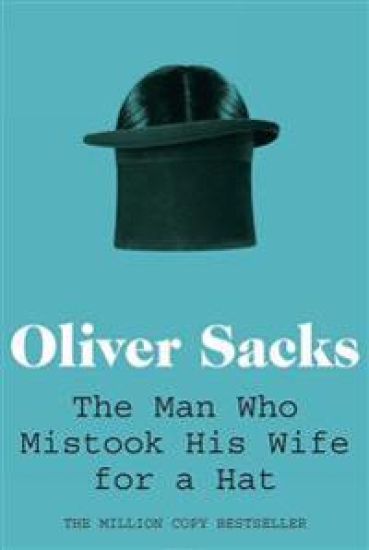
In his most extraordinary book, The Man Who Mistook His Wife for a Hat, Oliver Sacks recounts the stories of patients lost in the bizarre, apparently inescapable world of neurological disorders. These are case studies of people who have lost their memories and with them the greater part of their pasts; who are no longer able to recognize people or common objects; whose limbs have become alien; who are afflicted and yet are gifted with uncanny artistic or mathematical talents. In Dr Sacks’s splendid and sympathetic telling, each tale is a unique and deeply human study of life struggling against incredible adversity.‘Oliver Sacks has become the world’s best-known neurologist. His case studies of broken minds offer brilliant insight into the mysteries of consciousness’ – Guardian
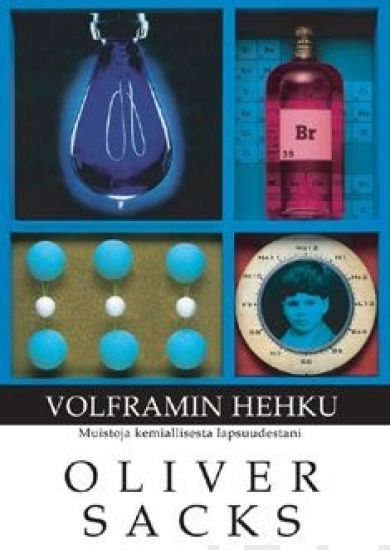
Kauan ennen kuin Oliver Sacksista tuli kuuluisa neurologi ja menestyskirjailija ("Mies joka luuli vaimoaan hatuksi"), hän oli pieni englantilainen poika, jonka suuri rakkaus oli luonnontiede. Häntä kiehtoivat yhtälailla metallit ja mineraalit kuin mustekalatkin. Pojan lumottuja tieteellisiä puutarhoja olivat mm. hänen oma kotilaboratorionsa, luonnontieteelliset museot, Dave-enon hehkulampputehdas ja meribiologian tutkimuskeskus. Nuori Sacks pakeni sota-ajan ahdistavia kokemuksia tieteen maailmaan, jonka hän koki turvalliseksi ja kauniiksi. Oliver Sacks kuvaa mieleenpainuvalla tavalla oman perheensä vaiheita 1930- ja 1940-luvun Lontoossa. Lisäksi Sacksin muistelmateos tarjoaa värikkään katsauksen kemian ja monien luonnontieteellisten ilmiöiden historiaan - aina hehkulampuista valokuvaukseen ja jaksollisen järjestelmän kehittämisestä kvanttifysiikkaan.
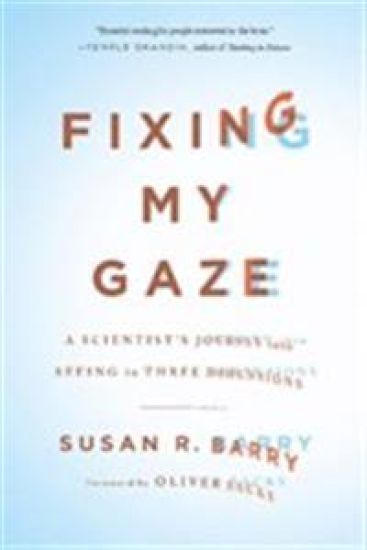
When neuroscientist Susan Barry was fifty years old, she took an unforgettable trip to Manhattan. As she emerged from the dim light of the subway into the sunshine, she saw a view of the city that she had witnessed many times in the past but now saw in an astonishingly new way. Skyscrapers on street corners appeared to loom out toward her like the bows of giant ships. Tree branches projected upward and outward, enclosing and commanding palpable volumes of space. Leaves created intricate mosaics in 3D. With each glance, she experienced the deliriously novel sense of immersion in a three dimensional world. Barry had been cross-eyed and stereoblind since early infancy. After half a century of perceiving her surroundings as flat and compressed, on that day she was seeing Manhattan in stereo depth for first time in her life. As a neuroscientist, she understood just how extraordinary this transformation was, not only for herself but for the scientific understanding of the human brain. Scientists have long believed that the brain is malleable only during a"critical period” in early childhood. According to this theory, Barry's brain had organized itself when she was a baby to avoid double vision-and there was no way to rewire it as an adult. But Barry found an optometrist who prescribed a little-known program of vision therapy after intensive training, Barry was ultimately able to accomplish what other scientists and even she herself had once considered impossible. A revelatory account of the brain's capacity for change, Fixing My Gaze describes Barry's remarkable journey and celebrates the joyous pleasure of our senses.