Kirjojen hintavertailu – 12 903 725 kirjaa ja 27 kauppaa
Kirjailija
Olivier de Schutter
Kirjat ja teokset yhdessä paikassa: 16 kirjaa, julkaisuja vuosilta 2014–2025, suosituimpiin kuuluu Um novo paradigma para a aprendizagem organizacional. Vertaile teosten hintoja ja tarkista saatavuus suomalaisista kirjakaupoista.
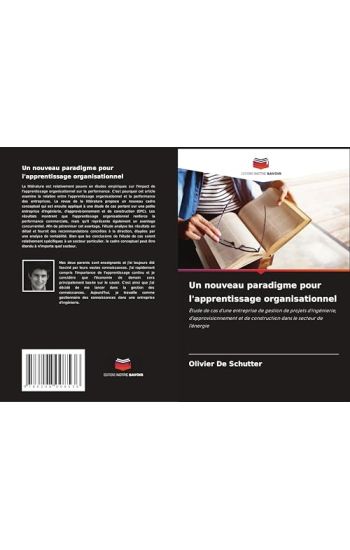
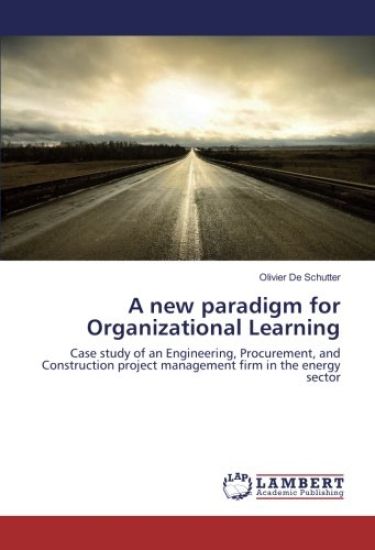
La litt rature est relativement pauvre en tudes empiriques sur l'impact de l'apprentissage organisationnel sur la performance. C'est pourquoi cet article examine la relation entre l'apprentissage organisationnel et la performance des entreprises. La revue de la litt rature propose un nouveau cadre conceptuel qui est ensuite appliqu une tude de cas portant sur une petite entreprise d'ing nierie, d'approvisionnement et de construction (EPC). Les r sultats montrent que l'apprentissage organisationnel renforce la performance commerciale, mais qu'il repr sente galement un avantage concurrentiel. Afin de p renniser cet avantage, l' tude analyse les r sultats en d tail et fournit des recommandations concr tes la direction, tay es par une analyse de rentabilit . Bien que les conclusions de l' tude de cas soient relativement sp cifiques un secteur particulier, le cadre conceptuel peut tre tendu n'importe quel secteur.
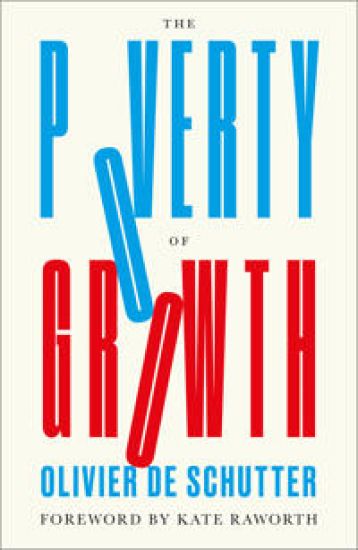
'Lucid, calm and compelling – Olivier De Schutter tackles the big questions' Kate Pickett, co-author, The Spirit Level: Why Equality is Better for Everyone How do we combat poverty and rising inequality? In our age of impending climate catastrophe, the conventional wisdom around economic growth is no longer fit for purpose; a rising tide sinks all boats. Oliver De Schutter believes that we must fundamentally rethink the fight against poverty. The quest for growth not only clashes with the need to remain within planetary boundaries, but also creates the very social exclusion it is intended to cure: eroding human rights, widening inequality, and modernising poverty without eliminating it. The Poverty of Growth is a clarion call to forge a new path demanding progress that is no longer focused on wealth and profit.
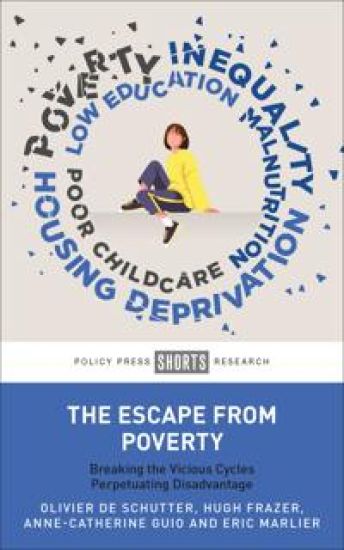
ePDF and ePUB available Open Access under CC-BY-NC-ND license. The perpetuation of poverty across generations damages lives. It weakens social cohesion and the economy and undermines environmental sustainability. This book examines why poverty is carried on from one generation to the next and what needs to be done to eradicate it. This book draws on a wide variety of sources and academic disciplines (social sciences, economics, law, community development, neuroscience and developmental psychology) along with the lived experience of people in poverty. Challenging the myths and prejudices about poverty that hinder progress, it calls for a comprehensive approach based on ensuring real equality of opportunity for all. It stresses the need to intervene early to combat child poverty and break the vicious cycles that perpetuate poverty and disadvantage.
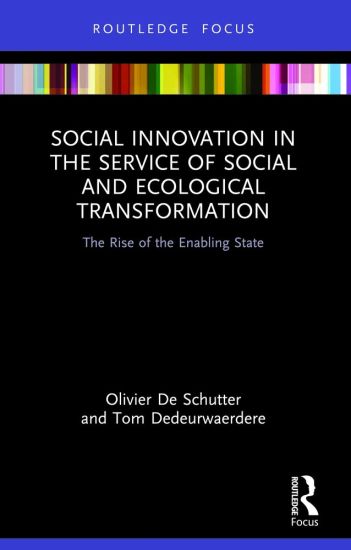
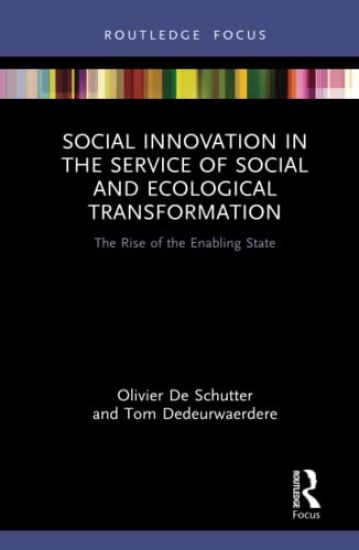
This book explores how the State can play a role as an enabler of citizens-led social innovations, to accelerate the shift to sustainable and socially just lifestyles. To meet the twin challenges of environmental degradation and the rise of inequalities, societal transformation is urgent. Most theories of social change focus either on the role of the State, on the magic of the market, or on the power of technological innovation. This book explores instead how local communities, given the freedom to experiment, can design solutions that can have a transformative impact. Change cannot rely only on central ordering by government, nor on corporations suddenly acting as responsible citizens. Societal transformation, at the speed and scope required, also should be based on the reconstitution of social capital, and on new forms of democracy emerging from collective action at the local level. The State matters of course, for the provision of both public services and of social protection, and to discipline the market, but it should also act as an enabler of citizen-led experimentation, and it should set up an institutional apparatus to ensure that collective learning spreads across jurisdictions. Corporations themselves can ensure that society taps the full potential of citizens-led social innovations: they can put their know-how, their access to finance, and their control of logistical chains in the service of such innovations, rather than focusing on shaping consumers’ tastes or even adapting to consumers’ shifting expectations. With this aim in mind, this book provides empirical evidence of how social innovations, typically developed within "niches", initially at a relatively small scale, can have society-wide impacts. It also examines the nature of the activism deployed by social innovators, and the emergence of a "do-it-yourself" form of democracy. This book will appeal to all those interested in driving societal change and social innovation to ensure a sustainable and socially just future for all.
As the EU's fundamental rights regime reaches maturity, this book offers the first full-length overview of the historical development and current role of fundamental rights in the law and policy of the European Union. It analyses both the institutional aspects (the place of fundamental rights in the EU legal order and their role in decision-making procedures) and substantive dimensions (the range and scope of rights recognized as part of EU law). Part I traces the emergence of fundamental rights as a feature of the EU legal order, from the initial silence of the original Treaties to the development of fundamental rights as general principles of law safeguarded by the European Court of Justice, and the adoption of a number of legislative instruments linking the protection of certain fundamental rights to the establishment of the internal market. Part II moves on to examine fundamental rights in the current landscape of EU law and policy. It analyses the constitutionalization of fundamental rights through Treaty amendments and the development of an area of freedom, security and justice among the Member States. It examines the role of the EU Charter of Fundamental Rights and of the Fundamental Rights Agency; and the relationship between the EU and the Council of Europe in the protection of human rights on the European continent. Finally, Part III offers a critical analysis of the role of fundamental rights in the external relations of the EU. As a whole, the book offers an ideal introduction to understanding the European Union as a human rights organization, suitable for use by graduate students, and an invaluable reference point for academics and legal practitioners needing an overview of EU fundamental rights law and policy.
This book explores how the State can play a role as an enabler of citizens-led social innovations, to accelerate the shift to sustainable and socially just lifestyles. To meet the twin challenges of environmental degradation and the rise of inequalities, societal transformation is urgent. Most theories of social change focus either on the role of the State, on the magic of the market, or on the power of technological innovation. This book explores instead how local communities, given the freedom to experiment, can design solutions that can have a transformative impact. Change cannot rely only on central ordering by government, nor on corporations suddenly acting as responsible citizens. Societal transformation, at the speed and scope required, also should be based on the reconstitution of social capital, and on new forms of democracy emerging from collective action at the local level. The State matters of course, for the provision of both public services and of social protection, and to discipline the market, but it should also act as an enabler of citizen-led experimentation, and it should set up an institutional apparatus to ensure that collective learning spreads across jurisdictions. Corporations themselves can ensure that society taps the full potential of citizens-led social innovations: they can put their know-how, their access to finance, and their control of logistical chains in the service of such innovations, rather than focusing on shaping consumers’ tastes or even adapting to consumers’ shifting expectations. With this aim in mind, this book provides empirical evidence of how social innovations, typically developed within "niches", initially at a relatively small scale, can have society-wide impacts. It also examines the nature of the activism deployed by social innovators, and the emergence of a "do-it-yourself" form of democracy. This book will appeal to all those interested in driving societal change and social innovation to ensure a sustainable and socially just future for all.
International human rights law has expanded remarkably since the 1990s. It is therefore more important than ever to identify, beyond specific controversies, its deeper structure and the general pattern of evolution. Moreover, it has a logic of its own: though part of international law, it borrows many of its principles from domestic constitutional law. This leading textbook meets both challenges. It has been significantly updated for the new third edition, introducing sections on subjects including business and human rights, amongst other key areas. Features include forty new cases from various jurisdictions or expert bodies, and figures offering visual descriptions of the procedures discussed in the text. The 'questions for discussion' have also been systematically updated. The text retains its student-friendly design, and the features which made the previous editions so engaging and accessible remain. This popular textbook continues to be an essential tool for all students of human rights law.
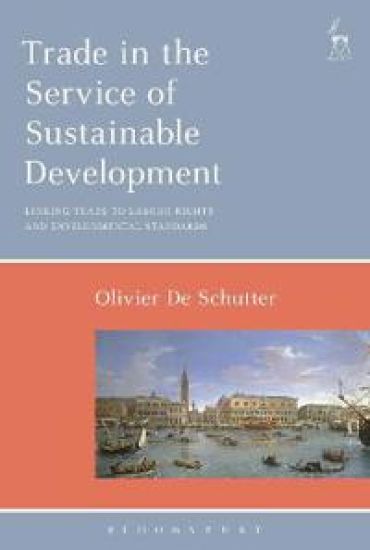
In the Bretton Woods era, trade liberalization, the improvement of labour rights and working conditions, and the strengthening of environmental policies, were seen as mutually supportive. But is this always true? Can we continue to pretend to protect the rights of workers and to improve environmental protection, particularly through climate change mitigation strategies, within an agenda focused on trade liberalization? Is it credible to pursue trade policies that aim to expand the volumes of trade, without linking such policies to labour and environmental standards, seen as ‘non-trade’ concerns? This book asks these questions, offering a detailed analysis of whether linkage is desirable and legally acceptable under the disciplines of the World Trade Organization (WTO). It concludes that trade can work for sustainable development, but only if we see it as a means for social and environmental progress, including climate change mitigation, and if we avoid fetichizing it as an end to be pursued for its own sake.
In the Bretton Woods era, trade liberalization, the improvement of labour rights and working conditions, and the strengthening of environmental policies, were seen as mutually supportive. But is this always true? Can we continue to pretend to protect the rights of workers and to improve environmental protection, particularly through climate change mitigation strategies, within an agenda focused on trade liberalization? Is it credible to pursue trade policies that aim to expand the volumes of trade, without linking such policies to labour and environmental standards, seen as ‘non-trade’ concerns? This book asks these questions, offering a detailed analysis of whether linkage is desirable and legally acceptable under the disciplines of the World Trade Organization (WTO). It concludes that trade can work for sustainable development, but only if we see it as a means for social and environmental progress, including climate change mitigation, and if we avoid fetichizing it as an end to be pursued for its own sake.
The leading textbook on international human rights law is now better than ever. The content has been fully updated and now provides more detailed coverage of substantive human rights, along with new sections on the war on terror and on the progressive realization of economic and social rights, making this the most comprehensive book in the field. It has a new, more student-friendly text design and has retained the features which made the first edition so engaging and accessible, including the concise and critical style, and questions and case studies within each chapter, as well as suggestions for further reading. Written by De Schutter, whose extensive experience working in the field and teaching the subject in both the US and EU gives him a unique perspective and valuable insight into the requirements of lecturers and students. This is an essential tool for all students of international human rights law.
The leading textbook on international human rights law is now better than ever. The content has been fully updated and now provides more detailed coverage of substantive human rights, along with new sections on the war on terror and on the progressive realization of economic and social rights, making this the most comprehensive book in the field. It has a new, more student-friendly text design and has retained the features which made the first edition so engaging and accessible, including the concise and critical style, and questions and case studies within each chapter, as well as suggestions for further reading. Written by De Schutter, whose extensive experience working in the field and teaching the subject in both the US and EU gives him a unique perspective and valuable insight into the requirements of lecturers and students. This is an essential tool for all students of international human rights law.