Kirjojen hintavertailu – 12 903 725 kirjaa ja 27 kauppaa

Kirjailija

Olivier Sibony

Kirjat ja teokset yhdessä paikassa: 22 kirjaa, julkaisuja vuosilta 2018–2026, suosituimpiin kuuluu Ruido: Un Fallo En El Juicio Humano / Noise: A Flaw in Human Judgment. Vertaile teosten hintoja ja tarkista saatavuus suomalaisista kirjakaupoista.

22 kirjaa

Kirjojen julkaisuvuodet: 2018–2026.

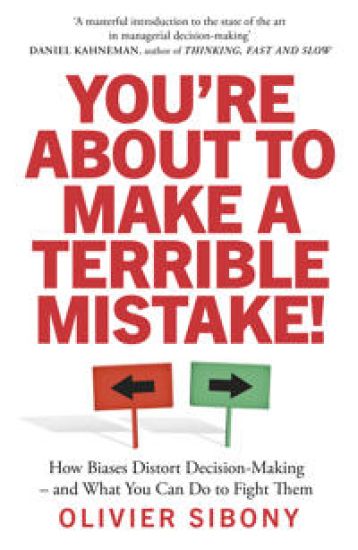
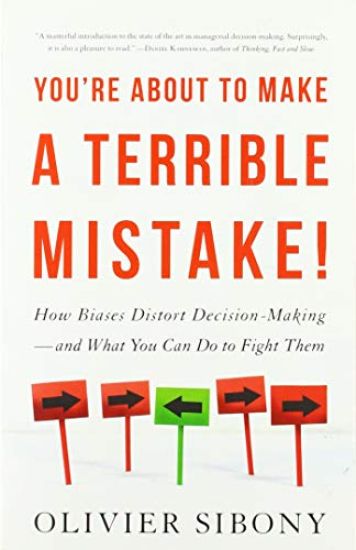
You're about to Make a Terrible Mistake: How Biases Distort Decision-Making and What You Can Do to Fight Them
Discover nine common business decision-making traps -- and learn practical tools for avoiding them -- in this "masterful," research-based guide from a professor of strategic thinking. (Daniel Kahneman, author of Thinking, Fast and Slow)We all make decisions all the time. It's so natural that we hardly stop to think about it. Yet even the smartest and most experienced among us make frequent and predictable errors. So, what makes a good decision? Should we trust our intuitions, and if so, when? How can we avoid being tripped up by cognitive biases when we are not even aware of them? In You're About to Make a Terrible Mistake , strategy professor and management consultant Olivier Sibony draws on dozens of fascinating and engaging case studies to show how cognitive biases routinely lead all of us -- including even the most renowned business titans -- into nine common decision-making traps. But instead of rehashing the same old "debiasing" techniques that fail managers time and again, Sibony explains that the best way to avoid the pitfalls of cognitive bias is to craft an effective decision-making architecture in your organization -- a system of techniques and processes that leverage collective intelligence to help leaders make the best decisions possible -- and provides 40 concrete methods for doing so. Distinctive in the clarity and practicality of its message, You're About to Make a Terrible Mistake distills the latest developments in behavioral economics and cognitive psychology into actionable tools for making smart, effective decisions in business and beyond. "Succinct, accurate, and even-handed. I loved it " (Angela Duckworth, bestselling author of Grit)"The best, funniest, most useful guide to cognitive bias in business. If you make decisions, you need to read this book." (Safi Bahcall, bestselling author of Loonshots)
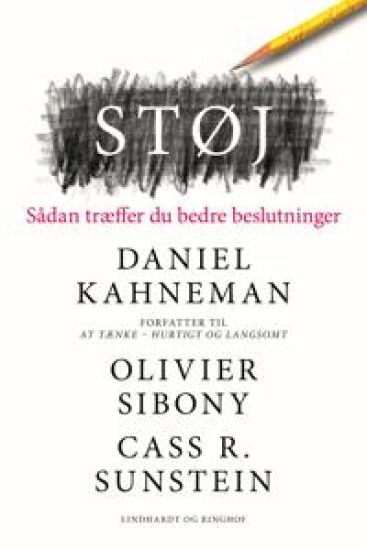
Støj - Sådan træffer du bedre beslutninger

Støj - Sådan træffer du bedre beslutninger

Daniel Kahneman; Olivier Sibony; Cass R. Sunstein

Lindhardt og Ringhof
2024
nidottu
Der vil altid være støj, der gør det svært for enhver at foretage vurderinger og træffe beslutninger. Daniel Kahneman, Olivier Sibony og Cass R. Sunstein viser i denne bog, hvordan støj er årsagen til, at der begås fejl inden for alle områder – herunder lægevidenskab, jura, sundhed, patenter, økonomi, retsmedicin, strategi og ansættelsesprocesser. Selvom støj findes overalt, hvor der træffes beslutninger, ignorerer både enkeltpersoner og organisationer dens betydning – ofte med store omkostninger til følge. Med enkle midler udforsker denne banebrydende bog, hvad vi kan gøre for at træffe bedre beslutninger. Forestil dig to læger, der stiller forskellige diagnoser til patienter med samme sygdom. Eller to dommere ved samme domstol, der giver forskellige domme til mennesker, der har begået identiske forbrydelser. Forestil dig, at beslutningerne afhænger af, om det er morgen eller eftermiddag, om det er mandag eller onsdag, eller om det er lige før eller efter frokost. Det er eksempler på støj: variationer i beslutninger, der burde være identiske.
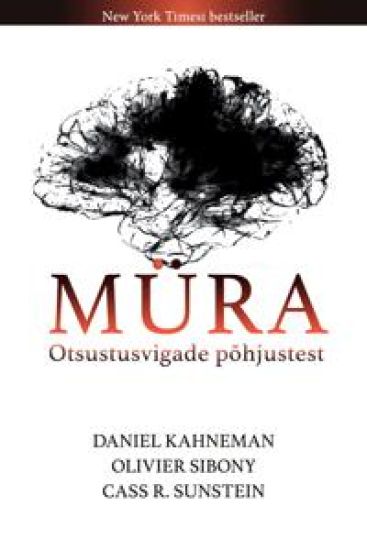
Müra

Müra

Olivier Sibony; Cass R. Sunstein; Daniel Kahneman

Äripäev
2023
sidottu
Kujutage ette, et kaks arsti panevad samale patsiendile erinevad diagnoosid või kaks kohtunikku määravad kohtualusele erinevad karistused. Need on näited otsuste varieeruvusest, mis peaksid olema identsed. Kujutage nüüd ette, et kõnealused arstid ja kohtunikud jõuavad erinevate otsusteni sõltuvalt sellest, kas on hommik või pärastlõuna, esmaspäev või kolmapäev. Kõikjal, kus on otsused, olgu isiklikud või töised, on ka müra. Lisaks ebaõiglusele loob see märkimisväärset majanduslikku kahju. Näiteks: kui tarkvaraarendajatel paluti eri päevadel hinnata samale ülesandele kuluvat aega, varieerusid tulemused tundides keskmiselt 71 protsenti. Katsed on kinnitanud sedagi, et hinnang töötaja sooritusele sõltub pigem selle andjast kui tulemusest. Kahneman, Sibony ja Sunstein kinnitavad oma menukis, et müra hulka saab vaid mõne lihtsa abinõuga tuntavalt vähendada ning jõuda seeläbi paremate otsusteni. Nende raamat uurib:- Müra ja nihke erinevust, näidates, et organisatsioonid võivad vahel olla lausa shokeerivalt mürased. Väite tõestuseks tutvustavad autorid müraauditi mõtet, mis on loodud selle mõõtmiseks.- Inimeste otsustuste olemust, kirjeldades, kuidas mõõta täpsust ja viga. Lisaks selgitatakse juhumüra olemust, mis kipub eriti hoogsalt tekkima grupiaruteludes näiliselt asjassepuutumatute tegurite tõttu (kes kõneleb esimesena jne).- Prognoosivaid otsustusi, samuti reeglite, valemite ja algoritmide olulisi eeliseid inimeste ees. Vastupidiselt levinud arvamusele ei ole asi niivõrd reeglite ülimuslikus tarkuses, vaid nende müratuses.- Psühholoogia seda osa, mis selgitab müra peamisi põhjuseid. Autorid uurivad, miks jääb müra märkamata ning miks meid ei üllata sündmused ja otsustused, mida polnud võimalik ennustada.- Kuidas oma otsustusi parandada ja vigu vältida? Autorid tutvustavad mitut müra vähendamise tehnikat, samuti vahehinnangute reeglistikku ehk võimaluste kaalumise käsitlust, mis sisaldab mitut olulist otsusehügieeni elementi ning mille eesmärk on jõuda usaldusväärsemate ja vähem müraste otsustusteni.- Milline on õige müratase? Mõnes valdkonnas ei olegi võimalik müra kõrvaldada, teistes oleks see liiga kulukas, kolmandas kahjustaks müra vähendamine olulisi konkurentsieeliseid.
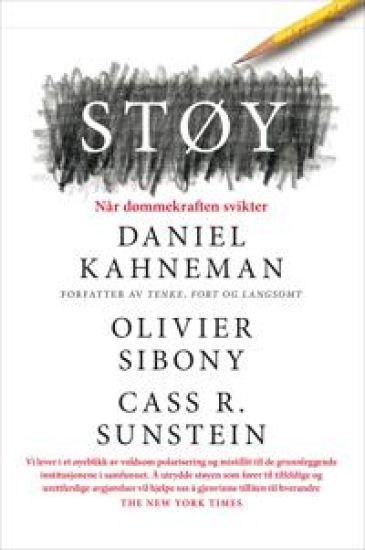
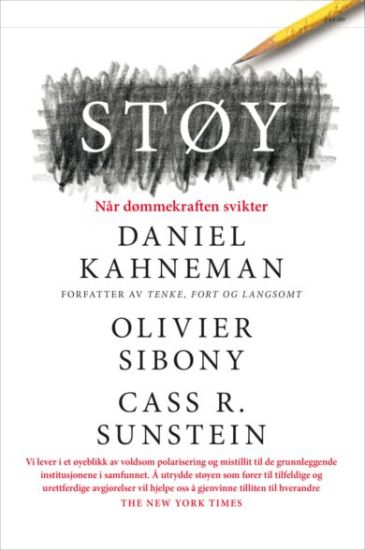
Støy; når dømmekraften svikter

Støy; når dømmekraften svikter

Daniel Kahneman; Olivier Sibony; Cass R. Sunstein

Pax
2022
pokkari
Se for deg at to leger i samme by gir totalt ulike diagnoser til identiske pasienter - eller at to dommere ved samme domstol idømmer helt ulike straffer til folk som har begått nøyaktig samme type kriminalitet. Sett at når et selskap behandler klager fra kundene, avhenger utfallet av hvilken kundebehandler som får jobben. Forestill deg videre at den samme legen, den samme dommeren eller kundebehandleren kommer til ulike resultater avhengig av om det er før eller etter lunsj, eller mandag fremfor fredag. Dette er eksempler på «støy»: variabilitet i avgjørelser som burde vært identiske. Gale beslutninger spiller en stor rolle i livet vårt, også når mye står på spill. Våre vurderinger, og det inkluderer de såkalte ekspertenes, er mye mer preget av tilfeldigheter enn vi er klar over. Men både enkeltmennesker og organisasjoner er som regel helt uvitende om i hvor stor grad tilfeldighetene herjer. I hvilken grad folk vil motsi sine egne tidligere avgjørelser når de presenteres for samme problemstilling på nytt, er en indikator på mengden støy. Fenomenet reduserer kvaliteten på vurderinger og beslutninger over alt, i næringslivet, i privatlivet og i samfunnet for øvrig. Denne boken presenterer systemer for å måle støy. Det viser seg dessverre at det ikke blir mindre støy av at beslutningstakerne er erfarne. En mulig løsning er i større grad å erstatte menneskelig vurdering med algoritmer, men også andre effektive metoder finnes - når man først har blitt klar over problemet.
Noise

Noise

Daniel Kahneman; Olivier Sibony; Cass R. Sunstein

William Collins
2022
nidottu

Halvin toimitettuna 19,90 €

THE INTERNATIONAL BESTSELLER ‘A monumental, gripping book … Outstanding’ SUNDAY TIMES ‘Noise may be the most important book I've read in more than a decade. A genuinely new idea so exceedingly important you will immediately put it into practice. A masterpiece’ Angela Duckworth, author of Grit ‘An absolutely brilliant investigation of a massive societal problem that has been hiding in plain sight’ Steven Levitt, co-author of Freakonomics From the world-leaders in strategic thinking and the multi-million copy bestselling authors of Thinking Fast and Slow and Nudge, the next big book to change the way you think. We like to think we make decisions based on good reasoning – and that our doctors, judges, politicians, economic forecasters and employers do too. In this groundbreaking book, three world-leading behavioural scientists come together to assess the last great fault in our collective decision-making: noise. We all make bad judgements more than we think. Noise shows us what we can do to make better ones.
Noise

Noise

Daniel Kahneman; Olivier Sibony; Cass R. Sunstein

HARPERCOLLINS PUBLISHERS
2022
nidottu

Halvin toimitettuna 15,90 €

The Sunday Times bestseller'A monumental, gripping book ... Outstanding' Sunday Times Wherever there is human judgement, there is noise. 'Noise may be the most important book I've read in more than a decade. A genuinely new idea so exceedingly important you will immediately put it into practice. A masterpiece' Angela Duckworth, author of Grit 'An absolutely brilliant investigation of a massive societal problem that has been hiding in plain sight'Steven Levitt, co-author of Freakonomics From the world-leaders in strategic thinking and the multi-million copy bestselling authors of Thinking Fast and Slow and Nudge, the next big book to change the way you think. Imagine that two doctors in the same city give different diagnoses to identical patients - or that two judges in the same court give different sentences to people who have committed matching crimes. Now imagine that the same doctor and the same judge make different decisions depending on whether it is morning or afternoon, or Monday rather than Wednesday, or they haven't yet had lunch. These are examples of noise: variability in judgements that should be identical. In Noise, Daniel Kahneman, Olivier Sibony and Cass R. Sunstein show how noise produces errors in many fields, including in medicine, law, public health, economic forecasting, forensic science, child protection, creative strategy, performance review and hiring. And although noise can be found wherever people are making judgements and decisions, individuals and organizations alike commonly ignore its impact, at great cost. Packed with new ideas, and drawing on the same kind of sharp analysis and breadth of case study that made Thinking, Fast and Slow and Nudge international bestsellers, Noise explains how and why humans are so susceptible to noise and bias in decision-making. We all make bad judgements more than we think. With a few simple remedies, this groundbreaking book explores what we can do to make better ones.
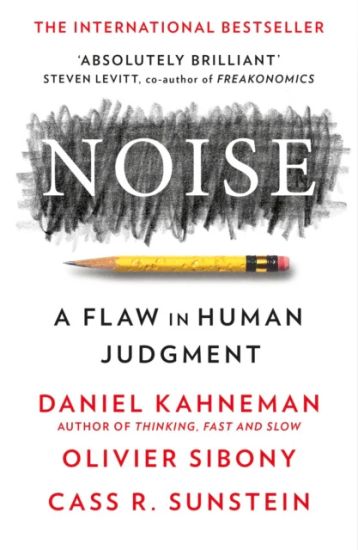
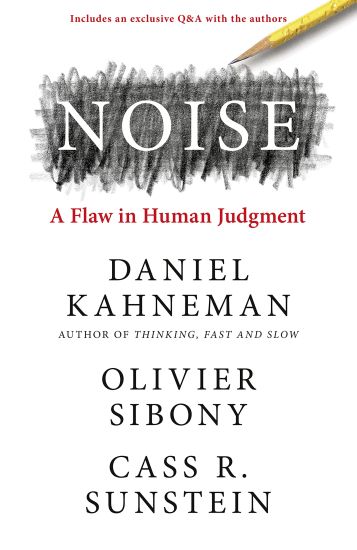
Noise: A Flaw in Human Judgment

Noise: A Flaw in Human Judgment

Daniel Kahneman; Olivier Sibony; Cass R. Sunstein

Little, Brown Spark
2022
nidottu

Halvin toimitettuna 26,20 €

NEW YORK TIMES BESTSELLER From the Nobel Prize-winning author of Thinking, Fast and Slow and the coauthor of Nudge, a revolutionary exploration of why people make bad judgments and how to make better ones--"a tour de force" (New York Times). Imagine that two doctors in the same city give different diagnoses to identical patients--or that two judges in the same courthouse give markedly different sentences to people who have committed the same crime. Suppose that different interviewers at the same firm make different decisions about indistinguishable job applicants--or that when a company is handling customer complaints, the resolution depends on who happens to answer the phone. Now imagine that the same doctor, the same judge, the same interviewer, or the same customer service agent makes different decisions depending on whether it is morning or afternoon, or Monday rather than Wednesday. These are examples of noise: variability in judgments that should be identical. In Noise, Daniel Kahneman, Olivier Sibony, and Cass R. Sunstein show the detrimental effects of noise in many fields, including medicine, law, economic forecasting, forensic science, bail, child protection, strategy, performance reviews, and personnel selection. Wherever there is judgment, there is noise. Yet, most of the time, individuals and organizations alike are unaware of it. They neglect noise. With a few simple remedies, people can reduce both noise and bias, and so make far better decisions. Packed with original ideas, and offering the same kinds of research-based insights that made Thinking, Fast and Slow and Nudge groundbreaking New York Times bestsellers, Noise explains how and why humans are so susceptible to noise in judgment--and what we can do about it.
Noise: A Flaw in Human Judgment

Noise: A Flaw in Human Judgment

Daniel Kahneman; Olivier Sibony; Cass R. Sunstein

Little, Brown Spark
2022
pokkari

Halvin toimitettuna 18,70 €

From the Nobel Prize-winning author of Thinking, Fast and Slow and the coauthor of Nudge, a revolutionary exploration of why people make bad judgments and how to make better ones--"a tour de force" (New York Times). Imagine that two doctors in the same city give different diagnoses to identical patients--or that two judges in the same courthouse give markedly different sentences to people who have committed the same crime. Suppose that different interviewers at the same firm make different decisions about indistinguishable job applicants--or that when a company is handling customer complaints, the resolution depends on who happens to answer the phone. Now imagine that the same doctor, the same judge, the same interviewer, or the same customer service agent makes different decisions depending on whether it is morning or afternoon, or Monday rather than Wednesday. These are examples of noise: variability in judgments that should be identical. In Noise, Daniel Kahneman, Olivier Sibony, and Cass R. Sunstein show the detrimental effects of noise in many fields, including medicine, law, economic forecasting, forensic science, bail, child protection, strategy, performance reviews, and personnel selection. Wherever there is judgment, there is noise. Yet, most of the time, individuals and organizations alike are unaware of it. They neglect noise. With a few simple remedies, people can reduce both noise and bias, and so make far better decisions. Packed with original ideas, and offering the same kinds of research-based insights that made Thinking, Fast and Slow and Nudge groundbreaking New York Times bestsellers, Noise explains how and why humans are so susceptible to noise in judgment--and what we can do about it.
Ruido: Un Fallo En El Juicio Humano / Noise: A Flaw in Human Judgment

Ruido: Un Fallo En El Juicio Humano / Noise: A Flaw in Human Judgment

Daniel Kahneman; Olivier Sibony; Cass R. Sunstein

Debate
2021
sidottu
PARA ENTENDER C MO PENSAMOS Y PENSAR MEJOR, HAY QUE LEER A KAHNEMAN. --Premio Nobel de Econom a Dos m dicos en la misma ciudad pueden dar diagn sticos diferentes a pacientes id nticos; dos jueces pueden dictar sentencias distintas ante delitos similares; nosotros mismos podemos decidir una cosa u otra seg n sea por la ma ana o por la tarde, o seg n se acerque o no la hora de comer. Estos son ejemplos de ruido: el sesgo que conlleva variabilidad en juicios que deber an ser iguales. El ruido est presente en todas las decisiones individuales y colectivas, y produce errores en innumerables terrenos, desde la medicina hasta la econom a, pasando por el derecho, la sanidad, la protecci n infantil y la contrataci n. Adem s, tambi n nos importuna e influye a la hora de tomar muchas de nuestras decisiones cotidianas. Daniel Kahneman, uno de los psic logos m s importantes del mundo, junto con Cass R. Sunstein y Olivier Sibony, dos eminencias mundiales en pensamiento estrat gico, nos ense an a escuchar ese ruido, cuyo impacto tendemos a ignorar, y a reducirlo para mejorar nuestros juicios. Basado en el mismo tipo de an lisis agudo e ingeniosos ejemplos que convirti Pensar r pido, pensar despacio en un best seller internacional, Ruido ofrece una serie de remedios originales, pr cticos y sencillos para pensar mejor. ENGLISH DESCRIPTION From the Nobel Prize-winning author of Thinking, Fast and Slow and the coauthor of Nudge, a revolutionary exploration of why people make bad judgments and how to make better ones--"a tour de force" (New York Times). Imagine that two doctors in the same city give different diagnoses to identical patients--or that two judges in the same courthouse give markedly different sentences to people who have committed the same crime. Suppose that different interviewers at the same firm make different decisions about indistinguishable job applicants--or that when a company is handling customer complaints, the resolution depends on who happens to answer the phone. Now imagine that the same doctor, the same judge, the same interviewer, or the same customer service agent makes different decisions depending on whether it is morning or afternoon, or Monday rather than Wednesday. These are examples of noise: variability in judgments that should be identical. In Noise, Daniel Kahneman, Olivier Sibony, and Cass R. Sunstein show the detrimental effects of noise in many fields, including medicine, law, economic forecasting, forensic science, bail, child protection, strategy, performance reviews, and personnel selection. Wherever there is judgment, there is noise. Yet, most of the time, individuals and organizations alike are unaware of it. They neglect noise. With a few simple remedies, people can reduce both noise and bias, and so make far better decisions. Packed with original ideas, and offering the same kinds of research-based insights that made Thinking, Fast and Slow and Nudge groundbreaking New York Times bestsellers, Noise explains how and why humans are so susceptible to noise in judgment--and what we can do about it.
Støy; når dømmekraften svikter

Støy; når dømmekraften svikter

Daniel Kahneman; Olivier Sibony; Cass R. Sunstein

Pax
2021
sidottu
Se for deg at to leger i samme by gir totalt ulike diagnoser til identiske pasienter - eller at to dommere ved samme domstol idømmer helt ulike straffer til folk som har begått nøyaktig samme type kriminalitet. Sett at når et selskap behandler klager fra kundene, avhenger utfallet av hvilken kundebehandler som får jobben. Forestill deg videre at den samme legen, den samme dommeren eller kundebehandleren kommer til ulike resultater avhengig av om det er før eller etter lunsj, eller mandag fremfor fredag. Dette er eksempler på «støy»: variabilitet i avgjørelser som burde vært identiske. Våre vurderinger, og det inkluderer de såkalte ekspertenes, er mye mer preget av tilfeldigheter enn vi er klar over. Men både enkeltmennesker og organisasjoner er som regel helt uvitende om i hvor stor grad tilfeldighetene herjer. I hvilken grad folk vil motsi sine egne tidligere avgjørelser når de presenteres for samme problemstilling på nytt, er en indikator på mengden støy. Fenomenet reduserer kvaliteten på vurderinger og beslutninger over alt, i næringslivet, i privatlivet og i samfunnet for øvrig. Denne boken presenterer systemer for å måle støy. Det viser seg dessverre at det ikke blir mindre støy av at beslutningstakerne er erfarne. En mulig løsning er i større grad å erstatte menneskelig vurdering med algoritmer, men også andre effektive metoder finnes - når man først har blitt klar over problemet.
You'Re About to Make a Terrible Mistake!
'A masterful introduction to the state of the art in managerial decision-making. Surprisingly, it is also a pleasure to read’ – Daniel Kahneman, author of Thinking, Fast and Slow A lively, research-based tour of nine common decision-making traps – and practical tools for avoiding them – from a professor of strategic thinking We make decisions all the time. It's so natural that we hardly stop to think about it. Yet even the smartest and most experienced among us make frequent and predictable errors. So, what makes a good decision? Should we trust our intuitions, and if so, when? How can we avoid being tripped up by cognitive biases when we are not even aware of them? You're About to Make a Terrible Mistake! offers clear and practical advice that distils the latest developments in behavioural economics and cognitive psychology into actionable tools for making clever, effective decisions in business and beyond.
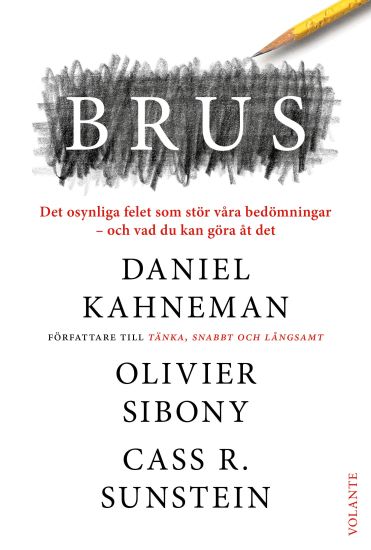
Brus : det osynliga felet som stör våra bedömningar - och vad du kan göra åt det

Brus : det osynliga felet som stör våra bedömningar - och vad du kan göra åt det

Daniel Kahneman; Cass R. Sunstein; Olivier Sibony

Volante
2021
sidottu
VARJE GÅNG DU GÖR EN BEDÖMNING ELLER FATTAR ETT BESLUT, PÅVERKAS DU AV BRUSET. Nobelprisbelönade Daniel Kahneman, en av världens främsta tänkare, är tillbaka med ett nytt storverk Brus (på engelska Noise) om hur vår hjärna och beslutsförmåga fungerar. Vilka är faktorerna som stör och hur kan vi minimera dem? Daniel Kahnemans forskning har haft stort inflytande inom en rad olika områden från ekonomi och psykologi till medicin och politik. Sin nya bok har han skrivit tillsammans med Olivier Sibony och Cass R. Sunstein, medförfattare till Nudge ihop med Richard Thaler. Brus bygger på lika omsorgsfull och djuplodande forskning som gjorde Tänka, snabbt och långsamt till en bästsäljare över hela världen. I en perfekt värld skulle samtliga skott träffa mitt i prick. På samma sätt skulle inga bedömningar störas av oönskade och felaktiga skillnader. Men i stället påverkas vi av ett osynligt problem: brus. Slumpmässiga störningar i mänskligt tänkande som orsakar felbedömningar på många områden: medicinska diagnoser, rättsliga påföljder, ekonomiska och finansiella prognoser, politiska beslut och strategiska vägval för företag. Effekterna kan ibland bli chockerande stora för både individer och organisationer. Till enorma kostnader. Vi gör dåliga bedömningar oftare än vad vi tror. Den här banbrytande boken visar vad vi kan göra åt det, med några enkla verktyg och regler. Boken avslutas med konkreta och specifika förslag på analyser, checklistor och justeringar som hjälper oss att göra bättre bedömningar. »Brus är nog den viktigaste boken jag har läst de senaste tio åren. Ett genuint nytt sätt att tänka av sådan dignitet att du får lust att omsätta det i praktiken med en gång.« Angela Duckworth, författare till Grit. »I Brus applicerar författarna skarpsinnigt sina unika och nya insikter om felen i våra bedömningar på de mest skilda områden En mästerlig bedrift och ett landmärke på psykologins område.« Philip E. Tetlock, medförfattare till Superforecasting »Spänn fast dig och låt några av världens skarpaste hjärnor förklara hur du kan bedöma människor, fatta beslut och lösa problem på ett nytt sätt.« Adam Grant, författare till Think again »Brus är en fullkomligt lysande redogörelse för ett jättelikt samhällsproblem som vi förbisett trots att det legat i öppen dager.« Steven Levitt, medförfattare till Freakonomics »Kahneman, Sibony och Sunstein har upptäckt ett problem stort som en elefant: brus. I den här viktiga boken visar de varför brus måste tas på allvar, varför det finns mer av det än vi tror och hur det kan minskas. Om vi följde deras råd skulle vi få lönsammare företag, friskare befolkning, rättvisare domar och lyckligare liv.« Jonathan Haidt, författare till The righteous mind
Noise

Noise

Daniel Kahneman; Olivier Sibony; Cass R. Sunstein

HARPERCOLLINS PUBLISHERS
2021
nidottu
The Sunday Times bestseller'A monumental, gripping book ... Outstanding' Sunday TimesWherever there is human judgement, there is noise.
Noise: A Flaw in Human Judgment

Noise: A Flaw in Human Judgment

Daniel Kahneman; Olivier Sibony; Cass R. Sunstein

Little, Brown Spark
2021
sidottu

Halvin toimitettuna 30,40 €

NEW YORK TIMES BESTSELLER From the Nobel Prize-winning author of Thinking, Fast and Slow and the coauthor of Nudge, a revolutionary exploration of why people make bad judgments and how to make better ones--"a tour de force" (New York Times). Imagine that two doctors in the same city give different diagnoses to identical patients--or that two judges in the same courthouse give markedly different sentences to people who have committed the same crime. Suppose that different interviewers at the same firm make different decisions about indistinguishable job applicants--or that when a company is handling customer complaints, the resolution depends on who happens to answer the phone. Now imagine that the same doctor, the same judge, the same interviewer, or the same customer service agent makes different decisions depending on whether it is morning or afternoon, or Monday rather than Wednesday. These are examples of noise: variability in judgments that should be identical. In Noise, Daniel Kahneman, Olivier Sibony, and Cass R. Sunstein show the detrimental effects of noise in many fields, including medicine, law, economic forecasting, forensic science, bail, child protection, strategy, performance reviews, and personnel selection. Wherever there is judgment, there is noise. Yet, most of the time, individuals and organizations alike are unaware of it. They neglect noise. With a few simple remedies, people can reduce both noise and bias, and so make far better decisions. Packed with original ideas, and offering the same kinds of research-based insights that made Thinking, Fast and Slow and Nudge groundbreaking New York Times bestsellers, Noise explains how and why humans are so susceptible to noise in judgment--and what we can do about it.
Noise: A Flaw in Human Judgment

Noise: A Flaw in Human Judgment

Daniel Kahneman; Olivier Sibony; Cass R. Sunstein

Little, Brown Spark
2021
sidottu

Halvin toimitettuna 28,70 €

NEW YORK TIMES BESTSELLER From the Nobel Prize-winning author of Thinking, Fast and Slow and the coauthor of Nudge, a revolutionary exploration of why people make bad judgments and how to make better ones--"a tour de force" (New York Times). Imagine that two doctors in the same city give different diagnoses to identical patients--or that two judges in the same courthouse give markedly different sentences to people who have committed the same crime. Suppose that different interviewers at the same firm make different decisions about indistinguishable job applicants--or that when a company is handling customer complaints, the resolution depends on who happens to answer the phone. Now imagine that the same doctor, the same judge, the same interviewer, or the same customer service agent makes different decisions depending on whether it is morning or afternoon, or Monday rather than Wednesday. These are examples of noise: variability in judgments that should be identical. In Noise, Daniel Kahneman, Olivier Sibony, and Cass R. Sunstein show the detrimental effects of noise in many fields, including medicine, law, economic forecasting, forensic science, bail, child protection, strategy, performance reviews, and personnel selection. Wherever there is judgment, there is noise. Yet, most of the time, individuals and organizations alike are unaware of it. They neglect noise. With a few simple remedies, people can reduce both noise and bias, and so make far better decisions. Packed with original ideas, and offering the same kinds of research-based insights that made Thinking, Fast and Slow and Nudge groundbreaking New York Times bestsellers, Noise explains how and why humans are so susceptible to noise in judgment--and what we can do about it.
Noise: A Flaw in Human Judgment

Noise: A Flaw in Human Judgment

Daniel Kahneman; Olivier Sibony; Cass R. Sunstein

Little, Brown Spark
2021
nidottu
From the Nobel Prize-winning author of Thinking, Fast and Slow and the coauthor of Nudge, a revolutionary exploration of why people make bad judgments and how to make better ones--"a tour de force" (New York Times). Imagine that two doctors in the same city give different diagnoses to identical patients--or that two judges in the same courthouse give markedly different sentences to people who have committed the same crime. Suppose that different interviewers at the same firm make different decisions about indistinguishable job applicants--or that when a company is handling customer complaints, the resolution depends on who happens to answer the phone. Now imagine that the same doctor, the same judge, the same interviewer, or the same customer service agent makes different decisions depending on whether it is morning or afternoon, or Monday rather than Wednesday. These are examples of noise: variability in judgments that should be identical. In Noise, Daniel Kahneman, Olivier Sibony, and Cass R. Sunstein show the detrimental effects of noise in many fields, including medicine, law, economic forecasting, forensic science, bail, child protection, strategy, performance reviews, and personnel selection. Wherever there is judgment, there is noise. Yet, most of the time, individuals and organizations alike are unaware of it. They neglect noise. With a few simple remedies, people can reduce both noise and bias, and so make far better decisions. Packed with original ideas, and offering the same kinds of research-based insights that made Thinking, Fast and Slow and Nudge groundbreaking New York Times bestsellers, Noise explains how and why humans are so susceptible to noise in judgment--and what we can do about it.
You'Re About to Make a Terrible Mistake!
'A masterful introduction to the state of the art in managerial decision-making. Surprisingly, it is also a pleasure to read’ – Daniel Kahneman, author of Thinking, Fast and Slow A lively, research-based tour of nine common decision-making traps – and practical tools for avoiding them – from a professor of strategic thinking We make decisions all the time. It's so natural that we hardly stop to think about it. Yet even the smartest and most experienced among us make frequent and predictable errors. So, what makes a good decision? Should we trust our intuitions, and if so, when? How can we avoid being tripped up by cognitive biases when we are not even aware of them? You're About to Make a Terrible Mistake! offers clear and practical advice that distils the latest developments in behavioural economics and cognitive psychology into actionable tools for making clever, effective decisions in business and beyond.
You're about to Make a Terrible Mistake: How Biases Distort Decision-Making and What You Can Do to Fight Them
Discover nine common business decision-making traps -- and learn practical tools for avoiding them -- in this "masterful," research-based guide from a professor of strategic thinking. (Daniel Kahneman, author of Thinking, Fast and Slow)We all make decisions all the time. It's so natural that we hardly stop to think about it. Yet even the smartest and most experienced among us make frequent and predictable errors. So, what makes a good decision? Should we trust our intuitions, and if so, when? How can we avoid being tripped up by cognitive biases when we are not even aware of them? In You're About to Make a Terrible Mistake , strategy professor and management consultant Olivier Sibony draws on dozens of fascinating and engaging case studies to show how cognitive biases routinely lead all of us -- including even the most renowned business titans -- into nine common decision-making traps. But instead of rehashing the same old "debiasing" techniques that fail managers time and again, Sibony explains that the best way to avoid the pitfalls of cognitive bias is to craft an effective decision-making architecture in your organization -- a system of techniques and processes that leverage collective intelligence to help leaders make the best decisions possible -- and provides 40 concrete methods for doing so. Distinctive in the clarity and practicality of its message, You're About to Make a Terrible Mistake distills the latest developments in behavioral economics and cognitive psychology into actionable tools for making smart, effective decisions in business and beyond. "Succinct, accurate, and even-handed. I loved it " (Angela Duckworth, bestselling author of Grit)"The best, funniest, most useful guide to cognitive bias in business. If you make decisions, you need to read this book." (Safi Bahcall, bestselling author of Loonshots)
You're About to Make a Terrible Mistake
Discover nine common business decision-making traps -- and learn practical tools for avoiding them -- in this "masterful," research-based guide from a professor of strategic thinking. (Daniel Kahneman, author of Thinking, Fast and Slow)We all make decisions all the time. It's so natural that we hardly stop to think about it. Yet even the smartest and most experienced among us make frequent and predictable errors. So, what makes a good decision? Should we trust our intuitions, and if so, when? How can we avoid being tripped up by cognitive biases when we are not even aware of them? In You're About to Make a Terrible Mistake , strategy professor and management consultant Olivier Sibony draws on dozens of fascinating and engaging case studies to show how cognitive biases routinely lead all of us -- including even the most renowned business titans -- into nine common decision-making traps. But instead of rehashing the same old "debiasing" techniques that fail managers time and again, Sibony explains that the best way to avoid the pitfalls of cognitive bias is to craft an effective decision-making architecture in your organization -- a system of techniques and processes that leverage collective intelligence to help leaders make the best decisions possible -- and provides 40 concrete methods for doing so. Distinctive in the clarity and practicality of its message, You're About to Make a Terrible Mistake distills the latest developments in behavioral economics and cognitive psychology into actionable tools for making smart, effective decisions in business and beyond." Succinct, accurate, and even-handed. I loved it " (Angela Duckworth, bestselling author of Grit)"The best, funniest, most useful guide to cognitive bias in business. If you make decisions, you need to read this book." (Safi Bahcall, bestselling author of Loonshots)