Kirjojen hintavertailu – 12 903 725 kirjaa ja 27 kauppaa

Kirjailija

Olof Sundin

Kirjat ja teokset yhdessä paikassa: 7 kirjaa, julkaisuja vuosilta 2018–2024, suosituimpiin kuuluu Profession, utbildning, forskning : biblioteks- och informationsvetenskap för en stärkt bibliotekarieprofession. Vertaile teosten hintoja ja tarkista saatavuus suomalaisista kirjakaupoista.

7 kirjaa

Kirjojen julkaisuvuodet: 2018–2024.

Källkritik : människor, teknik och samhälle

Källkritik : människor, teknik och samhälle

Olof Sundin

Gleerups Utbildning AB
2024
nidottu
Samtiden präglas av sociala mediers flöden med allt från kakrecept till konspirationsteorier, algoritmernas enorma makt och samtidigt osynlighet, och en framväxande generativ AI:s kapacitet att sprida lögner, påhittade bilder och videor. Kan källkritik, en metod som en gång utvecklats inom historievetenskapen, vara lösningen på de många utmaningar som samhället står inför? I boken Källkritik: människor, teknik och samhälle behandlas ovanstående och andra utmaningar utifrån mångårig forskning och med hjälp av aktuella exempel. Källkritik ges en vidare förståelse som även inkluderar en diskussion om tillitens viktiga roll i en politiskt turbulent tid och hur information faktiskt hittas. Bokens vänder sig till studenter, yrkesverksamma och alla som vill lära sig mer om källkritik. Olof Sundin är professor i biblioteks- och informationsvetenskap vid Institutionen för kulturvetenskaper, Lunds universitet.
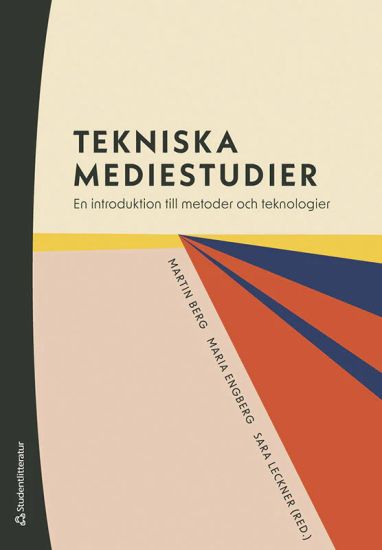
Tekniska mediestudier : en introduktion till metoder och teknologier

Tekniska mediestudier : en introduktion till metoder och teknologier

Martin Berg; Maria Engberg; Sara Leckner; Jonas Andersson; Jay David Bolter; Òscar Coromina Rodriguez; Jutta Haider; Fredrik Håland Jensen; Simon Lindgren; Lars Nyre; Linda Paxling; Olof Sundin; Jakob Svensson; Pontus Wärnestål

Studentlitteratur AB
2023
nidottu
I en tid då medielandskapet är i ständig förändring och traditionell medieforskning konstant utmanas ökar behovet av att förena teknik, humaniora och samhällsvetenskap. Medie- och teknikforskning kräver innovativa angreppssätt för att navigera bland komplexa relationer mellan kultur, samhälle, ekonomi och teknologi. I den här boken bjuder ledande forskare in till samtal om teknologins utmaningar och möjligheter. Här presenteras redskap för att utforska, beskriva, begreppsliggöra och förstå nya relationer mellan medieteknologier och deras omvärld - en kunskap som förbereder läsaren att på egen hand kombinera samhällsvetenskapernas kritiska analyser med teknikvetenskapernas tradition att utveckla tillförlitliga och effektiva system. Tekniska mediestudier riktar sig till studenter inom ämnen som medieteknik, medie- och kommunikationsvetenskap, kulturvetenskap, data- och systemvetenskap, interaktionsdesign och informatik.
Paradoxes of Media and Information Literacy

Paradoxes of Media and Information Literacy

Jutta Haider; Olof Sundin

TAYLOR FRANCIS LTD
2022
nidottu

Halvin toimitettuna 53,40 €

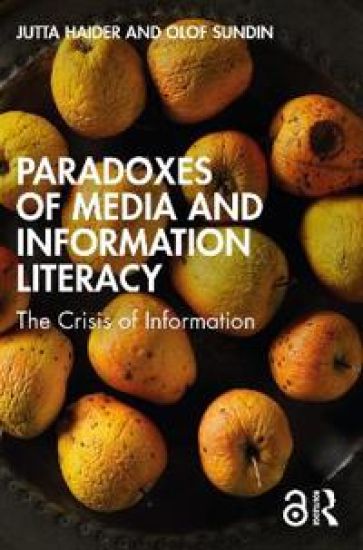
Paradoxes of Media and Information Literacy contributes to ongoing conversations about control of knowledge and different ways of knowing. It does so by analysing why media and information literacy (MIL) is proposed as a solution for addressing the current information crisis. Questioning why MIL is commonly believed to wield such power, the book throws into sharp relief several paradoxes that are built into common understandings of such literacies. Haider and Sundin take the reader on a journey across different fields of practice, research and policymaking, including librarianship, information studies, teaching and journalism, media and communication and the educational sciences. The authors also consider national information policy proposals and the recommendations of NGOs or international bodies, such as UNESCO and the OECD. Showing that MIL plays an active role in contemporary controversies, such as those on climate change or vaccination, Haider and Sundin argue that such controversies challenge existing notions of fact and ignorance, trust and doubt, and our understanding of information access and information control. The book thus argues for the need to unpack and understand the contradictions forming around these notions in relation to MIL, rather than attempting to arrive at a single, comprehensive definition. Paradoxes of Media and Information Literacy combines careful analytical and conceptual discussions with an in-depth understanding of information practices and of the contemporary information infrastructure. It is essential reading for scholars and students engaged in library and information studies, media and communication, journalism studies and the educational sciences.
Paradoxes of Media and Information Literacy

Paradoxes of Media and Information Literacy

Jutta Haider; Olof Sundin

TAYLOR FRANCIS LTD
2022
sidottu
Paradoxes of Media and Information Literacy contributes to ongoing conversations about control of knowledge and different ways of knowing. It does so by analysing why media and information literacy (MIL) is proposed as a solution for addressing the current information crisis. Questioning why MIL is commonly believed to wield such power, the book throws into sharp relief several paradoxes that are built into common understandings of such literacies. Haider and Sundin take the reader on a journey across different fields of practice, research and policymaking, including librarianship, information studies, teaching and journalism, media and communication and the educational sciences. The authors also consider national information policy proposals and the recommendations of NGOs or international bodies, such as UNESCO and the OECD. Showing that MIL plays an active role in contemporary controversies, such as those on climate change or vaccination, Haider and Sundin argue that such controversies challenge existing notions of fact and ignorance, trust and doubt, and our understanding of information access and information control. The book thus argues for the need to unpack and understand the contradictions forming around these notions in relation to MIL, rather than attempting to arrive at a single, comprehensive definition. Paradoxes of Media and Information Literacy combines careful analytical and conceptual discussions with an in-depth understanding of information practices and of the contemporary information infrastructure. It is essential reading for scholars and students engaged in library and information studies, media and communication, journalism studies and the educational sciences.
Invisible Search and Online Search Engines

Invisible Search and Online Search Engines

Jutta Haider; Olof Sundin

Routledge
2019
sidottu
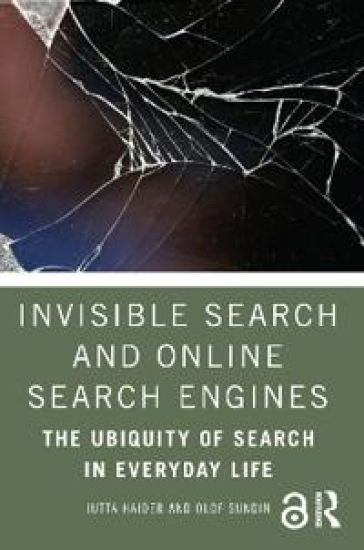
Invisible Search and Online Search Engines considers the use of search engines in contemporary everyday life and the challenges this poses for media and information literacy. Looking for mediated information is mostly done online and arbitrated by the various tools and devices that people carry with them on a daily basis. Because of this, search engines have a significant impact on the structure of our lives, and personal and public memories. Haider and Sundin consider what this means for society, whilst also uniting research on information retrieval with research on how people actually look for and encounter information. Search engines are now one of society’s key infrastructures for knowing and becoming informed. While their use is dispersed across myriads of social practices, where they have acquired close to naturalised positions, they are commercially and technically centralised. Arguing that search, searching, and search engines have become so widely used that we have stopped noticing them, Haider and Sundin consider what it means to be so reliant on this all-encompassing and increasingly invisible information infrastructure. Invisible Search and Online Search Engines is the first book to approach search and search engines from a perspective that combines insights from the technical expertise of information science research with a social science and humanities approach. As such, the book should be essential reading for academics, researchers, and students working on and studying information science, library and information science (LIS), media studies, journalism, digital cultures, and educational sciences.
Invisible Search and Online Search Engines

Invisible Search and Online Search Engines

Jutta Haider; Olof Sundin

Routledge
2019
nidottu

Halvin toimitettuna 54,50 €

Invisible Search and Online Search Engines considers the use of search engines in contemporary everyday life and the challenges this poses for media and information literacy. Looking for mediated information is mostly done online and arbitrated by the various tools and devices that people carry with them on a daily basis. Because of this, search engines have a significant impact on the structure of our lives, and personal and public memories. Haider and Sundin consider what this means for society, whilst also uniting research on information retrieval with research on how people actually look for and encounter information. Search engines are now one of society’s key infrastructures for knowing and becoming informed. While their use is dispersed across myriads of social practices, where they have acquired close to naturalised positions, they are commercially and technically centralised. Arguing that search, searching, and search engines have become so widely used that we have stopped noticing them, Haider and Sundin consider what it means to be so reliant on this all-encompassing and increasingly invisible information infrastructure. Invisible Search and Online Search Engines is the first book to approach search and search engines from a perspective that combines insights from the technical expertise of information science research with a social science and humanities approach. As such, the book should be essential reading for academics, researchers, and students working on and studying information science, library and information science (LIS), media studies, journalism, digital cultures, and educational sciences.
Profession, utbildning, forskning : biblioteks- och informationsvetenskap för en stärkt bibliotekarieprofession

Profession, utbildning, forskning : biblioteks- och informationsvetenskap för en stärkt bibliotekarieprofession

Joacim Hansson; Åse Hedemark; Ulrika Kjellman; Jenny Lindberg; Jan Nolin; Olof Sundin; Per Wisselgren

Kungliga biblioteket
2018
nidottu
Hur är läget för svensk biblioteks- och informationsvetenskap – och hur kan den stärkas? Det är fokus i en ny rapport från sekretariatet för en nationell biblioteksstrategi. Rapporten presenterar även fem strategiska förslag för hur både utbildningen och forskningen kan utvecklas. I Sverige finns biblioteks- och informationsvetenskapliga utbildningar idag vid fem lärosäten: Högskolan i Borås, Linnéuniversitetet, Lunds universitet, Umeå universitet och Uppsala universitet. Under förra året gav sekretariatet för nationell biblioteksstrategi dem i uppdrag att utreda situationen för sina respektive utbildningar. Resultatet av utredningarna presenteras nu i denna rapport. Rapporten innehåller en omvärldsanalys med riktning mot bibliotekssektorn samt en beskrivning av nuläget för biblioteks- och informationsvetenskaplig utbildning och forskning. Dessutom lyfts ämnets centrala betydelse för bibliotekarieprofessionen fram.