Kirjojen hintavertailu – 12 903 725 kirjaa ja 27 kauppaa

Kirjailija

Omer Bartov

Kirjat ja teokset yhdessä paikassa: 20 kirjaa, julkaisuja vuosilta 1986–2027, suosituimpiin kuuluu Gender in Conflicts. Vertaile teosten hintoja ja tarkista saatavuus suomalaisista kirjakaupoista.

20 kirjaa

Kirjojen julkaisuvuodet: 1986–2027.

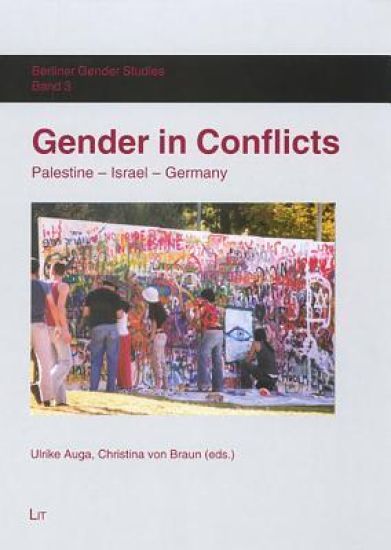
Gender in Conflicts

Gender in Conflicts

Theodore Zev Weiss; Christina von Braun; Jurgen Zimmerer; Annette Becker; Kate Brown; Omer Bartov; Na'ama Shik; Elizabeth R. Baer; Dori Laub

Lit Verlag
2007
nidottu
Gender order is one domain in which claims to power are demarcated in societies based on a religious codex as well as in secular societies such as nation-states. Gender order especially becomes the area in which conflicts are carried out when a society experiences transition or clashes with another society. At a time when Israel and Palestine face an escalation of their conflict and Germany is undergoing profound changes, renowned scholars discuss the implications on the gender order from their individual vantage points. The transdisciplinary articles focus on Gender in the context of Knowledge, Arts and Representation, Memory and Scripture, Political Transition, and Life Sciences. "Ulrike Auga" is assistant professor at Humboldt University, Berlin (Germany). "Christina von Braun" is the head of the Chair for Cultural History and Gender at Humboldt University, Berlin.
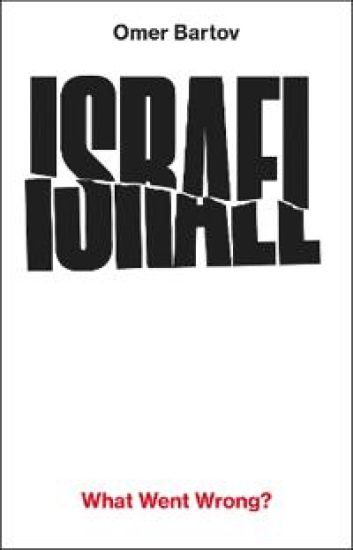
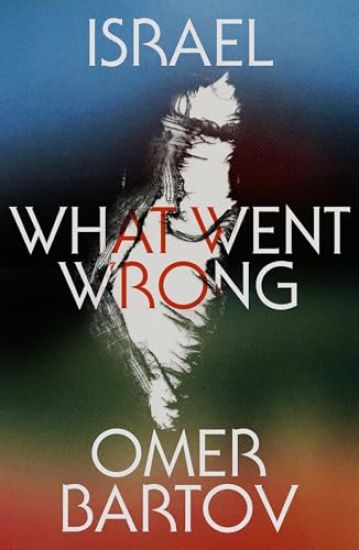
Israel: What Went Wrong?

Israel: What Went Wrong?

Omer Bartov

Vintage Publishing
2026
sidottu
A leading genocide scholar explores the history of Zionism, Israel’s lurch towards extreme oppression and violence, and why it stands accused of crimes against humanity Professor Omer Bartov was born on a kibbutz, grew up in Tel Aviv and served in the Israel Defence Forces during the Yom Kippur War. He went on to become an expert on the German army and the Holocaust, before turning his attention to his native country. In Israel: What Went Wrong?, Bartov explores the transformation of Zionism from a movement of Jewish emancipation and liberation into a state ideology of ethno-nationalism, exclusion and violent domination of Palestinians. He traces the process whereby Israel – whose establishment received international support in the aftermath of the Holocaust – stands accused of war crimes and genocide. Less than eight decades after its founding in 1948 – the year in which the UN Genocide Convention was adopted in response to Nazi crimes – Bartov argues that, for the past two years, the Jewish state was engaged in a genocidal undertaking in Gaza. What are the implications of Israel’s near total impunity for the post-1945 regime of international law? And how do we understand the widespread support for these policies by Israel’s Jewish citizens? Eye-opening and urgent, Israel: What Went Wrong? is a powerful and vital primer for anyone trying to understand this century’s most violent and devastating conflict.
Israel: What Went Wrong?

Israel: What Went Wrong?

Omer Bartov

Farrar, Straus and Giroux
2026
sidottu
A leading Israeli American scholar of the Holocaust explores and explains his native country's intensifying turn toward violence and exclusion. The distinguished historian Omer Bartov was born on a kibbutz, grew up in Tel Aviv, and served in the Israel Defense Forces during the Yom Kippur War. He went on to become a leading scholar of the German army and the Holocaust, before turning his attention to his native country. In Israel: What Went Wrong?, Bartov sketches the tragic transformation of Zionism, a movement that sought to emancipate European Jewry from oppression, into a state ideology of ethno-nationalism. How is it possible, he asks, that a state founded in the immediate aftermath of the Holocaust, an event that gave legitimacy to a national home for the Jews, stands credibly accused of perpetrating large-scale war crimes? How do we come to terms with the fact that Israel's war of destruction is being conducted with the support, laced with denial and indifference, of so many of its Jewish citizens? Tracing the roots of the violent events currently unfolding in Israel and the occupied territories, Bartov tracks his country's moral tribulations and considers the origins of Zionism, the intertwining of Israel's independence with Palestinian displacement, the politics of the Holocaust, controversies over the term "genocide," and the uncertain future. The result is a searing and urgent critique that addresses today's debates over Zionism and the future of Israel with rigor and depth.
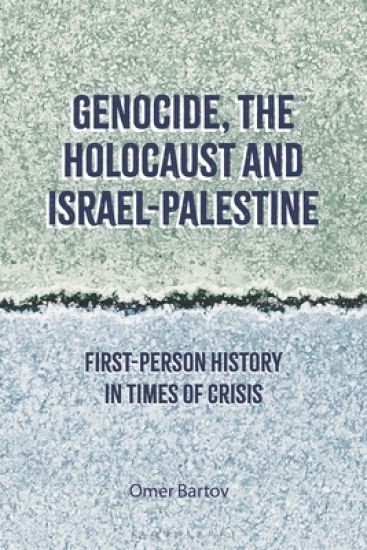
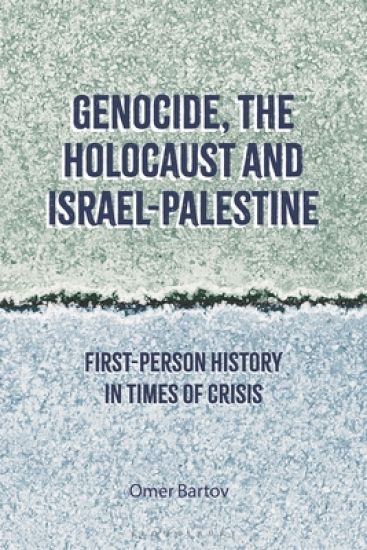
Genocide, the Holocaust and Israel-Palestine

Genocide, the Holocaust and Israel-Palestine

Omer Bartov

BLOOMSBURY PUBLISHING PLC
2023
nidottu

Halvin toimitettuna 34,40 €

A 2024 Choice Outstanding Academic TitleThis book discusses some of the most urgent current debates over the study, commemoration, and politicization of the Holocaust through key critical perspectives. Omer Bartov adeptly assesses the tensions between Holocaust and genocide studies, which have repeatedly both enriched and clashed with each other, whilst convincingly arguing for the importance of local history and individual testimony in grasping the nature of mass murder. He goes on to critically examine how legal discourse has served to both uncover and deny individual and national complicity. Genocide, the Holocaust and Israel-Palestine outlines how first-person histories provide a better understanding of events otherwise perceived as inexplicable and, lastly, draws on the author’s own personal trajectory to consider links between the fate of Jews in World War II and the plight of Palestinians during and in the aftermath of the establishment of the state of Israel. Bartov demonstrates that these five perspectives, rarely if ever previously discussed in a single book, are inextricably linked, and shed much light on each other. Thus the Holocaust and other genocides must be seen as related catastrophes in the modern era; understanding such vast human tragedies necessitates scrutinizing them on the local and personal scale; this in turn calls for historical empathy, accomplished via personal-biographical introspection; and true, open-minded, and rigorous introspection, without which historical understanding tends toward obfuscation, brings to light uncomfortable yet clarifying connections, such as that between the Holocaust and the Nakba, the mass flight and expulsion of the Palestinians in 1948.
Genocide, the Holocaust and Israel-Palestine

Genocide, the Holocaust and Israel-Palestine

Omer Bartov

BLOOMSBURY PUBLISHING PLC
2023
sidottu
A 2024 Choice Outstanding Academic TitleThis book discusses some of the most urgent current debates over the study, commemoration, and politicization of the Holocaust through key critical perspectives. Omer Bartov adeptly assesses the tensions between Holocaust and genocide studies, which have repeatedly both enriched and clashed with each other, whilst convincingly arguing for the importance of local history and individual testimony in grasping the nature of mass murder. He goes on to critically examine how legal discourse has served to both uncover and deny individual and national complicity. Genocide, the Holocaust and Israel-Palestine outlines how first-person histories provide a better understanding of events otherwise perceived as inexplicable and, lastly, draws on the author’s own personal trajectory to consider links between the fate of Jews in World War II and the plight of Palestinians during and in the aftermath of the establishment of the state of Israel. Bartov demonstrates that these five perspectives, rarely if ever previously discussed in a single book, are inextricably linked, and shed much light on each other. Thus the Holocaust and other genocides must be seen as related catastrophes in the modern era; understanding such vast human tragedies necessitates scrutinizing them on the local and personal scale; this in turn calls for historical empathy, accomplished via personal-biographical introspection; and true, open-minded, and rigorous introspection, without which historical understanding tends toward obfuscation, brings to light uncomfortable yet clarifying connections, such as that between the Holocaust and the Nakba, the mass flight and expulsion of the Palestinians in 1948.
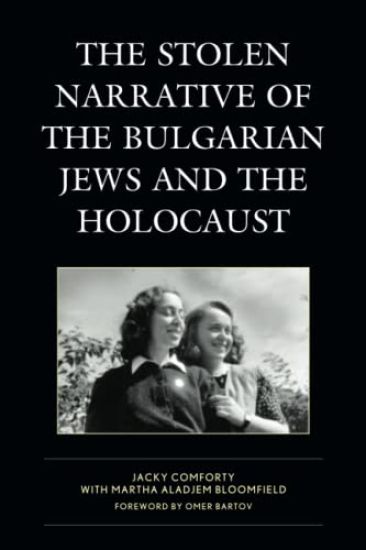
The Stolen Narrative of the Bulgarian Jews and the Holocaust

The Stolen Narrative of the Bulgarian Jews and the Holocaust

Jacky Comforty; Omer Bartov

BLOOMSBURY PUBLISHING PLC
2023
nidottu
The Stolen Narrative of the Bulgarian Jews and the Holocaust collects narratives of Bulgarian Jews who survived the Holocaust. Through the analysis of eye-witness testimonies, archival documents, photographs, and researchers’ investigations, the authors weave a complex tapestry of voices that were previously underrepresented, ignored, and denied. Taken together, the collected memories offer an alternative perspective that counters official accounts and corroborates war crimes.
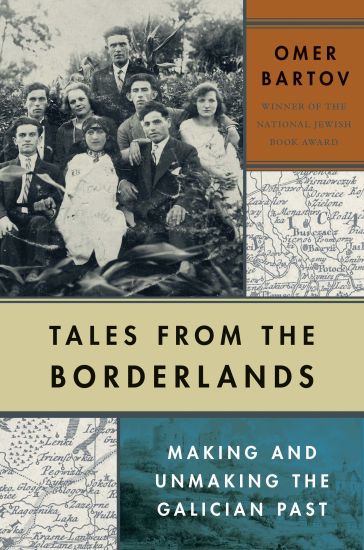
Tales from the Borderlands

Tales from the Borderlands

Omer Bartov

YALE UNIVERSITY PRESS
2022
sidottu

Halvin toimitettuna 32,60 €

The story of the diverse communities of Eastern Europe’s borderlands in the centuries prior to World War II “A powerful combination of history and personal memoir. . . . A richly contextual, skillfully woven historical study.”—Kirkus Reviews (starred review) Focusing on the former province of Galicia, this book tells the story of Europe’s eastern borderlands, stretching from the Baltic to the Balkans, through the eyes of the diverse communities of migrants who settled there for centuries and were murdered or forcibly removed from the borderlands in the course of World War II and its aftermath. Omer Bartov explores the fates and hopes, dreams and disillusionment of the people who lived there, and, through the stories they told about themselves, reconstructs who they were, where they came from, and where they were heading. It was on the borderlands that the expanding great empires—German, Austro-Hungarian, Russian, and Ottoman—overlapped, clashed, and disintegrated. The civilization of these borderlands was a mix of multiple cultures, languages, ethnic groups, religions, and nations that similarly overlapped and clashed. The borderlands became the cradle of modernity. Looking back at it tells us where we came from.
The Stolen Narrative of the Bulgarian Jews and the Holocaust

The Stolen Narrative of the Bulgarian Jews and the Holocaust

Jacky Comforty; Omer Bartov

Lexington Books
2021
sidottu
The Stolen Narrative of the Bulgarian Jews and the Holocaust shares a complex tapestry of voices of memories previously underrepresented, ignored and denied. An alternative perspective that includes stolen, silenced, but now reclaimed Jewish narrative based on our peoples’ experiences. It contextualizes and personalizes our history, reconstructs the puzzle, praises those who helped the Jews and shares their exemplary acts of humanity for future generations.
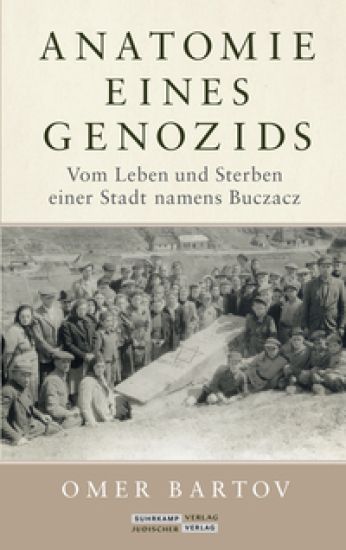
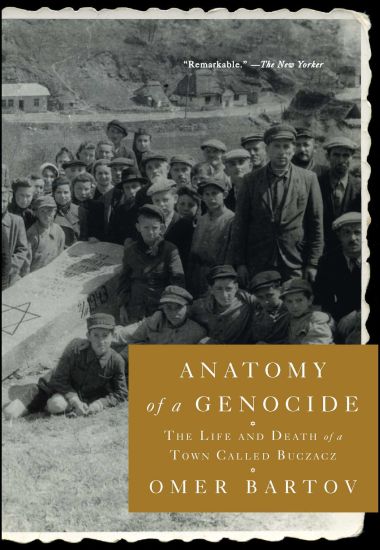
Anatomy of a Genocide: The Life and Death of a Town Called Buczacz

Anatomy of a Genocide: The Life and Death of a Town Called Buczacz

Omer Bartov

SIMON SCHUSTER
2019
nidottu

Halvin toimitettuna 22,10 €

Winner of the Yad Vashem International Book Book Prize for Holocaust Research "A substantive contribution to the history of ethnic strife and extreme violence" (The Wall Street Journal) and a cautionary examination of how genocide can take root at the local level--turning neighbors, friends, and family against one another--as seen through the eastern European border town of Buczacz during World War II. For more than four hundred years, the Eastern European border town of Buczacz--today part of Ukraine--was home to a highly diverse citizenry. It was here that Poles, Ukrainians, and Jews all lived side by side in relative harmony. Then came World War II, and three years later the entire Jewish population had been murdered by German and Ukrainian police, while Ukrainian nationalists eradicated Polish residents. In truth, though, this genocide didn't happen so quickly. In Anatomy of a Genocide, Omer Bartov explains that ethnic cleansing doesn't occur as is so often portrayed in popular history, with the quick ascent of a vitriolic political leader and the unleashing of military might. It begins in seeming peace, slowly and often unnoticed, the culmination of pent-up slights and grudges and indignities. The perpetrators aren't just sociopathic soldiers. They are neighbors and friends and family. They are also middle-aged men who come from elsewhere, often with their wives and children and parents, and settle into a life of bourgeois comfort peppered with bouts of mass murder. For more than two decades Bartov, whose mother was raised in Buczacz, traveled extensively throughout the region, scouring archives and amassing thousands of documents rarely seen until now. He has also made use of hundreds of first-person testimonies by victims, perpetrators, collaborators, and rescuers. Anatomy of a Genocide profoundly changes our understanding of the social dynamics of mass killing and the nature of the Holocaust as a whole. Bartov's book isn't just an attempt to understand what happened in the past. It's a warning of how it could happen again, in our own towns and cities--much more easily than we might think.
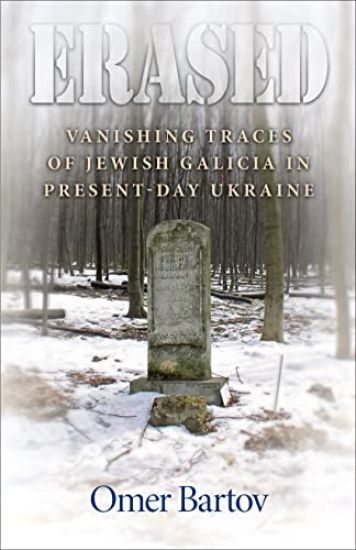
Erased

Erased

Omer Bartov

Princeton University Press
2015
pokkari
In Erased, Omer Bartov uncovers the rapidly disappearing vestiges of the Jews of western Ukraine, who were rounded up and murdered by the Nazis during World War II with help from the local populace. What begins as a deeply personal chronicle of the Holocaust in his mother's hometown of Buchach--in former Eastern Galicia--carries him on a journey across the region and back through history. This poignant travelogue reveals the complete erasure of the Jews and their removal from public memory, a blatant act of forgetting done in the service of a fiercely aggressive Ukrainian nationalism. Bartov, a leading Holocaust scholar, discovers that to make sense of the heartbreaking events of the war, he must first grapple with the complex interethnic relationships and conflicts that have existed there for centuries. Visiting twenty Ukrainian towns, he recreates the histories of the vibrant Jewish and Polish communities who once lived there-and describes what is left today following their brutal and complete destruction. Bartov encounters Jewish cemeteries turned into marketplaces, synagogues made into garbage dumps, and unmarked burial pits from the mass killings. He bears witness to the hastily erected monuments following Ukraine's independence in 1991, memorials that glorify leaders who collaborated with the Nazis in the murder of Jews. He finds that the newly independent Ukraine-with its ethnically cleansed and deeply anti-Semitic population--has recreated its past by suppressing all memory of its victims. Illustrated with dozens of hauntingly beautiful photographs from Bartov's travels, Erased forces us to recognize the shocking intimacy of genocide.
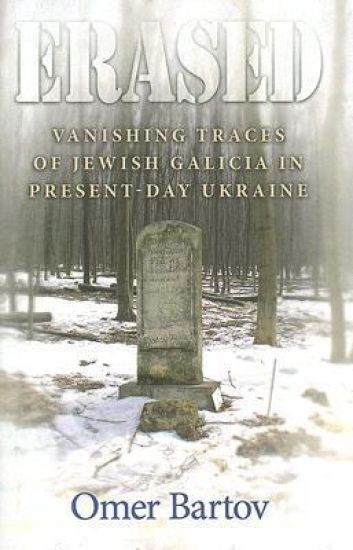
Erased

Erased

Omer Bartov

Princeton University Press
2007
sidottu
In Erased, Omer Bartov uncovers the rapidly disappearing vestiges of the Jews of western Ukraine, who were rounded up and murdered by the Nazis during World War II with help from the local populace. What begins as a deeply personal chronicle of the Holocaust in his mother's hometown of Buchach--in former Eastern Galicia--carries him on a journey across the region and back through history. This poignant travelogue reveals the complete erasure of the Jews and their removal from public memory, a blatant act of forgetting done in the service of a fiercely aggressive Ukrainian nationalism. Bartov, a leading Holocaust scholar, discovers that to make sense of the heartbreaking events of the war, he must first grapple with the complex interethnic relationships and conflicts that have existed there for centuries. Visiting twenty Ukrainian towns, he recreates the histories of the vibrant Jewish and Polish communities who once lived there-and describes what is left today following their brutal and complete destruction. Bartov encounters Jewish cemeteries turned into marketplaces, synagogues made into garbage dumps, and unmarked burial pits from the mass killings. He bears witness to the hastily erected monuments following Ukraine's independence in 1991, memorials that glorify leaders who collaborated with the Nazis in the murder of Jews. He finds that the newly independent Ukraine-with its ethnically cleansed and deeply anti-Semitic population--has recreated its past by suppressing all memory of its victims. Illustrated with dozens of hauntingly beautiful photographs from Bartov's travels, Erased forces us to recognize the shocking intimacy of genocide.
The "Jew" in Cinema

The "Jew" in Cinema

Omer Bartov

Indiana University Press
2005
pokkari
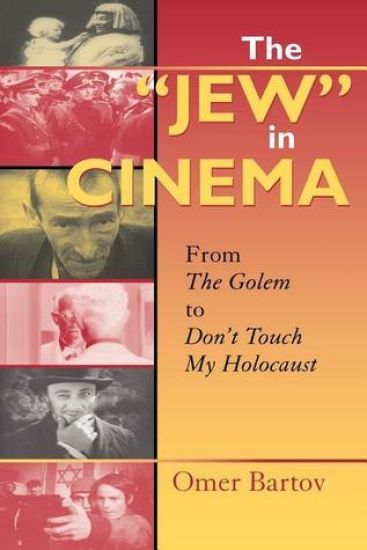
From cinema's beginnings, the film image of the "Jew" has closely followed the fortunes and misfortunes of Jews. Analyzing more than 70 films made in the Soviet Union, Poland, Hungary, Czechoslovakia and the Czech Republic, East and West Germany, France, Italy, the United States, and Israel from 1920 to the 1990s, noted historian Omer Bartov argues that depictions of the "Jew" in film have been fed by, or have reacted to, certain stereotypical depictions of Jews arising from age-old prejudices. These images, in turn, both reflected public attitudes and helped to shape them. He points to Mel Gibson's film The Passion of the Christ as one of the most recent examples of the phenomenon. In trenchant discussions of individual films, Bartov develops four basic cinematic representations of the "Jew": as perpetrator (especially in antisemitic films), as victim (especially in films about the Holocaust), as hero (especially in films about the state of Israel), and as anti-hero (especially in films about the Arab-Israeli conflict). This absorbing book reveals the ways in which powerful images remained deeply embedded in the creative imagination, even as the circumstances that originally engendered them underwent profound changes. Bartov concludes that some of the fundamental prejudices about Jews, which predate cinema, persisted in cinematic depictions throughout the 20th century, although they have been reinterpreted according to changing political regimes, ideologies, and tastes. Covering a range of traditions and periods, The "Jew" in Cinema provides original and provocative interpretations that often contradict conventional views. Placing cinematic representations of the "Jew" within their historical context, Bartov demonstrates the powerful political, social, and cultural impact of these images on popular attitudes. The Helen and Martin Schwartz Lectures in Jewish Studies
Germany's War and the Holocaust

Germany's War and the Holocaust

Omer Bartov

Cornell University Press
2003
pokkari
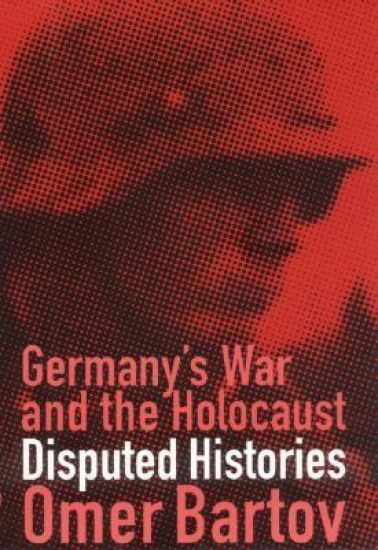
Omer Bartov, a leading scholar of the Wehrmacht and the Holocaust, provides a critical analysis of various recent ways to understand the genocidal policies of the Nazi regime and the reconstruction of German and Jewish identities in the wake of World War II. Germany's War and the Holocaust both deepens our understanding of a crucial period in history and serves as an invaluable introduction to the vast body of literature in the field of Holocaust studies. Drawing on his background as a military historian to probe the nature of German warfare, Bartov considers the postwar myth of army resistance to Hitler and investigates the image of Blitzkrieg as a means to glorify war, debilitate the enemy, and hide the realities of mass destruction. The author also addresses several new analyses of the roots and nature of Nazi extermination policies, including revisionist views of the concentration camps. Finally, Bartov examines some paradigmatic interpretations of the Nazi period and its aftermath: the changing American, European, and Israeli discourses on the Holocaust; Victor Klemperer's view of Nazi Germany from within; and Germany's perception of its own victimhood.
Mirrors of Destruction

Mirrors of Destruction

Omer Bartov

Oxford University Press Inc
2002
nidottu

Halvin toimitettuna 42,50 €

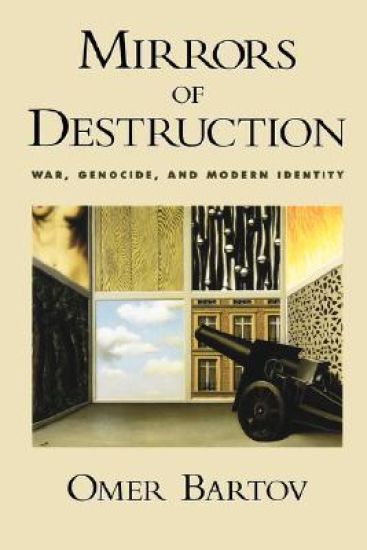
Mirrors of Destruction examines the relationship between total war, state-organized genocide, and the emergence of modern identity. Here, Omer Bartov demonstrates that in the twentieth century there have been intimate links between military conflict, mass murder of civilian populations, and the definition and categorization of groups and individuals. These connections were most clearly manifested in the Holocaust, as the Nazis attempted to exterminate European Jewry under cover of a brutal war and with the stated goal of creating a racially pure Aryan population and Germanic empire. The Holocaust, however, can only be understood within the context of the century's predilection for applying massive and systematic methods of destruction to resolve conflicts over identity. To provide the context for the "Final Solution," Bartov examines the changing relationships between Jews and non-Jews in France and Germany from the outbreak of World War I to the present. Rather than presenting a comprehensive history, or a narrative from a single perspective, Bartov views the past century through four interrelated prisms. He begins with an analysis of the glorification of war and violence, from its modern birth in the trenches of World War I to its horrifying culmination in the presentation of genocide by the SS as a glorious undertaking. He then examines the pacifist reaction in interwar France to show how it contributed to a climate of collaboration with dictatorship and mass murder. The book goes on to argue that much of the discourse on identity throughout the century has had to do with identifying and eliminating society's "elusive enemies" or "enemies from within." Bartov concludes with an investigation of modern apocalyptic visions, showing how they have both encouraged mass destructions and opened a way for the reconstruction of individual and collective identifies after a catastrophe. Written with verve, Mirrors of Destruction is rich in interpretations and theoretical tools and provides a new framework for understanding a central trait of modern history.
Mirrors of Destruction

Mirrors of Destruction

Omer Bartov

Oxford University Press Inc
2000
sidottu
This book examines the relationship between total war, state-organized genocide, and the emergence of modern identity. Omer Bartov demonstrates that, in the twentieth century, there have been intimate links between military conflict, mass murder of civilian populations, and the definition and categorization of groups and individuals. The Holocaust, he argues, can only be understood within the context of the century's predilection to apply systematic and destructive methods to resolve conflicts over identity. His study follows the changing relationships between Jews and non-Jews in France and Germany from the outbreak of World War I to the present. He takes a close look at the glorification of war between 1914-18 and examines the pacifist reaction in interwar France to show how it contributed to a climate of collaboration with dictatorship and mass murder. He also provides detailed analyses of modern apocalyptic visions and pursuits for internal enemies. The book is an important new perspective on some of the most crucial issues of our time.
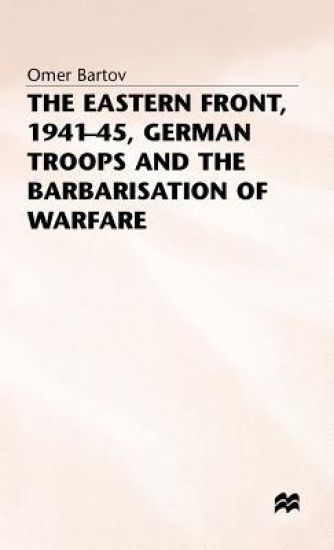
The Eastern Front, 1941-45, German Troops and the Barbarisation ofWarfare
Based largely upon unpublished sources, Omer Bartov's study looks closely at the background of the German army on the Eastern Front during the Second World War. He describes the physical hardship, the discipline and morale at the front, and analyses the social, educational and political background of the junior officers who formed the backbone of the German army. Only with these factors in mind - together with the knowledge of the extent of National Socialist indoctrination - can we begin to explain the criminal activities of the German army in Russia and the extent of involvement of the army in the execution of Hitler's brutal policies.