
Kirjailija
Onoto Watanna
Kirjat ja teokset yhdessä paikassa: 83 kirjaa, julkaisuja vuosilta 2000–2026, suosituimpiin kuuluu Marion. Vertaile teosten hintoja ja tarkista saatavuus suomalaisista kirjakaupoista.
83 kirjaa
Kirjojen julkaisuvuodet: 2000–2026.


Sunny-San, stands as a beacon in the world of books, bridging the gap between past and present. Once considered among the old books, this classic work-like so many forgotten and ancient books-has shaped our understanding of culture and history. It's a remarkable example of history books that have influenced generations, and now, through the dedication of Alpha Editions-your trusted book publisher-it's reborn in a fresh, elegant format. We've carefully retyped, redesigned, and improved this book so it's much more than just another title to read. Now you can enjoy clear, easy-to-read pages without any blurry scans or faded text. By choosing this edition, you're investing in more than a book-you're safeguarding a legacy. Your support keeps a remarkable piece of human heritage alive, ensuring its lessons and inspirations continue to resonate well into the future.

Homage to John Dryden: Three Essays on Poetry of the Seventeenth Century
Onoto Watanna
Alpha Editions
2023
nidottu
Tama, a classical and rare book that has been considered essential throughout human history, so that this work is never forgotten, we at Alpha Editions have made efforts in its preservation by republishing this book in a modern format for present and future generations. This whole book has been reformatted, retyped and designed. These books are not made of scanned copies of their original work and hence the text is clear and readable.
Miss Num of Japan: A Japanese-American Romance, a classical book, has been considered important throughout the human history, and so that this work is never forgotten we at Alpha Editions have made efforts in its preservation by republishing this book in a modern format for present and future generations. This whole book has been reformatted, retyped and designed. These books are not made of scanned copies of their original work and hence the text is clear and readable.

The Love of Azalea by Onoto Watanna has been regarded as significant work throughout human history, and in order to ensure that this work is never lost, we have taken steps to ensure its preservation by republishing this book in a contemporary format for both current and future generations. This entire book has been retyped, redesigned, and reformatted. Since these books are not made from scanned copies, the text is readable and clear.
Me: A Book of Remembrance, has been acknowledged as a major work throughout human history, and we have taken precautions to assure its preservation by republishing this book in a modern manner for both present and future generations. This book has been completely retyped, revised, and reformatted. The text is readable and clear because these books are not created from scanned copies.
This book "" A Japanese Nightingale "", has been considered important throughout the human history, and so that this work is never forgotten we have made efforts in its preservation by republishing this book in a modern format for present and future generations. This whole book has been reformatted, retyped and designed. These books are not made of scanned copies and hence the text is clear and readable.
This book "" A Japanese Blossom "", has been considered important throughout the human history, and so that this work is never forgotten we have made efforts in its preservation by republishing this book in a modern format for present and future generations. This whole book has been reformatted, retyped and designed. These books are not made of scanned copies and hence the text is clear and readable.

The Wooing of Wistaria follows the life of a vicarious and bubbly young Japanese woman, Lady Wistaria. Beginning with her presentation to high society, Wistaria reflects on her experience meeting the court. Accompanied by her aunt, who was her guardian, Wistaria visits the capitol city for the first time, enamored by the sights. She enters the court knowing all that was expected of her. The court is in awe of her beauty, but when Wistaria makes a small mistake, she is immediately shamed. Though Wistaria is kind, beautiful, and full of personality, she is consistently judged throughout her life for her qualities that conflict with society’s standards. This is especially evident in her relationship to her father, who is a stoic and harsh man. Dedicated to upholding the social expectations and etiquette, Wistaria’s father is tough on her, and despite her reflections, Wistaria never really understands why. Through the depiction of Lady Wistaria’s life, The Wooing of Wistaria by Onoto Watanna provides representation of Asian heritage and aspects of 20th century Japanese society, allowing readers a privileged perspective into the culture. Featuring beautiful and detailed descriptions of Japanese landscapes, the physical environment of Japan is represented as vividly as the cultural and social atmosphere. With themes of gender and sexuality, The Wooing of Wistaria is thought-provoking and enlightening on the constructs of Asian femininity. Through the characterization of Lady Wistaria, The Wooing of Wistaria portrays a bright and cheery young woman who does not fit the role she is expected to fill. First published in the early years of the 20th century, The Wooing of Wistaria by Onoto Watanna has rarely been in print since its original publication. This special edition features a stunning cover design and is printed in an easy-to-read font. With these accommodations, this edition caters to contemporary readers by restoring the novel to modern standards while preserving the original intricacy of Onoto Watanna’s work.
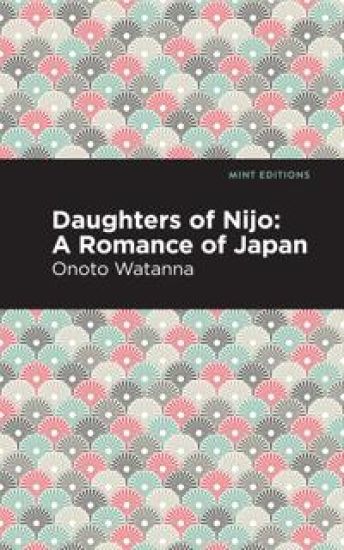
Inspired by the classic tale of the prince and the pauper, Daughters of Nijo: A Romance of Japan by Onoto Watanna features a sweet and amusing narrative in which two sisters trade places and lovers. Sado-ko was raised to be a princess. Massago was raised as a lowly country maid. Though raised in separate classes and homes, fate conspires to bring Massago and Sado-ko together again. With poor living conditions and an unfair workload, Massago is unhappy as a country maid. Meanwhile, at the palace, Sado-ko spends most of her time in solitude, feeling solemn about her future as Prince Komatzu’s wife. The other court ladies disprove of her, judging Sado-ko for not succumbing to Western influences like they have. After the palace commissions Massago's fiancé, Junzo, to create a sculpture, the two sisters reunite and decide to trade places. In their new lives, Sado-ko and Massago find happiness at last, but when Aoi, a lady of the court, starts to cause trouble, she threatens to ruin the twin sisters' plans. Published in 1904, Daughters of Nijo: A Romance of Japan by Onoto Watanna is now presented in an easy-to-read font and features a stunning new cover design. With these accommodations, Daughters of Nijo: A Romance of Japan is restored to modern standards while preserving the original and precious mastery of Onoto Watanna’s work. Add this beautiful edition to your bookshelf, or enjoy the digital edition on any e-book device.
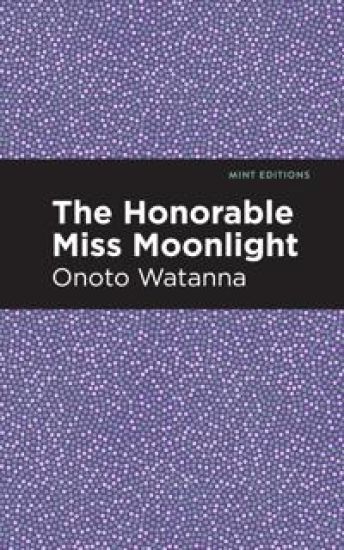
When the day of Lord Saito Gonji’s birthday arrives, Gonji celebrates with dread, knowing that in a week, he will be married. Sent away in his youth for samurai training, and then to higher education, Gonji is very connected to his studies. After his intelligence is proven, his professors even tell Gonji that he would do great things for Japan one day. However, since he is the youngest son in his family, Gonji is expected to marry—a social expectation that he cannot get around. Now, on his birthday, he is expected to marry a childhood friend, Ohano in one week, which will greatly interfere with his studies. When his family notice how upset Gonji is over the arranged marriage, they grant him one week of pure freedom, allowing him to do whatever he chooses. Soon into the week, Gonji meets a famous dancer. Known by the stage name of Spider, the dancer was at the height of her career after being trained by the most celebrated geisha in Japan. When Spider and Gonji become intimate during the week, their fleeting encounter soon proves to complicate the plans Gonji’s parents made for him. Featuring complex and memorable characters as well as detailed descriptions of Japanese customs and landscapes, The Honorable Miss Moonlight depicts a vivid portrait of 20th century Japan. With themes of gender, sexuality, identity, and a close perspective of the honor/shame culture of Japan in the 1900s, The Honorable Miss Moonlight is as enlightening as it is entertaining. First published in 1912, The Honorable Miss Moonlight is one of Onoto Watanna’s most famous works, yet is rarely found in print. This special edition features a stunning cover design and is printed in an easy-to-read font. With these accommodations, this edition caters to contemporary readers by restoring the novel to modern standards while preserving the original intricacy of Onoto Watanna’s work.
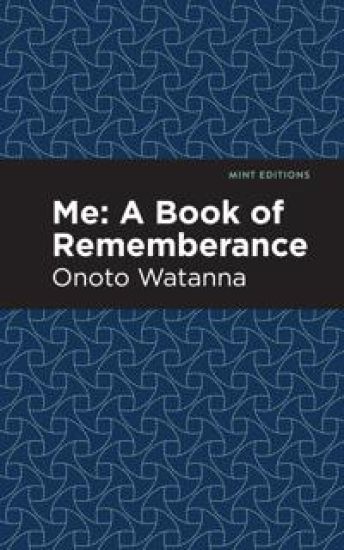
Born into a family of sixteen children, Nora Ascouth is used to fighting to be heard. From a young age, Nora becomes determined to have a writing career, and travels around the world looking for the best place to work. From Canada, she moves to Jamaica, where she works for a newspaper. Later, in search of a more personal approach to her work, Nora moves to Chicago to try to sell her own stories. In her attempts to find a way publish her work, Nora ends up finding best friends and fellow writers, Fred and Lolly. The two support Nora as she jumps from job to job, and they all help each other with their writing. After Nora really settles in Chicago, she meets a man that captures her heart immediately. However, as her relationship with Mr. Hamilton grows, conflict arises when he suggests a move to New York. After they marry, the young couple set out to a new city, Nora prepares herself to enter the job market yet again. With details mirroring author Onoto Watanna’s life, Me: A Book of Rememberance is semi-autobiographical. Through the depiction of the struggles and powerlessness Nora faces as a working woman in the 19th century, Me: A Book of Rememberance explores views on race, gender, and class. With an intimate perspective, Watanna reveals truths derived from first-hand experience; Watanna worked not just as a woman in America, but as a woman with Asian heritage in a time where she was heavily discriminated against. First published in 1912, Me: A Book of Rememberance is one of Onoto Watanna’s most intimate works, and is rarely found in print. This special edition features a stunning cover design and is printed in an easy-to-read font. With these accommodations, this edition of Me: A Book of Rememberance caters to contemporary readers by restoring the novel to modern standards while preserving the original intricacy of Onoto Watanna’s work.
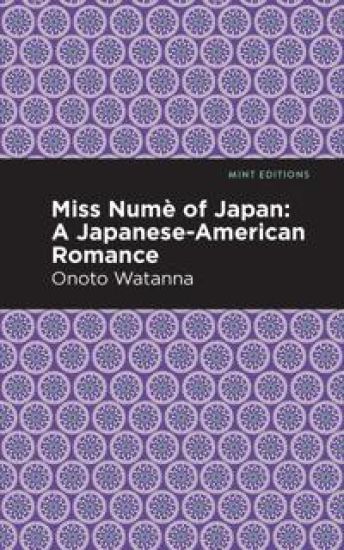
When Orito and Numé were young children, their fathers, who were good friends, decided that one day their children would be betrothed. But before they marry, Orito is expected to complete his education. While Orito studied at a Japanese university, he and Numé remained good friends. But when his father makes plans for Orito to complete his education in America, set to return after eight years to marry Numé, she gets upset that Orito was leaving her, especially since she heard the plan from her father rather than Orito himself. Despite her disapproval, Orito goes to America to attend Harvard University. Experiencing culture shock and missing home, Orito feels out of place at first. But when he meets Cleo, a passionate dancer, they immediately start falling for each other, despite both of their engagements. As his time in America increases, Orito struggles with the decision to break tradition and stay with Cleo, or return home to marry Numé. Caught between cultures, expectation, and passion, Orito must decide which is more important to him. Miss Numé of Japan: a Japanese American Romance by Onoto Watanna is a late 19th century romance that depicts a love triangle alongside the cultural contrasts between Japan and America. With beautiful descriptions, sympathetic characters, and a compelling romance-driven storyline, Miss Numé of Japan: a Japanese American Romance is entertaining while also providing intriguing insight into early interactions and cultural differences between Japan and the United States. First published in 1899, Miss Numé of Japan: A Japanese American Romance is one of Onoto Watanna’s earliest works, and is rarely found in print. This special edition features a stunning cover design and is printed in an easy-to-read font. With these accommodations, this edition of Miss Numé of Japan: A Japanese American Romance caters to contemporary readers by restoring the novel to modern standards while preserving the original intricacy of Onoto Watanna’s work.

Delia is a confident young woman who works as a housekeeper for a small family. Every morning, she gets up before everyone else and makes breakfast for each family member, then starts on her cleaning tasks. Despite her close relationship with the family she works for, Delia feels that she has more potential and does not like working a housemaid. She feels disrespected by some members in the family, and wants to try to find another job. After meeting with her friend, Minnie, Delia decides that she will quit her job. She wakes up the next morning and refuses to make the breakfast as usual. Instead, she tells the family of her decision and asked for the wages she’s due. Even though the family protests, Delia gets her wages and goes off to live with Minnie. However, Delia soon learns that the world is not kind to working women, and she struggles to find a well-paying job. Poor and unsure what to do, Delia remains optimistic and fights to find the best place for her. Set in the early 1900s, The Diary of Delia is an intimate account of life as a poor working woman. Featuring detailed descriptions of landscapes, customs and dialects, The Diary of Delia acts a valuable and entertaining historical source. With animate and memorable characters, Onoto Watanna creates a historical narrative that still feels fresh and compelling to a modern audience. First published in 1907, Onoto Watanna’s The Diary of Delia is rarely found in print. This special edition features a stunning cover design and is printed in an easy-to-read font. With these accommodations, this edition of The Diary of Delia caters to contemporary readers by restoring the novel to modern standards while preserving the original intimacy of Onoto Watanna’s work.
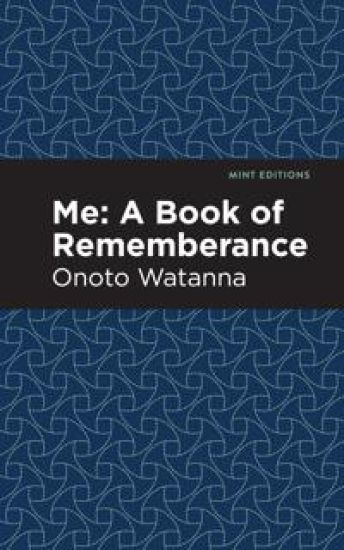
Born into a family of sixteen children, Nora Ascouth is used to fighting to be heard. From a young age, Nora becomes determined to have a writing career, and travels around the world looking for the best place to work. From Canada, she moves to Jamaica, where she works for a newspaper. Later, in search of a more personal approach to her work, Nora moves to Chicago to try to sell her own stories. In her attempts to find a way publish her work, Nora ends up finding best friends and fellow writers, Fred and Lolly. The two support Nora as she jumps from job to job, and they all help each other with their writing. After Nora really settles in Chicago, she meets a man that captures her heart immediately. However, as her relationship with Mr. Hamilton grows, conflict arises when he suggests a move to New York. After they marry, the young couple set out to a new city, Nora prepares herself to enter the job market yet again. With details mirroring author Onoto Watanna’s life, Me: A Book of Rememberance is semi-autobiographical. Through the depiction of the struggles and powerlessness Nora faces as a working woman in the 19th century, Me: A Book of Rememberance explores views on race, gender, and class. With an intimate perspective, Watanna reveals truths derived from first-hand experience; Watanna worked not just as a woman in America, but as a woman with Asian heritage in a time where she was heavily discriminated against. First published in 1912, Me: A Book of Rememberance is one of Onoto Watanna’s most intimate works, and is rarely found in print. This special edition features a stunning cover design and is printed in an easy-to-read font. With these accommodations, this edition of Me: A Book of Rememberance caters to contemporary readers by restoring the novel to modern standards while preserving the original intricacy of Onoto Watanna’s work.

The Wooing of Wistaria follows the life of a vicarious and bubbly young Japanese woman, Lady Wistaria. Beginning with her presentation to high society, Wistaria reflects on her experience meeting the court. Accompanied by her aunt, who was her guardian, Wistaria visits the capitol city for the first time, enamored by the sights. She enters the court knowing all that was expected of her. The court is in awe of her beauty, but when Wistaria makes a small mistake, she is immediately shamed. Though Wistaria is kind, beautiful, and full of personality, she is consistently judged throughout her life for her qualities that conflict with society’s standards. This is especially evident in her relationship to her father, who is a stoic and harsh man. Dedicated to upholding the social expectations and etiquette, Wistaria’s father is tough on her, and despite her reflections, Wistaria never really understands why. Through the depiction of Lady Wistaria’s life, The Wooing of Wistaria by Onoto Watanna provides representation of Asian heritage and aspects of 20th century Japanese society, allowing readers a privileged perspective into the culture. Featuring beautiful and detailed descriptions of Japanese landscapes, the physical environment of Japan is represented as vividly as the cultural and social atmosphere. With themes of gender and sexuality, The Wooing of Wistaria is thought-provoking and enlightening on the constructs of Asian femininity. Through the characterization of Lady Wistaria, The Wooing of Wistaria portrays a bright and cheery young woman who does not fit the role she is expected to fill. First published in the early years of the 20th century, The Wooing of Wistaria by Onoto Watanna has rarely been in print since its original publication. This special edition features a stunning cover design and is printed in an easy-to-read font. With these accommodations, this edition caters to contemporary readers by restoring the novel to modern standards while preserving the original intricacy of Onoto Watanna’s work.