Kirjojen hintavertailu – 12 903 725 kirjaa ja 27 kauppaa

Kirjailija

Ooi Kee beng

Kirjat ja teokset yhdessä paikassa: 7 kirjaa, julkaisuja vuosilta 2006–2023, suosituimpiin kuuluu What is China? : observations and perspectives. Vertaile teosten hintoja ja tarkista saatavuus suomalaisista kirjakaupoista.

7 kirjaa

Kirjojen julkaisuvuodet: 2006–2023.

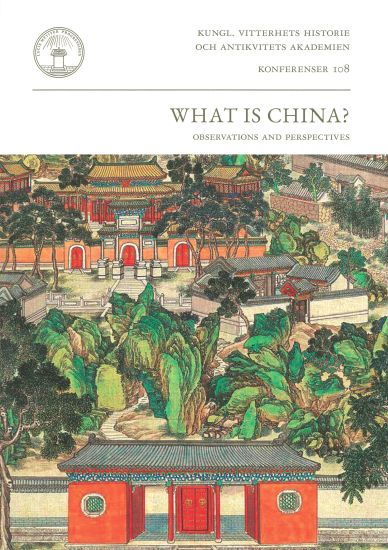
What is China? : observations and perspectives

What is China? : observations and perspectives

Joakim Enwall; Fredrik Fällman; Ge Zhaoguang; Chun-Chieh Huang; Youngmin Kim; Torbjörn Lodén; Ooi Kee beng; Fansen Wang; Wang Gungwu; Zhang Longxi

Kungl. Vitterhetsakademien
2023
nidottu
“China is”, in the words of Bertrand Russell, “much less a political entity than a civilization.” To this we may add that China is also a geographical area. The word China has multiple meanings charged with different kinds of values and preconceptions. In this book ten scholars from Mainland China, Hong Kong, Korea, Malaysia, Singapore, Sweden, and Taiwan explore various meanings and aspects of Chinese identity. What does “China” mean as a cultural concept and when referring to a geographical territory? What is the significance of the historical relationship between the interior and exterior for the Chinese identity? How have classical texts been used by the Chinese state? These are central questions in this book, where you will also find contributions analysing, among other topics, the Chinese self-image and China as seen from the outside. One article examines the ideological use of the notion of “Chinese characteristics” in contemporary Mainland China, while another analyses China’s future development in terms of the country’s transformation from a multiethnic empire to a homogenous national state.
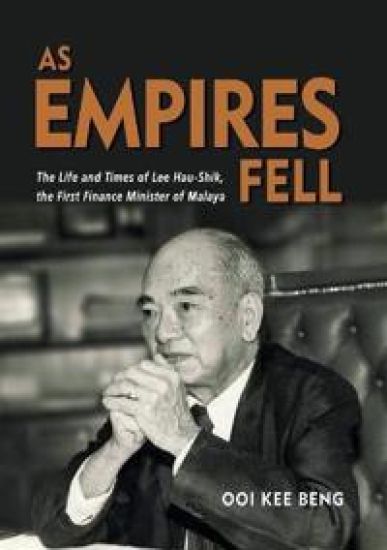
As Empires Fell

As Empires Fell

Ooi Kee Beng

ISEAS
2020
nidottu
To understand how independence was gained for a politically complex country such as Malaysia, and how its structure took form requires familiarity with the key players involved. More importantly, only by locating these actors within the changing socio-political context in which they specifically lived does their influence both before and after the birth of the country become clear. Having written potent biographies about Malaysian and Singapore leaders such as Ismail Abdul Rahman, the Deputy Prime Minister of Malaysia who died in 1973, Goh Keng Swee, the economic architect and one of the founding fathers of the Republic of Singapore, and Lim Kit Siang, the unwavering opposition leader of Malaysia, Ooi Kee Beng now tells the story of Lee Hau-Shik, based on the latter’s extensive private papers housed at ISEAS Library, Singapore. Born in Hong Kong to a highly prominent family at a time when the Qing Dynasty was falling, Hau-Shik received degrees in Law and Economics in Cambridge and became a successful tin miner in British Malaya and an influential member of Kuala Lumpur’s colonial society. After the Second World War, his influence in elite circles in China, Britain and Malaya allowed him to play a key role in the gaining of independence for Malaysia. He was one of the founders of the Malayan Chinese Association, and served as the country’s first Minister of Finance.
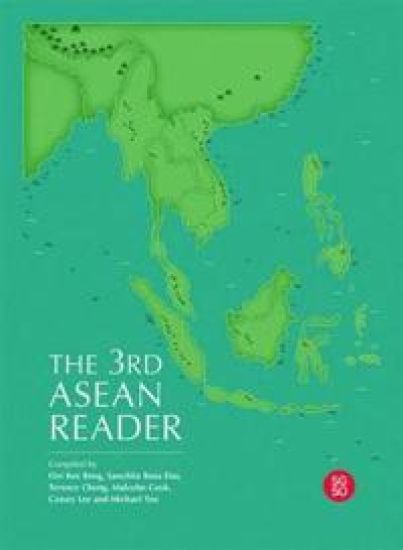
3rd ASEAN Reader

3rd ASEAN Reader

Ooi Kee Beng; Sanchita Basu Das

Institute of Southeast Asian Studies
2015
pokkari
The First ASEAN Reader was published in 1992 just as the Cold War ended, while The Second ASEAN Reader came in 2003 in the wake of the 1997 Asian crisis and the September 11 attacks in 2001. The articles in The Third ASEAN Reader study the trends and events of recent years, and discuss the immediate future of Southeast Asia.
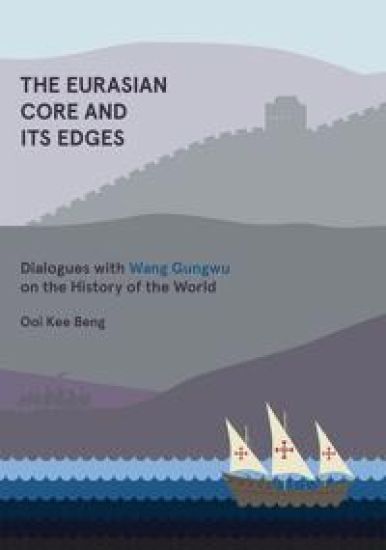
The Eurasian Core and Its Edges

The Eurasian Core and Its Edges

Ooi Kee Beng

Institute of Southeast Asian Studies
2014
nidottu
With China's transformation into a republic after two millennia as an empire as the starting point, Ooi Kee Beng prompts renowned historian Wang Gungwu through a series of interviews to discuss China, Europe, Southeast Asia and India. What emerges is an exciting and original World History that is neither Eurocentric nor Sinocentric. if anything, it is an appreciation of the dominant role that central Asia played in the history of most of mankind over the last several thousand years. The irrepressible power of the Eurasian core over the centuries explains much of the development of civilizations founded on the fringes - and its edges to the west, the east and the south. Most significantly, what is recognised as The Global Age today, is seen as the latest result of these conflicts between core and edge leading at the Atlantic fringe to human mastery of the sea - in military and mercantile terms. In effect, human history, which had for centuries been configured by continental dynamics, has only quite recently established a new dimension to counteract these. In summary, Wang Gungwu argues convincingly that “The Global is Maritime”.
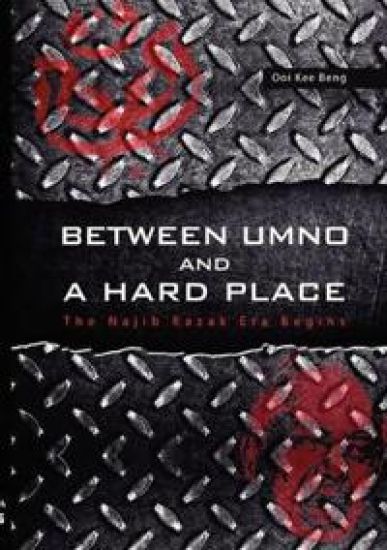
Between UMNO and a Hard Place
Enough time has passed, and enough key events have taken place for the contours of the administration of Malaysian Prime Minister Datuk Seri Najib Razak to be apparent. While it has flirted openly with reforms, and has used phrases otherwise used by the opposition, its sincerity - and its capability - is still in doubt. More than that, it is not as yet clear how convinced the government actually is about of the need for institutional reforms, especially when the institutions in need of reform include the police, the anti-corruption agency, the judiciary and the dominant party, UMNO. With a new coalition opposing him in parliament, Najib comes to power wedged between his own coalition's aged traditions and the restive spirit of the times. Whether he can squeeze his way into a comfortable spot and stay in power is the question the coming years will answer.
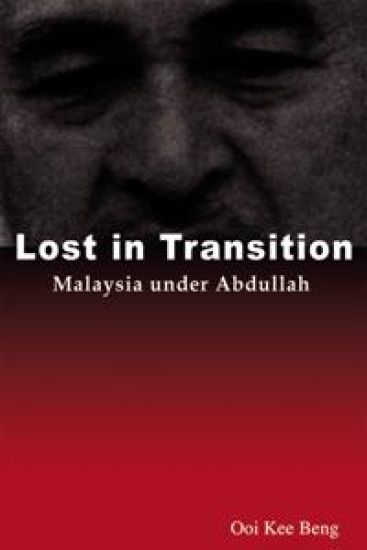
Lost in Transition

Lost in Transition

Ooi Kee Beng

Institute of Southeast Asian Studies
2008
pokkari
A collection of essays on tumultuous political developments in Malaysia. It offers a reminder of events which tend to get forgotten in the relentless tide of contentious issues that keep battering us.
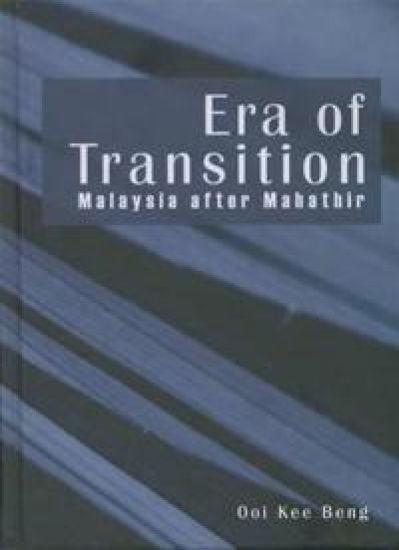
Era of Transition

Era of Transition

Ooi Kee Beng

Institute of Southeast Asian Studies
2006
sidottu
This is a collection of opinion pieces written by Ooi Kee Beng and published in the mass media after Abdullah Badawi became Malaysia's Prime Minister in October 2004, and analyses the many difficult aspects of leadership that has been facing him over the last two years. In effect, these discusses the country's underlying problems, the dilemma involved in succeeding Mahathir Mohamed, and draws conclusions about nation building in general. The leading party and its many weaknesses and strengths, the role of Malaysian Islam and the growing importance of regionalism and globalisation are also discussed.