Kirjojen hintavertailu – 12 859 829 kirjaa ja 27 kauppaa
Kirjailija
Opland Jeff
Kirjat ja teokset yhdessä paikassa: 3 kirjaa, julkaisuja vuosilta 1983–2012, suosituimpiin kuuluu Print, Text and Book Cultures in South Africa. Vertaile teosten hintoja ja tarkista saatavuus suomalaisista kirjakaupoista.
Barnard Rita; Leon Kock; Archie L. Dick; Distiller Natasha; Patrick Denman Flanery; Gouws John; Lucy Valerie Graham; Hofmeyr Isabel; Kriel Lize; Law-Viljoen Bronwyn; Elizabeth le Roux; McDonald Peter D.; Nuttall Sarah; Opland Jeff; Lily Saint; Samuelson Meg; Seddon Deborah; Hedley Twidle; Andrew van der Vlies; Margriet van der Waal; Zimbler Jarad
This book explores the power of print and the politics of the book in South Africa from a range of disciplinary perspectives - historical, bibliographic, literary-critical, sociological, and cultural studies. The essays collected here, by leading international scholars, address a range of topics as varied as: the role of print cultures in contests over the nature of the colonial public sphere in the nineteenth century; orthography; iimbongi, orature and the canon; book-collecting and libraries; print and transnationalism; Indian Ocean cosmopolitanisms; books in war; how the fates of South African texts, locally and globally, have been affected by their material instantiations; photocomics and other ephemera; censorship, during and after apartheid; books about art and books as art; local academic publishing; and the challenge of 'book history' for literary and cultural criticism in contemporary South Africa.
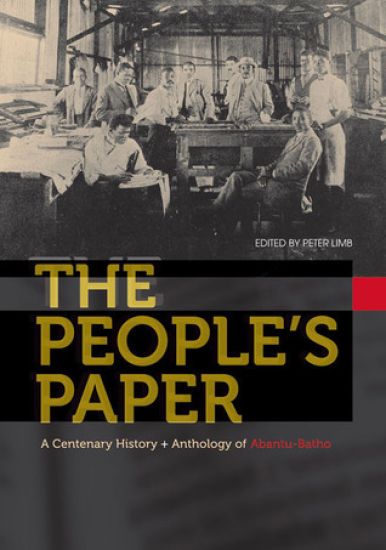
This much-awaited volume uncovers the long-lost pages of the major African multi-lingual newspaper, Abantu-Batho. Founded in 1912 by African National Congress convener Pixley Seme, with assistance from the Swazi Queen, it was published until 1931, attracting the cream of African politicians, journalists, and poets S. E. K Mqhayi, Nontsizi Mgqwetho and Robert Grendon. In its pages burning issues of the day were articulated alongside cultural by-ways. Comprising both essays on and texts from the paper, it explores the complex movements and individuals that emerged. The essays contribute rich, new material to provide clearer insights into South African politics and intellectual life. The Anthology unveils a judicious selection of never-before-published columns from the paper spanning every year of its life, drawn from repositories on three continents. Abantu-Batho also had a regional and international focus, and by examining all these dynamics across boundaries and disciplines the book transcends established historiographical frontiers to fill a lacuna that scholars have long lamented. Distinguished historians and literary scholars, together with exciting young scholars, plumb the lives and ideas of editors, writers, readers and allied movements. Sharing the considerable interest in the ANC centenary, this unique book will have a strong appeal and secure audience among all interested in history, politics, culture, literature, gender, biography and journalism studies, from academics and students to a general public interested in knowing about this early ANC newspaper, its people and the stories that once captivated South Africans.
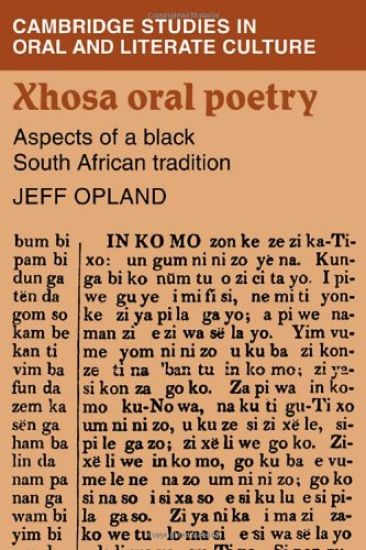
The Xhosa-speaking peoples of south-eastern South Africa have a long tradition of oral poetry, extending back at least two hundred years. This book, first published in 1983, was the first detailed study of that tradition. Jeff Opland has assembled a large corpus of Xhosa oral poetry making his the first analysis of an active South African oral poetic tradition to be based on actual fieldwork. The book focuses in particular on the poetry produced by the imbongi, or court poet, and Professor Opland examines the poetry and careers of four such individuals. He describes the imbongi's informal training, the diction of his poetry and its improvisational character and the relationship of the poet to the chief and the community, revealing that the role of the poetry is essentially political. He also considers the nature of the poetry in relation to ritual. His discussion of Xhosa poetry in relation to theoretical constructs of oral poetry and of oral mental processes is an important contribution to the debate about the nature and distinctiveness of 'oral literature'. With its interdisciplinary approach, it will appeal to readers from many disciplines as well as to general readers interested in African culture.