
Kirjailija
Orlando Lopez
Kirjat ja teokset yhdessä paikassa: 14 kirjaa, julkaisuja vuosilta 2004–2025, suosituimpiin kuuluu Implementation of a Data Reliability Program. Vertaile teosten hintoja ja tarkista saatavuus suomalaisista kirjakaupoista.
Nimi esiintyy myös muodoissa: Orlando López
14 kirjaa
Kirjojen julkaisuvuodet: 2004–2025.

Principios de Práctica Inmobiliaria en Florida
Orlando Lopez; Stephen Mettling; Ryan Mettling
Performance Programs Company LLC
2024
pokkari
"Principios de Pr ctica Inmobiliaria en Florida" es una herramienta de aprendizaje moderna para el estudiante que se prepara para ingresar al negocio de bienes ra ces en Florida como un profesional con licencia. Contiene lo esencial de la ley de bienes ra ces, principios y pr cticas ense adas en las escuelas y universidades de bienes ra ces de Florida, incluyendo todos esos fundamentos que los educadores de bienes ra ces, profesionales en ejercicio, servicios de evaluaci n y funcionarios de licencias consideran necesarios para la competencia b sica. "Principios de Pr ctica Inmobiliaria en Florida" cubre los requisitos previos de licencia exigidos por la ley de licencias de Florida. Principios de Pr ctica Inmobiliaria en Florida is the Spanish version of Performance Programs Company's Principles of Real Estate Practice in Florida FREC 1 textbook.
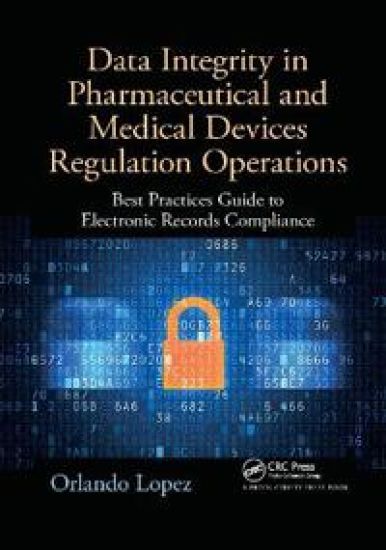
Data Integrity in Pharmaceutical and Medical Devices Regulation Operations
Orlando Lopez
TAYLOR FRANCIS LTD
2022
nidottu
Data integrity is fundamental in a pharmaceutical and medical devices quality system. This book provides practical information to enable compliance with data integrity, while highlighting and efficiently integrating worldwide regulation into the subject. The ideas presented in this book are based on many years’ experience in regulated industries in various computer systems development, maintenance, and quality functions. In addition to case studies, a practical approach will be presented to increase efficiency and to ensure that the design and testing of the data integrity controls are correctly achieved.
The worldwide medicines' manufacturing practices regulations depend heavily on reliable data and records. The information properly recorded is the basis for manufacturers to assure the regulatory authorities of product identity, strengths, purity, and safety. The collected electronic records (e-records) also demonstrate that the manufacturing process adheres to the CGMP, including instructions. An element of reliable records is the integrity of such records. For the relevant stakeholders, such unauthorized alterations will be catalogued that the system is without the proper data integrity (DI) controls and would be deemed a noticeable deficiency. As a state or condition, e-records integrity is a measure of the validity and fidelity of related data. Based on the Universal Electronic Records Management (ERM) Requirements, Version 2.03 published by the National Archives and Records Administration (NARA), this book covers the requirements applicable to DI in the medicines' manufacturing practices regulations, pharmaceutical and biotechnological. This book presents the bounded characterization of e-records handling systems. The reader will have a reference of over fifty-three requirements that need to be agreed upon between the relevant stakeholders.
Pharmaceutical and Medical Devices Manufacturing Computer Systems Validation
Orlando Lopez
Taylor Francis Ltd
2021
nidottu
Validation of computer systems is the process that assures the formal assessment and report of quality and performance measures for all the life-cycle stages of software and system development, its implementation, qualification and acceptance, operation, modification, requalification, maintenance and retirement (PICS CSV PI 011-3). It is a process that demonstrates the compliance of computer systems functional and non-functional requirements, data integrity, regulated company procedures and safety requirements, industry standards, and applicable regulatory authority’s requirements. Compliance is a state of being in adherence to application-related standards or conventions or regulations in laws and similar prescriptions. This book, which is relevant to the pharmaceutical and medical devices regulated operations, provides practical information to assist in the computer validation to production systems, while highlighting and efficiently integrating worldwide regulation into the subject. A practical approach is presented to increase efficiency and to ensure that the validation of computer systems is correctly achieved.

Data integrity is a critical aspect to the design, implementation, and usage of any system which stores, processes, or retrieves data. The overall intent of any data integrity technique is the same: ensure data is recorded exactly as intended and, upon later retrieval, ensure the data is the same as it was when originally recorded. Any alternation to the data is then traced to the person who made the modification. The integrity of data in a patient’s electronic health record is critical to ensuring the safety of the patient. This book is relevant to production systems and quality control systems associated with the manufacture of pharmaceuticals and medical device products and updates the practical information to enable better understanding of the controls applicable to e-records. The book highlights the e-records suitability implementation and associated risk-assessed controls, and e-records handling. The book also provides updated regulatory standards from global regulatory organizations such as MHRA, Medicines and Healthcare Products Regulatory Agency (UK); FDA, Food and Drug Administration (US); National Medical Products Association (China); TGA, Therapeutic Goods Administration (Australia); SIMGP, Russia State Institute of Medicines and Good Practices; and the World Health Organization, to name a few.

Data integrity is a critical aspect to the design, implementation, and usage of any system which stores, processes, or retrieves data. The overall intent of any data integrity technique is the same: ensure data is recorded exactly as intended and, upon later retrieval, ensure the data is the same as it was when originally recorded. Any alternation to the data is then traced to the person who made the modification. The integrity of data in a patient’s electronic health record is critical to ensuring the safety of the patient. This book is relevant to production systems and quality control systems associated with the manufacture of pharmaceuticals and medical device products and updates the practical information to enable better understanding of the controls applicable to e-records. The book highlights the e-records suitability implementation and associated risk-assessed controls, and e-records handling. The book also provides updated regulatory standards from global regulatory organizations such as MHRA, Medicines and Healthcare Products Regulatory Agency (UK); FDA, Food and Drug Administration (US); National Medical Products Association (China); TGA, Therapeutic Goods Administration (Australia); SIMGP, Russia State Institute of Medicines and Good Practices; and the World Health Organization, to name a few.
Covering regulatory requirements stipulated by the FDA, this book delineates the organization, planning, verification, and documentation activities and procedural controls required for compliance with worldwide computer systems validation regulations. The author introduces supporting technologies such as encryption and digital signatures and places regulatory compliance within the context of quality assurance. He demonstrates the importance of integrating validation activities into the system lifecycle using a structured top-down approach. He covers practical applications of quality assurance and engineering techniques as they relate to the development of systems fit to meet user and regulatory requirements.
Pharmaceutical and Medical Devices Manufacturing Computer Systems Validation
Orlando Lopez
CRC Press
2018
sidottu
Validation of computer systems is the process that assures the formal assessment and report of quality and performance measures for all the life-cycle stages of software and system development, its implementation, qualification and acceptance, operation, modification, requalification, maintenance and retirement (PICS CSV PI 011-3). It is a process that demonstrates the compliance of computer systems functional and non-functional requirements, data integrity, regulated company procedures and safety requirements, industry standards, and applicable regulatory authority’s requirements. Compliance is a state of being in adherence to application-related standards or conventions or regulations in laws and similar prescriptions. This book, which is relevant to the pharmaceutical and medical devices regulated operations, provides practical information to assist in the computer validation to production systems, while highlighting and efficiently integrating worldwide regulation into the subject. A practical approach is presented to increase efficiency and to ensure that the validation of computer systems is correctly achieved.
Data Integrity in Pharmaceutical and Medical Devices Regulation Operations
Orlando Lopez
Productivity Press
2016
sidottu
Data integrity is fundamental in a pharmaceutical and medical devices quality system. This book provides practical information to enable compliance with data integrity, while highlighting and efficiently integrating worldwide regulation into the subject. The ideas presented in this book are based on many years’ experience in regulated industries in various computer systems development, maintenance, and quality functions. In addition to case studies, a practical approach will be presented to increase efficiency and to ensure that the design and testing of the data integrity controls are correctly achieved.
EU Annex 11 Guide to Computer Validation Compliance for the Worldwide Health Agency GMP
Orlando Lopez
Apple Academic Press Inc.
2015
sidottu
Good Manufacturing Practice (GMP) ensures medicinal products are produced consistently and controlled to the quality standards appropriate for their intended use and as required by product specifications or marketing authorization. Annex 11 details the European Medicines Agency (EMA) GMP requirements for computer systems. The purpose of Annex 11 is to provide the EMA healthcare industry with consistent criteria for effective implementation, control, and use of computer systems. EU Annex 11 Guide to Computer Validation Compliance for the Worldwide Health Agency GMP supplies practical information to facilitate compliance with computer system GMP requirements, while highlighting and integrating the Annex 11 guidelines into the computer compliance program. The ideas presented in this book are based on the author’s 25 years of experience with computer validation in the healthcare industry with various computer systems development, maintenance, and quality functions. The book details a practical approach to increase efficiency and to ensure that software development and maintenance are achieved correctly. Examining the implementation of the computer systems validation entirely based on EU Annex 11, the book includes examples from laboratory, clinical, and manufacturing computer systems. It also discusses electronic record integrity associated with stored information.
Covering regulatory requirements stipulated by the FDA, this book delineates the organization, planning, verification, and documentation activities and procedural controls required for compliance with worldwide computer systems validation regulations. The author introduces supporting technologies such as encryption and digital signatures and places regulatory compliance within the context of quality assurance. He demonstrates the importance of integrating validation activities into the system lifecycle using a structured top-down approach. He covers practical applications of quality assurance and engineering techniques as they relate to the development of systems fit to meet user and regulatory requirements.