Kirjailija
Orville Vernon Burton
Kirjat ja teokset yhdessä paikassa: 8 kirjaa, julkaisuja vuosilta 2003–2024, suosituimpiin kuuluu The Dawn of Religious Freedom in South Carolina. Vertaile teosten hintoja ja tarkista saatavuus suomalaisista kirjakaupoista.
8 kirjaa
Kirjojen julkaisuvuodet: 2003–2024.
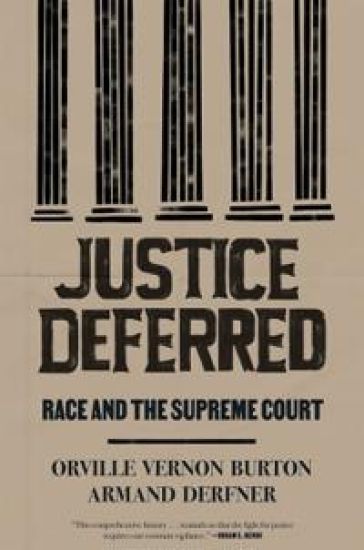
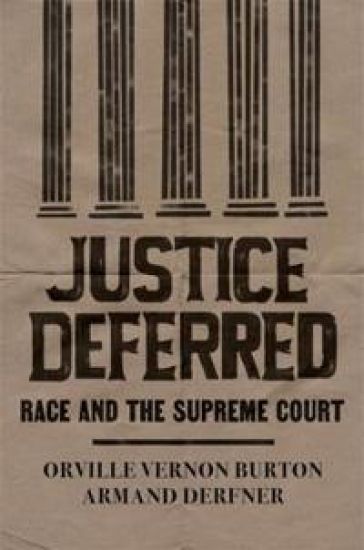
“[A] learned and thoughtful portrayal of the history of race relations in America…authoritative and highly readable…[An] impressive work.”—Randall Kennedy, The Nation“This comprehensive history…reminds us that the fight for justice requires our constant vigilance.”—Ibram X. Kendi“Remarkable for the breadth and depth of its historical and legal analysis…makes an invaluable contribution to our understanding of the US Supreme Court’s role in America’s difficult racial history.”—Tomiko Brown-Nagin, author of Civil Rights Queen: Constance Baker Motley and the Struggle for EqualityFrom the Cherokee Trail of Tears to Brown v. Board of Education to the dismantling of the Voting Rights Act, Orville Vernon Burton and Armand Derfner shine a powerful light on the Supreme Court’s race record—uplifting, distressing, and even disgraceful. Justice Deferred is the first book that comprehensively charts the Supreme Court’s race jurisprudence, detailing the development of legal and constitutional doctrine, the justices’ reasoning, and the impact of individual rulings. In addressing such issues as the changing interpretations of the Reconstruction amendments, Japanese internment in World War II, the exclusion of Mexican Americans from juries, and affirmative action, the authors bring doctrine to life by introducing the people and events at the heart of the story of race in the United States. Much of the fragility of civil rights in America is due to the Supreme Court, but as this sweeping history reminds us, the justices still have the power to make good on the country’s promise of equal rights for all.
African American Life in South Carolina's Upper Piedmont, 1780-1900
W. J. Megginson; Orville Vernon Burton
UNIVERSITY OF SOUTH CAROLINA PRESS
2022
pokkari
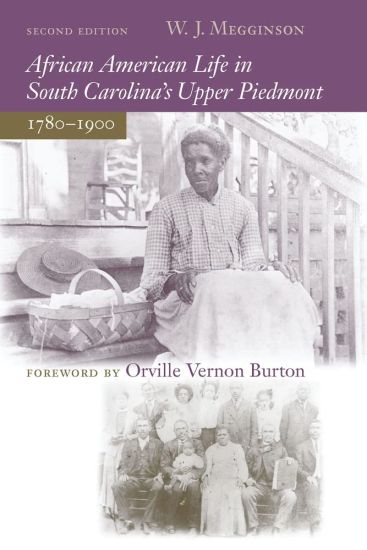
A rich portrait of Black life in South Carolina's UpstateEncyclopedic in scope, yet intimate in detail, African American Life in South Carolina's Upper Piedmont, 1780–1900, delves into the richness of community life in a setting where Black residents were relatively few, notably disadvantaged, but remarkably cohesive. W. J. Megginson shifts the conventional study of African Americans in South Carolina from the much-examined Lowcountry to a part of the state that offered a quite different existence for people of color. In Anderson, Oconee, and Pickens counties—occupying the state's northwest corner—he finds an independent, brave, and stable subculture that persevered for more than a century in the face of political and economic inequities. Drawing on little-used state and county denominational records, privately held research materials, and sources available only in local repositories, Megginson brings to life African American society before, during, and after the Civil War. Orville Vernon Burton, Judge Matthew J. Perry Jr. Distinguished Professor of History at Clemson University and University Distinguished Teacher/Scholar Emeritus at the University of Illinois, provides a new foreword.
In the first comprehensive accounting of the US Supreme Court’s race-related jurisprudence, a distinguished historian and renowned civil rights lawyer scrutinize a legacy too often blighted by racial injustice. The Supreme Court is usually seen as protector of our liberties: it ended segregation, was a guarantor of fair trials, and safeguarded free speech and the vote. But this narrative derives mostly from a short period, from the 1930s to the early 1970s. Before then, the Court spent a century largely ignoring or suppressing basic rights, while the fifty years since 1970 have witnessed a mostly accelerating retreat from racial justice. From the Cherokee Trail of Tears to Brown v. Board of Education to the dismantling of the Voting Rights Act, historian Orville Vernon Burton and civil rights lawyer Armand Derfner shine a powerful light on the Court’s race record—a legacy at times uplifting, but more often distressing and sometimes disgraceful. For nearly a century, the Court ensured that the nineteenth-century Reconstruction Amendments would not truly free and enfranchise African Americans. And the twenty-first century has seen a steady erosion of commitments to enforcing hard-won rights. Justice Deferred is the first book that comprehensively charts the Court’s race jurisprudence. Addressing nearly two hundred cases involving America’s racial minorities, the authors probe the parties involved, the justices’ reasoning, and the impact of individual rulings. We learn of heroes such as Thurgood Marshall; villains, including Roger Taney; and enigmas like Oliver Wendell Holmes and Hugo Black. Much of the fragility of civil rights in America is due to the Supreme Court, but as this sweeping history also reminds us, the justices still have the power to make good on the country’s promise of equal rights for all.
The Gullah people of St. Helena Island still relate that their people wanted to “catch the learning” after northern abolitionists founded Penn School in 1862, less than six months after the Union army captured the South Carolina sea islands. In this broad history Orville Vernon Burton and Wilbur Cross range across the past 150 years to reacquaint us with the far-reaching impact of a place where many daring and innovative social justice endeavors had their beginnings. Penn Center’s earliest incarnation was as a refuge where escaped and liberated enslaved people could obtain formal liberal arts schooling, even as the Civil War raged on sometimes just miles away. Penn Center then earned a place in the history of education by providing agricultural and industrial arts training for African Americans after Reconstruction and through the Jim Crow era, the Great Depression, and two world wars. Later, during the civil rights movement, Penn Center made history as a safe meeting place for organizations like Martin Luther King Jr.’s Southern Christian Leadership Conference and the Peace Corps. Today, Penn Center continues to build on its long tradition of leadership in progressive causes. As a social services hub for local residents and as a museum, conference, and education complex, Penn Center is a showcase for activism in such areas as cultural, material, and environmental preservation; economic sustainability; and access to health care and early learning. Here is all of Penn Center’s rich past and present, as told through the experiences of its longtime Gullah inhabitants and countless visitors. Including forty-two extraordinary photographs that show Penn as it was and is now, this book recounts Penn Center's many achievements and its many challenges, reflected in the momentous events it both experienced and helped to shape.
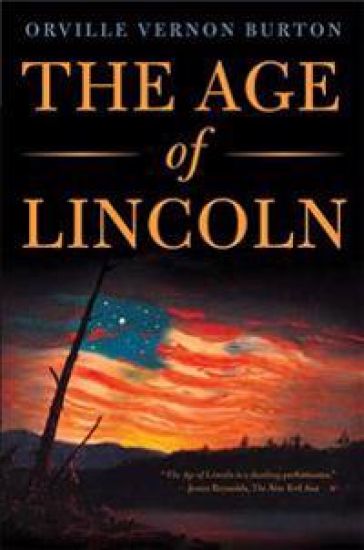
Stunning in its breadth and conclusions, The Age of Lincoln is a fiercely original history of the five decades that pivoted around the presidency of Abraham Lincoln. Abolishing slavery, the age's most extraordinary accomplishment, was not its most profound. The enduring legacy of the age of Lincoln was inscribing personal liberty into the nation's millennial aspirations. America has always perceived providence in its progress, but in the 1840s and 1850s pessimism accompanied marked extremism, as Millerites predicted the Second Coming, utopianists planned perfection, Southerners made slavery an inviolable honor, and Northerners conflated Manifest Destiny with free-market opportunity. Even amid historic political compromises the middle ground collapsed. In a remarkable reappraisal of Lincoln, the distinguished historian Orville Vernon Burton shows how the president's authentic Southernness empowered him to conduct a civil war that redefined freedom as a personal right to be expanded to all Americans. In the violent decades to follow, the extent of that freedom would be contested but not its central place in what defined the country. Presenting a fresh conceptualization of the defining decades of modern America, The Age of Lincoln is narrative history of the highest order.
The Dawn of Religious Freedom in South Carolina
Orville Vernon Burton; Peter Clarke; Belinda L. Gergel; Richard J. Gergel; David Herr; Alexander Moore; W. Scott Poole
University of South Carolina Press
2006
sidottu
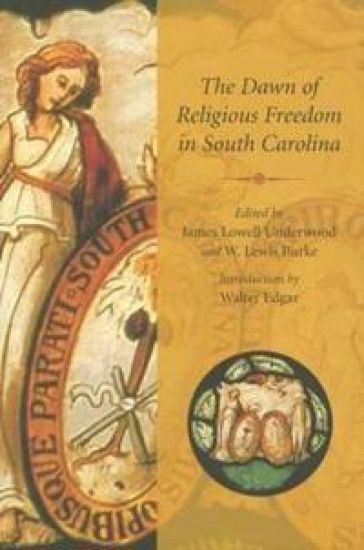
Although South Carolina's colonial charter promised a safe harbor of religious freedom for those who were oppressed, eighteenth-century religious minorities in the colony found their rights were subjugated to those of the Anglicans. ""The Dawn of Religious Freedom in South Carolina"" contains eight essays by historians and legal scholars that trace the quest for religious equality by Protestant dissenters, Huguenots, Jews, Quakers, Afro-Carolinians, and Roman Catholics. Uncovering the historical roots of the separation of church and state, the contributors use South Carolina's experience to illustrate that religious freedom is more secure when widely shared. South Carolina was a beacon of religious freedom when compared to many other North American colonies. The contributors recount the incremental steps that culminated with the 1790 Constitution's grant of ""free exercise and enjoyment of religious profession and worship, without discrimination or preference."" Separate chapters revisit the experiences of the Huguenots, who found themselves caught in a political crossfire between Anglicans and Protestant dissenters; the Quakers, who ultimately left the state because of their inability to reconcile with the principles of a slaveholding society; the Afro-Carolinians, who created ""psychological living space"" through religion while their masters watched nervously for signs of rebellion; and the evangelicals, whose emphasis on equality before God brought ideas about egalitarianism to South Carolina society. The volume's contributors also enumerate Catholic and Jewish efforts to gain religious equality, and recount the leading roles played by such individuals as Jewish patriot Francis Salvador, Catholic bishop John England, and statesman Charles Pinckney.
Cause at Heart
Junius Irving Scales; Richard Nickson; Orville Vernon Burton; James Barrett
University of Georgia Press
2005
nidottu
The story of the only American ever to be convicted solely for being a member of the Communist Party. On November 18, 1954, Junius Irving Scales, the Communist Party district organizer for the upper South, was arrested on a quiet Memphis street by FBI agents. Charged with violation of the Smith Act of 1940, Scales spent the next six years ensnared in a legal system that was in thrall to a daunting force: McCarthyism. Scales's case twice reached the U. S. Supreme Court; ultimately, his lower-court guilty verdict was upheld. Scales served fifteen months in Lewisburg Penitentiary before his six-year sentence was commuted by President Kennedy in 1962. ""Cause at Heart"" follows Scales from his privileged southern upbringing through the awakening of his social conscience, his civil- and labor-rights work for the Party across the South, his arrest and trials, his disillusionment with the Party, and his time in prison. Even behind bars Scales refused to cooperate with his prosecutors, to ""name names."" In their foreword, Vernon Burton and James Barrett draw chilling parallels between the Smith Act, the legal grounds on which Scales was convicted, and contemporary restrictions on individual rights such as the Patriot Act. Today, as it did sixty-plus years ago, ""Congress has radically expanded the description of what constitutes a threat to the U. S. government.
Born the son of a sharecropper in 1894 near Ninety Six, South Carolina, Benjamin E. Mays went on to serve as president of Morehouse College for twenty-seven years and as the first president of the Atlanta School Board. His earliest memory, of a lynching party storming through his county, taunting but not killing his father, became for Mays an enduring image of black-white relations in the South. Born to Rebel is the moving chronicle of his life, a story that interlaces achievement with the rebuke he continually confronted.