Kirjojen hintavertailu – 12 903 724 kirjaa ja 27 kauppaa

Kirjailija

Oscar Hemer

Kirjat ja teokset yhdessä paikassa: 10 kirjaa, julkaisuja vuosilta 2020–2026, suosituimpiin kuuluu Speculative Anthropology. Vertaile teosten hintoja ja tarkista saatavuus suomalaisista kirjakaupoista.

10 kirjaa

Kirjojen julkaisuvuodet: 2020–2026.

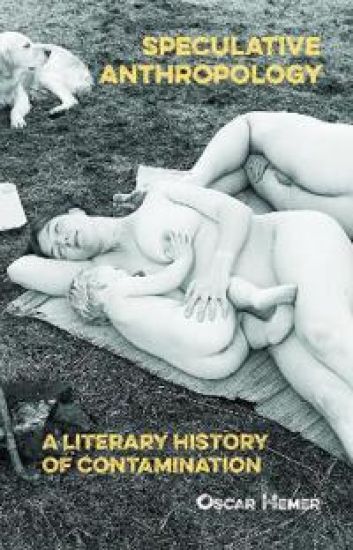
Speculative Anthropology

Speculative Anthropology

Oscar Hemer

SEAN KINGSTON PUBLISHING
2026
nidottu
Anthropology’s keen interest in fiction can be traced to the discipline’s so-called ‘literary turn’ in the 1980s and 90s, instigated by James Clifford and George Marcus’ groundbreaking anthology Writing Culture (1986). But the close connection between anthropology and literature goes back to pioneer anthropologists like Bronislaw Malinowski and Claude Lévi-Strauss, who were also prominent writers. The discussion continues, and ‘literary anthropology’ is now a well-established sub-field that addresses literary studies as well as creative writing. Yet, anthropology’s courting of literature has largely remained unanswered. Some famous authors have a background in anthropology, such as Kurt Vonnegut, Ursula K. Le Guin and Amitav Ghosh, but few – one of the exceptions being Ghosh – have reflected on the relationship between the two practices, let alone consciously attempted to fuse them. Speculative Anthropology: A Literary History of Contamination explores the ‘intersection’ between anthropology and literature from the literary side, with the perspective of the writer, rather than the critic. The title is inspired by Argentinian author Juan José Saer’s tentative definition of ‘fiction’ as ‘speculative anthropology’ and Ghanaian British philosopher Kwame Anthony Appiah’s similarly tentative proposal for a literary tradition of ‘contamination’, going back to Roman playwright Terence’s fusion of comedy and tragedy. In this pioneer monograph, Oscar Hemer reinterprets Appiah’s ‘contamination’ as genre crossing and mixing, not between different literary genres but between fiction and discursive forms of writing – anthropological as well as philosophical and historical. His tentative ‘canon of contamination’ explored in this volume includes, among others, Montesquieu’s Persian Letters, the ‘self-ethnographies’ of Michel Leiris and Édouard Glissant, Jorge Luis Borges’s ‘fictional essays’, César Aira’s ‘freaked-out ethnography’, Chris Kraus’s ‘theoretical fiction’, Zoë Wicomb’s spectral South African history – and the exemplary philosophy-by-fiction of J. M. Coetzee.
Återkomstens gåta

Återkomstens gåta

Oscar Hemer

Bokförlaget Korpen
2026
nidottu
Återkomstens gåta är Oscar Hemers två olika närmanden – en essä och en roman – till två parallella resor med femtio års intervall. Essän, skriven in medias res, är en reseberättelse från dagens Sydamerika (Argentina till Ecuador) och en reflektion kring själva resandet och tiden. Romanen, som bland annat återbesöker det politiska och psykedeliska sjuttiotalet, är samtidigt en fristående pendang till Hemers föregående roman Familj: en fiktion (2022), med särskilt fokus på förhållandet mellan far och son.
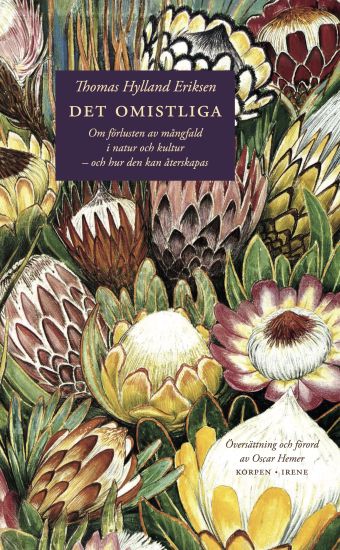
Det omistliga : om förlusten av mångfald i natur och kultur - och hur den kan återskapas

Det omistliga : om förlusten av mångfald i natur och kultur - och hur den kan återskapas

Thomas Hylland Eriksen; Oscar Hemer

Bokförlaget Korpen och Irene Publishing
2025
nidottu
Det är allvar nu. Det är vår framtid som står på spel. Såväl kulturell som biologisk mångfald hotas i den globaliserade värld som nu löper amok. Det pris vi betalar för mänsklighetens framsteg är standardisering. Vi har utrotat sjukdomar och hungersnöd, men även arter och säregna kulturer. Urskog och vildmark har omvandlats till plantager och betongöknar, små språk försvinner och lokal kunskap glöms bort. Vi har alla från Sverige till Seychellerna, från Amazonas till Australien utvecklats till konsumenter av samma sort. Resultatet är allt större likriktning. Men allt är faktiskt inte hopplöst. Denna bok visar både på motkrafter och försök att återskapa mångfald. Det är viktigare än någonsin att visa på de alternativ som finns. Variationsrikedom är livsviktig. Så kan man sammanfatta kärnan i det intellektuella arv som den norske antropologen Thomas Hylland Eriksen lämnar efter sig. Det är raka motsatsen till att hylla renhet eller sätta upp stängsel och staket. Det handlar om de nyskapande blandformer som uppstår där människor och kulturer möts. När Thomas Hylland Eriksen gick bort, hösten 2024, hade han just färdigställt Det omistliga. Denna bok blev hans sista stora projekt och sammanfattar hans livsgärning som forskare, författare och kunskapsförmedlare. Det omistliga ges ut på svenska i samarbete mellan Bokförlaget Korpen och Irene Publishing. Thomas Hylland Eriksen (1962 2024) var professor i socialantropologi vid Oslo universitet och författare till en lång rad böcker på norska och engelska. Hans forskning var inriktad på sociala och kulturella effekter av globaliseringen, från nationalism och kreolisering till informationsrevolutionen och klimatkrisen. Hylland Eriksen mottog en rad priser för sitt författarskap och räknades vid sin bortgång till en av Norges ledande intellektuella. Hans böcker Små platser stora frågor och Ögonblickets tyranni har översatts till mer än trettio språk.
Speculative Anthropology

Speculative Anthropology

Oscar Hemer

SEAN KINGSTON PUBLISHING
2025
sidottu

Halvin toimitettuna 114,40 €

Anthropology’s keen interest in fiction can be traced to the discipline’s so-called ‘literary turn’ in the 1980s and 90s, instigated by James Clifford and George Marcus’ groundbreaking anthology Writing Culture (1986). But the close connection between anthropology and literature goes back to pioneeranthropologists like Bronislaw Malinowski and Claude Lévi-Strauss, who were also prominent writers. The discussion continues, and ‘literary anthropology’is now a well-established sub-field that addresses literary studies as well as creative writing. Yet, anthropology’s courting of literature has largely remainedunanswered. Some famous authors have a background in anthropology, such as Kurt Vonnegut, Ursula K. Le Guin and Amitav Ghosh, but few – one of theexceptions being Ghosh – have reflected on the relationship between the two practices, let alone consciously attempted to fuse them. Speculative Anthropology: A Literary History of Contamination explores the ‘intersection’ between anthropology and literature from the literary side, with the perspective of the writer, rather than the critic. The title is inspired by Argentinian author Juan José Saer’s tentative definition of ‘fiction’ as ‘speculative anthropology’ and Ghanaian British philosopher Kwame Anthony Appiah’s similarly tentative proposal for a literary tradition of ‘contamination’,going back to Roman playwright Terence’s fusion of comedy and tragedy. In this pioneer monograph, Oscar Hemer reinterprets Appiah’s ‘contamination’ asgenre crossing and mixing, not between different literary genres but between fiction and discursive forms of writing – anthropological as well as philosophicaland historical. His tentative ‘canon of contamination’ explored in this volume includes, among others, Montesquieu’s Persian Letters, the ‘self-ethnographies’of Michel Leiris and Édouard Glissant, Jorge Luis Borges’s ‘fictional essays’, César Aira’s ‘freaked-out ethnography’, Chris Kraus’s ‘theoretical fiction’, Zoë Wicomb’s spectral South African history – and the exemplary philosophy-by-fiction of J. M. Coetzee.
Familj : en fiktion

Familj : en fiktion

Oscar Hemer

Bokförlaget Korpen
2022
nidottu
Oscar Hemers nya roman utspelar sig pandemiåret 2020 på Österlen, men berättelsen sträcker sig över tre generationer och tre kontinenter till bland annat sjuttiotalets Tanzania och den finska krigsvintern 1939-40. Strax före jul får syskonen Beyonce och Lasse ett överraskande sms: Nu har pappa och jag bestämt att vi reser bort några veckor. Ni är välkomna att bo i Sandäng medan vi är borta. Det finns mat i kylen. Puss. Mamma. Åtta månader senare är Leo och Tania fortfarande spårlöst försvunna. Men alla löpande räkningar betalas per autogiro, till och med Ica-kortet fylls på automatiskt varje månad. Lasse är kvar i huset på Österlen efter att ha svultit sig genom en snövinter som lokalt skördade fler liv än pandemin. Beyonce, hans räddare i nöden, kommer nu tillbaka från Christiania och flyttar in med sin katt i föräldrarnas sovrum. Familj handlar om den i grunden slumpmässiga fusion av två individers gener, förhoppningar och minnen som i sin tur är produkter av slumpmässiga kombinationer av ärvda och förvärvade egenskaper och erfarenheter i två eller tre led så länge det levande minnet varar. Oscar Hemer är professor i journalistisk och litterär gestaltning vid Malmö Universitet. Han är författare till ett femtontal böcker i olika genrer, senast essän Borgesiana (2021) och den experimentella essäromanen Contaminations and Ethnographic Fictions: Southern Crossings (2020). Han är även översättare från spanska och var, tillsammans med Lasse Söderberg, redaktör för den samlade svenska utgåvan av Jorge Luis Borges verk, Borges I-III (2017; 2019; 2020).
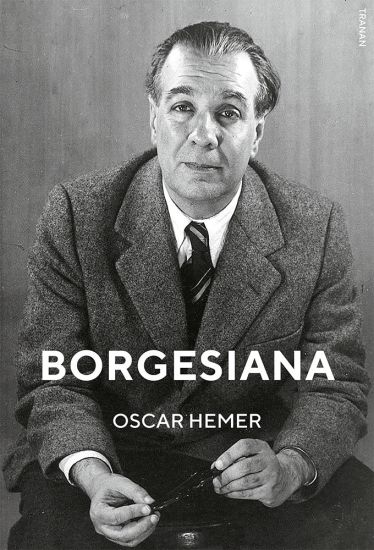
Borgesiana

Borgesiana

Oscar Hemer

Bokförlaget Tranan
2021
nidottu
JORGE LUIS BORGES (1899 1986) a r en av nittonhundratalets mest ikoniska fo rfat­tare. Hans bero mmelse vilar ba de pa den ny skapande litteratur han producerade under mer a n ett halvt sekel och pa mytologin kring hans liv: han var den unga avantgardisten, den utvalde huvudbibliotekarien vid nationalbib­lioteket i Buenos Aires, den stridbare Peron­-motsta ndaren som gjorde mer a n ett politiskt snedsteg och, pa a lderns ho st, den blinde bar­den som fostrade en ny generation fo rfattare. I nio essa er djupdyker Borgeska nnaren Oscar Hemer i Borges liv och fo rfattarskap utifra n lika ma nga perspektiv, till exempel ka rle­ken till hemstaden Buenos Aires, de ideliga fo ra lskelserna, fascinationen fo r den judiska mystiken och fo rha llandet till Sverige och Nobelpriset. Idén till boken föddes under arbetet med de tre stora volymer med Jorge Luis Borges verk som Tranan givit ut under de senaste åren. Oscar Hemer -- som varit en av redaktörerna och översättarna -- började skriva en bok som kan ackompanjera läsningen av Borges egna texter, skriven i en på samma gång lärd och personlig stil. Boken kan ses som en pendang till de tre Borges-volymerna och fungerar både som fördjupning och läsguide, samtidigt som essäerna också är lättillgängliga och allmänbildande för den vanliga läsaren. Oscar Hemer är professor i journalistisk och litterär gestaltning vid Malmö Universitet och författare till ett femtontal böcker i olika genrer, bland annat romanerna i Argentina­trilogin. Han har också ett förflutet som kulturjournalist, bland annat för Sydsvenskan. Enga­gemanget i Borges verk sträcker sig långt tillbaka i tiden och han har besökt Argentina i många omgångar sedan det första besöket 1974.
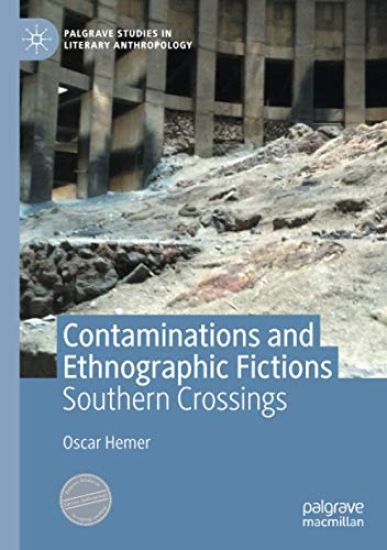
Contaminations and Ethnographic Fictions

Contaminations and Ethnographic Fictions

Oscar Hemer

Springer Nature Switzerland AG
2021
nidottu
In an unusual merging of academic and literary practices, this volume attempts to identify a form (or forms) that is congenial with the subject of interrogation: the world in transition, with South Africa as the main focal point. Approaching anthropology from the position of the literary writer, Oscar Hemer here takes the reader through a kaleidoscope of perspectives—a stream-of-consciousness understanding of “writing the city” of Johannesburg, embedding ethnography in subjectivity; a challenge to binaries both temporal and gendered in examining the growth of the IT metropolis Bangalore to a combusting mega-city; an auto-ethnographic interweaving of fictional reportage with a close-reading of anthropological and philosophical treatises, including Mary Douglas’s Purity and Danger and Edouard Glissant’s Poetics of Relation, among others—to interrogate themes of transition, identity, purity and variation in the Western Cape. As the form transcends boundaries to create a methodological hybrid, creolization comes to the fore as a theoretical concept and as cultural practice.
Conviviality at the Crossroads

Conviviality at the Crossroads

Per-Markku Ristilammi; Maja Povrzanovic Frykman; Oscar Hemer

Saint Philip Street Press
2020
sidottu
Conviviality has lately become a catchword not only in academia but also among political activists. This open access book discusses conviviality in relation to the adjoining concepts cosmopolitanism and creolisation. The urgency of today's global predicament is not only an argument for the revival of all three concepts, but also a reason to bring them into dialogue. Ivan Illich envisioned a post-industrial convivial society of 'autonomous individuals and primary groups' (Illich 1973), which resembles present-day manifestations of 'convivialism'. Paul Gilroy refashioned conviviality as a substitute for cosmopolitanism, denoting an ability to be 'at ease' in contexts of diversity (Gilroy 2004). Rather than replacing one concept with the other, the fourteen contributors to this book seek to explore the interconnections - commonalities and differences - between them, suggesting that creolisation is a necessary complement to the already-intertwined concepts of conviviality and cosmopolitanism. Although this volume takes northern Europe as its focus, the contributors take care to put each situation in historical and global contexts in the interests of moving beyond the binary thinking that prevails in terms of methodologies, analytical concepts, and political implementations. This work was published by Saint Philip Street Press pursuant to a Creative Commons license permitting commercial use. All rights not granted by the work's license are retained by the author or authors.
Conviviality at the Crossroads

Conviviality at the Crossroads

Per-Markku Ristilammi; Maja Povrzanovic Frykman; Oscar Hemer

Saint Philip Street Press
2020
pokkari
Conviviality has lately become a catchword not only in academia but also among political activists. This open access book discusses conviviality in relation to the adjoining concepts cosmopolitanism and creolisation. The urgency of today's global predicament is not only an argument for the revival of all three concepts, but also a reason to bring them into dialogue. Ivan Illich envisioned a post-industrial convivial society of 'autonomous individuals and primary groups' (Illich 1973), which resembles present-day manifestations of 'convivialism'. Paul Gilroy refashioned conviviality as a substitute for cosmopolitanism, denoting an ability to be 'at ease' in contexts of diversity (Gilroy 2004). Rather than replacing one concept with the other, the fourteen contributors to this book seek to explore the interconnections - commonalities and differences - between them, suggesting that creolisation is a necessary complement to the already-intertwined concepts of conviviality and cosmopolitanism. Although this volume takes northern Europe as its focus, the contributors take care to put each situation in historical and global contexts in the interests of moving beyond the binary thinking that prevails in terms of methodologies, analytical concepts, and political implementations. This work was published by Saint Philip Street Press pursuant to a Creative Commons license permitting commercial use. All rights not granted by the work's license are retained by the author or authors.
Contaminations and Ethnographic Fictions

Contaminations and Ethnographic Fictions

Oscar Hemer

Springer Nature Switzerland AG
2020
sidottu
In an unusual merging of academic and literary practices, this volume attempts to identify a form (or forms) that is congenial with the subject of interrogation: the world in transition, with South Africa as the main focal point. Approaching anthropology from the position of the literary writer, Oscar Hemer here takes the reader through a kaleidoscope of perspectives—a stream-of-consciousness understanding of “writing the city” of Johannesburg, embedding ethnography in subjectivity; a challenge to binaries both temporal and gendered in examining the growth of the IT metropolis Bangalore to a combusting mega-city; an auto-ethnographic interweaving of fictional reportage with a close-reading of anthropological and philosophical treatises, including Mary Douglas’s Purity and Danger and Edouard Glissant’s Poetics of Relation, among others—to interrogate themes of transition, identity, purity and variation in the Western Cape. As the form transcends boundaries to create a methodological hybrid, creolization comes to the fore as a theoretical concept and as cultural practice.