Kirjojen hintavertailu – 12 859 824 kirjaa ja 27 kauppaa

Kirjailija

Oscar Wilde

Kirjat ja teokset yhdessä paikassa: 2 744 kirjaa, julkaisuja vuosilta 1890–2026, suosituimpiin kuuluu Aforismeja. Vertaile teosten hintoja ja tarkista saatavuus suomalaisista kirjakaupoista.

2 744 kirjaa

Kirjojen julkaisuvuodet: 1890–2026.

The Ballad of Reading Gaol (annotated)

The Ballad of Reading Gaol (annotated)

Oscar Wilde

Createspace Independent Publishing Platform
2015
nidottu

Halvin toimitettuna 12,40 €

The Ballad of Reading Gaol is a poem by Oscar Wilde, written in exile in Berneval-le-Grand, after his release from Reading Gaol on 19 May 1897. Wilde had been incarcerated in Reading after being convicted of homosexual offences in 1895 and sentenced to two years' hard labour in prison. During his imprisonment, on Tuesday, 7 July 1896, a hanging took place. Charles Thomas Wooldridge had been a trooper in the Royal Horse Guards. He was convicted of cutting the throat of his wife, Laura Ellen, 1] earlier that year at Clewer, near Windsor. He was aged 30 when executed. 2] 3] Wilde wrote the poem in mid-1897 while staying with Robert Ross in Berneval-le-Grand. The poem narrates the execution of Wooldridge; it moves from an objective story-telling to symbolic identification with the prisoners as a whole. 4] No attempt is made to assess the justice of the laws which convicted them, but rather the poem highlights the brutalisation of the punishment that all convicts share. Wilde juxtaposes the executed man and himself with the line "Yet each man kills the thing he loves". 5] Wilde too was separated from his wife and sons. He adopted the proletarian ballad form, and suggested it be published in Reynold's Magazine, "because it circulates widely among the criminal classes - to which I now belong - for once I will be read by my peers - a new experience for me". 6] The finished poem was published by Leonard Smithers on 13 February 1898 7] under the name C.3.3., which stood for cell block C, landing 3, cell 3. This ensured that Wilde's name - by then notorious - did not appear on the poem's front cover. It was not commonly known, until the 7th printing in June 1899, that C.3.3. was actually Wilde. The first edition, of 800 copies, sold out within a week, and Smithers announced that a second edition would be ready within another week; that was printed on 24 February, in 1,000 copies, which also sold well. A third edition, of 99 numbered copies "signed by the author", was printed on 4 March, on the same day a fourth edition of 1,200 ordinary copies was printed. A fifth edition of 1,000 copies was printed on 17 March, and a sixth edition was printed in 1,000 copies on 21 May 1898. So far the book's title page had identified the author only as C.3.3., although many reviewers, and of course those who bought the numbered and autographed third edition copies, knew that Wilde was the author, but the seventh edition, printed on 23 June 1899, actually revealed the author's identity, putting the name Oscar Wilde, in square brackets, below the C.3.3.. 8] 9] It brought him a small income in his remaining lifetime. The poem consists of 109 stanzas of 6 lines, of 8-6-8-6-8-6 syllables, and rhyming a-b-c-b-d-b. Some stanzas incorporate rhymes within some or all of the 8-syllable lines. The whole poem is grouped into 6 untitled sections of 16, 13, 37, 23, 17 and 3 stanzas. A version with only 63 of the stanzas, divided into 4 sections of 15, 7, 22 and 19 stanzas, and allegedly based on the original draft, was included in the posthumous editions of Wilde's poetry edited by Robert Ross, "for the benefit of reciters and their audiences who have found the entire poem too long for declamation"
Reviews

Reviews

Oscar Wilde

Createspace Independent Publishing Platform
2015
nidottu
Reviews Oscar Wilde (1854 - 1900) Wilde's literary reputation has survived so much that I think it proof against any exhumation of articles which he or his admirers would have preferred to forget. As a matter of fact, I believe this volume will prove of unusual interest; some of the reviews are curiously prophetic; some are, of course, biassed by prejudice hostile or friendly; others are conceived in the author's wittiest and happiest vein; only a few are colourless. And if, according to Lord Beaconsfield, the verdict of a continental nation may be regarded as that of posterity, Wilde is a much greater force in our literature than even friendly contemporaries ever supposed he would become. It should be remembered, however, that at the time when most of these reviews were written Wilde had published scarcely any of the works by which his name has become famous in Europe, though the protagonist of the sthetic movement was a well-known figure in Paris and London.
Shorter Prose Pieces

Shorter Prose Pieces

Oscar Wilde

Createspace Independent Publishing Platform
2015
nidottu
Shorter Prose Pieces by Oscar Wilde - Phrases And Philosophies for the Use of The Young - Mrs. Langtry as Hester Grazebrook - Slaves of Fashion - Woman's Dress - More Radical Ideas upon Dress Reform - Costume - The American Invasion - Sermons in Stones at Bloomsbury - L'Envoi
Intentions (annotated)

Intentions (annotated)

Oscar Wilde

Createspace Independent Publishing Platform
2015
nidottu
Intentions is a collection of works about British arts and drama by Oscar Wilde which includes the following selections: The Decay of Lying Pen, Pencil, and Poison The Critic as Artist The Truth of Masks
De Profundis (annotated)

De Profundis (annotated)

Oscar Wilde

Createspace Independent Publishing Platform
2015
nidottu
De Profundis (Latin: "from the depths") is a letter written by Oscar Wilde during his imprisonment in Reading Gaol, to "Bosie" (Lord Alfred Douglas). In its first half Oscar Wilde recounts their previous relationship and extravagant lifestyle which eventually led to Wilde's conviction and imprisonment for gross indecency. He indicts both Lord Alfred's vanity and his own weakness in acceding to those wishes. In the second half, Wilde charts his spiritual development in prison and identification with Jesus Christ, whom he characterises as a romantic, individualist artist. The letter began "Dear Bosie" and ended "Your Affectionate Friend". Oscar Wilde wrote the letter between January and March 1897, close to the end of his imprisonment. Contact had lapsed between Douglas and Wilde and the latter had suffered from his close supervision, physical labour, and emotional isolation. Nelson, the new prison governor, thought that writing might be more cathartic than prison labour. He was not allowed to send the long letter which he was allowed to write "for medicinal purposes"; each page was taken away when completed, and only at the end could he read it over and make revisions. Nelson gave the long letter to him on his release on 18 May 1897. Oscar Wilde entrusted the manuscript to the journalist Robert Ross (another former lover, loyal friend and rival to "Bosie"). Ross published the letter in 1905, five years after Wilde's death, giving it the title "De Profundis" from Psalm 130. It was an incomplete version, excised of its autobiographical elements and references to the Queensberry family; various editions gave more text until in 1962 the complete and correct version appeared in a volume of Wilde's letters. In 1891 Wilde began an intimate friendship with Lord Alfred Douglas, a young, vain aristocrat. As the two grew closer, family and friends on both sides urged Wilde and Douglas to lessen their contact. Lord Alfred's father, the Marquess of Queensberry, often feuded with his son over the topic. Especially after the suicide death of his eldest son, the Viscount Drumlanrig, Queensberry privately accused them of improper acts and threatened to cut off Lord Alfred's allowance. When they refused, he began publicly harassing Oscar Wilde. In early 1895 Wilde had reached the height of his fame and success with his plays An Ideal Husband and The Importance of Being Earnest on stage in London. When Wilde returned from holidays after the premieres, he found Queensberry's card at his club with the inscription: "For Oscar Wilde, posing somdomite sic]". Unable to bear further insults and encouraged by Lord Alfred (who wanted to attack his father in every possible way), Oscar Wilde sued Queensberry for criminal libel. Wilde withdrew his claim as the defence began but the Judge deemed that Queensberry's accusation was justified. The Crown promptly issued a warrant for his arrest and he was charged with gross indecency with other men under the Labouchere Amendment in April 1895. The trial was the centre of public discussion as details of Wilde's consorts from the working class became known. Wilde refused to admit wrongdoing and the jury were unable to reach a verdict. At the retrial Wilde was sentenced to two years' imprisonment, to be held to hard labour.
The Soul of Man

The Soul of Man

Oscar Wilde

Createspace Independent Publishing Platform
2015
nidottu
The Soul of Man Oscar Wilde (1854 - 1900) "(T)he past is what man should not have been. The present is what man ought not to be. The future is what artists are." Published originally as "The Soul of Man Under Socialism," this is not so much a work of sober political analysis; rather it can be summed up as a rhapsodic manifesto on behalf of the Individual. Socialism having deployed technology to liberate the whole of humanity from soul-destroying labour, the State obligingly withers away to allow the free development of a joyful, anarchic hedonism... "Is this Utopian? A map of the world that does not include Utopia is not worth even glancing at, for it leaves out the one country at which Humanity is always landing." Far from abandoning the epigram in favour of the slogan, Wilde wittily assails several of his favourite targets: the misguided purveyors of philanthropy; life-denying ascetics of various kinds; the army of the half-educated who constitute themselves the enemies of Art - and those venal popular journalists who cater to them... "Behind the barricade there may be much that is noble and heroic. But what is there behind the leading-article but prejudice, stupidity, cant, and twaddle?"
A House of Pomegranates (annotated)

A House of Pomegranates (annotated)

Oscar Wilde

Createspace Independent Publishing Platform
2015
nidottu
A House of Pomegranates is a collection of classic fairy tales, written by Oscar Wilde, that was published in 1891 as a second collection for The Happy Prince and Other Tales (1888). Wilde once said that this fairy tale collection was "intended neither for the British child nor the British public." The Young King The Young King tells the story of the illegitimate shepherd son of the recently dead king's daughter of an unnamed country. Being his only heir, the sixteen-year-old is brought to the palace to await his accession. There, he is in awe of the splendor of his new home and anxiously awaits his new crown, scepter, and robe which are soon to be delivered to him for his coronation in the morning. The Birthday of the Infanta The Birthday of the Infanta is about a hunchbacked dwarf, found in the woods by courtiers of the King of Spain. The hunchback's father sells him to the palace for the amusement of the king's daughter, the Infanta, on her twelfth birthday. The Fisherman and his Soul In The Fisherman and his Soul, a young Fisherman finds a Mermaid and wants nothing more than to marry her, but he cannot, for one cannot live underwater if one has a soul. He goes to his priest, but the priest tells him his soul is his most precious possession, and the soulless mermen are lost. He tries to sell it to merchants, who tell him it is not worth anything. He goes to a witch, who tells him his soul is his shadow, and says how it can be cut away with a viper-skin knife after he dances with her. The Star-Child The Star-Child is the story of an infant boy found abandoned in the woods by a poor woodcutter, who pities him and takes him in. He grows up to be exceedingly beautiful, but vain, cruel, and arrogant, believing himself to be the divine child of the stars. He lords over the other children, who follow him devotedly, and takes pleasure in torturing the forest animals and village beggars alike.
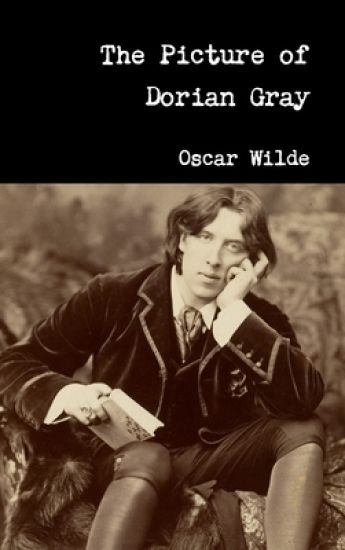
The Picture of Dorian Gray

The Picture of Dorian Gray

Oscar Wilde

Lulu.com
2015
sidottu
The Picture of Dorian Gray is the only published novel by Oscar Wilde, appearing as the lead story in Lippincott's Monthly Magazine on 20 June 1890, printed as the July 1890 issue. The magazine's editors feared the story was indecent as submitted, so they censored roughly 500 words, without Wilde's knowledge, before publication. But even with that, the story was still greeted with outrage by British reviewers, some of whom suggested that Wilde should be prosecuted on moral grounds, leading Wilde to defend the novel aggressively in letters to the British press. Today, Wilde's fin de siecle novella is considered a classic.
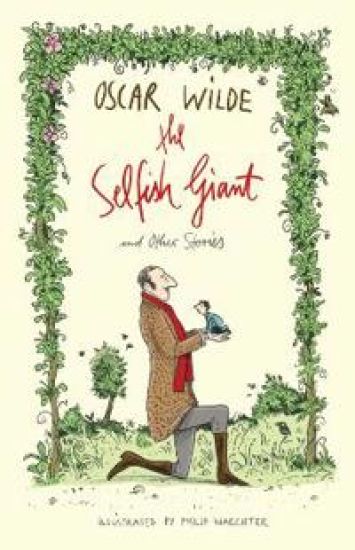
The Selfish Giant and Other Stories

The Selfish Giant and Other Stories

Oscar Wilde

Alma Classics
2015
nidottu

Halvin toimitettuna 15,90 €

When the Selfish Giant decides to build a wall around his garden to prevent the children from playing in it, it becomes barren and stuck in perpetual winter. It takes a wonderful event and the heart of a young boy for him to realize the error of his ways. A classic tale for children, 'The Selfish Giant' is presented here with all of Oscar Wilde's other fairy stories - 'The Happy Prince', 'The Nightingale and the Rose', 'The Devoted Friend', 'The Remarkable Rocket', 'The Young King', 'The Birthday of the Infanta', 'The Fisherman and His Soul' and 'The Star-Child' - brought to life by Philip Waechter's bright and imaginative illustrations.
De profundis

De profundis

Oscar Wilde

Createspace Independent Publishing Platform
2015
nidottu
De profundis es la ep stola que Oscar Wilde escribi para su compa ero, Lord Alfred Douglas en la prisi n de Reading en marzo de 1897, dos meses antes de que cumpliera su sentencia, la cual fue impuesta por el delito de sodom a. Bella, emp tica, triste, conmovedora, irritante, reflexiva, espiritual... muchos adjetivos pueden definir esta obra, dependiendo del lector. Lo cierto es que, a pesar de la confrontaci n de diversos sentimientos, el autor redacta cada palabra de esta obra con esperanza; esperanza de recibir una respuesta, cualquiera que esta fuera, del principal responsable de su estancia en prisi n.