

Kirjailija
Oscar Wilde
Kirjat ja teokset yhdessä paikassa: 2 744 kirjaa, julkaisuja vuosilta 1890–2026, suosituimpiin kuuluu Aforismeja. Vertaile teosten hintoja ja tarkista saatavuus suomalaisista kirjakaupoista.
2 744 kirjaa
Kirjojen julkaisuvuodet: 1890–2026.
The Decay of Lying: An Observation By Oscar Wilde"The Decay of Lying - An Observation" is an essay by Oscar Wilde included in his collection of essays titled Intentions, published in 1891. This is a significantly revised version of the article that first appeared in the January 1889 issue of The Nineteenth Century. Wilde presents the essay in a Socratic dialogue between with Vivian and Cyril, two characters named after his own sons. Their conversation, though playful and whimsical, promotes Wilde's view of Romanticism over Realism. Vivian tells Cyril of an article he has been writing called "The Decay Of Lying: A Protest". According to Vivian, the decay of Lying "as an art, a science, and a social pleasure" is responsible for the decline of modern literature, which is excessively concerned with the representation of facts and social reality. He writes, "if something cannot be done to check, or at least to modify, our monstrous worship of facts, Art will become sterile and beauty will pass away from the land." Moreover, Vivian defends the idea that Life imitates Art far more than vice versa. Nature, he argues, is no less an imitation of Art than Life. Vivian also contends that Art is never representative of a time or place: rather, "the highest art rejects the burden of the human spirit ...] She develops purely on her own lines. She is not symbolic of any age." Vivian thus defends Aestheticism and the concept of "art for art's sake". At Cyril's behest, Vivian briefly summarizes the doctrines of the "new aesthetics" in the following terms: Art never expresses anything but itself. All bad art comes from returning to Life and Nature, and elevating them into ideals. Life imitates Art far more than Art imitates Life. It follows as a corollary that external Nature also imitates Art. Lying, the telling of beautiful untrue things, is the proper aim of Art. The essay ends with the two characters going outside, as Cyril asked Vivian to do at the beginning of the essay. Vivian finally complies, saying that twilight nature's "chief use" may be to "illustrate quotations from the poets." As Mich le Mendelssohn points out, "in an era when sociology was still in its infancy, psychology wasn't yet a discipline, and theories of performativity were still a long way off, Wilde's essay touched on a profound truth about human behaviour in social situations. The laws of etiquette governing polite society were, in fact, a mask. Tact was merely an elaborate art of impression management."
The importance of Being Earnest. A Trivial Comedy for Serious People
Oscar Wilde
Les Prairies Numeriques
2020
pokkari
The Importance of Being Earnest, A Trivial Comedy for Serious People is a play by Oscar Wilde. First performed on 14 February 1895 at the St James's Theatre in London, it is a farcical comedy in which the protagonists maintain fictitious person to escape burdensome social obligations. Working within the social conventions of late Victorian London, the play's major themes are the triviality with which it treats institutions as serious as marriage, and the resulting satire of Victorian ways. Some contemporary reviews praised the play's humour and the culmination of Wilde's artistic career, while others were cautious about its lack of social messages. Its high farce and witty dialogue have helped make The Importance of Being Earnest Wilde's most enduringly popular play.
The Picture of Dorian Gray By Oscar WildeThe Picture of Dorian Gray is a Gothic and philosophical novel by Oscar Wilde, first published complete in the July 1890 issue of Lippincott's Monthly Magazine. Fearing the story was indecent, the magazine's editor deleted roughly five hundred words before publication without Wilde's knowledge. Despite that censorship, The Picture of Dorian Gray offended the moral sensibilities of British book reviewers, some of whom said that Oscar Wilde merited prosecution for violating the laws guarding public morality. In response, Wilde aggressively defended his novel and art in correspondence with the British press, although he personally made excisions of some of the most controversial material when revising and lengthening the story for book publication the following year. The longer and revised version of The Picture of Dorian Gray published in book form in 1891 featured an aphoristic preface-a defence of the artist's rights and of art for art's sake-based in part on his press defences of the novel the previous year. The content, style, and presentation of the preface made it famous in its own right, as a literary and artistic manifesto. In April 1891, the publishing firm of Ward, Lock and Company, who had distributed the shorter, more inflammatory, magazine version in England the previous year, published the revised version of The Picture of Dorian Gray. The Picture of Dorian Gray is the only novel written by Wilde. It exists in several versions: the 1890 magazine edition (in 13 chapters), with important material deleted before publication by the magazine's editor, J. M. Stoddart the "uncensored" version submitted to Lippincott's Monthly Magazine for publication (also in 13 chapters), with all of Wilde's original material intact, first published in 2011 by Harvard University Press and the 1891 book edition (in 20 chapters). As literature of the 19th century, The Picture of Dorian Gray "pivots on a gothic plot device" with strong themes interpreted from Faust. Dorian Gray is the subject of a full-length portrait in oil by Basil Hallward, an artist impressed and infatuated by Dorian's beauty he believes that Dorian's beauty is responsible for the new mood in his art as a painter. Through Basil, Dorian meets Lord Henry Wotton, and he soon is enthralled by the aristocrat's hedonistic world view: that beauty and sensual fulfilment are the only things worth pursuing in life.


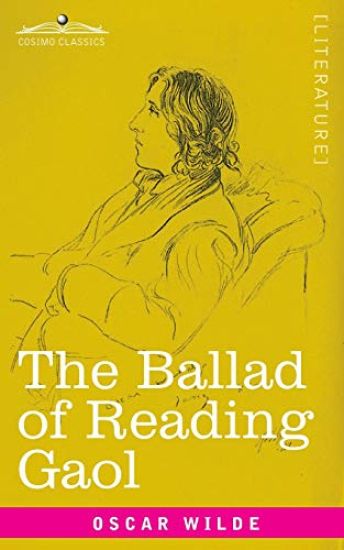
"Like two doomed ships that pass in stormWe had crossed each other's way: But we made no sign, we said no word, We had no word to say"-Oscar Wilde, The Ballad of Reading Gaol (1898) The poem The Ballad of Reading Gaol (1898) by Oscar Wilde, was inspired by the two years he spent in the jail of Reading Gaol, England. There he experienced the hanging of Royal Horse Guards trooper Charles Thomas Wooldridge, convicted for the murder of his wife. This poem, dedicated to Wooldridge, describes not only his execution, but is also an indictment of the Victorian penal system and a plea for reform of prison conditions. This poem, Wilde's last publication, was very successful and assured he had a steady income until his death at a young age in 1900.
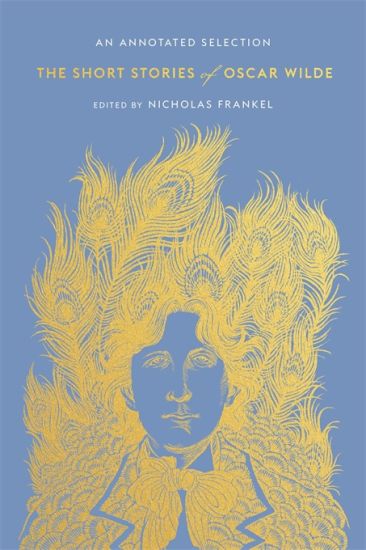
The Short Stories of Oscar Wilde
Oscar Wilde
Harvard University Press
2020
sidottu
Halvin toimitettuna 32,70 €
An innovative new edition of nine classic short stories from one of the greatest writers of the Victorian era.“I cannot think other than in stories,” Oscar Wilde once confessed to his friend André Gide. In this new selection of his short fiction, Wilde’s gifts as a storyteller are on full display, accompanied by informative facing-page annotations from Wilde biographer and scholar Nicholas Frankel. A wide-ranging introduction brings readers into the world from which the author drew inspiration. Each story in the collection brims with Wilde’s trademark wit, style, and sharp social criticism. Many are reputed to have been written for children, although Wilde insisted this was not true and that his stories would appeal to all “those who have kept the childlike faculties of wonder and joy.” “Lord Arthur Savile’s Crime” stands alongside Wilde’s comic masterpiece The Importance of Being Earnest, while other stories—including “The Happy Prince,” the tale of a young ruler who had never known sorrow, and “The Nightingale and the Rose,” the story of a nightingale who sacrifices herself for true love—embrace the theme of tragic, forbidden love and are driven by an undercurrent of seriousness, even despair, at the repressive social and sexual values of Wilde’s day. Like his later writings, Wilde’s stories are a sweeping indictment of the society that would imprison him for his homosexuality in 1895, five years before his death at the age of forty-six. Published here in the form in which Victorian readers first encountered them, Wilde’s short stories contain much that appeals to modern readers of vastly different ages and temperaments. They are the perfect distillation of one of the Victorian era’s most remarkable writers.
The Picture of Dorian Gray (Royal Collector's Edition) (Case Laminate Hardcover with Jacket)
Oscar Wilde
SF Classic
2020
sidottu
Halvin toimitettuna 42,40 €
The Portrait of Mr. W. H. By Oscar Wilde"The Portrait of Mr. W. H." is a story written by Oscar Wilde, first published in Blackwood's Magazine in 1889. It was later added to the collection Lord Arthur Savile's Crime and Other Stories, though it does not appear in early editions. An enlarged edition planned by Wilde, almost twice as long as the Blackwood's version, with cover illustration by Charles Ricketts, did not proceed and only came to light after Wilde's death. This was published in limited edition by Mitchell Kennerley in New York in 1921, and in a first regular English edition by Methuen in 1958, edited by Vyvyan Holland. The story is about an attempt to uncover the identity of Mr. W. H., the enigmatic dedicatee of Shakespeare's Sonnets. It is based on a theory, originated by Thomas Tyrwhitt, that the sonnets were addressed to one Willie Hughes, portrayed in the story as a boy actor who specialized in playing women in Shakespeare's company. This theory depends on the assumption that the dedicatee is also the Fair Youth who is the subject of most of the poems. The only evidence for this theory is the text of a number of sonnets themselves (such as Sonnet 20, that makes puns on the words "Will" and "Hues"). Wilde's story is narrated by a friend of a man called Erskine, who is preoccupied by the Hughes theory. Erskine had learned the idea from one Cyril Graham, who had tried to persuade Erskine of it based on text of sonnets, but Erskine was frustrated by the lack of external historical evidence for Willie Hughes's existence. Graham tried to find such evidence but failed instead, he fakes a portrait of Hughes in which Hughes is depicted with his hand on a book on which can be seen the dedication from the sonnets. Erskine is convinced by this evidence, but then discovers the portrait to be a fake, a discovery that leads him to yet again doubt the existence of Willie Hughes. Graham still believes in the theory, and to prove it, shoots himself. Erskine recounts these events to the narrator, who is so struck by the Willie Hughes theory that he begins his own research and further fleshes out Graham's findings until he is without a doubt that Willie Hughes was real and was the subject of the sonnets. He presents the evidence to Erskine but then finds himself strangely divested from it and loses faith in its basis in reality. Erskine's belief, however, is renewed he sets off at once to try to find a trace of Willie Hughes. But like Graham, he finds nothing. The narrator maintains that there was nothing to be found-that Hughes never existed. Erskine sends him a letter, in which he tells him that the truth is in front of him and, as a sign of complete faith in it, is now twice stained with blood. His friend goes to his hotel in Cannes and finds Erskine dead.

In Praise of Disobedience draw on works from a single miraculous year in which Oscar Wilde published the larger part of his greatest prose - the year he came into maturity as an artist. Before the end of 1891, he had written the first of his phenomenally successful plays and met the young man who would win his heart, beginning the love affair that would lead to imprisonment and public infamy. In a witty introduction, playwright, novelist and Wilde scholar Neil Bartlett explains what made this point in the writer's life central to his genius and why Wilde remains a provocative and radical figure to this day. Included here are the entirety of Wilde's foray into political philosophy, The Soul of Man Under Socialism; the complete essay collection Intentions; selections from The Portrait of Dorian Gray as well as its paradoxical and scandalous preface; and some of Wilde's greatest fictions for children. Each selection is accompanied by stimulating and enlightening annotations. A delight for fans of Oscar Wilde, In Praise of Disobedience will restore and revitalize an often misunderstood legacy.
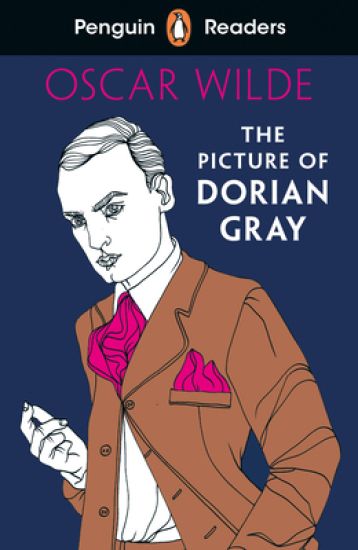
Penguin Readers Level 3: The Picture of Dorian Gray (ELT Graded Reader)
Oscar Wilde
Penguin Books Ltd
2020
pokkari
Halvin toimitettuna 14,50 €
Penguin Readers is an ELT graded reader series for learners of English as a foreign language. With carefully adapted text, new illustrations and language learning exercises, the print edition also includes instructions to access supporting material online. Titles include popular classics, exciting contemporary fiction, and thought-provoking non-fiction, introducing language learners to bestselling authors and compelling content. The eight levels of Penguin Readers follow the Common European Framework of Reference for language learning (CEFR). Exercises at the back of each Reader help language learners to practise grammar, vocabulary, and key exam skills. Before, during and after-reading questions test readers' story comprehension and develop vocabulary. Visit the Penguin Readers websiteExclusively with the print edition, readers can unlock online resources including a digital book, audio edition, lesson plans and answer keys. An artist paints a beautiful young man called Dorian Gray. When Dorian sees the picture, he decides to give his soul to keep his beautiful face. He lives a bad life and he is bad to many people, but his face never changes. However, in a room upstairs, the portrait gets uglier and uglier.
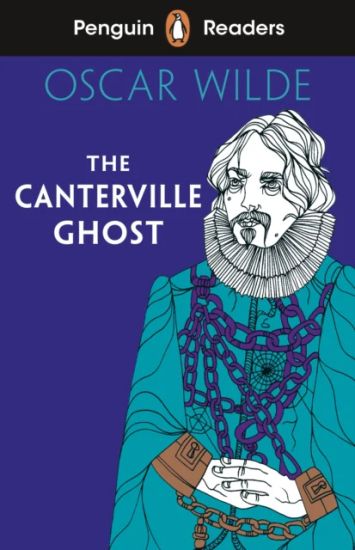
Penguin Readers Level 1: The Canterville Ghost (ELT Graded Reader)
Oscar Wilde
Penguin Books Ltd
2020
pokkari
Halvin toimitettuna 14,50 €
Penguin Readers is an ELT graded reader series for learners of English as a foreign language. With carefully adapted text, new illustrations and language learning exercises, the print edition also includes instructions to access supporting material online. Titles include popular classics, exciting contemporary fiction, and thought-provoking non-fiction, introducing language learners to bestselling authors and compelling content. The eight levels of Penguin Readers follow the Common European Framework of Reference for language learning (CEFR). Exercises at the back of each Reader help language learners to practise grammar, vocabulary, and key exam skills. Before, during and after-reading questions test readers' story comprehension and develop vocabulary. Visit the Penguin Readers websiteExclusively with the print edition, readers can unlock online resources including a digital book, audio edition, lesson plans and answer keys. An American family buy Canterville Hall - a house with a ghost. But the ghost is not happy because it cannot frighten the family.
A Woman of No ImportanceA Woman of No Importance is a play by Irish playwright Oscar Wilde. The play premi red on 19 April 1893 at London's Haymarket Theatre. Like Wilde's other society plays, it satirizes English upper-class society. It has been performed on stages in Europe and North America since his death in 1900. Act IThe Terrace at Hunstanton ChaseThe play opens with a party on a terrace in Lady Hunstanton's estate. The upper class guests spend the better part of Act I exchanging social gossip and small talk. Lady Caroline Pontrefact patronizes an American visitor, Hester Worsley, and proceeds to give her own opinion of everyone in the room (and her surrounding life). Lady Caroline also denounces Hester's enthusiasm for Gerald Arbuthnot until Gerald himself enters to proclaim that Lord Illingworth, a powerful, flirtatious male political figure, intends to take him under his wing as secretary. This is great news for Gerald, as being Lord Illingworth's secretary would be the young man's first step to a life of financial/political success. The guests then discuss the rumors surrounding Lord Illingworth's aim for being a foreign ambassador, while Lady Hunstanton sends a letter through her footman to Gerald's mother, inviting her to the party. Gerald offers to take Hester for a walk, leaving the remaining guests to gossip further about their social lives. Lady Hunstanton and Lady Stutfield comment on the yet unseen Lord Illingworth's amoral qualities towards women when the man himself enters the terrace. He declines their thanks for his hiring of Gerald Arbuthnot and says that he hired him out of personal interest. Lord Illingworth remains near Mrs. Allonby during the entire exchange until the two of them leave for the conservatory together, following a discussion of Hester's background and wealthy father. A footman enters with a letter from Mrs. Arbuthnot, stating that she will arrive to the party after dinner. When Illingworth and Mrs. Allonby return, the remaining guests have already moved to have tea in another room. The two characters have a witty conversation involving marriage and women and men until Gerald and Hester enter the room. They have some short small talk, and Lord Illingworth and Mrs. Allonby are again left alone. Their aim of discussion turns toward Hester when Mrs. Allonby reprehends the young American for her casual talk of being eighteen and a Puritan. Lord Illingworth expresses that he rather admires Hester's beauty and actually uses the conversation to assert his flirtations toward Mrs. Allonby, claiming that he has never met a woman so puritanical as Hester that she would steadfastly resist all and any advances. Mrs. Allonby asserts that Hester is sincere in her desire to be left alone, but Illingworth interprets her remarks as a playful challenge. Lord Illingworth notices Mrs. Arbuthnot's letter lying on a table and remarks that the handwriting on the envelope seems familiar. When Mrs. Allonby asks who the handwriting reminds him of, he carelessly mentions "a woman of no importance."