Kirjojen hintavertailu – 12 859 826 kirjaa ja 27 kauppaa

Kirjailija

Oscar Wilde

Kirjat ja teokset yhdessä paikassa: 2 744 kirjaa, julkaisuja vuosilta 1890–2026, suosituimpiin kuuluu Aforismeja. Vertaile teosten hintoja ja tarkista saatavuus suomalaisista kirjakaupoista.

2 744 kirjaa

Kirjojen julkaisuvuodet: 1890–2026.

De Profundis

De Profundis

Oscar Wilde; Max Meyerfeld

E-Artnow
2017
pokkari
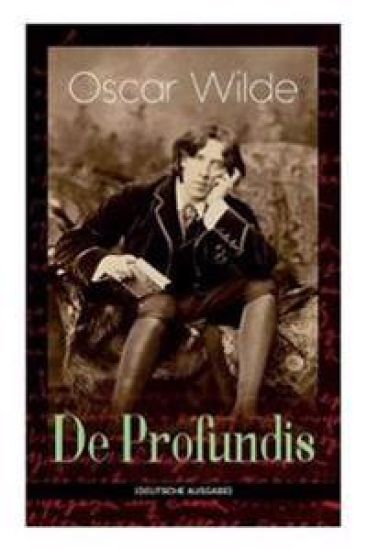
In De Profundis und andere briefe in dieser Sammlung betrachtet Wilde sein bisheriges Leben kritisch und beschreibt es als oberfl chlich und hedonistisch. Er schildert die Haftbedingungen, zum Beispiel den Tag, an dem er in Handschellen unter den Augen einer spottenden Menge am Bahnhof Clapham Junction stehen musste, und seinen nach vielen Leiden nun dem tigen emotionalen Zustand. Nach einer finanziellen Bestandsaufnahme ("I am completely penniless, and absolutely homeless.") kommentiert er, dass ihm in der kommenden schweren Zeit weder Moral noch Religion oder Vernunft helfen werden. Dem Adressaten Alfred Douglas macht er bittere Vorw rfe. Gleichzeitig ist De Profundis eine Apologie f r Wildes Leben; er f hrt an, mit seinem Aufstieg und Fall sei er ein Mann, der in symbolischer Beziehung zu der Kunst und Kultur seines Zeitalters stand. De Profundis ist ein offener Brief, den der irische Schriftsteller Oscar Wilde zwischen 1895 und 1897, w hrend seiner Inhaftierung in verschiedenen englischen Zuchth usern an seinen fr heren Freund und Liebhaber Lord Alfred Bruce Douglas schrieb. Der Name der Schrift ist dem Psalm 130 entnommen: "De profundis clamavi ad te Domine." - "Aus der Tiefe rief ich, Herr, zu Dir." Oscar Wilde (1854-1900) war ein irischer Schriftsteller. Als Lyriker, Romanautor, Dramatiker und Kritiker wurde er zu einem der bekanntesten und - im Viktorianischen England - auch umstrittensten Schriftsteller seiner Zeit.
Das Bildnis des Dorian Gray

Das Bildnis des Dorian Gray

Oscar Wilde; Richard Zoozmann

E-Artnow
2017
pokkari
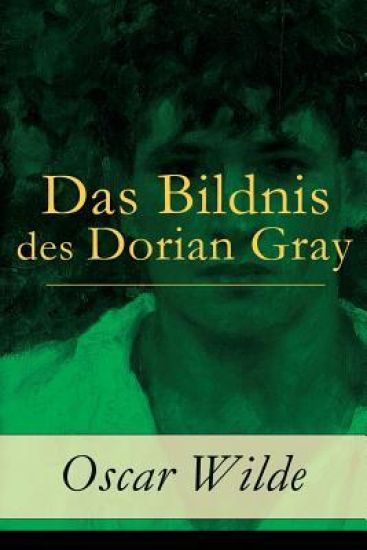
Oscar Wilde (1854-1900) war ein irischer Schriftsteller. Wilde wurde zu seiner Zeit als Schriftsteller bewundert und war im pr den viktorianischen England zugleich als Skandalautor und Dandy verschrien. Das Bildnis des Dorian Gray ist der einzige Roman des irischen Schriftstellers Oscar Wilde. Der Roman gilt als Oscar Wildes Prosahauptwerk. Themen sind die Moralit t von Sinnlichkeit und Hedonismus im Viktorianismus und die Dekadenz der englischen Oberschicht. Die Handlung setzt mit einem Gespr ch zweier junger M nner ein, Lord Henry Wotton, eines gebildeten Dandys, und des erfolgreichen Malers Basil Hallward. Ort des Geschehens ist Basils Atelier, das sich in einen Garten ffnet. Es geht um Kunst und Selbstinszenierung. Hallwards im Atelier aufgestelltes Ganzk rper-Portr t des sch nen, jungen Dorian Gray r hrt Lord Henrys Neugier, so dass Hallward von seiner ersten, ergreifenden Begegnung mit dem jungen Mann zu erz hlen beginnt, die ihn an "den Rand einer Lebenskrise" gebracht habe.
Lady Windermere's Fan

Lady Windermere's Fan

Oscar Wilde

Createspace Independent Publishing Platform
2017
nidottu
Lady Windermere's Fan, A Play About a Good Woman is a four-act comedy by Oscar Wilde, first produced on Saturday, 20 February 1892, at the St James's Theatre in London. The story concerns Lady Windermere, who suspects that her husband is having an affair with another woman. She confronts him with it but although he denies it, he invites the other woman, Mrs Erlynne, to his wife's birthday ball. Angered by her husband's supposed unfaithfulness, Lady Windermere decides to leave her husband for another lover. After discovering what has transpired, Mrs Erlynne follows Lady Windermere and attempts to persuade her to return to her husband and in the course of this, Mrs Erlynne is discovered in a compromising position. It is then revealed Mrs Erlynne is Lady Windermere's mother, who abandoned her family twenty years before the time the play is set. Mrs Erlynne sacrifices herself and her reputation to save her daughter's marriage. The best-known line of the play sums up the central theme: We are all in the gutter, but some of us are looking at the stars.
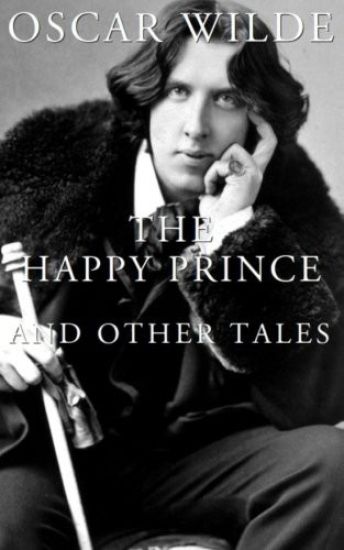
The Happy Prince and Other Tales

The Happy Prince and Other Tales

Oscar Wilde

Createspace Independent Publishing Platform
2017
nidottu
The Happy Prince and Other Tales (sometimes called The Happy Prince and Other Stories) is a collection of stories for children by Oscar Wilde first published in May 1888. It contains five stories, "The Happy Prince", "The Nightingale and the Rose", "The Selfish Giant", "The Devoted Friend", and "The Remarkable Rocket". It is most famous for its title story, "The Happy Prince".
The Importance of Being Earnest

The Importance of Being Earnest

Oscar Wilde

Createspace Independent Publishing Platform
2017
nidottu
The Importance of Being Earnest, A Trivial Comedy for Serious People is a play by Oscar Wilde. First performed on 14 February 1895 at the St James's Theatre in London, it is a farcical comedy in which the protagonists maintain fictitious person to escape burdensome social obligations. Working within the social conventions of late Victorian London, the play's major themes are the triviality with which it treats institutions as serious as marriage, and the resulting satire of Victorian ways. Contemporary reviews all praised the play's humour, though some were cautious about its explicit lack of social messages, while others foresaw the modern consensus that it was the culmination of Wilde's artistic career so far. Its high farce and witty dialogue have helped make The Importance of Being Earnest Wilde's most enduringly popular play.
De Profundis

De Profundis

Oscar Wilde

Createspace Independent Publishing Platform
2017
nidottu
De Profundis (Latin: "from the depths") is an epistle written by Oscar Wilde during his imprisonment in Reading Gaol, to Lord Alfred Douglas.
The Importance of Being Earnest: A Trivial Comedy for Serious People

The Importance of Being Earnest: A Trivial Comedy for Serious People

Oscar Wilde

Createspace Independent Publishing Platform
2017
nidottu
The Importance of Being Earnest is a classic comedy of manners in which two flippant young men, in order to impress their respected beloveds, pretend that their names are "Ernest," which both young ladies believe confers magical qualities on the possessor. It was first performed for the public on February 14, 1895 at the St. James' Theatre in London, and is regarded by many critics and scholars as being the wittiest play in the English language.
The Duchess of Padua

The Duchess of Padua

Oscar Wilde

Createspace Independent Publishing Platform
2017
nidottu
Excerpt from The Duchess of Padua: A Play It is that now, and your man has not come. I don't believe in him, Guido. I think it is some wench who has set her eye at you; and, as I have followed you from Perugia to Padua. About the Publisher Forgotten Books publishes hundreds of thousands of rare and classic books. Find more at www.forgottenbooks.com This book is a reproduction of an important historical work. Forgotten Books uses state-of-the-art technology to digitally reconstruct the work, preserving the original format whilst repairing imperfections present in the aged copy. In rare cases, an imperfection in the original, such as a blemish or missing page, may be replicated in our edition. We do, however, repair the vast majority of imperfections successfully; any imperfections that remain are intentionally left to preserve the state of such historical works.
De Profundis

De Profundis

Oscar Wilde

Createspace Independent Publishing Platform
2017
nidottu
De profundis es la epistola que Oscar Wilde escribio para su companero, Lord Alfred Douglas en la prision de Reading en marzo de 1897, dos meses antes de que cumpliera su sentencia, la cual fue impuesta por el delito de sodomia. Bella, empatica, triste, conmovedora, irritante, reflexiva, espiritual... muchos adjetivos pueden definir esta obra, dependiendo del lector. Lo cierto es que, a pesar de la confrontacion de diversos sentimientos, el autor redacta cada palabra de esta obra con esperanza; esperanza de recibir una respuesta, cualquiera que esta fuera, del principal responsable de su estancia en prision.
The Canterville Ghost

The Canterville Ghost

Jv Editors; Oscar Wilde

Createspace Independent Publishing Platform
2017
nidottu
"The Canterville Ghost" is a parody featuring a dramatic spirit named Sir Simon and the United States minister (ambassador) to the Court of St. James's, Hiram B. Otis. Mr. Otis travels to England with his family and moves into a haunted country house. Lord Canterville, the previous owner of the house, warns Mr. Otis that the ghost of Sir Simon de Canterville has haunted it ever since he killed his wife, Eleonore, three centuries before. But Mr. Otis dismisses the ghost story as bunk and disregards Lord Canterville's warnings. When the Otises learn that the house is indeed haunted, they succeed in victimizing the ghost and in disregarding age-old British traditions. What emerges is a satire of American materialism, a lampoon of traditional British values, and an amusing twist on the traditional gothic horror tale.
The Canterville Ghost

The Canterville Ghost

Oscar Wilde

Createspace Independent Publishing Platform
2017
nidottu
The Canterville Ghost is a popular 1887 novella by Oscar Wilde, widely adapted for the screen and stage. "The Canterville Ghost" is a parody featuring a dramatic spirit named Sir Simon and the United States minister (ambassador) to the Court of St. James's, Hiram B. Otis. Mr. Otis travels to England with his family and moves into a haunted country house. Lord Canterville, the previous owner of the house, warns Mr. Otis that the ghost of Sir Simon de Canterville
The Picture of Dorian Gray

The Picture of Dorian Gray

Oscar Wilde

Createspace Independent Publishing Platform
2017
nidottu
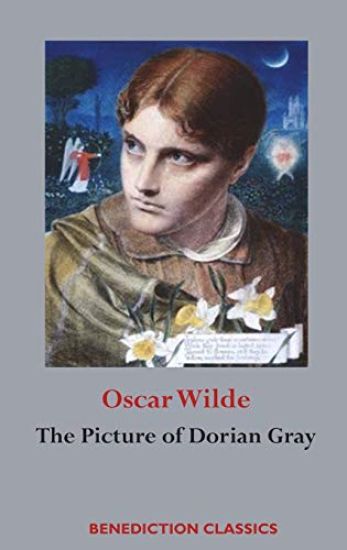
Oscar Wilde's story of a fashionable young man who sells his soul for eternal youth and beauty is one of his most popular works. Written in Wilde's characteristically dazzling manner, full of stinging epigrams and shrewd observations, the tale of Dorian Gray's moral disintegration caused something of a scandal when it first appeared in 1890.
The Happy Prince And Other Tales

The Happy Prince And Other Tales

Oscar Wilde

Createspace Independent Publishing Platform
2017
nidottu
"High above the city, on a tall column, stood the statue of the Happy Prince. He was gilded all over with thin leaves of fine gold, for eyes he had two bright sapphires, and a large red ruby glowed on his sword-hilt. He was very much admired indeed. "He is as beautiful as a weathercock," remarked one of the Town Councillors who wished to gain a reputation for having artistic tastes; "only not quite so useful," he added, fearing lest people should think him unpractical, which he really was not. "Why can't you be like the Happy Prince?" asked a sensible mother of her little boy who was crying for the moon. "The Happy Prince never dreams of crying for anything." "I am glad there is some one in the world who is quite happy," muttered a disappointed man as he gazed at the wonderful statue. "He looks just like an angel," said the Charity Children as they came out of the cathedral in their bright scarlet cloaks and their clean white pinafores. "How do you know?" said the Mathematical Master, "you have never seen one." "Ah but we have, in our dreams," answered the children; and the Mathematical Master frowned and looked very severe, for he did not approve of children dreaming." The Happy Prince And Other Tales By Oscar Wilde The Nightingale And The Rose The Selfish Giant The Devoted Friend The Remarkable Rocket
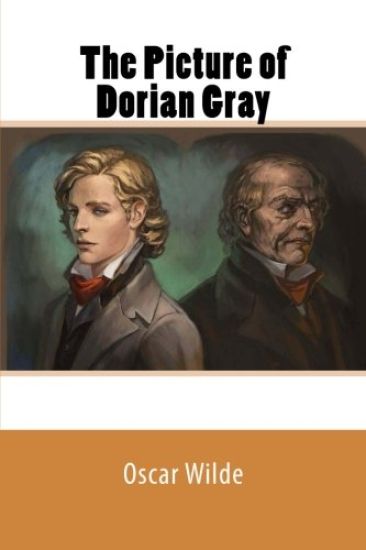
The Picture of Dorian Gray

The Picture of Dorian Gray

Oscar Wilde

Createspace Independent Publishing Platform
2017
nidottu
The Picture of Dorian Gray is an 1891 philosophical novel by Irish writer and playwright Oscar Wilde. First published as a serial story in the July 1890 issue of Lippincott's Monthly Magazine, the editors feared the story was indecent, and without Wilde's knowledge, deleted five hundred words before publication. Despite that censorship, The Picture of Dorian Gray offended the moral sensibilities of British book reviewers, some of whom said that Oscar Wilde merited prosecution for violating the laws guarding the public morality. In response, Wilde aggressively defended his novel and art in correspondence with the British press. Wilde revised and expanded the magazine edition of The Picture of Dorian Gray (1890) for publication as a novel; the book edition (1891) featured an aphoristic preface - an apologia about the art of the novel and the reader. The content, style, and presentation of the preface made it famous in its own literary right, as social and cultural criticism. In April 1891, the editorial house Ward, Lock and Company published the revised version of The Picture of Dorian