Kirjojen hintavertailu – 12 859 826 kirjaa ja 27 kauppaa
Kirjailija
Oscar Wilde
Kirjat ja teokset yhdessä paikassa: 2 744 kirjaa, julkaisuja vuosilta 1890–2026, suosituimpiin kuuluu Aforismeja. Vertaile teosten hintoja ja tarkista saatavuus suomalaisista kirjakaupoista.
The Importance of Being Earnest - A trivial comedy for serious people is an unchanged, high-quality reprint of the original edition of 1895. Hansebooks is editor of the literature on different topic areas such as research and science, travel and expeditions, cooking and nutrition, medicine, and other genres. As a publisher we focus on the preservation of historical literature. Many works of historical writers and scientists are available today as antiques only. Hansebooks newly publishes these books and contributes to the preservation of literature which has become rare and historical knowledge for the future.
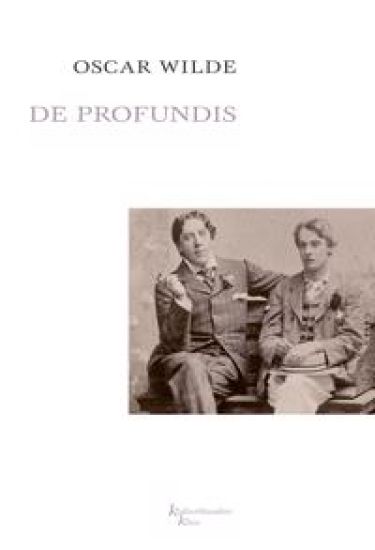
‘De profundis’ er et brev, Oscar Wilde skrev, mens han sad i fængsel 1895-97 for sit ifølge loven groft umoralske forhold til vennen Bosie – og brevet er stilet til denne. Det skildrer et kærlighedsforhold, der gik helt skævt. Og det skildrer en mand, der prøver at grave sig op af et både eksistentielt og fysisk fangehul, da han mod slutningen af sit fængselsophold vil have ryddet op i fortiden, så der kan blive plads til fremtiden. Der er tale om en stor kærlighedshistorie, der bliver fortalt, mens det stadig ryger fra ruinerne, men den er i sin helhed mere en opgørelse end et opgør. Brevet er en meditation over menneskelivets lidelser, men også en katharsisk øvelse og et forsøg på forsoning. Med sin skildring af forholdet holder Wilde nemlig et spejl op for Bosie for derved selv at komme til afklaring. To gange tidligere har censurerede og forkortede udgaver af ‘De profundis’ været udgivet på dansk. Forkortet, fordi Wildes skånselsløse portræt af sin unge elsker blev fundet for privat og ubearbejdet sammenlignet med de mere modne, filosofiske overvejelser i bogens anden halvdel. Tiden er nu inde til, at læserne selv kan få lov at dømme.
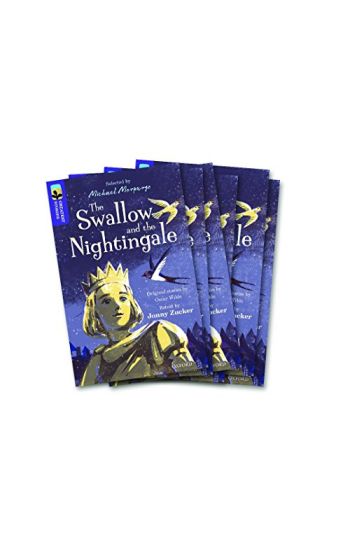
Two stories full of love, devotion and sacrifice. A mournful statue is helped by a swallow to carry out acts of charity around the city. A nightingale longs to find a red rose for her friend, but the rose bush asks a high price. Both these feathered creatures pay the ultimate price to help others, showing that true love is selfless. These retellings of Oscar Wilde's tragic short stories will reduce you to tears with their beauty and magic. TreeTops Greatest Stories offers children some of the worlds best loved tales in a collection of timeless classics. Top children's authors and talented illustrators work together to bring to life our literary heritage for a new generation, engaging and delighting children. The books are carefully levelled, making it easy to match every child to the right book. Each book contains inside cover notes to help children explore the content, supporting their reading development. Teaching notes on Oxford Owl offer cross-curricular links and activities to support guided reading, writing, speaking and listening. This pack provides 6 copies of the same title.
The Picture of Dorian Gray is an 1891 philosophical novel by Irish writer and playwright Oscar Wilde. First published as a serial story in the July 1890 issue of Lippincott's Monthly Magazine, the editors feared the story was indecent, and without Wilde's knowledge, deleted five hundred words before publication. Despite that censorship, The Picture of Dorian Gray offended the moral sensibilities of British book reviewers, some of whom said that Oscar Wilde merited prosecution for violating the laws guarding the public morality. In response, Wilde aggressively defended his novel and art in correspondence with the British press. Wilde revised and expanded the magazine edition of The Picture of Dorian Gray (1890) for publication as a novel; the book edition (1891) featured an aphoristic preface
The Importance of Being Earnest: A Trivial Comedy for Serious People is a play by Oscar Wilde. First performed on 14 February 1895 at the St James's Theatre in London, it is a farcical comedy in which the protagonists maintain fictitious person to escape burdensome social obligations.
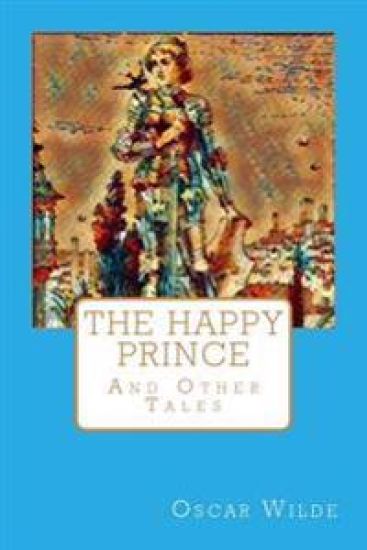
The Happy Prince and Other Tales (sometimes called The Happy Prince and Other Stories) is a collection of stories for children by Oscar Wilde first published in May 1888. It contains five stories: "The Happy Prince", "The Nightingale and the Rose", "The Selfish Giant", "The Devoted Friend", and "The Remarkable Rocket". In a town where a lot of poor people suffer and where there are a lot of miseries, a swallow who was left behind after his flock flew off to Egypt for the winter, meets the statue of the late "Happy Prince", who in reality has never experienced true sorrow, for he lived in a palace where sorrow isn't allowed to enter. Viewing various scenes of people suffering in poverty from his tall monument, the Happy Prince asks the swallow to take the ruby from his hilt, the sapphires from his eyes, and the golden leaf covering his body to give to the poor. As the winter comes and the Happy Prince is stripped of all of his beauty, his lead heart breaks when the swallow dies as a result of his selfless deeds and severe cold. The statue is then brought down from the pillar and melted in a furnace leaving behind the broken heart and the dead swallow and they are thrown in a dust heap. These are taken up to heaven by an angel that has deemed them the two most precious things in the city. This is affirmed by God and they live forever in his city of gold and garden of paradise.
The play opens during a dinner party at the home of Sir Robert Chiltern in London's fashionable Grosvenor Square. Sir Robert, a prestigious member of the House of Commons, and his wife, Lady Chiltern, are hosting a gathering that includes his friend Lord Goring, a dandified bachelor and close friend to the Chilterns, Mabel Chiltern, and other genteel guests. During the party, Mrs. Cheveley, an enemy of Lady Chiltern's from their school days, attempts to blackmail Sir Robert into supporting a fraudulent scheme to build a canal in Argentina. Apparently, Mrs. Cheveley's dead mentor and lover, Baron Arnheim, convinced the young Sir Robert to sell him a Cabinet secret, a secret that suggested he buy stocks in the Suez Canal three days before the British government announced its purchase. Sir Robert made his fortune with that illicit money, and Mrs. Cheveley has the letter to prove his crime. Fearing the ruin of both career and marriage, Sir Robert submits to her demands. When Mrs. Cheveley pointedly informs Lady Chiltern of Sir Robert's change of heart regarding the canal scheme, the morally inflexible Lady Chiltern, unaware of both her husband's past and the blackmail plot, insists that Sir Robert renege on his promise. For Lady Chiltern, their marriage is predicated on her having an "ideal husband"-that is, a model spouse in both private and public life that she can worship: thus Sir Robert must remain unimpeachable in all his decisions. Sir Robert complies with the lady's wishes and apparently seals his doom. Also toward the end of Act I, Mabel and Lord Goring come upon a diamond brooch that Lord Goring gave someone many years ago. Goring takes the brooch and asks that Mabel inform him if anyone comes to retrieve it. In the second act, which also takes place at Sir Robert's house, Lord Goring urges Sir Robert to fight Mrs. Cheveley and admit his guilt to his wife. He also reveals that he and Mrs. Cheveley were formerly engaged. After finishing his conversation with Sir Robert, Goring engages in flirtatious banter with Mabel. He also takes Lady Chiltern aside and obliquely urges her to be less morally inflexible and more forgiving. Once Goring leaves, Mrs. Cheveley appears, unexpected, in search of a brooch she lost the previous evening. Incensed at Sir Robert's reneging on his promise, she ultimately exposes Sir Robert to his wife once they are both in the room. Unable to accept a Sir Robert now unmasked, Lady Chiltern then denounces her husband and refuses to forgive him.
The Picture of Dorian Gray is an 1891 philosophical novel by Irish writer and playwright Oscar Wilde. First published as a serial story in the July 1890 issue of Lippincott's Monthly Magazine, the editors feared the story was indecent, and without Wilde's knowledge, deleted five hundred words before publication. Despite that censorship, The Picture of Dorian Gray offended the moral sensibilities of British book reviewers, some of whom said that Oscar Wilde merited prosecution for violating the laws guarding the public morality. In response, Wilde aggressively defended his novel and art in correspondence with the British press. Wilde revised and expanded the magazine edition of The Picture of Dorian Gray (1890) for publication as a novel; the book edition (1891) featured an aphoristic preface
“The truth is rarely pure and never simple.” Oscar Wilde was already one of the best known literary figures in Britain when he was persuaded to turn his extraordinary talents to the theatre. Between 1891 and 1895 he produced a sequence of distinctive plays which spearheaded the dramatic renaissance of the 1890s and still retain their power among today's audiences. The final comic or dramatic work from undisputed genius Oscar Wilde, The Importance of Being Earnest, A Trivial Comedy for Serious People is his most enduring popular play and a must-read for any Wilde fan. A farcical comedy in which the protagonists maintain fictitious personæ to escape burdensome social obligations, the play is an unforgettable satire of Victorian ways. Working within the social conventions of late Victorian London, the play's major theme is the triviality with which it treats institutions. Wilde's notoriety caused the play, despite its early success, to be closed after 86 performances. This latest edition allows you to discover or enjoy once again the writing of one of history's great comedy and drama writers. The Legend Classics series:Around the World in Eighty DaysThe Adventures of Huckleberry FinnThe Importance of Being EarnestAlice's Adventures in WonderlandThe MetamorphosisThe Railway ChildrenThe Hound of the BaskervillesFrankensteinWuthering HeightsThree Men in a BoatThe Time MachineLittle WomenAnne of Green GablesThe Jungle BookThe Yellow Wallpaper and Other StoriesDraculaA Study in ScarletLeaves of GrassThe Secret GardenThe War of the WorldsA Christmas CarolStrange Case of Dr Jekyll and Mr HydeHeart of DarknessThe Scarlet LetterThis Side of ParadiseOliver TwistThe Picture of Dorian GrayTreasure IslandThe Turn of the ScrewThe Adventures of Tom SawyerEmmaThe TrialA Selection of Short Stories by Edgar Allan PoeGrimm Fairy TalesThe AwakeningMrs DallowayGulliver’s TravelsThe Castle of OtrantoSilas MarnerHard Times
The Picture of Dorian Gray is an 1891 philosophical novel by Irish writer and playwright Oscar Wilde. First published as a serial story in the July 1890 issue of Lippincott's Monthly Magazine, the editors feared the story was indecent, and without Wilde's knowledge, deleted five hundred words before publication. Despite that censorship, The Picture of Dorian Gray offended the moral sensibilities of British book reviewers, some of whom said that Oscar Wilde merited prosecution for violating the laws guarding the public morality. In response, Wilde aggressively defended his novel and art in correspondence with the British press. Wilde revised and expanded the magazine edition of The Picture of Dorian Gray (1890) for publication as a novel; the book edition (1891) featured an aphoristic preface - an apologia about the art of the novel and the reader. The content, style, and presentation of the preface made it famous in its own literary right, as social and cultural criticism. In April 1891, the editorial house Ward, Lock and Company
The Picture of Dorian Gray is an 1891 philosophical novel by Irish writer and playwright Oscar Wilde. First published as a serial story in the July 1890 issue of Lippincott's Monthly Magazine, the editors feared the story was indecent, and without Wilde's knowledge, deleted five hundred words before publication. Despite that censorship, The Picture of Dorian Gray offended the moral sensibilities of British book reviewers, some of whom said that Oscar Wilde merited prosecution for violating the laws guarding the public morality. In response, Wilde aggressively defended his novel and art in correspondence with the British press. Wilde revised and expanded the magazine edition of The Picture of Dorian Gray (1890) for publication as a novel; the book edition (1891) featured an aphoristic preface - an apologia about the art of the novel and the reader. The content, style, and presentation of the preface made it famous in its own literary right, as social and cultural criticism. In April 1891, the editorial house Ward, Lock and Company
UNE EDITION INTEGRALE D'EXCEPTION / EXCEPTIONAL UNABRIDGED EDITION Le Fant me de Canterville et autres nouvelles / The Canterville Ghost and other stories Bilingue fran ais/anglais / Bilingual French/English Une famille am ricaine ach te Lord Canterville, un ch teau hant en Angleterre, o des grincements de cha nes et des taches de sang terrorisent les lieux depuis des si cles... Mais comment un pauvre fant me peut effrayer des gens pragmatiques? Ce livre est un recueil de quatre nouvelles. Apr s Le fant me de Canterville, retrouvez trois autres histoires tout autant extraordinaires: Le crime de Lord Arthur Savile, Le sphinx qui n'a pas de secret et Le mod le millionnaire - qui m lent myst re et humour. Cette dition int grale est bilingue: les textes fran ais et anglais sont en parall le chaque page, pour vous permettre de savourer pleinement le chef-d'oeuvre d'Oscar Wilde. An American family buys a haunted castle in England from Lord Canterville, where creaking chains and blood stains have been terrorizing the area for centuries... But how can a poor ghost frighten pragmatic people? This book is a collection of four short stories. After the Canterville ghost, find three other extraordinary stories: Lord Arthur Savile's crime, The sphinx without a secret, The model millionaire - which mix mystery and humor. Enjoy Oscar Wilde's masterpiece in two languages thanks to this bilingual unabridged edition, where french and english texts are in parallel all along the book. Retrouvez d'autres chefs-d'oeuvre en dition bilingue chez Atlantic Editions / Find other masterpieces in bilingual edition by Atlantic Editions: Alice au Pays des Merveilles / Alice's Adventures in Wonderland - Fully illustrated edition, ISBN 978-1534683914 Le portrait de Dorian Gray / The picture of Dorian Gray ISBN 978-1548213138 L' le au tr sor / Treasure island ISBN 978-1548701987 Rom o et Juliette / Romeo and Juliet ISBN 978-1977766243 Hamlet ISBN 978-1981446803 Macbeth ISBN 978-1984218247 Les aventures de Tom Sawyer / Adventures of Tom Sawyer ISBN 978-1548501105 Le Chien des Baskerville / The Hound of the Baskervilles ISBN 978-1986213615 (c) Atlantic Editions
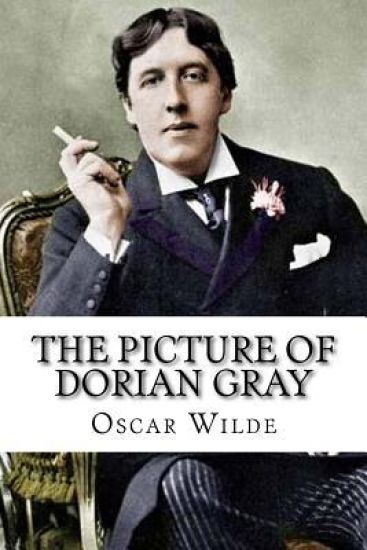
EXCEPTIONAL UNABRIDGED EDITION Read one of the greatest masterpieces of all time in a beautiful edition. Oscar Wilde (1854-1900) was an Irish author, playwright and poet, who built himself as esthete and hedonist dandy. Inseparable from his huge literary talent, his extraordinary personality, biting wit, flamboyant dress and glittering conversation ensured his fame. The Picture of Dorian Gray, Wilde's only novel, is the eerie fable of Dorian Gray, a naive and irresistible young man, who sells his soul for eternal youth and beauty. He becomes steeped in sin, but his face remains perfect - while only his portrait, locked away, reveals the blackness of his soul. The tale of Dorian Gray's moral depravity caused a scandal when it first appeared in 1890, confronted with the rigid morality of the Victorian era. Just a few years later, the book became an issue in the trials occasioned by Wilde's homosexual liaisons, which resulted in his imprisonment and decline. This outstanding novel is a must-read of classic literature and will delight readers of all ages. Find all masterpieces by Oscar Wilde in a beautiful book series by Atlantic Editions: The Canterville ghost, and other stories The importance of being Earnest