Kirjojen hintavertailu – 12 859 824 kirjaa ja 27 kauppaa

Kirjailija

Osman Bakar

Kirjat ja teokset yhdessä paikassa: 9 kirjaa, julkaisuja vuosilta 1998–2021, suosituimpiin kuuluu Colonialism in the Malay Archipelago. Vertaile teosten hintoja ja tarkista saatavuus suomalaisista kirjakaupoista.

9 kirjaa

Kirjojen julkaisuvuodet: 1998–2021.

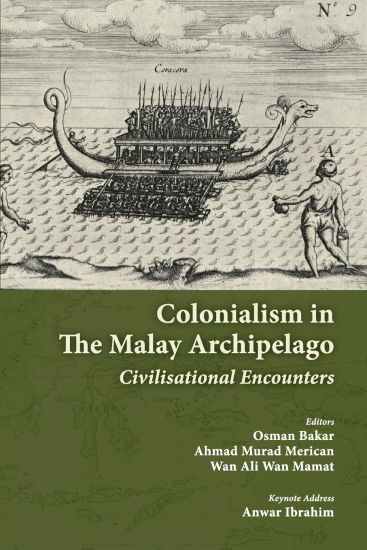
Colonialism in the Malay Archipelago

Colonialism in the Malay Archipelago

Osman Bakar

Istac-Iium Publications
2021
pokkari
In this book fourteen leading scholars and intellectual-activists provide a collective treatment of the theme of colonialism in the Malay Archipelago from the as yet little explored perspective of civilisational encounters. The centuries-long Western colonial presence in the Archipelago had generated both peaceful and violent encounters that were to prove consequential on the civilisational history of the region. The book's chapters attempt to present new insights into the nature and multidimensional character of these civilisational encounters and their significance for the life and thought of contemporary Malay Archipelago that now comprises the modern nation-states of Brunei Darussalam, Indonesia, Malaysia, The Philippines, Singapore, and Timor-Leste.
Al-Farabi

Al-Farabi

Osman Bakar

Islamic Book Trust
2018
pokkari
Al-Fārābī who was conferred the distinguished title of al-Mu'allim al-thānī (The Second Teacher), is here sympathetically portrayed as a deeply religious man-a true Muslim-whose life and thought was essentially shaped and influenced by Islamic teachings contained in the Qur'an and the Sunnah of the Prophet. It was on the basis of the Qur'an and Hadīths that al-Fārābī sought to formulate an intellectual response to Greek thought. His Islamization of Greek science and philosophy should be of considerable interest to Muslim scholars today when the Muslim ummah is confronted with perhaps the most serious intellectual challenge in its history.
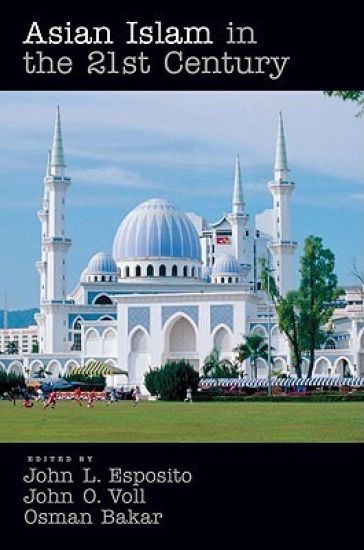
Asian Islam in the 21st Century

Asian Islam in the 21st Century

John L. Esposito; John Voll; Osman Bakar

Oxford University Press Inc
2007
sidottu
Although more than half of the world's Muslims live in Asia, most books on contemporary Islam focus on the Middle East, giving short shift to the dynamic and diverse presence of Asian Islam in regional and global politics. The Muslims of Asia constitute the largest Muslim communities in the world - Indonesia, Pakistan, Bangladesh, India and Central Asia. In recent years, terrorist bombings in Bali, separatist conflicts in Thailand and the Philippines, and opposition politics in Central Asia, all point to the strategic importance of Asian Islam. In Asian Islam in the 21st Century, terrorism and its effects are placed within the broader context of Muslim politics and how Islamic ideals and movements, mainstream and extremist, have shaped Asian Muslim societies. Democratization experiments -- successful and unsuccessful -- are examined. The rise of radical militant movements is analyzed and placed in historical perspective. The result is an insightful portrait of the rich diversity of Muslim politics and discourse that continue to affect Asian Muslim majority and minority countries. Specialists and students of Islamic studies, religion and international affairs, and comparative politics as well as general readers will benefit from this sorely needed comprehensive analysis of a part of the world that has become increasingly important in the 21st century.
Asian Islam in the 21st Century

Asian Islam in the 21st Century

John L. Esposito; John Voll; Osman Bakar

Oxford University Press Inc
2007
nidottu
Although more than half of the world's Muslims live in Asia, most of the widely read books on contemporary Islam focus on developments in the Middle East, giving short shrift to experiences in some of the largest Muslim countries in the world. In recent years events like the terrorist bombings in Bali, intensifying separatist activities in Thailand, and developments in the Central Asian states of the former Soviet Union all point to the fact that Asian Islam is a subject of growing importance. Specialists as well as general readers interested in international relations need broadly conceived analyses of developments in the major Muslim societies of Asia. The beginning of the twenty-first century is witnessing profound transformations in the way that Islamic ideals and Islamic movements shape state and society. The studies collected in this book look at the changes happening both in Muslim majority countries and in societies where Muslims are a minority. Experiences of democratization - successful and unsuccessful - are examined. The rise of radical militant movements is analyzed, and placed in historical perspective and in the broader context of mainstream Islamic ideals. Among the contributors are such prominent scholars as Fred von der Mehden, Vali Nasr, Hakan Yavuz, and John Voll. This book will serve as the successor to Esposito's influential 1987 collection, Islam in Asia.
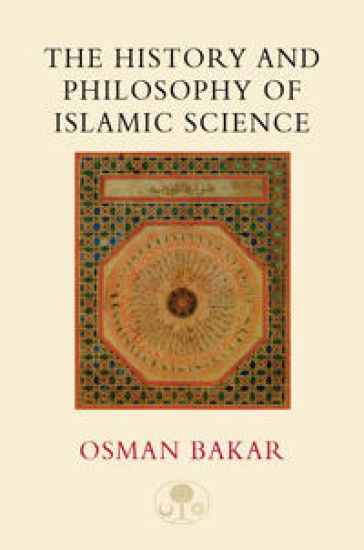
The History and Philosophy of Islamic Science

The History and Philosophy of Islamic Science

Osman Bakar

The Islamic Texts Society
1999
nidottu

Halvin toimitettuna 25,60 €

The essays presented in 'The History and Philosophy of Islamic Science' discuss the principles behind the different sciences cultivated in the Islamic world from the third century of the Islamic era onwards and the place of science in relation to other branches of Islamic learning. In defining what Islamic science means, Professor Osman Bakar shows how these sciences are organically related to the fundamental teachings of Islam. Covering all the natural and mathematical sciences, 'The History and Philosophy of Islamic Science' illustrates what Islamic science shares with modern science. Professor Osman Bakar also highlights where the Islamic approach to science differs from the secular, modern approach.
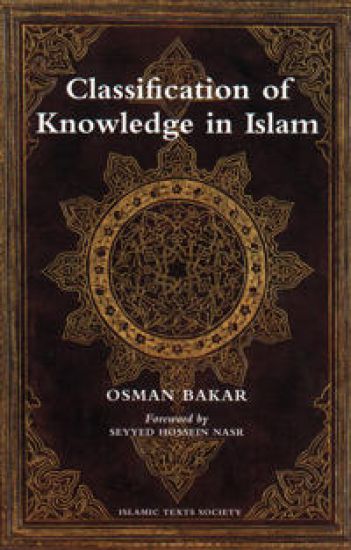
Classification of Knowledge in Islam

Classification of Knowledge in Islam

Osman Bakar

The Islamic Texts Society
1998
nidottu
The classification of knowledge is a recurring theme in Islamic scholarship. Successive generations of Muslim scholars, from al-Kindi in the ninth century to Shah Waliallah of Delhi in the eighteenth century, have devoted considerable efforts to the exposition of this theme. The lives and the ideas of the three thinkers discussed in 'Classification of Knowledge in Islam' - al-Farabi (870-950AD), al-Ghazzali (1058-1111AD) and Qutb al-Din al-Shirazi (1236-1311AD) - cover the pivotal period of Islamic history from the first flourishing of the philosophical sciences to the sacking of Baghdad by the Mongols. In addition, each of these three thinkers was either a founder or an eminent representative of a major intellectual school in Islam. Al-Farabi was the founder and one of the most prominent representatives of the mashsha'i (Peripatetic) school of philosopher-scientists. Al-Ghazzali is still recognised as the most famous theologian/sufi of Islam. Qutb al-Din al-Shirazi represents the ishraqi (Illuminationists) school of philosophy. Prof. Osman Bakar's 'Classification of Knowledge in Islam' is the first work of its kind in the English language and is based on extensive scholarships and reference to the original texts.