
Kirjailija
Otfried Höffe
Kirjat ja teokset yhdessä paikassa: 44 kirjaa, julkaisuja vuosilta 1988–2026, suosituimpiin kuuluu Aristoteles. Vertaile teosten hintoja ja tarkista saatavuus suomalaisista kirjakaupoista.
Nimi esiintyy myös muodoissa: Otfried Hoffe
44 kirjaa
Kirjojen julkaisuvuodet: 1988–2026.

Der Blaue Reiter. Journal für Philosophie / Der Trost der Endlichkeit
Annemarie Pieper; Eckart von Hirschhausen; Otfried Höffe
der blaue Reiter
2019
nidottu


An introduction to Thomas Hobbes as a systematic and not merely political philosopher. Best known for his contributions to political philosophy, Thomas Hobbes set out to develop a coherent philosophical system extending from logic and natural philosophy to civil and religious philosophy. In this introduction to Hobbes's thought, Otfried Höffe begins by providing an overview of the entire scope of his work, making clear its systematic character through analysis of his natural philosophy, his individual and social anthropology, and his political thought. He then offers an innovative examination of religious and ecclesiastical questions, touching not only on the political implications of religion so important to Hobbes, but also on his attempt to reconstruct Christianity in terms of a materialistic philosophy. He also explores Hobbes's continuous critique of Aristotle and Aristotelian Scholastics, in which Höffe argues that Hobbes and Aristotle have much more in common philosophically than is normally supposed-and certainly more than Hobbes himself acknowledged. Finally, Höffe sketches the influence Hobbes had and continues to have on the development of legal and political philosophy.
This volume brings to English readers the finest postwar German-language scholarship on Kant's moral and legal philosophy. Examining Kant's relation to predecessors such as Hutcheson, Wolff, and Baumgarten, it clarifies the central issues in each of Kant's major works in practical philosophy, including The Groundwork of the Metaphysics of Morals, The Critique of Practical Reason, and The Metaphysics of Morals. It also examines the relation of Kant's philosophy to politics. Collectively, the essays in this volume provide English readers with a direct view of how leading German philosophers are now regarding Kant's revolutionary practical philosophy, one of the outstanding achievements of German thought.
Kants Kritik der praktischen Vernunft
Otfried Höffe
C.H. BECK
2012
pokkari
Halvin toimitettuna 25,50 €
Kant’s "Critique of Pure Reason" is so outstanding among modern philosophical works, that it can be termed "the" foundation of modern philosophy. Schopenhauer termed it "the most important book ever to have been written in Europe." Otfried Höffe guides the reader through the "Critique" one step at a time, expounding Kant’s thoughts, submitting them to an interpretation and drawing a summary conclusion, placing the work and its topics within the context of its modern successors. A "critical" interpretation of Kant’s text reveals that he had something to say on many discussions that are said to have originated after his death. Reducing his argumentation to its central tenets, it can be made stronger and applicable to current problems. Kant’s eventual concern, however, even when writing theoretical philosophy, lay with the practical. Elaborating this concern and its connection to Kant’s theoretical philosophy is a prime tenet of this book.

Die schone Seele begnugt sich weder mit einer nur asthetischen Schonheit noch mit blosser Moral. Sie bedeutet eine Ganzheit und umfassende Wertschatzung, eine umfassende und zugleich in sich ruhende Humanitat." Otfried Hoffe Macht Tugend schon? - Schon diese Frage wirkt irritierend, weil wir die Schonheit eines Menschen mit seiner korperlichen Schonheit verbinden, die aber kaum mit der Moral zusammenhangt. Dieses verkurzte Verstandnis herrschte freilich nicht immer vor: Noch in Schillers "schoner Seele" begegnet uns das aus der Antike stammende Verstandnis der Schonheit als jener vollkommenen Einheit des Menschen, in der sich asthetische Schonheit und Moral mit dem eigenen Gluck verbinden. Weil sich jedoch das eigene Gluck und die Moral zu widersprechen scheinen, entsteht eine Schwierigkeit: Muss wer glucklich sein will, der Moral zuwiderhandeln, und muss, wer die Moral anerkennt, sein eigenes Lebensgluck aufs Spiel setzen? Der Frage, die sich auch im alltaglichen Leben immer wieder stellt, geht Otfried Hoffe in dem kleinen Buchlein "Macht Tugend schon? Uber Lebenskunst und Moral" nach. Er klart die Bedeutung so vielschichtiger Begriffe wie Gluck und Moral, setzt sie zueinander ins Verhaltnis und fragt: ob man nicht bloss das eigene Gluck mit der Moral in Einklang bringen, sondern diesen Einklang noch zu einem gelungenen Menschsein steigern kann, das wir "schon" nennen.
Otfried Höffe is one of the foremost political philosophers in Europe today. In this major work, already a classic in continental Europe, he re-examines philosophical discourse on justice - from Classical Greece to the present day. Höffe confronts what he sees as the two major challenges to any theory of justice: the legal, positivist claim that there are no standards of justice external to legal systems; and the anarchist claim that justice demands the rejection and abolition of all legal and state systems. Höffe sets out to continue the 'philosophical project of modernity', the legitimation of human rights, and their guarantee by the state, while at the same time rehabilitating the classical theory of political justice represented by Plato and Aristotle. He questions the success of the positivists in avoiding extra-legal normative claims, and casts doubt on the plausibility of their criticism of the Natural Law tradition. Most anarchists, he argues, rely on an uncritical assumption that social institutions other than states and legal orders do not coerce. In Höffe's view, some coercion is unavoidable, and the grounds for its justification must be examined. Principles of justice will be those principles which define fundamental rights, and which must be enforced if rights are to be respected.
Kant’s "Critique of Pure Reason" is so outstanding among modern philosophical works, that it can be termed "the" foundation of modern philosophy. Schopenhauer termed it "the most important book ever to have been written in Europe." Otfried Höffe guides the reader through the "Critique" one step at a time, expounding Kant’s thoughts, submitting them to an interpretation and drawing a summary conclusion, placing the work and its topics within the context of its modern successors. A "critical" interpretation of Kant’s text reveals that he had something to say on many discussions that are said to have originated after his death. Reducing his argumentation to its central tenets, it can be made stronger and applicable to current problems. Kant’s eventual concern, however, even when writing theoretical philosophy, lay with the practical. Elaborating this concern and its connection to Kant’s theoretical philosophy is a prime tenet of this book.
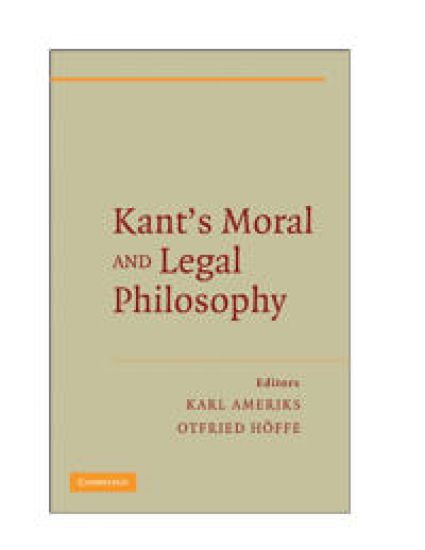
This volume brings to English readers the finest postwar German-language scholarship on Kant's moral and legal philosophy. Examining Kant's relation to predecessors such as Hutcheson, Wolff, and Baumgarten, it clarifies the central issues in each of Kant's major works in practical philosophy, including The Groundwork of the Metaphysics of Morals, The Critique of Practical Reason, and The Metaphysics of Morals. It also examines the relation of Kant's philosophy to politics. Collectively, the essays in this volume provide English readers with a direct view of how leading German philosophers are now regarding Kant's revolutionary practical philosophy, one of the outstanding achievements of German thought.
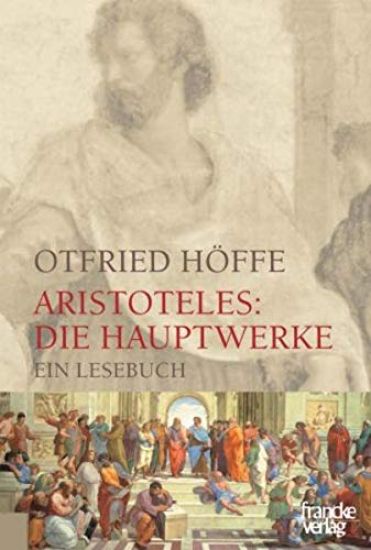
Aristoteles beginnt seine Metaphysik mit dem Satz, daß alle Menschen von Natur aus nach Wissen streben. Diese Wißbegier führt bei ihm zu einem geradezu enzyklopädischen Werk, das im Laufe der Jahrhunderte nicht nur Philosophen maßgeblich beeinflußt hat, sondern ebenso Naturforscher und Theologen, Literatur- und Politikwissenschaftler, Juristen, Psychologen und Ökonomen. Das Aristoteles-Lesebuch schließt eine Lücke auf dem deutschen Markt: Es bietet eine sorgfältige Auswahl der zentralen Texte des Aristoteles, die aus den fundiertesten deutschen Übersetzungen der entsprechenden Schriften zusammengestellt wurden. Dadurch erschließt sich dem Leser das umfassende Werk eines des wichtigsten Philosophen der Weltgeschichte. Durch Berücksichtigung auch der kleineren Schriften werden die von Aristoteles behandelten Themen, die von der Logik, von Biologie über Physik, Metaphysik bis hin zur Ethik und Politik reichen, sowohl in ihrem Zusammenhang als auch in ihrer jeweiligen Eigenständigkeit deutlich.
Der wirkungsmachtige Begriff einer praktischen Philosophie geht auf Aristoteles zuruck. Der Begriff ist ebenso wie sein Gegenbegriff, der der theoretischen Philosophie, ungewohnlich, sogar provokativ. Otfried Hoffe zeigt, dass Ethik als wissenschaftliche und zugleich sittlich engagierte Disziplin zu begreifen ist. Fur diesen Zweck bedarf es einer besonderen Rationalitatsform, einer Grundriss-Wissenschaft."
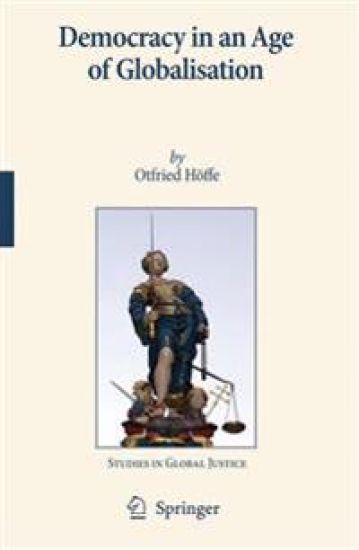
In "Democracy in an Age of Globalisation", Otfried Höffe develops a comprehensive analysis of the demands, which the process of globalization exerts on the political organisations of humanity. The author starts from a diagnosis of the process of globalisation and frees its concept from its economistic narrowing: Globalisation is a comprehensive process which puts new strains on the economies and political systems of the world, the cultural and social structures of peoples. The scope of its challenges demands solutions, which transcend the powers of the classical nation-state. The question central to the book can be formulated as follows: "How can the social, moral and legal achievements of the nation-state be retained while its structure is reshaped to satisfy the requirements of a globalised world?"

In "Democracy in an Age of Globalisation", Otfried Höffe develops a comprehensive analysis of the demands, which the process of globalization exerts on the political organisations of humanity. The author starts from a diagnosis of the process of globalisation and frees its concept from its economistic narrowing: Globalisation is a comprehensive process which puts new strains on the economies and political systems of the world, the cultural and social structures of peoples. The scope of its challenges demands solutions, which transcend the powers of the classical nation-state. The question central to the book can be formulated as follows: "How can the social, moral and legal achievements of the nation-state be retained while its structure is reshaped to satisfy the requirements of a globalised world?"
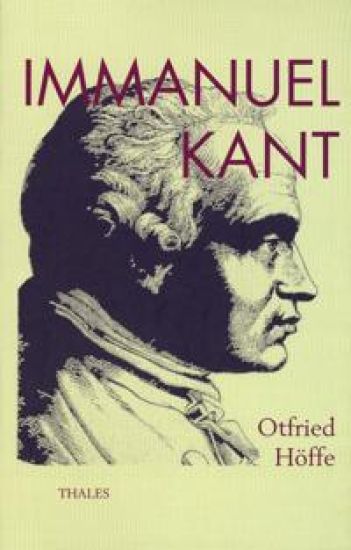
Det har inte funnits någon tillgänglig bok på svenska om Immanuel Kant och hans filosofi. Översättningen av Otfried Höffes bok fyller denna lucka. Höffe, en av vår tids främsta kännare av Kant, ger här en bred och ändå ingående introduktion till Kants liv och verk. Kants grundtankar presenteras klart och insiktsfullt, alltifrån Kritik av det rena förnuftet över etiken och fram till religionens och konstens filosofi. Utöver Kants mest välkända och epokgörande arbeten, de tre kritikerna, diskuteras också mindre bekanta och ofta försummade aspekter av Kants filosofi, såsom hans rättsfilosofi och politiska tänkande. Samtidigt ger Höffe inte enbart en historisk framställning av Kants tänkande, utan tar också upp kritiska synpunkter Genom att sätta in Kant inom en samtida problemhorisont visar Höffe varför Kants tänkande är relevant också för vår tid. Boken avslutas med en historisk överblick av Kants inflytande fram till våra dagar och innehåller också en fyllig förteckning över aktuell kommenterande litteratur.
A comprehensive introduction to the life and work of Aristotle. Aristotle belongs to the small class of philosophers who were not only influential in a particular field of philosophy but also shaped the profile of every philosophical discipline. In this book Otfried Höffe provides a comprehensive introduction to the life and work of Aristotle, covering well-known Aristotelian topics such as ethics, politics, and metaphysics as well as the less familiar, such as biology, psychology, and rhetoric. Höffe also compares Aristotle to other major figures in the history of European (especially German) philosophy, making connections to Kant and Hegel that are particularly insightful. A picture of Aristotle emerges as a philosopher who is much more modern than previously thought, one whose writings are still relevant today and continue to make valuable contributions to many contemporary philosophical debates.
In Germany, Otfried Höffe has been a leading contributor to debates in moral, legal, political, and social philosophy for close to three decades. Höffe's work (like that of his contemporary, Jürgen Habermas), brings into relief the relevance of these German discussions to their counterparts in English-language circles. In this book, originally published in Germany in 1990 and expanded since, Höffe proposes an extended and original interpretation of Kant‚ philosophy of law, and social morality. Höffe articulates his reading of Kant in the context of an account of modernity as a "polyphonous project," in which the dominant themes of pluralism and empiricism are countered by the theme of categorically binding moral principles, such as human rights. Paying equal attention to the nuances of Kant's texts and the character of the philosophical issues in their own right, Höffe ends up with a Kantianism that requires, rather than precludes, a moral anthropology and that questions the fashionable juxtaposition of Kant and Aristotle as exemplars of incompatible approaches to ethical and political thought.