Kirjailija
Otmar Issing
Kirjat ja teokset yhdessä paikassa: 15 kirjaa, julkaisuja vuosilta 1964–2024, suosituimpiin kuuluu Unabhangigkeit Der Notenbank Und Geldwertstabilitat: Vorgetragen in Der Plenarsitzung Am 16. November 1992. Vertaile teosten hintoja ja tarkista saatavuus suomalaisista kirjakaupoista.
15 kirjaa
Kirjojen julkaisuvuodet: 1964–2024.
Zu allen Zeiten waren die Regierungen der Versuchung ausgesetzt, ihre Ausgaben durch die Verschlechterung des Geldes zu finanzieren. Mit seinem Vorschlag, das staatliche Monopol der Notenemission zu brechen, will Hayek diese Möglichkeit ausschalten. Sein Plan des Währungswettbewerbs kann jedoch nicht überzeugen. Im Zeitalter der Papierwährungen sind die Unabhängigkeit der Notenbank und die gesetzliche Verpflichtung auf das Ziel der Preisstabilität die beste Vorkehrung gegen den Missbrauch der Notenpresse durch den Staat. Die Anforderungen an Kommunikation, Transparenz und Rechenschaftspflicht der Notenbanken haben sich im Laufe der Zeit immer mehr erhöht. Gleichzeitig gerät die Unabhängigkeit weltweit unter zunehmenden Druck. Der Kampf um stabiles Geld bleibt eine stetige Herausforderung.
A leading economist and former central banker discusses the evolution of central bank communication from secretiveness to transparency and accountability. Central bank communication has evolved from secretiveness to transparency and accountability-from a reluctance to give out any information at all to the belief in communication as a panacea for effective policy. In this book, Otmar Issing, himself a former central banker, discusses the journey toward transparency in central bank communication. Issing traces the development of transparency, examining the Bank of England as an example of extreme reticence and European Central Bank's President Mario Draghi as a practitioner of effective communication. He argues that the ultimate goal of central bank communication is to make monetary policy more effective, and describes the practice and theory of communication as an evolutionary process. For a long time, the Federal Reserve never made its monetary policy decisions public; the European Central Bank, on the other hand, had to adopt a modern communication strategy from the outset. Issing discusses the importance of guiding expectations in central bank communication, and points to financial markets as the most important recipients of this communication. He discusses the obligations of accountability and transparency, although he notes that total transparency is a "mirage." Issing argues that the central message to the public must always be that the stability of a nation's currency is the bank's priority.

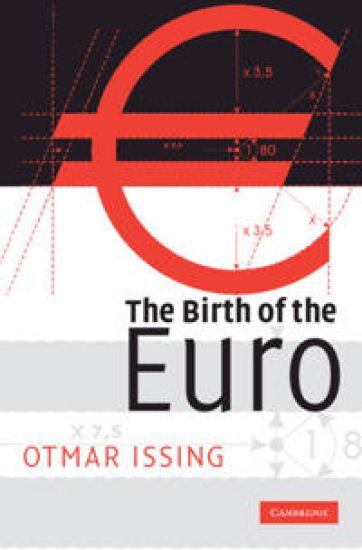
Today, 318 million people in 15 countries use the Euro, which now rivals the importance of the US Dollar in the world economy. This is an outcome that few would have predicted with confidence when the Euro was launched. How can we explain this success and what are the prospects for the future? There is nobody better placed to answer these questions than Otmar Issing, who as a founding member of the Executive Board of the European Central Bank (1998–2006), was one of the Euro's principal architects. His story is a unique insider account, combining personal memoir with reference to the academic and policy literature. Free of jargon, this is a very human reflection on a unique historical experiment and a key reference for all academics, policy makers, and 'Eurowatchers' seeking to understand how the Euro has got to where it is today and what challenges lie ahead.
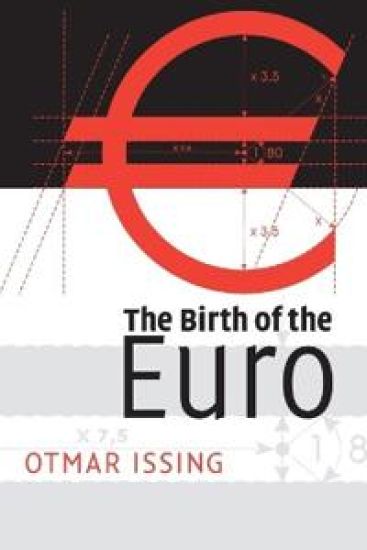
Today, 318 million people in 15 countries use the Euro, which now rivals the importance of the US Dollar in the world economy. This is an outcome that few would have predicted with confidence when the Euro was launched. How can we explain this success and what are the prospects for the future? There is nobody better placed to answer these questions than Otmar Issing, who as a founding member of the Executive Board of the European Central Bank (1998–2006), was one of the Euro's principal architects. His story is a unique insider account, combining personal memoir with reference to the academic and policy literature. Free of jargon, this is a very human reflection on a unique historical experiment and a key reference for all academics, policy makers, and 'Eurowatchers' seeking to understand how the Euro has got to where it is today and what challenges lie ahead.
Imperfect Knowledge and Monetary Policy
Vítor Gaspar; Otmar Issing; Oreste Tristani; David Vestin
Cambridge University Press
2006
pokkari
Based on lectures given as part of The Stone Lectures in Economics, this book discusses the problem of formulating monetary policy in practice, under the uncertain circumstances which characterize the real world. The first lecture highlights the limitations of decision rules suggested by the academic literature and recommends an approach involving, first, a firm reliance on the few fundamental and robust results of monetary economics and, secondly, a pragmatic attitude to policy implementation, taking into consideration lessons from central banking experience. The second lecture revisits Milton Friedman's questions about the effects of active stabilization policies on business cycle fluctuations. It explores the implications of a simple model where the policy maker has imperfect knowledge about potential output and the private sector forms expectations according to adaptive learning. This lecture shows that imperfect knowledge limits the scope for active stabilization policy and strengthens the case for conservatism.
Imperfect Knowledge and Monetary Policy
Vítor Gaspar; Otmar Issing; Oreste Tristani; David Vestin
Cambridge University Press
2006
sidottu
Based on lectures given as part of The Stone Lectures in Economics, this book discusses the problem of formulating monetary policy in practice, under the uncertain circumstances which characterize the real world. The first lecture highlights the limitations of decision rules suggested by the academic literature and recommends an approach involving, first, a firm reliance on the few fundamental and robust results of monetary economics and, secondly, a pragmatic attitude to policy implementation, taking into consideration lessons from central banking experience. The second lecture revisits Milton Friedman's questions about the effects of active stabilization policies on business cycle fluctuations. It explores the implications of a simple model where the policy maker has imperfect knowledge about potential output and the private sector forms expectations according to adaptive learning. This lecture shows that imperfect knowledge limits the scope for active stabilization policy and strengthens the case for conservatism.
Monetary Policy in the Euro Area
Otmar Issing; Vitor Gaspar; Ignazio Angeloni; Oreste Tristani
Cambridge University Press
2001
pokkari
A non-technical analysis of the monetary policy strategy, institutions and operational procedures of the Eurosystem.
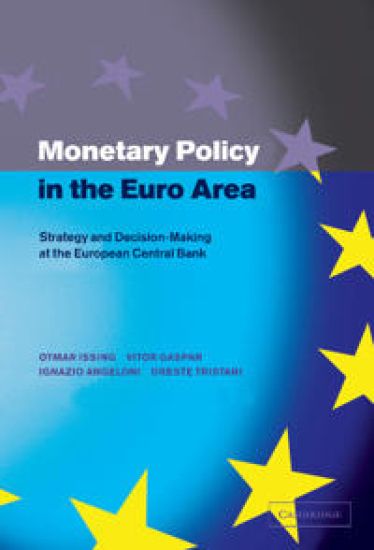
Monetary Policy in the Euro Area
Otmar Issing; Vitor Gaspar; Ignazio Angeloni; Oreste Tristani
Cambridge University Press
2001
sidottu
How and for whose benefit the European Central Bank (ECB) will work is the most important issue facing Europe, and has been the subject of vast media and academic interest which has already spawned a vast literature of discussion papers in the academic literature, and 'Euro Watch' features. Much of this discussion has been of an increasingly hysterical and political nature and has served to blur rather than inform. This book, written by a team at the ECB, including Otmar Issing the ECB's Chief Economist, provides the first comprehensive, inside, non-technical analysis of the monetary policy strategy, institutional features and operational procedures of the Eurosystem. The goals and the transmission mechanism of monetary policy are explored, as are the theoretical and empirical results underpinning the 'stability-oriented monetary policy strategy' adopted by the ECB. The characteristics of this strategy are also discussed in comparison with suggested alternatives.
CONTENTS: The Lessons of History; Stages of European Integration; The Role of Monetary Policy in the Integration Process; Common Currency as Pace-Setter for Political Union; The Labour Market & Social Union; Compensatory transfers; Possible Political Tensions; Institutional Arrangements & 'Good Money from Outside'; The Difficulties & Risks of Monetary Union; Barriers Against Deficits & Debts; Constitutional restraints; Ambivalence of the Political Union; Summary.

Unabhangigkeit Der Notenbank Und Geldwertstabilitat: Vorgetragen in Der Plenarsitzung Am 16. November 1992
Otmar Issing
Franz Steiner Verlag Wiesbaden GmbH
1993
nidottu

Minderheiten Im Spannungsfeld Von Markt Und Regulierung: Marginalien Aus Theoretischer Und Historischer Sicht
Otmar Issing
Franz Steiner Verlag Wiesbaden GmbH
1991
nidottu