Kirjojen hintavertailu – 12 903 725 kirjaa ja 27 kauppaa
Kirjailija
Otto F. Kernberg
Kirjat ja teokset yhdessä paikassa: 28 kirjaa, julkaisuja vuosilta 1980–2022, suosituimpiin kuuluu Object Relations Theory and Clinical Psychoanalysis. Vertaile teosten hintoja ja tarkista saatavuus suomalaisista kirjakaupoista.
Object Relations Theory and Clinical Psychoanalysis is a collection of Kernberg's papers published or presented during the period from 1966 to 1975, with some new material included as well.
Object Relations Theory and Clinical Psychoanalysis is a collection of Kernberg's papers published or presented during the period from 1966 to 1975, with some new material included as well.
In this important new volume, Otto F. Kernberg, M. D., of Weill Cornell Medical College, offers an updated vision of psychoanalytic object relations theory, revealing its application to transference-focused psychotherapy (TFP), a treatment approach derived from, and related to, psychoanalysis. Collecting previously published articles and new material based on empirical studies carried out by the Personality Disorders Institute of Weill Cornell, the book illustrates TFP's applicability in scenarios that include: • Schizoid personality disorders• Psychotic personality organization• Disturbances in sexuality and love relations in cases of narcissistic personalities• Inpatient hospital treatment• Large group regression in organizational and political settings as a consequence of malignant narcissism Hatred, Emptiness, and Hope also devotes a chapter to the implications of new developments in neurobiology on psychoanalytic object relations theory, examining the relationship between neurobiological dispositions and their interaction with psychodynamic developments. Besides offering a detailed look at the application of TFP to severe personality disorders, this book also examines the practice of TFP itself, tackling controversial issues regarding the supervision of psychoanalysis and its derived psychotherapies, the challenges for the future of psychoanalysis, and innovations that may serve to strengthen its role as a profession, a treatment approach and a social organization within mental health sciences.
Filling a crucial gap in the clinical literature, this book provides a contemporary view of pathological narcissism and presents an innovative treatment approach. The preeminent authors explore the special challenges of treating patients--with narcissistic traits or narcissistic personality disorder--who retreat from reality into narcissistic grandiosity, thereby compromising their lives and relationships. Assessment procedures and therapeutic strategies have been adapted from transference-focused psychotherapy (TFP), a manualized, evidence-based treatment for borderline personality disorder. Rich case material illustrates how TFP-N enables the clinician to engage patients more deeply in therapy and help them overcome relationship and behavioral problems at different levels of severity. The volume integrates psychodynamic theory and research with findings from social cognition, attachment, and neurobiology.
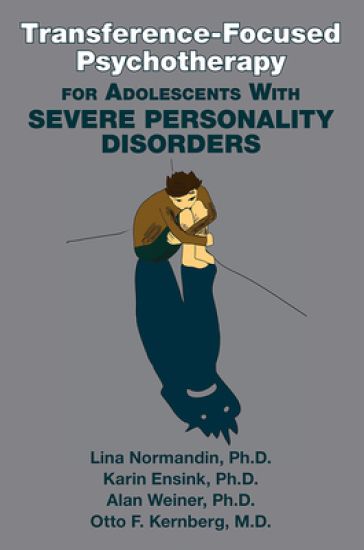
Transference-Focused Psychotherapy for Adolescents With Severe Personality Disorders offers clinicians a comprehensive, compassionate presentation of this specialized psychodynamic psychotherapy. Like the transference-focused psychotherapy model developed for borderline personality disorder (BPD) in adults, the version for adolescents is based on contemporary psychoanalytic object relations theory as developed by the leading thinker in the field, Otto Kernberg, one of the authors of this insightful manual. This book fills an acute need: currently, there is relatively little research on promising treatments for adolescents with PDs, in part because clinicians hesitate to diagnose PD in patients so young (because of stigma and other factors), although it is evident that a constellation of symptoms can be observed in children and adolescents. However, these personality issues are unlikely to resolve without interventions developed explicitly to treat adolescents. In TFP-A, the psychotherapist provides patients with a safe space to examine emotions, relationships, and past trauma, with the focus on helping them gain better behavioral control; increase affect regulation; develop more intimate and gratifying relationships with family, peers, or close friends; and engage in a productive life aimed at realizing current and future goals. Noteworthy themes and features of the text include:Emphasis on the therapist as "third voice," acting as interpreter and mediator between the adolescent, the parental couple, and conventional society and its values, with the ultimate goal of fostering ego integration sufficient to allow the adolescent to proceed under his own agency. Detailed coverage of the techniques of TFP-A, including creating a holding environment, assuming an active stance, engaging in the interpretive process, analyzing transference and countertransference, achieving technical neutrality, and ensuring interventions are developmentally informed. Practical and accessible review of TFP-A "tactics," including establishing the treatment frame, collaborating with parents, and other interventions that maintain the conditions necessary for working effectively with the adolescent and for protecting treatment integrity. Thoughtful review of the attributes that make a clinician a good "fit" for transference-focused psychotherapy. For example, therapists must have their own lives "together," because they will have to use countertransference reactions to identity and understand what is projected onto them. A rich and useful repository of assessment scales and forms in the Appendices, as well as extended and illustrative patient interviews. Navigating adolescence is fraught under the best of circumstances, but patients with PDs are hampered in their quest for individuation. Transference-Focused Psychotherapy for Adolescents With Severe Personality Disorders fills a critical gap in the treatment literature and is an eminently useful guide for clinicians serving this vulnerable population.
Deftly combining contemporary theory with clinical practice, Psychodynamic Therapy for Personality Pathology: Treating Self and Interpersonal Functioning is an invaluable resource for any clinician seeking a coherent model of personality functioning and pathology, classification, assessment, and treatment. This insightful guide introduces Transference-Focused Psychotherapy—Extended (TFP-E), a specialized but accessible approach for any clinician interested in the skillful treatment of personality disorders. Compatible with the DSM-5 Section III Alternative Model for Personality Disorders—and elaborating on that approach, this volume offers clinicians at all levels of experience an accessible framework to guide evaluation and treatment of personality disorders in a broad variety of clinical and research settings. In this book, readers will find: • A coherent model of personality functioning and disorders based in psychodynamic object relations theory• A clinically near approach to the classification of personality disorders, coupled with a comprehensive approach to assessment• An integrated treatment model based on general clinical principles that apply across the spectrum of personality disorders• An understanding of specific modifications of technique that tailor intervention to the individual patient's personality pathology• Descriptions of specific psychodynamic techniques that can be exported to shorter-term treatments and acute clinical settings Patient assessment and basic psychodynamic techniques are described in up-to-date, jargon-free terms and richly supported by numerous clinical vignettes, as well as online videos demonstrating interventions. At the end of each chapter, readers will find a summary of key clinical concepts, making this book both a quick reference tool as well as a springboard for continued learning. Clinicians looking for an innovative, trustworthy guide to understanding and treating personality pathology that combines contemporary theory with clinical practice need look no further than Psychodynamic Therapy for Personality Pathology: Treating Self and Interpersonal Functioning.
In Treatment of Severe Personality Disorders: Resolution of Aggression and Recovery of Eroticism, the influential psychoanalyst and psychiatrist Otto Kernberg presents an integrated update of the current knowledge of personality disorders, their neurobiological and psychodynamic determinants, and a specific psychodynamic psychotherapy geared to resolve the psychopathology of these conditions—namely, the syndrome of identity diffusion and its influence on the capacity for emotional wellbeing and gratifying relationships with significant others. The author updates the findings of the Personality Disorders Institute of the Weill Cornell Medical College Department of Psychiatry, which are derived from the empirical research and clinical investigation of severe personality disorders, and addresses the effectiveness of transference-focused psychotherapy, a specific psychodynamic treatment for these disorders developed at the Institute. The volume focuses particularly on an essential group of techniques common to all psychoanalytically derived treatments and clarifies the corresponding differential features of various psychodynamic treatment approaches. In prose both precise and evocative, the author:Examines the classification of personality disorders, the way competing viewpoints have influenced the evolution of DSM-III and DSM-IV, and the impact of new knowledge on the classification of DSM-5, with emphasis on how conflicts between scientific and political considerations have hindered the classification of personality disorders in the past. Illustrates in detail how present knowledge of neurobiological structures and neurotransmitters intertwines with the psychodynamic determinants of how psychic experience is organized. Explores psychodynamic psychotherapies and contemporary developments and controversies in the field. For example, the role of interpretation in borderline pathology is examined using a clinical case, and a new formulation of supportive psychodynamic psychotherapy is described. Addresses severe narcissistic pathology—its diagnosis, prognosis, and treatment. Specifically, the book presents an overview of treatment options for severe narcissistic personality disorder, explores the distortions in verbal communication that may arise during psychotherapy with these patients, and focuses on the differential diagnosis of antisocial behavior. Examines the diagnosis and treatment of sexual pathology, and explores the vicissitudes of the love lives of patients with severe personality disorders. Concludes with a chapter on the essential preconditions in the education of psychodynamic psychotherapists to carry out the challenging and complex psychotherapeutic work in this field. In describing both the limits and the advances in therapeutic effectiveness, the Treatment of Severe Personality Disorders: Resolution of Aggression and Recovery of Eroticism performs a great service, and it will surely become a classic of the psychoanalytic literature.
La Psicoterapia centrada en la transferencia se basa en la teor a de las relaciones objetales -orientaci n que constituye uno de los pilares fundamentales del pensamiento psicoanal tico- y ha sido concebida con la ayuda de una metodolog a de investigaci n y una evaluaci n emp rica rigurosas. Dise ada para tratar a los pacientes m s dif ciles dentro de la cartera de casos del psicoterapeuta psicodin mico, a saber, aquellos que adolecen de una organizaci n borderline de la personalidad, este tratamiento ofrece ya no nicamente un mero alivio de los s ntomas cuanto un enfoque para abordar el trastorno de personalidad subyacente. Permite a los pacientes mejorar su funcionamiento social y vocacional, sus vidas amorosas y su creatividad. En esta gu a de tratamiento dirigida a los profesionales cl nicos, Yeomans, Clarkin y Kernberg, los creadores del enfoque, describen los or genes de la Psicoterapia centrada en la transferencia y acompa an al profesional cl nico a trav s de la exposici n de sus diferentes fases y etapas. Los autores analizan el proceso de selecci n de casos, el establecimiento y el mantenimiento del marco terap utico y el desarrollo y an lisis de la transferencia. Brindan una orientaci n para el manejo de las crisis, el potencial suicida, y los acting-outs sexuales, todo ello ricamente ilustrado con distintos ejemplos cl nicos. Este texto es de lectura obligada para todo aquel profesional que pretenda comprender o aplicar la Psicoterapia centrada en la transferencia, o para quienes desarrollen su labor cl nica con pacientes l mites. Frank E. Yeomans, M. D., Ph. D. es profesor cl nico asociado de Psiquiatr a en la Universidad Weill Cornell y en la Universidad de Columbia. John F. Clarkin, Ph. D. es codirector del Instituto de Trastornos de la Personalidad en la Escuela Superior de Medicina de la Universidad Weill Cornell. Otto F. Kernberg, M. D. es director del Instituto de Trastornos de la Personalidad en la Universidad Weill Cornell y psicoanalista formador en la Universidad de Columbia.
In diesem Buch werden Ursprung und Bedeutung primitiver Aggressionen in der psychodynamischen Psychotherapie von Patienten mit schweren Personlichkeitsstorungen erortert. Die klinischen Manifestationen dieser Entwicklungen und ihre prognostische Bedeutung, die wirkungsvollen psychotherapeutischen Techniken und ihre Grenzen werden in einem Uberblick dargestellt. Der wichtige Einfluss von Grenzsetzungen, Gegenubertragungsanalyse und Toleranz werden diskutiert. Abschliessend wird das Behandlungskonzept, das die systematische Analyse der primitiven Ubertragungsreaktionen ermoglicht, vorgestellt.
Transference-Focused Psychotherapy for Borderline Personality Disorder: A Clinical Guide presents a model of borderline personality disorder (BPD) and its treatment that is based on contemporary psychoanalytic object relations theory as developed by the leading thinker in the field, Otto Kernberg, M. D., who is also one of the authors of this insightful manual. The model is supported and enhanced by material on current phenomenological and neurobiological research and is grounded in real-world cases that deftly illustrate principles of intervention in ways that mental health professionals can use with their patients. The book first provides clinicians with a model of borderline pathology that is essential for expert assessment and treatment planning and then addresses the empirical underpinnings and specific therapeutic strategies of transference-focused psychotherapy (TFP). • From the chapter on clinical assessment, the clinician learns how to select the type of treatment on the basis of the level of personality organization, the symptoms the patient experiences, and the areas of compromised functioning. In order to decide on the type of treatment, the clinician must examine the patient's subjective experience (such as symptoms of anxiety or depression), observable behaviors (such as investments in relationships and deficits in functioning), and psychological structures (such as identity, defenses, and reality testing). • Next, the clinician learns to establish the conditions of treatment through negotiating a verbal treatment contract or understanding with the patient. The contract defines the responsibilities of each of the participants and defines what the reality of the therapeutic relationship is. • Techniques of treatment interventions and tactics to address particularly difficult clinical challenges are addressed next, equipping the therapist to employ the four primary techniques of TFP (interpretation, transference analysis, technical neutrality, and use of countertransference) and setting the stage for and guiding the proper use of those techniques within the individual session.• What to expect in the course of long-term treatment to ameliorate symptoms and to effect personality change is covered, with sections on the early, middle, and late phases of treatment. This material prepares the clinician to deal with predictable phases, such as tests of the frame, impulse containment, movement toward integration, episodes of regression, and termination.• Finally, the text is accompanied by supremely instructive online videos that demonstrate a variety of clinical situations, helping the clinician with assessment and modeling critical therapeutic strategies. The book recognizes that each BPD patient presents a unique treatment challenge. Grounded in the latest research and rich with clinical insight, Transference-Focused Psychotherapy for Borderline Personality Disorder: A Clinical Guide will prove indispensable to mental health professionals seeking to provide thoughtful, effective care to these patients.