Kirjojen hintavertailu – 12 903 725 kirjaa ja 27 kauppaa

Kirjailija

Owen D. Jones

Kirjat ja teokset yhdessä paikassa: 4 kirjaa, julkaisuja vuosilta 2024–2026, suosituimpiin kuuluu Force of Nature: Understanding Evolution's Deepest Logic-And Putting It to Use. Vertaile teosten hintoja ja tarkista saatavuus suomalaisista kirjakaupoista.

4 kirjaa

Kirjojen julkaisuvuodet: 2024–2026.

Force of Nature

Force of Nature

Owen D. Jones

Oxford University Press
2026
sidottu
While plenty of books tell readers how natural selection works, Force of Nature focuses on why understanding it has enormous practical value for reader's lives, right now. Natural selection never signs its work, earns awards, or collects the praise of peers. Still, the closer we look, the more awesome it is. We may understand that as life's most powerful process it shapes all living things in their endlessly surprising and photogenic diversity. But we're nowhere near done discovering its full power, scope, and reach. While plenty of books tell readers how natural selection works, Force of Nature focuses on why understanding it has enormous practical value and is important to reader's lives, right now. With vivid examples, the book shows how looking through the lens of natural selection adds value in domains as diverse as medicine, psychology, agriculture, artificial intelligence, engineering, economics, and law. Force of Nature illustrates how deepening our understanding of natural selection can help us to reduce errors, lower costs, increase efficiencies, and improve our ability to pursue some of our existing goals. It reveals hidden patterns that natural selection paints across seemingly disconnected things, from airplanes, cancers, and cod, to body armor, robot navigation, the feeling of ownership, and how we assess risks within the daily swirl of imperfectly predictable events. For example, the book looks at why both doctors and patients so often--and indeed so wildly--misunderstand diagnostic statistics for diseases like breast cancer. It illustrates how researchers can code software to evolve itself automatically to solve seemingly intractable problems. It explores the bases for some systemic but illogical biases in human decision-making. And it connects all these examples not only to each other but also to soil probes on Mars, satellite antennas, human breastmilk, the architectures of legal systems, and more. You are sure to come away with deeper understandings of how natural selection works, influences human behaviors more broadly and deeply than commonly contemplated, and how greater understanding of it can be harnessed to aid human flourishing across a surprisingly wide swath of domains.
Force of Nature: Understanding Evolution's Deepest Logic-And Putting It to Use
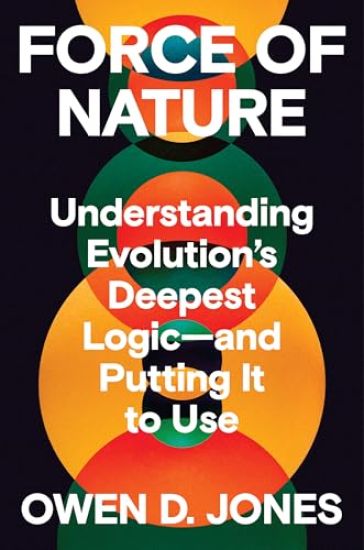
Most of us remember learning about natural selection back in school and have a sense of some of its everyday implications, like the risks of overusing antibiotics. Yet, as professor of law and biology Owen D. Jones shows, there are still many things that most of us fail to appreciate about evolution--including just how useful it can be to understand. In Force of Nature, Jones explores how we misunderstand and neglect natural selection to our detriment, both missing opportunities to better achieve our goals and, sometimes, even imperiling lives. Through vivid and surprising examples ranging from medicine, psychology, and AI to economics, engineering, and beyond, we see how a finer grasp of natural selection can help open new horizons in cancer treatment and space exploration; create faster machines and better robots; design more effective, just laws; and more. Enlightening and inspiring, Force of Nature shows how, properly understood, evolution may be even more powerful than we may think.
Brain Science for Lawyers, Judges, and Policymakers

Brain Science for Lawyers, Judges, and Policymakers

Owen D. Jones; Jeffrey D. Schall; Francis X. Shen; Morris B. Hoffman; Anthony D. Wagner

OXFORD UNIVERSITY PRESS INC
2024
sidottu
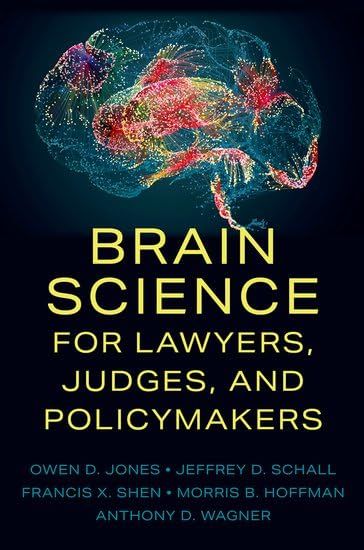
Brain science in the form of neuroscientific evidence now appears frequently in courtrooms and policy discussions alike. Many legal issues are at stake, such as how to separate the best uses of brain science information from those that are potentially biasing or misleading. It is crucial to evaluate brain science evidence in light of relevant legal standards (such as the Daubert and Frye Rules). Brain Science for Lawyers, Judges, and Policymakers responds to this rapidly changing legal landscape, providing a user-friendly introduction to the fundamentals of neuroscience for lawyers, advocates, judges, legal academics, and policymakers. It features detailed but clear illustrations, as well as a comprehensive and accessible overview of developments in legally relevant neuroscience. Readers will learn brain science terms, how to understand and discuss brain structure and function in legally relevant contexts, and how to avoid over- or under-interpreting neuroscientific evidence. The book begins with a survey of the kinds of litigation, legislation, and regulation where neuroscience is currently being used. It provides accessible descriptions of basic brain anatomy and brain function as well as an overview of how modern technologies can reveal the brain structures and brain functions of individuals. It finishes with cautions and limitations, including timely and thought-provoking observations about where the future of neurolaw might lead. Throughout, the authors offer clear and concise guidance on understanding both the promise and the limitations of using brain science in law and policymaking.
Brain Science for Lawyers, Judges, and Policymakers

Brain Science for Lawyers, Judges, and Policymakers

Owen D. Jones; Jeffrey D. Schall; Francis X. Shen; Morris B. Hoffman; Anthony D. Wagner

OXFORD UNIVERSITY PRESS INC
2024
nidottu
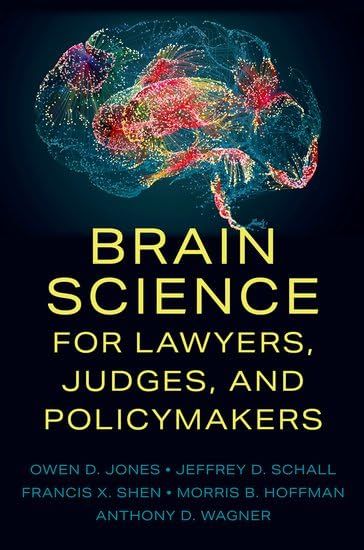
Brain science in the form of neuroscientific evidence now appears frequently in courtrooms and policy discussions alike. Many legal issues are at stake, such as how to separate the best uses of brain science information from those that are potentially biasing or misleading. It is crucial to evaluate brain science evidence in light of relevant legal standards (such as the Daubert and Frye Rules). Brain Science for Lawyers, Judges, and Policymakers responds to this rapidly changing legal landscape, providing a user-friendly introduction to the fundamentals of neuroscience for lawyers, advocates, judges, legal academics, and policymakers. It features detailed but clear illustrations, as well as a comprehensive and accessible overview of developments in legally relevant neuroscience. Readers will learn brain science terms, how to understand and discuss brain structure and function in legally relevant contexts, and how to avoid over- or under-interpreting neuroscientific evidence. The book begins with a survey of the kinds of litigation, legislation, and regulation where neuroscience is currently being used. It provides accessible descriptions of basic brain anatomy and brain function as well as an overview of how modern technologies can reveal the brain structures and brain functions of individuals. It finishes with cautions and limitations, including timely and thought-provoking observations about where the future of neurolaw might lead. Throughout, the authors offer clear and concise guidance on understanding both the promise and the limitations of using brain science in law and policymaking.