
Kirjojen hintavertailu – 12 903 725 kirjaa ja 27 kauppaa

Kirjailija

Oxana Shevel

Kirjat ja teokset yhdessä paikassa: 3 kirjaa, julkaisuja vuosilta 2011–2023, suosituimpiin kuuluu Migration, Refugee Policy, and State Building in Postcommunist Europe. Vertaile teosten hintoja ja tarkista saatavuus suomalaisista kirjakaupoista.

3 kirjaa

Kirjojen julkaisuvuodet: 2011–2023.

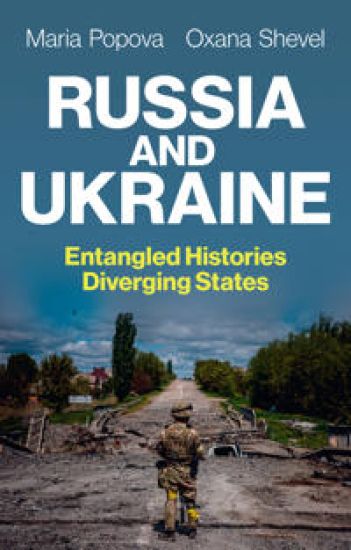
Russia and Ukraine

Russia and Ukraine

Maria Popova; Oxana Shevel

JOHN WILEY AND SONS LTD
2023
nidottu

Halvin toimitettuna 29,40 €

In February 2022, Russian missiles rained on Ukrainian cities, and tanks rolled towards Kyiv to end Ukrainian independent statehood. President Zelensky declined a Western evacuation offer and Ukrainians rallied to defend their country. What are the roots of this war, which has upended the international legal order and brought back the spectre of nuclear escalation? How did these supposedly “brotherly peoples” become each other’s worst nightmare? In Russia and Ukraine: Entangled Histories, Diverging States, Maria Popova and Oxana Shevel explain how since 1991 Russia and Ukraine diverged politically, ending up on a collision course. Russia slid back into authoritarianism and imperialism, while Ukraine consolidated a competitive political system and pro-European identity. As Ukraine built a democratic nation-state, Russia refused to accept it and came to see it as an “anti-Russia” project. After political and economic pressure proved ineffective, and even counterproductive, Putin went to war to force Ukraine back into the fold of the “Russian world.” Ukraine resisted, determined to pursue European integration as a sovereign state. These irreconcilable goals, rather than geopolitical wrangling between Russia and the West over NATO expansion, are – the authors argue – essential to understanding Russia’s war on Ukraine.
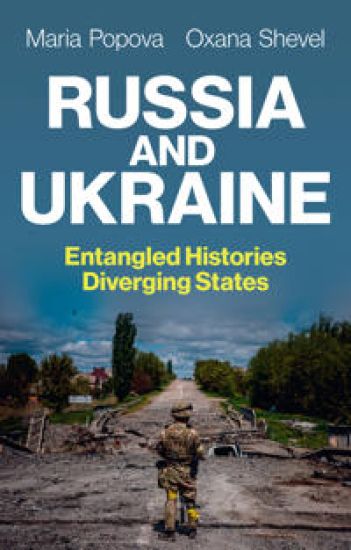
Russia and Ukraine

Russia and Ukraine

Maria Popova; Oxana Shevel

JOHN WILEY AND SONS LTD
2023
sidottu
In February 2022, Russian missiles rained on Ukrainian cities, and tanks rolled towards Kyiv to end Ukrainian independent statehood. President Zelensky declined a Western evacuation offer and Ukrainians rallied to defend their country. What are the roots of this war, which has upended the international legal order and brought back the spectre of nuclear escalation? How did these supposedly “brotherly peoples” become each other’s worst nightmare? In Russia and Ukraine: Entangled Histories, Diverging States, Maria Popova and Oxana Shevel explain how since 1991 Russia and Ukraine diverged politically, ending up on a collision course. Russia slid back into authoritarianism and imperialism, while Ukraine consolidated a competitive political system and pro-European identity. As Ukraine built a democratic nation-state, Russia refused to accept it and came to see it as an “anti-Russia” project. After political and economic pressure proved ineffective, and even counterproductive, Putin went to war to force Ukraine back into the fold of the “Russian world.” Ukraine resisted, determined to pursue European integration as a sovereign state. These irreconcilable goals, rather than geopolitical wrangling between Russia and the West over NATO expansion, are – the authors argue – essential to understanding Russia’s war on Ukraine.
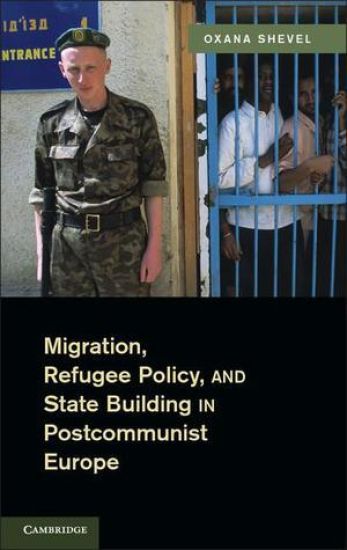
Migration, Refugee Policy, and State Building in Postcommunist Europe
Why do similar postcommunist states respond differently to refugees? Why do some states privilege certain refugee groups, while other states do not? This book presents a theory to account for this puzzle, and it centers on the role of the politics of nation-building and of the office of the UN High Commissioner for Refugees (UNHCR). A key finding of the book is that when the boundaries of a nation are contested (and thus there is no consensus on which group should receive preferential treatment in state policies), a political space for a receptive and nondiscriminatory refugee policy opens up. The book speaks to the broader questions of how nationalism matters after communism and under what conditions and through what mechanisms international actors can influence domestic polices. The analysis is based on extensive primary research the author conducted in four languages in the Czech Republic, Poland, Russia and Ukraine.