Kirjojen hintavertailu – 12 859 827 kirjaa ja 27 kauppaa
Kirjailija
P. Christopher Earley
Kirjat ja teokset yhdessä paikassa: 11 kirjaa, julkaisuja vuosilta 1993–2010, suosituimpiin kuuluu Face, Harmony, and Social Structure. Vertaile teosten hintoja ja tarkista saatavuus suomalaisista kirjakaupoista.
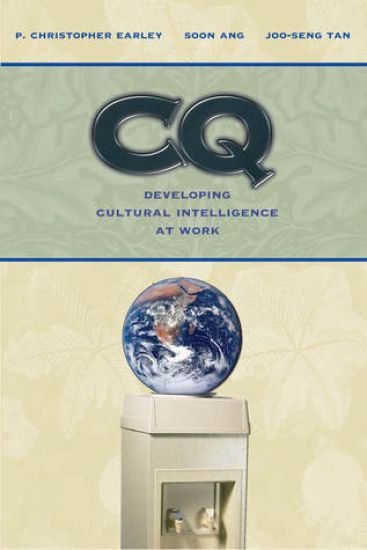
This book explains to those living and working in another country how to identify and develop their Cultural Intelligence, or CQ. Cultural intelligence is an outsider's natural ability to interpret and respond to unfamiliar cultural signals in an appropriate manner. CQ is distinguished by three core features: the head, or the ability to discover new information about a culture; the heart, or one's motivation and confidence in dealing with a culture; and the body, or the capability to adapt actions and behavior so that they are appropriate in a new culture. A manager with a high CQ can enter into new cultural settings—national, professional, organizational, regional—and immediately understand what is happening and why, confidently interact with people, and engage in the right actions. Filled with real-world examples and case studies, this book explains how to assess one's own skills and improve one's CQ.
This book explains to those living and working in another country how to identify and develop their Cultural Intelligence, or CQ. Cultural intelligence is an outsider's natural ability to interpret and respond to unfamiliar cultural signals in an appropriate manner. CQ is distinguished by three core features: the head, or the ability to discover new information about a culture; the heart, or one's motivation and confidence in dealing with a culture; and the body, or the capability to adapt actions and behavior so that they are appropriate in a new culture. A manager with a high CQ can enter into new cultural settings—national, professional, organizational, regional—and immediately understand what is happening and why, confidently interact with people, and engage in the right actions. Filled with real-world examples and case studies, this book explains how to assess one's own skills and improve one's CQ.
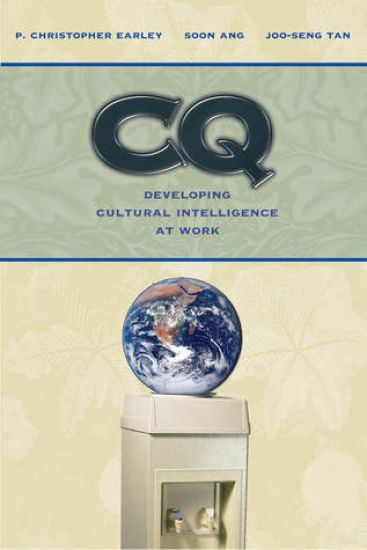
In a global market where international teams, initiatives, and joint ventures are increasingly common, it is extremely important for people to integrate themselves quickly in new cultures. Effective strategies for selecting and training people on global perspectives are critical for managing businesses. Current theories in management and psychology do not provide adequate frameworks to explain the successes or failures of people working and managing in foreign cultures. In this book, the authors develop the idea of cultural intelligence and examine its three essential facets: cognition, the ability to develop patterns from cultural cues; motivation, the desire and ability to engage others; and behavior, the capability to act in accordance with cognition and motivation. In their presentation of this new conceptual framework, the authors provide a critical review of the existing literature. They explore the fundamental nature of cultural intelligence and its relationship to other frameworks of intelligence.
In a global market where international teams, initiatives, and joint ventures are increasingly common, it is extremely important for people to integrate themselves quickly in new cultures. Effective strategies for selecting and training people on global perspectives are critical for managing businesses. Current theories in management and psychology do not provide adequate frameworks to explain the successes or failures of people working and managing in foreign cultures. In this book, the authors develop the idea of cultural intelligence and examine its three essential facets: cognition, the ability to develop patterns from cultural cues; motivation, the desire and ability to engage others; and behavior, the capability to act in accordance with cognition and motivation. In their presentation of this new conceptual framework, the authors provide a critical review of the existing literature. They explore the fundamental nature of cultural intelligence and its relationship to other frameworks of intelligence.
This authored book's purpose is to extend and consolidate the evolving literature on multinational work teams by developing a comprehensive theory that incorporates a dynamic, multilevel view of such teams. The model used by the authors focuses on various features of the team's members, their interactions as a team, and the organizational context in which they operate. The concept of integration and differentiation, as well as the notion of equilibrium are used as a general force guiding the specific processes that link various levels of analysis in the model. Providing a framework for scholars and students in the field of organizational studies, this book presents: *a comprehensive review of the literature related to multinational and multicultural teams; *an overview of the specific model driving our thinking along with an extensive description of the component parts; *the individual and group-level elements of teams and their members; *the linking processes that connect various elements and structures; *the catalysts that give rise to changes in various elements and structures described in the theory section; and *a general integration of the model and an application of this framework for understanding MNT's in diverse cultural contexts.
This authored book's purpose is to extend and consolidate the evolving literature on multinational work teams by developing a comprehensive theory that incorporates a dynamic, multilevel view of such teams. The model used by the authors focuses on various features of the team's members, their interactions as a team, and the organizational context in which they operate. The concept of integration and differentiation, as well as the notion of equilibrium are used as a general force guiding the specific processes that link various levels of analysis in the model. Providing a framework for scholars and students in the field of organizational studies, this book presents: *a comprehensive review of the literature related to multinational and multicultural teams; *an overview of the specific model driving our thinking along with an extensive description of the component parts; *the individual and group-level elements of teams and their members; *the linking processes that connect various elements and structures; *the catalysts that give rise to changes in various elements and structures described in the theory section; and *a general integration of the model and an application of this framework for understanding MNT's in diverse cultural contexts.
Presenting cross-cultural research on a wide range of organizational topics, this book ranges from the individual to the macro level. Among the issues examined are: organizational trust in international settings, HRM issues in international joint ventures, developing strategic advantage across borders, and social partnerships for sustainable growth.
Presenting cross-cultural research on a wide range of organizational topics, this book ranges from the individual to the macro level. Among the issues examined are: organizational trust in international settings, HRM issues in international joint ventures, developing strategic advantage across borders, and social partnerships for sustainable growth.
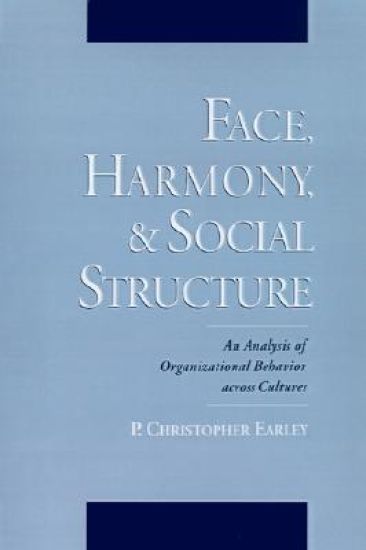
Face, Harmony, and Social Structure continues author P. Christopher Earley's investigations of the differences among people within organizations in different cultures. In this study, Earley develops a mid-range theory of individual behaviour, self-concept, and interpersonal process in predicting cultural differences in organizational settings. This work represents a new theory of self-presentation and face within a cross-cultural context, integrating a cross-level approach ranging from the individual to the organization and to the societal levels of discussion.
With the passage of NAFTA and GATT, the steady integration of the European Community, and the emergence of promising new markets in Eastern Europe and the Pacific Rim, businesses around the world are globalizing their operations with unprecedented speed. But as executives working in foreign countries have discovered, organizational cultures can differ dramatically from country to country, and management practices effective back home can fail miserably abroad. The Transplanted Executive provides a comprehensive resource for managers of any nationality striving to understand the diversity of workplace values and traditions - and how they can be used to maximize employee efficiency, morale, and the bottom line. Offering sensible solutions to everyday problems, this informative volume shows how employees with different cultural, religious, and ethnic backgrounds respond to specific managerial techniques. The authors demonstrate, for example, why effective incentive systems in Japan might decrease productivity in United States, and why successful efforts to create team-based cooperation in Russia could alienate rather than motivate workers in England. Each chapter focuses on a different management problem - effective communication, motivation of workers, turning groups into teams, leadership skills, and quality management production - and following each chapter are quick reference charts that neatly summarize the text. The authors also include a table which provides cultural profiles of nearly 50 countries from major business centres around the world. Now more than ever, multinational managers need to be in touch with the range of cultural issues that can affect their overseas operations. With The Transplanted Executive in hand, managers the world over will have a user-friendly guide to understanding and mastering the subject.
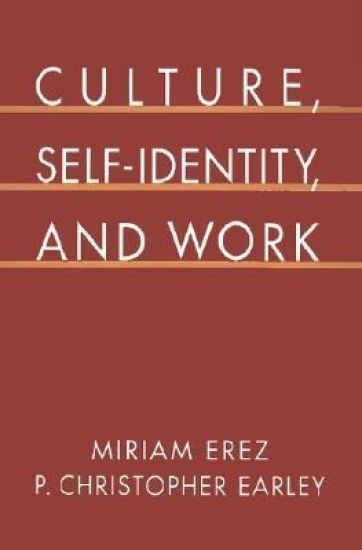
The focus of this book is the development and application of a middle-range theory of culture, self-identity and work behaviour. According to the authors' self-representative theory, three components are relevant to an individual's work behaviour: cultural and situational characteristics, cognitive representation of the self, and managerial practices and techniques used in an organization. Culture is viewed as a shared knowledge structure that results in decreased variability in individual interpretation of stimuli. The self is viewed as a dynamic interpretive structure that shapes an individual's interpretation of social milieu. Managerial practices influence work behaviour, and in this book the focus is on how these practices relate to the components of culture and the self. A final chapter provides a number of specific recommendations for how organizations might consider structuring their environment and managerial practices in order to match culture-self interaction.