Kirjojen hintavertailu – 12 859 819 kirjaa ja 27 kauppaa

Kirjailija

P G Wodehouse

Kirjat ja teokset yhdessä paikassa: 1 144 kirjaa, julkaisuja vuosilta 1904–2026, suosituimpiin kuuluu Psmith ratkaisee. Vertaile teosten hintoja ja tarkista saatavuus suomalaisista kirjakaupoista.

Nimi esiintyy myös muodoissa: P. G. Wodehouse, P.G. Wodehouse, P. G Wodehouse, P.G Wodehouse

1 144 kirjaa

Kirjojen julkaisuvuodet: 1904–2026.

The Inimitable Jeeves

The Inimitable Jeeves

P G Wodehouse

Les Prairies Numeriques
2020
pokkari
The Inimitable Jeeves By P. G. WodehouseThe Inimitable Jeeves is a semi-novel collecting Jeeves stories by P. G. Wodehouse, first published in the United Kingdom by Herbert Jenkins, London, on 17 May 1923 and in the United States by George H. Doran, New York, on 28 September 1923, under the title Jeeves. The novel combined 11 previously published stories, of which the first six and the last were split in two, to make a book of 18 chapters. It is now often printed in 11 chapters, mirroring the original stories. All the stories had previously appeared in The Strand Magazine in the UK, between December 1921 and November 1922, except for one, "Jeeves and the Chump Cyril", which had appeared in the Strand in August 1918. That story had appeared in the Saturday Evening Post (US) in June 1918. All the other stories appeared in Cosmopolitan in the US between December 1921 and December 1922. This was the second collection of Jeeves stories, after My Man Jeeves (1919) the next collection would be Carry On, Jeeves, in 1925. All of the short stories are connected and most of them involve Bertie's friend Bingo Little, who is always falling in love. The original story titles and publication dates were as follows (with split chapter titles in parentheses): "Jeeves in the Springtime" - Bertie's friend Bingo is in love with a waitress, Mabel, but fears his uncle won't approve of her. Jeeves suggests a plan using romance novels to sway Bingo's uncle. UK: Strand, December 1921US: Cosmopolitan, December 1921("Jeeves Exerts the Old Cerebellum" and "No Wedding Bells for Bingo")"Aunt Agatha Takes the Count" - Aunt Agatha pushes an unwilling Bertie to marry a girl named Aline Hemingway, who, along with her brother Sidney, appears to be quiet and respectable. UK: Strand, April 1922US: Cosmopolitan, October 1922 (as "Aunt Agatha Makes a Bloomer")("Aunt Agatha Speaks Her Mind" and "Pearls Mean Tears")"Scoring off Jeeves" - Bingo is in love with Honoria Glossop, whom Aunt Agatha wants Bertie to marry. Bertie tries to sort out this dilemma without Jeeves's help. UK: Strand, February 1922US: Cosmopolitan, March 1922 (as "Bertie Gets Even")("The Pride of the Woosters Is Wounded" and "The Hero's Reward")"Sir Roderick Comes to Lunch" - Reluctantly engaged to Honoria Glossop, Bertie must demonstrate to her father, Sir Roderick Glossop, that he is mentally sound. Meanwhile, Bertie's cousins Claude and Eustace appear. UK: Strand, March 1922US: Cosmopolitan, April 1922 (as "Jeeves the Blighter")("Introducing Claude and Eustace" and "Sir Roderick Comes to Lunch")
Ukridge

Ukridge

P G Wodehouse

Suzeteo Enterprises
2020
sidottu
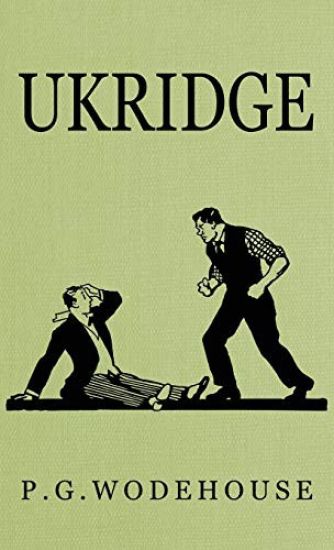
Bright, witty, and full of amusement, Ukridge is a collection of ten short stories by English author P. G. Wodehouse. Featuring the title character, Stanley Featherstonehaugh Ukridge, these short stories, narrated by Ukridge's school boy friend "Corky" Corcoran, detail the foolish adventures that happen to these two longtime friends. Ukridge, jobless and a bit of a scoundrel, has plenty of shocking, almost wicked, ideas to make a fortune without forcing him to settle down. While optimistic about his endeavors, his friend Corky is always less enthusiastic but willing to help with Ukridge's outrageous schemes. With stories such as "Ukridge's Dog College" and "The Debut of Battling Billson," there is no true evilness in Ukridge's plans, but a sense of innocence and amusement in a character who is just afraid to grow up. P. G. Wodehouse has written Ukridge in over fifteen short stories and has featured the charming opportunist in one novel, and many readers adore his quick wit and melodrama. Find yourself laughing at every turned page as you read of Ukridge and all of his failings in trying to make a quick buck.
Right Ho, Jeeves

Right Ho, Jeeves

P. G. Wodehouse

Iap - Information Age Pub. Inc.
2020
sidottu
P. G. Wodehouse was one of the greatest comic author of the 20th century. Right Ho, Jeeves was the second novel featuring Jeeves and was published in the US under the title Brinkley Manor. An article published in August 29th 2009 in the British newspaper The Gardian states that Right Ho, Jeeves was voted number 1 in the "best comic book by English writer" category in a recent internet pool. In another pool, "top 10 funniest book" according to a well-known book seller website in the UK, Right Ho, Jeeves was again number 1. In 1996, John Le Carr , author of the international best-seller The Spy Who Came in from the Cold, wrote: "No library, however humble, is complete without its well-thumbed copy of Right Ho, Jeeves, by P. G. Wodehouse, which contains the immortal scene of Gussie Fink-Nottle, drunk to the gills, presenting the prizes to the delighted scholars of Market Snodsbury Grammar School". In 2012, Christian Science Monitor listed Right Ho, Jeeves as number ten in a list of the ten best comic works in all literature.
Right Ho, Jeeves

Right Ho, Jeeves

P G Wodehouse

Indoeuropeanpublishing.com
2020
sidottu
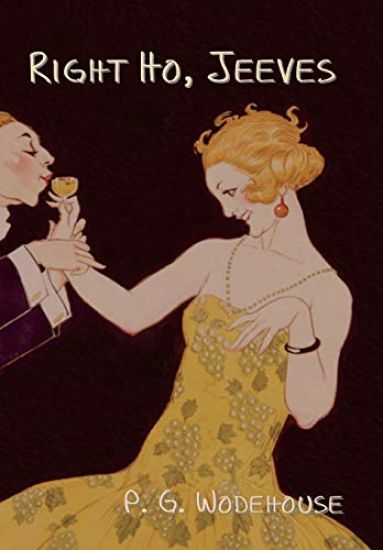
Right Ho, Jeeves is a novel by P. G. Wodehouse, the second full-length novel featuring the popular characters Jeeves and Bertie Wooster, after Thank You, Jeeves. It also features a host of other recurring Wodehouse characters, and is mostly set at Brinkley Court, the home of Bertie's Aunt Dahlia. It was first published in the United Kingdom on October 5, 1934 by Herbert Jenkins, London, and in the United States on October 15, 1934 by Little, Brown and Company, Boston, under the title Brinkley Manor. Before being published as a book, it had been sold to the Saturday Evening Post, in which it appeared in serial form from December 23, 1933 to January 27, 1934, and in England in Grand Magazine from April to September 1934.
The Inimitable Jeeves

The Inimitable Jeeves

P. G. Wodehouse

Graphic Arts Books
2020
pokkari
“Mr Wodehouse's idyllic world can never stale. He will continue to release future generations from captivity that may be more irksome than our own. He has made a world for us to live in and delight in.” -Evelyn Waugh “Wodehouse is one of the funniest and most productive men who ever wrote in English. He is far from being a mere jokesmith: he is an authentic craftsman, a wit and humorist of the first water, the inventor of a prose style which is a kind of comic poetry.” -Richard Voorhees First published in 1923, The Inimitable Jeeves follows young Bertie Wooster as he complicates every attempt to aid the easily confused Bingo Little’s pursuit of true love. Disaster surely awaits, unless they can trust in the intervention of Bertie’s serenely competent valet, Jeeves. The Inimitable Jeeves is a chain of short stories masterfully fused into a novel and one of the best-known books about the author’s most famous characters, Bertie Wooster and Jeeves. Well meaning, but often clueless, man-about-town Bertie narrates his adventures with assorted friends and relatives. These deal primarily with his chum Bingo Little’s astounding ability to fall instantly and randomly in love and then conceive of startlingly absurd methods of getting himself into his beloved’s good graces. Wodehouse’s joyous farce showcases his trademark vision of a timeless and comfortable England, a collection of generally less-than-perceptive characters, and most especially his sublime prose- deadpan, precise and ceaselessly inventive. The author’s vision and style have proven uniquely his own, resist any attempt at imitation and will continue to offer readers entrance into a world of charm and urbane hilarity. With an eye-catching new cover, and professionally typeset manuscript, this edition of The Inimitable Jeeves is both modern and readable.
My Man Jeeves

My Man Jeeves

P. G. Wodehouse

Iap - Information Age Pub. Inc.
2020
nidottu
Jeeves first appeared in 1915. He continued to be in Wodehouse's work until his last finished novel Aunts Aren't Gentlemen (1974), published one year later as The Cat-nappers in the US. Jeeves is a persuasive and cultured man who typically helps Bertie, extricating him from unwanted engagements. He also helps Bertie's friends and relatives in various dilemmas. Together, Bertie and Jeeves experience different adventures in numerous short stories and novels. Containing eight stories, four of them including Jeeves, My Man Jeeves was originally published in 1919, and it is the first title by Wodehouse with more than one jeevesian short story.
Psmith in the City

Psmith in the City

P G Wodehouse

Bibliotech Press
2020
sidottu
Psmith in the City is a novel by P. G. Wodehouse, first published on 23 September 1910 by Adam & Charles Black, London. The story was originally released as a serial in The Captain magazine, between October 1908 and March 1909, under the title The New Fold. It continues the adventures of cricket-loving Mike Jackson and his immaculately-dressed friend Psmith, first encountered in Mike (1909). (wikipedia.org)
Meet Mr. Mulliner

Meet Mr. Mulliner

P G Wodehouse

Alpha Edition
2020
pokkari
This book has been considered by academicians and scholars of great significance and value to literature. This forms a part of the knowledge base for future generations. So that the book is never forgotten we have represented this book in a print format as the same form as it was originally first published. Hence any marks or annotations seen are left intentionally to preserve its true nature.
The Inimitable Jeeves (Deseret Alphabet edition)
Sir Pelham Grenville Wodehouse (1667-1745) was an English humorist. He wrote numerous novels, short stories, plays, poems, and lyrics. Wodehouse is best known for his humorous stories about the English upper class in the first part of the twentieth century, written in a smooth, apparently effortless style. The Inimitable Jeeves is a set of short stories loosely woven together. In each, the hapless Bertie Wooster (or one of his pals) finds himself in a sticky, usually romantic, situation from which he can only be extricated by Bertie's nonpareil gentleman's gentleman, his valet Jeeves. This book is in the Deseret Alphabet, a phonetic alphabet for writing English developed in the mid-19th century at the University of Deseret (now the University of Utah).
Mike and Psmith

Mike and Psmith

P G Wodehouse

Bibliotech Press
2020
pokkari
Sir Pelham Grenville Wodehouse KBE (15 October 1881 - 14 February 1975) was an English author and one of the most widely read humorists of the 20th century. Born in Guildford, the third son of a British magistrate based in Hong Kong, Wodehouse spent happy teenage years at Dulwich College, to which he remained devoted all his life. After leaving school, he was employed by a bank but disliked the work and turned to writing in his spare time. His early novels were mostly school stories, but he later switched to comic fiction, creating several regular characters who became familiar to the public over the years. They include the jolly gentleman of leisure Bertie Wooster and his sagacious valet Jeeves; the immaculate and loquacious Psmith; Lord Emsworth and the Blandings Castle set; the Oldest Member, with stories about golf; and Mr Mulliner, with tall tales on subjects ranging from bibulous bishops to megalomaniac movie moguls. Most of Wodehouse's fiction is set in England, although he spent much of his life in the US and used New York and Hollywood as settings for some of his novels and short stories. He wrote a series of Broadway musical comedies during and after the First World War, together with Guy Bolton and Jerome Kern, that played an important part in the development of the American musical. He began the 1930s writing for MGM in Hollywood. In a 1931 interview, his na ve revelations of incompetence and extravagance in the studios caused a furore. In the same decade, his literary career reached a new peak. Wodehouse worked extensively on his books, sometimes having two or more in preparation simultaneously. He would take up to two years to build a plot and write a scenario of about thirty thousand words. After the scenario was complete he would write the story. Early in his career he would produce a novel in about three months, but he slowed in old age to around six months. He used a mixture of Edwardian slang, quotations from and allusions to numerous poets, and several literary techniques to produce a prose style that has been compared to comic poetry and musical comedy. Some critics of Wodehouse have considered his work flippant, but among his fans are former British prime ministers and many of his fellow writers. (wikipedia.org)
Tales of St. Austin's

Tales of St. Austin's

P G Wodehouse

Bibliotech Press
2020
sidottu
Sir Pelham Grenville Wodehouse KBE (15 October 1881 - 14 February 1975) was an English author and one of the most widely read humorists of the 20th century. Born in Guildford, the third son of a British magistrate based in Hong Kong, Wodehouse spent happy teenage years at Dulwich College, to which he remained devoted all his life. After leaving school, he was employed by a bank but disliked the work and turned to writing in his spare time. His early novels were mostly school stories, but he later switched to comic fiction, creating several regular characters who became familiar to the public over the years. They include the jolly gentleman of leisure Bertie Wooster and his sagacious valet Jeeves; the immaculate and loquacious Psmith; Lord Emsworth and the Blandings Castle set; the Oldest Member, with stories about golf; and Mr Mulliner, with tall tales on subjects ranging from bibulous bishops to megalomaniac movie moguls. Most of Wodehouse's fiction is set in England, although he spent much of his life in the US and used New York and Hollywood as settings for some of his novels and short stories. He wrote a series of Broadway musical comedies during and after the First World War, together with Guy Bolton and Jerome Kern, that played an important part in the development of the American musical. He began the 1930s writing for MGM in Hollywood. In a 1931 interview, his na ve revelations of incompetence and extravagance in the studios caused a furore. In the same decade, his literary career reached a new peak. Wodehouse worked extensively on his books, sometimes having two or more in preparation simultaneously. He would take up to two years to build a plot and write a scenario of about thirty thousand words. After the scenario was complete he would write the story. Early in his career he would produce a novel in about three months, but he slowed in old age to around six months. He used a mixture of Edwardian slang, quotations from and allusions to numerous poets, and several literary techniques to produce a prose style that has been compared to comic poetry and musical comedy. Some critics of Wodehouse have considered his work flippant, but among his fans are former British prime ministers and many of his fellow writers. (wikipedia.org)
Tales of St. Austin's

Tales of St. Austin's

P G Wodehouse

Bibliotech Press
2020
pokkari
Sir Pelham Grenville Wodehouse KBE (15 October 1881 - 14 February 1975) was an English author and one of the most widely read humorists of the 20th century. Born in Guildford, the third son of a British magistrate based in Hong Kong, Wodehouse spent happy teenage years at Dulwich College, to which he remained devoted all his life. After leaving school, he was employed by a bank but disliked the work and turned to writing in his spare time. His early novels were mostly school stories, but he later switched to comic fiction, creating several regular characters who became familiar to the public over the years. They include the jolly gentleman of leisure Bertie Wooster and his sagacious valet Jeeves; the immaculate and loquacious Psmith; Lord Emsworth and the Blandings Castle set; the Oldest Member, with stories about golf; and Mr Mulliner, with tall tales on subjects ranging from bibulous bishops to megalomaniac movie moguls. Most of Wodehouse's fiction is set in England, although he spent much of his life in the US and used New York and Hollywood as settings for some of his novels and short stories. He wrote a series of Broadway musical comedies during and after the First World War, together with Guy Bolton and Jerome Kern, that played an important part in the development of the American musical. He began the 1930s writing for MGM in Hollywood. In a 1931 interview, his na ve revelations of incompetence and extravagance in the studios caused a furore. In the same decade, his literary career reached a new peak. Wodehouse worked extensively on his books, sometimes having two or more in preparation simultaneously. He would take up to two years to build a plot and write a scenario of about thirty thousand words. After the scenario was complete he would write the story. Early in his career he would produce a novel in about three months, but he slowed in old age to around six months. He used a mixture of Edwardian slang, quotations from and allusions to numerous poets, and several literary techniques to produce a prose style that has been compared to comic poetry and musical comedy. Some critics of Wodehouse have considered his work flippant, but among his fans are former British prime ministers and many of his fellow writers. (wikipedia.org)
The Coming of Bill

The Coming of Bill

P G Wodehouse

Bibliotech Press
2020
sidottu
Sir Pelham Grenville Wodehouse KBE (15 October 1881 - 14 February 1975) was an English author and one of the most widely read humorists of the 20th century. Born in Guildford, the third son of a British magistrate based in Hong Kong, Wodehouse spent happy teenage years at Dulwich College, to which he remained devoted all his life. After leaving school, he was employed by a bank but disliked the work and turned to writing in his spare time. His early novels were mostly school stories, but he later switched to comic fiction, creating several regular characters who became familiar to the public over the years. They include the jolly gentleman of leisure Bertie Wooster and his sagacious valet Jeeves; the immaculate and loquacious Psmith; Lord Emsworth and the Blandings Castle set; the Oldest Member, with stories about golf; and Mr Mulliner, with tall tales on subjects ranging from bibulous bishops to megalomaniac movie moguls. Most of Wodehouse's fiction is set in England, although he spent much of his life in the US and used New York and Hollywood as settings for some of his novels and short stories. He wrote a series of Broadway musical comedies during and after the First World War, together with Guy Bolton and Jerome Kern, that played an important part in the development of the American musical. He began the 1930s writing for MGM in Hollywood. In a 1931 interview, his na ve revelations of incompetence and extravagance in the studios caused a furore. In the same decade, his literary career reached a new peak. Wodehouse worked extensively on his books, sometimes having two or more in preparation simultaneously. He would take up to two years to build a plot and write a scenario of about thirty thousand words. After the scenario was complete he would write the story. Early in his career he would produce a novel in about three months, but he slowed in old age to around six months. He used a mixture of Edwardian slang, quotations from and allusions to numerous poets, and several literary techniques to produce a prose style that has been compared to comic poetry and musical comedy. Some critics of Wodehouse have considered his work flippant, but among his fans are former British prime ministers and many of his fellow writers. (wikipedia.org)
The Coming of Bill

The Coming of Bill

P G Wodehouse

Bibliotech Press
2020
pokkari
Sir Pelham Grenville Wodehouse KBE (15 October 1881 - 14 February 1975) was an English author and one of the most widely read humorists of the 20th century. Born in Guildford, the third son of a British magistrate based in Hong Kong, Wodehouse spent happy teenage years at Dulwich College, to which he remained devoted all his life. After leaving school, he was employed by a bank but disliked the work and turned to writing in his spare time. His early novels were mostly school stories, but he later switched to comic fiction, creating several regular characters who became familiar to the public over the years. They include the jolly gentleman of leisure Bertie Wooster and his sagacious valet Jeeves; the immaculate and loquacious Psmith; Lord Emsworth and the Blandings Castle set; the Oldest Member, with stories about golf; and Mr Mulliner, with tall tales on subjects ranging from bibulous bishops to megalomaniac movie moguls. Most of Wodehouse's fiction is set in England, although he spent much of his life in the US and used New York and Hollywood as settings for some of his novels and short stories. He wrote a series of Broadway musical comedies during and after the First World War, together with Guy Bolton and Jerome Kern, that played an important part in the development of the American musical. He began the 1930s writing for MGM in Hollywood. In a 1931 interview, his na ve revelations of incompetence and extravagance in the studios caused a furore. In the same decade, his literary career reached a new peak. Wodehouse worked extensively on his books, sometimes having two or more in preparation simultaneously. He would take up to two years to build a plot and write a scenario of about thirty thousand words. After the scenario was complete he would write the story. Early in his career he would produce a novel in about three months, but he slowed in old age to around six months. He used a mixture of Edwardian slang, quotations from and allusions to numerous poets, and several literary techniques to produce a prose style that has been compared to comic poetry and musical comedy. Some critics of Wodehouse have considered his work flippant, but among his fans are former British prime ministers and many of his fellow writers. (wikipedia.org)
The Head of Kay's

The Head of Kay's

P G Wodehouse

Bibliotech Press
2020
pokkari
Sir Pelham Grenville Wodehouse KBE (15 October 1881 - 14 February 1975) was an English author and one of the most widely read humorists of the 20th century. Born in Guildford, the third son of a British magistrate based in Hong Kong, Wodehouse spent happy teenage years at Dulwich College, to which he remained devoted all his life. After leaving school, he was employed by a bank but disliked the work and turned to writing in his spare time. His early novels were mostly school stories, but he later switched to comic fiction, creating several regular characters who became familiar to the public over the years. They include the jolly gentleman of leisure Bertie Wooster and his sagacious valet Jeeves; the immaculate and loquacious Psmith; Lord Emsworth and the Blandings Castle set; the Oldest Member, with stories about golf; and Mr Mulliner, with tall tales on subjects ranging from bibulous bishops to megalomaniac movie moguls. Most of Wodehouse's fiction is set in England, although he spent much of his life in the US and used New York and Hollywood as settings for some of his novels and short stories. He wrote a series of Broadway musical comedies during and after the First World War, together with Guy Bolton and Jerome Kern, that played an important part in the development of the American musical. He began the 1930s writing for MGM in Hollywood. In a 1931 interview, his na ve revelations of incompetence and extravagance in the studios caused a furore. In the same decade, his literary career reached a new peak. Wodehouse worked extensively on his books, sometimes having two or more in preparation simultaneously. He would take up to two years to build a plot and write a scenario of about thirty thousand words. After the scenario was complete he would write the story. Early in his career he would produce a novel in about three months, but he slowed in old age to around six months. He used a mixture of Edwardian slang, quotations from and allusions to numerous poets, and several literary techniques to produce a prose style that has been compared to comic poetry and musical comedy. Some critics of Wodehouse have considered his work flippant, but among his fans are former British prime ministers and many of his fellow writers. (wikipedia.org)