Kirjojen hintavertailu – 12 903 725 kirjaa ja 27 kauppaa

Kirjailija

P. R. Kumaraswamy

Kirjat ja teokset yhdessä paikassa: 18 kirjaa, julkaisuja vuosilta 2009–2026, suosituimpiin kuuluu Persian Gulf 2024–25. Vertaile teosten hintoja ja tarkista saatavuus suomalaisista kirjakaupoista.

Nimi esiintyy myös muodoissa: P.R. Kumaraswamy, P R Kumaraswamy

18 kirjaa

Kirjojen julkaisuvuodet: 2009–2026.

Persian Gulf 2024–25

Persian Gulf 2024–25

P. R. Kumaraswamy; Sameena Hameed; Md. Muddassir Quamar

SPRINGER VERLAG, SINGAPORE
2026
sidottu
The Persian Gulf 2024-25, part of the annual Persian Gulf Series published by MEI@ND, offers a comprehensive and systematic analysis of important political, foreign policy, security, economic and societal developments in the nine Gulf countries, namely Bahrain, Iran, Iraq, Kuwait, Oman, Qatar, Saudi Arabia, the United Arab Emirates and Yemen as well as the Gulf Cooperation Council (GCC), and focuses on the developments of 2023 and 2024. It captures the important political, diplomatic, economic, strategic, cultural and expatriate-related developments between India and the regional countries in 2023 and 2024, and offers concise policy recommendations for the Indian industries, businesses, defence and security establishment and the Government of India. The book will interest universities and colleges with departments on international relations and foreign policy, as well as strategic and research institutions and think tanks as well as governments engaged with Persian Gulf countries.
Persian Gulf 2023

Persian Gulf 2023

Md. Muddassir Quamar; Sameena Hameed; P. R. Kumaraswamy

SPRINGER VERLAG, SINGAPORE
2024
nidottu
The book is 10th in the Persian Gulf Series by Middle East Institute, New Delhi (MEI@ND) and 5th with Springer Nature. It focuses on regional developments in the Gulf and India’s relations with the region in the preceding years; hence, Persian Gulf 2023 focuses on events in 2022. The broad subject of the book is Indian foreign policy and international relations. The book is based on opensource data, statistics, and information including government and international organisations’ reports, reports published by important consultancy and research institutions focused on the Gulf region, news and media reports published in the Gulf region and India and should be of great interest to analysts, academics, journalists, students, and practitioners. Each chapter in the book has several tables and figures on economic indicators, bilateral trade, and energy-related developments. It is a reference work for anyone interested in the Gulf region and at the same time it offers valuable policy recommendations. Hence, it has both academic and policy relevance.
Persian Gulf 2023

Persian Gulf 2023

Md. Muddassir Quamar; Sameena Hameed; P. R. Kumaraswamy

SPRINGER VERLAG, SINGAPORE
2023
sidottu
The book is 10th in the Persian Gulf Series by Middle East Institute, New Delhi (MEI@ND) and 5th with Springer Nature. It focuses on regional developments in the Gulf and India’s relations with the region in the preceding years; hence, Persian Gulf 2023 focuses on events in 2022. The broad subject of the book is Indian foreign policy and international relations. The book is based on opensource data, statistics, and information including government and international organisations’ reports, reports published by important consultancy and research institutions focused on the Gulf region, news and media reports published in the Gulf region and India and should be of great interest to analysts, academics, journalists, students, and practitioners. Each chapter in the book has several tables and figures on economic indicators, bilateral trade, and energy-related developments. It is a reference work for anyone interested in the Gulf region and at the same time it offers valuable policy recommendations. Hence, it has both academic and policy relevance.
Persian Gulf 2021–22

Persian Gulf 2021–22

Sameena Hameed; Md. Muddassir Quamar; P. R. Kumaraswamy

SPRINGER VERLAG, SINGAPORE
2023
nidottu
The Persian Gulf 2021-22 is the ninth in the annual Persian Gulf Series published by MEI@ND. It is a detailed analysis of India’s bilateral relations with the nine countries in the Persian Gulf region and the Gulf Cooperation Council (GCC), and focuses on the developments of 2020 and 2021. It offers a comprehensive account of the internal politics, economic situations, foreign policy, security challenges and social developments in the Persian Gulf countries and India’s strategic, political, economic and cultural engagements with the region. The book also offers policy recommendations for India based on the current state of affairs.
The Arab-Israeli Conflict

The Arab-Israeli Conflict

P.R. Kumaraswamy

TAYLOR FRANCIS LTD
2023
sidottu
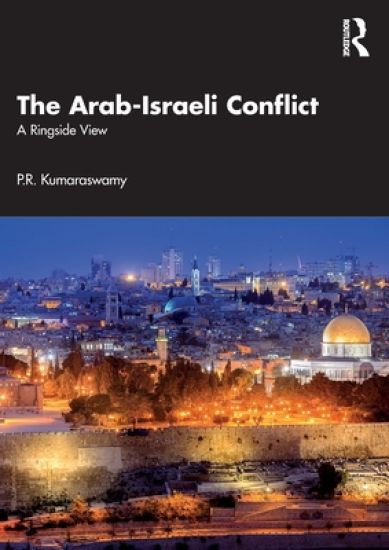
This book provides a holistic view of the conflict between Israel and its Arab neighbours and studies the global implications of their fraught relations. Focusing on the conflict from its beginning in the late 19th century, the author provides a well-rounded and balanced narrative by examining its religious, ideological, ethnic, political, national, regional and international dimensions. The volume covers a wide range of issues, such as the conflicting historical legacy of the city of Jerusalem, Jewish longing for a homeland, the partition of Palestine, various wars and conflicts since 1948, Palestinian resistance, the Arab Boycott of Israel and the Abraham Accords. It also tackles the contested national claims and the refugee question and looks at various peace-making efforts, including the role of external stakeholders such as the US, UK, Russia and India. A comprehensive study of the Arab-Israeli conflict, the book is richly supported by a swath of references to materials, documents, maps and video links. It will be an essential reading for students, academics and teachers of politics and international relations, national security, geopolitics, history, military and strategic studies, Middle East studies, conflict resolution and peace-making.
The Arab-Israeli Conflict

The Arab-Israeli Conflict

P.R. Kumaraswamy

TAYLOR FRANCIS LTD
2023
nidottu
This book provides a holistic view of the conflict between Israel and its Arab neighbours and studies the global implications of their fraught relations. Focusing on the conflict from its beginning in the late 19th century, the author provides a well-rounded and balanced narrative by examining its religious, ideological, ethnic, political, national, regional and international dimensions. The volume covers a wide range of issues, such as the conflicting historical legacy of the city of Jerusalem, Jewish longing for a homeland, the partition of Palestine, various wars and conflicts since 1948, Palestinian resistance, the Arab Boycott of Israel and the Abraham Accords. It also tackles the contested national claims and the refugee question and looks at various peace-making efforts, including the role of external stakeholders such as the US, UK, Russia and India. A comprehensive study of the Arab-Israeli conflict, the book is richly supported by a swath of references to materials, documents, maps and video links. It will be an essential reading for students, academics and teachers of politics and international relations, national security, geopolitics, history, military and strategic studies, Middle East studies, conflict resolution and peace-making.
Persian Gulf 2021–22

Persian Gulf 2021–22

Sameena Hameed; Md. Muddassir Quamar; P. R. Kumaraswamy

SPRINGER VERLAG, SINGAPORE
2022
sidottu
The Persian Gulf 2021-22 is the ninth in the annual Persian Gulf Series published by MEI@ND. It is a detailed analysis of India’s bilateral relations with the nine countries in the Persian Gulf region and the Gulf Cooperation Council (GCC), and focuses on the developments of 2020 and 2021. It offers a comprehensive account of the internal politics, economic situations, foreign policy, security challenges and social developments in the Persian Gulf countries and India’s strategic, political, economic and cultural engagements with the region. The book also offers policy recommendations for India based on the current state of affairs.
Persian Gulf 2020

Persian Gulf 2020

P.R. Kumaraswamy; Md. Muddassir Quamar; Sameena Hameed

Springer Verlag, Singapore
2020
sidottu
The Persian Gulf 2020 is the eighth in the annual Persian Gulf series published by MEI@ND. It is a comprehensive analysis of India’s bilateral relations with the nine countries in the Persian Gulf and the GCC and focuses on developments in 2019. It gives a comprehensive account of the internal political, economic and security situation in the Persian Gulf countries and India’s strategic, political, economic and cultural engagements with the region. The book also offers policy recommendations based on the current state of affairs.
Political Violence in MENA

Political Violence in MENA

P R Kumaraswamy; MD Muddassir Quamar

K W Publishers Pvt Ltd
2020
sidottu
The MEI@ND has undertaken this volume towards encouraging and shaping young and budding scholars of Middle East studies. This is the second volume in the series followed by the first on Islamic Movements in the Middle East published in 2019. The volume is not an exhaustive work on all aspects of political violence in MENA. Instead, it provides insights into specific instances of political violence and examines their causes and consequences within a specific time and space. The volume comprises nine chapters encompassing important regional countries such as Egypt, Syria, Lebanon, Iraq, Iran, Libya and Yemen. The introductory chapter puts the context for the causes and consequences of political violence for a better comprehension of the issue. This volume is an invaluable companion for the academia, students of international relations and Middle East studies, and the general readership as well.The MEI@ND and the editors would like to acknowledge the support and encouragement of the trustees of the Forum for Middle Eastern Studies (FMES), namely, D Shyam Babu, G V C Naidu, Sreeradha Datta, and Atul Kumar. The support of the members of the Academic Council of MEI@ND, especially, its chair C Uday Bhaskar, has been significant in our academic journey. The editors also acknowledge the diligent work of KW Publishers Pvt Ltd and its team, especially of Kalpana Shukla, and Kishan Lal, and the copy editor Rehana Mishra in improving the quality of the manuscript.
Squaring the Circle

Squaring the Circle

P.R. Kumaraswamy

Routledge
2020
sidottu
The centrality of the book is Gandhi's disposition and orientation towards the idea of Jewish homeland. When it comes to Jews, Jewish nationalism and their aspirations in Palestine, even Mahatma Gandhi was not infallible. His abiding empathy for the Jews was negated by his limited understanding of Judaism and Jewish history. His perception of the Palestine issue and his support for the Arabs was rooted in the domestic Indian context. The conventional understanding that Gandhi was ‘consistently’ opposed to Zionism and the Jewish aspirations for a national home in Palestine does not correspond with his later remarks. While demanding Jewish non-violence both against Hitler and in Palestine, Mahatma was prepared to understand, the ‘excesses’ of the Arabs who were facing ‘overwhelming odds.’ His position on the domestic situation largely influenced his stand viz-à-viz Palestine and hence his demand for Jews to abandon their collaboration with imperialism and follow the path of negotiation should be read within the Indian context. So long as India pursued a recognition-without-relations policy toward Israel, one could rest on Gandhi’s shoulders and adopt a self-righteous attitude. However, can one rely on the Gandhian paradigm to explain India’s new-found bonhomie toward Israel without sounding selective, hypocritical or both? The primary focus of this book is the explication of political constraints and oversensitivity towards the religious minority for political gains, which shaped Gandhi's notion about the Jewish homeland. The author has conducted an empirical survey of the political, religious and strategic constraints behind Gandhi's idea of the Jewish homeland that in common parlance is seen as an ardent disapproval of Zionism by Gandhi. Please note: This title is co-published with KW Publishers, New Delhi. Taylor & Francis does not sell or distribute the Hardback in India, Pakistan, Nepal, Bhutan, Bangladesh and Sri Lanka
Persian Gulf 2019

Persian Gulf 2019

P. R. Kumaraswamy; Md. Muddassir Quamar

Springer Verlag, Singapore
2020
sidottu
The book is seventh in the annual Persian Gulf series published by MEI@ND. It is a comprehensive analysis of India’s bilateral relations with the nine countries in the Persian Gulf and the GCC and focusses on developments during 2018. It gives a comprehensive account of the strategic, political, economic and cultural aspects of bilateral developments and also provides in-depth analysis of internal dynamics of the Persian Gulf countries. The final chapter offers policy recommendations based on the current state of affairs.
Persian Gulf 2018

Persian Gulf 2018

P. R. Kumaraswamy; Md. Muddassir Quamar; Manjari Singh

Springer Verlag, Singapore
2019
nidottu
The Persian Gulf 2018 is sixth in the series published by MEI@ND and examines India’s bilateral relations with the countries along the Persian Gulf, namely, Bahrain, Iran, Iraq, Kuwait, Oman, Qatar, Saudi Arabia, UAE and Yemen. It focuses on developments during 2017 and offers a comprehensive account of the strategic, political, economic and cultural aspects of bilateral developments along with specific policy recommendations for India. The book also provides an in-depth analysis of internal dynamics of these countries.
India's Saudi Policy

India's Saudi Policy

P. R. Kumaraswamy; Md. Muddassir Quamar

Springer Verlag, Singapore
2018
nidottu
The book traces India’s Saudi Policy and locates the current state of bilateral relations and the challenges it faces. It argues that during the Cold War the relations were largely shaped by the Pakistan factor which in turn inhibited both sides from exploring the importance and value of one another. As a result, the relations were largely transactional and marginal. The end of the Cold War coincided with two interesting developments, namely, significant growth in India’s economic power and influence and the de-hyphenation of Pakistan from its Middle East policy. This resulted in greater political engagements between India and Saudi Arabia and was strengthened by the growing energy trade ties. For long expatiate population and haj have been the backbone of the relations, and they have been new instruments as India looks to enhance its engagements with the Kingdom through investments opportunities, political contacts, shared security concerns and strategic cooperation. India’s Saudi policy, however, face many challenges most importantly the regional instability, the Iran factor, low oil price and the international dynamics. The book will be the first comprehensive work on the India-Saudi relations. Though targeting a wider audience, it will be academically grounded and based on primary sources collected from India and Saudi Arabia.
Persian Gulf 2018

Persian Gulf 2018

P. R. Kumaraswamy; Md. Muddassir Quamar; Manjari Singh

Springer Verlag, Singapore
2018
sidottu
The Persian Gulf 2018 is sixth in the series published by MEI@ND and examines India’s bilateral relations with the countries along the Persian Gulf, namely, Bahrain, Iran, Iraq, Kuwait, Oman, Qatar, Saudi Arabia, UAE and Yemen. It focuses on developments during 2017 and offers a comprehensive account of the strategic, political, economic and cultural aspects of bilateral developments along with specific policy recommendations for India. The book also provides an in-depth analysis of internal dynamics of these countries.
India's Saudi Policy

India's Saudi Policy

P. R. Kumaraswamy; Md. Muddassir Quamar

Springer Verlag, Singapore
2018
sidottu
The book traces India’s Saudi Policy and locates the current state of bilateral relations and the challenges it faces. It argues that during the Cold War the relations were largely shaped by the Pakistan factor which in turn inhibited both sides from exploring the importance and value of one another. As a result, the relations were largely transactional and marginal. The end of the Cold War coincided with two interesting developments, namely, significant growth in India’s economic power and influence and the de-hyphenation of Pakistan from its Middle East policy. This resulted in greater political engagements between India and Saudi Arabia and was strengthened by the growing energy trade ties. For long expatiate population and haj have been the backbone of the relations, and they have been new instruments as India looks to enhance its engagements with the Kingdom through investments opportunities, political contacts, shared security concerns and strategic cooperation. India’s Saudi policy, however, face many challenges most importantly the regional instability, the Iran factor, low oil price and the international dynamics. The book will be the first comprehensive work on the India-Saudi relations. Though targeting a wider audience, it will be academically grounded and based on primary sources collected from India and Saudi Arabia.
Historical Dictionary of the Arab-Israeli Conflict

Historical Dictionary of the Arab-Israeli Conflict

P R Kumaraswamy

Rowman Littlefield
2015
sidottu
Competing Jewish and Arab national claims over the Holy Land form the core of the Arab–Israeli conflict, thereby transforming it into the most intensely-fought struggles in the history of humanity. The conflict evokes unparalleled passion and hostility not only among its immediate participants and neighbors but also in the wider international community. The involvement of three principal monotheistic religions makes the conflict a truly universal contestation. As a result, it often contributes to bouts of violence, turmoil and terrorism in the Middle East and beyond. This second edition of Historical Dictionary of the Arab-Israeli Conflict covers the history through a chronology, an introductory essay, appendixes, and an extensive bibliography. The dictionary section has over 600 cross-referenced entries important events, key personalities, official positions of principal states and the UN and other efforts to find a peaceful settlement.. This book is an excellent access point for students, researchers, and anyone wanting to know more about this conflict.
India's Israel Policy

India's Israel Policy

P. R. Kumaraswamy

Columbia University Press
2010
sidottu
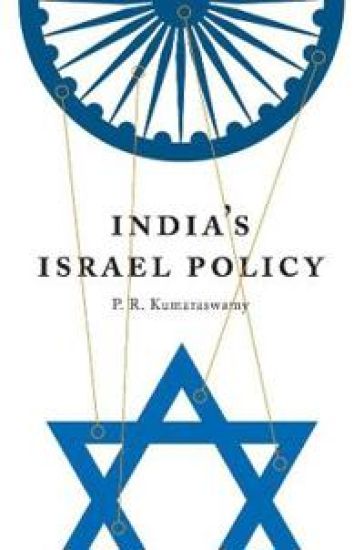
India's foreign policy toward Israel is a subject of deep dispute. Throughout the twentieth century arguments have raged over the Palestinian problem and the future of bilateral relations. Yet no text comprehensively looks at the attitudes and policies of India toward Israel, especially their development in conjunction with history. P. R. Kumaraswamy is the first to account for India's Israel policy, revealing surprising inconsistencies in positions taken by the country's leaders, such as Mahatma Gandhi and Jawaharlal Nehru, and tracing the crackling tensions between its professed values and realpolitik. Kumaraswamy's findings debunk the belief that India possesses a homogenous policy toward the Middle East. In fact, since the early days of independence, many within India have supported and pursued relations with Israel. Using material derived from archives in both India and Israel, Kumaraswamy investigates the factors that have hindered relations between these two countries despite their numerous commonalities. He also considers how India destabilized relations, the actions that were necessary for normalization to occur, and the directions bilateral relations may take in the future. In his most provocative argument, Kumaraswamy underscores the disproportionate affect of anticolonial sentiments and the Muslim minority on shaping Indian policy.
The A to Z of the Arab-Israeli Conflict

The A to Z of the Arab-Israeli Conflict

P R Kumaraswamy

Scarecrow Press
2009
nidottu
For over a century, the conflict between the Arabs and Jews has remained the most intractable problem confronting the world. Hardly a day passes that the Arab-Israeli Conflict is not headlined in the media. It has turned the Arabs and Israelis against one another and embittered relations within the two communities, while drawing the rest of the world into the circle of disruption. The A to Z of the Arab-Israeli Conflict provides factual background through an introductory essay, a chronology, a bibliography, and hundreds of cross-referenced dictionary entries on the more significant persons, places and events, including the various wars and negotiations. The history, religion, culture, and archeology that this rivalry has sparked between the Arabs and Israelis over the same piece of territory is traced in this book, which offers the essential details using neutral terms and thereby allowing readers to draw conclusions for themselves.