Kirjojen hintavertailu – 12 859 827 kirjaa ja 27 kauppaa

Kirjailija

Page Keeley

Kirjat ja teokset yhdessä paikassa: 12 kirjaa, julkaisuja vuosilta 2007–2026, suosituimpiin kuuluu Uncovering Student Ideas in Primary Science, Volume 1. Vertaile teosten hintoja ja tarkista saatavuus suomalaisista kirjakaupoista.

12 kirjaa

Kirjojen julkaisuvuodet: 2007–2026.

Activating Students' Ideas in Science

Activating Students' Ideas in Science

Patrick Brown; Page Keeley

TAYLOR FRANCIS LTD
2026
sidottu
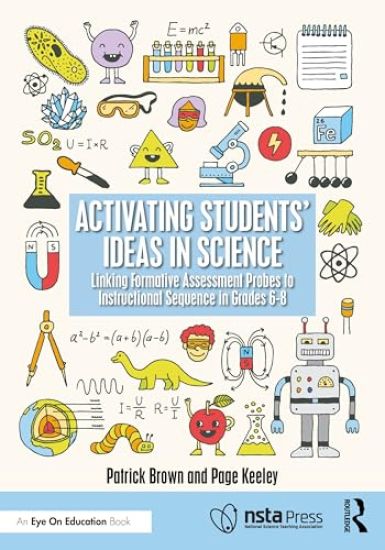
This resource helps bring both student thinking and instructional sequencing to the forefront of your science teaching. Grounded in cognitive science and best practices in formative assessment, this book provides a practical “explore-before-explain” approach to engage middle school students in doing science, not merely memorizing it, fostering their creativity, scientific reasoning, and long-lasting understanding. Each chapter is a classroom vignette that demonstrates how effective instructional sequencing can enhance students’ understanding of science content, from physical science concepts such as heat and temperature to chemical reactions and forces in motion. Chapters also include strategies for fostering classroom discourse, promoting metacognition, and scaffolding for diverse learners. Ideal for science educators of grades 6-8, this guide supports your instructional design journey, both in alignment with Next Generation Science Standards (NGSS) and in ensuring student-centered content delivery for improved scientific literacy.
Activating Students' Ideas in Science

Activating Students' Ideas in Science

Patrick Brown; Page Keeley

TAYLOR FRANCIS LTD
2026
nidottu
This resource helps bring both student thinking and instructional sequencing to the forefront of your science teaching. Grounded in cognitive science and best practices in formative assessment, this book provides a practical “explore-before-explain” approach to engage middle school students in doing science, not merely memorizing it, fostering their creativity, scientific reasoning, and long-lasting understanding. Each chapter is a classroom vignette that demonstrates how effective instructional sequencing can enhance students’ understanding of science content, from physical science concepts such as heat and temperature to chemical reactions and forces in motion. Chapters also include strategies for fostering classroom discourse, promoting metacognition, and scaffolding for diverse learners. Ideal for science educators of grades 6-8, this guide supports your instructional design journey, both in alignment with Next Generation Science Standards (NGSS) and in ensuring student-centered content delivery for improved scientific literacy.
Uncovering Student Ideas in Life Science, Volume 2

Uncovering Student Ideas in Life Science, Volume 2

Page Keeley

National Science Teachers Association
2024
pokkari
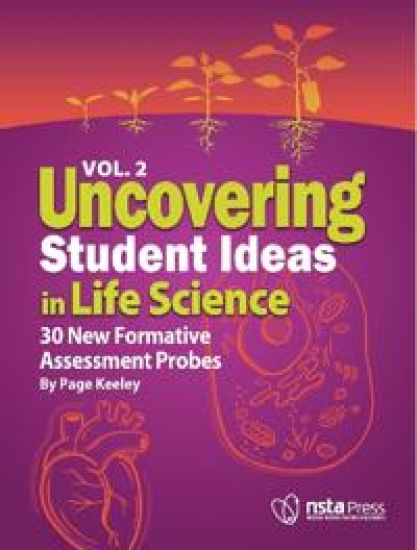
Here's a fresh way to help your students learn life science by determining how you can help them learn best. Uncovering Student Ideas in Life Science, Volume 2, offers 30 new formative assessment probes--engaging questions that can reveal what students already know (or think they know) about a core science topic. Armed with that insight, you can use the probes' teacher materials to present the science content in grade-appropriate ways that will help your students learn it accurately. Volume 2 is organized into two main sections-- "From Molecules to Organisms: Structures and Processes" and "Ecosystems, Interactions, Energy, and Dynamics." You can use the handy reproducible sheets to uncover students' thinking about topics from cells and organs to what happens when new plants and animals enter an ecosystem. Like the other 12 books in the Uncovering series, this one offers field-tested materials that are easy for time-starved teachers like you to use. The new probes are short, simple-to-administer activities. They come ready to reproduce and distribute to your students. And in addition to explaining the science content, the teacher materials address related research and disciplinary core ideas. They also suggest instructional approaches for elementary, middle, and high school students. By helping you detect and then replace misperceptions with sound science, this new volume will help your students reveal, re-examine, and further develop their understanding of life science concepts.
Activating Students' Ideas

Activating Students' Ideas

Patrick Brown; Page Keeley

National Science Teaching Association
2023
pokkari
Science teachers face an incredible challenging task of combining research on how students learn best, the three-dimensions of the Science Education Frameworks that in themselves are complicated to understand, and instructional sequences that lead to deeper learning. Activating Students' Ideas Matter: Linking Formative Assessment Probes to Instructional Sequence is the type of book that stimulates teacher thinking and cultivates teachers' skills and abilities necessary to take students to higher levels of learning. The beginning chapter of the book, provides teacher candidates, experienced teachers, teacher educators, and professional developers with a framework for developing lessons that promote higher levels of science literacy. The framework that is used throughout the book is an explore-before-explain sequence of instruction using the 5E instructional model. Once teachers have a solid understanding of an explore-before-explain framework, we guide them through planning activities so they can use emerging bodies of research and the Science Education Frameworks to plan their own explore-before-explain lessons. Educators will have many opportunities to think about explore-before-explain teaching and can explore examples of K-5 science lessons. Each chapter addresses the three dimensions of the Frameworks.
Understanding Children's Ideas in Science

Understanding Children's Ideas in Science

Page Keeley; Ed Walsh

Millgate Publishing
2021
nidottu
Understanding Children’s Ideas in Science: 40 probes for raising misconceptions and developing understanding in primary science. When teachers are starting on a new topic in science it’s important to see what ideas the children already have. If we can get children thinking, talking and sharing their ideas we can learn a lot about how to pitch the following lessons. This book contains 40 ‘probes’ which are classroom ready activities across a wide range of science topics. Aimed at teachers of children aged from 7 to 11, the materials also include guidance on how to interpret responses, reference to research on misconceptions and suggestions as to how the insights gained can be used to plan follow up lessons. Drawing on the hugely successful American series ‘Uncovering Students’ Ideas’, these probes have been adapted for use in a wide range of settings. Understanding Children’s Ideas in Science is accompanied by a downloadable resource pack.
Uncovering Student Ideas About Engineering and Technology

Uncovering Student Ideas About Engineering and Technology

Page Keeley; Cary Sneider; Mihir Ravel

National Science Teachers Association
2020
nidottu
Have you been wondering how well your students understand engineering and technology concepts? Have you been wishing for formative assessment tools in both English and Spanish? If so, this is the book for you. Like the other 11 books in the bestselling Uncovering Student Ideas series, Uncovering Student Ideas About Engineering and Technology does the following:Brings you engaging questions, also known as formative assessment probes. The book’s 32 probes are designed to uncover what students know—or think they know—about what technology and engineering are, how to define related problems, and how to design and test solutions. The probes will help you uncover students’ current thinking about everything from the purpose of technology to who can become an engineer to how an engineering design process works. Offers field-tested teacher materials that provide best answers along with distracters designed to reveal preconceptions and misunderstandings that students commonly hold. Since the content is explained in clear, everyday language, even engineering and technology novices can grasp and teach it effectively. Is convenient even for time-starved teachers like you. The new probes are short, easy-to-administer activities that come ready to reproduce for speakers of both English and Spanish. In addition to explaining the engineering and technology content, the teacher materials note links to A Framework for K–12 Science Education and the Next Generation Science Standards and suggest grade-appropriate ways to present material so students will learn it accurately. Uncovering Student Ideas About Engineering and Technology has the potential to help you take an important first step in teaching for understanding—and perhaps transform your teaching about STEM-related topics.
Uncovering Student Ideas in Science, Volume 1

Uncovering Student Ideas in Science, Volume 1

Page Keeley

National Science Teachers Association
2018
nidottu
This is the newest book in the bestselling Uncovering Student Ideas in Science series. Like the first edition of volume 1, this book helps pinpoint what your students know (or think they know) so you can monitor their learning and adjust your teaching accordingly. Loaded with classroom-friendly features you can use immediately, the book includes 25 “probes”—brief, easily administered formative assessments designed to understand your students’ thinking about 60 core science concepts. All probes in this new edition are provided in both Spanish and English. The detailed Teacher Notes that accompany each probe have been updated to include current research summaries, connections to A Framework for K–12 Science Education and the Next Generation Science Standards, new instructional suggestions, and related NSTA resources. These teacher materials also explain science content, present developmental considerations, and suggest instructional approaches for elementary, middle, and high school students. Other books may discuss students’ general misconceptions about scientific ideas. Only this one provides single, reproducible sheets you can use to determine students’ thinking about, for example, Moon phases, conservation of matter, reflection, chemical change, and cells. All probes have been field-tested with hundreds of students across multiple grade levels, so they’re proven effective for helping your students reveal, reexamine, and further develop their understanding of science concepts.
Uncovering Student Ideas in Physical Science, Volume 2

Uncovering Student Ideas in Physical Science, Volume 2

Page Keeley; Rand Harrington

National Science Teachers Association
2014
nidottu
If you and your students can’t get enough of a good thing, Volume 2 of Uncovering Student Ideas in Physical Science is just what you need. The book offers 39 new formative assessment probes, this time with a focus on electric charge, electric current, and magnets and electromagnetism. It can help you do everything from demystify electromagnetic fields to explain the real reason balloons stick to the wall after you rub them on your hair. Like the other eight wildly popular books in the full series, Uncovering Student Ideas in Physical Science, Volume 2:Provides a collection of engaging questions, or formative assessment probes. Each probe in this volume is designed to uncover what students know—or think they know—about electric or magnetic phenomena or identify misunderstandings they may develop during instruction. Offers field-tested teacher materials that provide “best answers” along with distracters designed to reveal misconceptions that students commonly hold. Is easy to use by time-starved teachers like you. The new probes are short, easy-to-administer activities that come ready to reproduce. In addition to explaining the science content, the teacher materials note links to national standards and suggest grade-appropriate ways to present material so students will learn it accurately. By helping you detect and then make sound instructional decisions to address students’ misconceptions, this new volume has the potential to transform your teaching.
Uncovering Student Ideas in Primary Science, Volume 1

Uncovering Student Ideas in Primary Science, Volume 1

Page Keeley

National Science Teachers Association
2013
nidottu
Winner of the Distinguished Achievement Award from PreK-12 Learning Group, Association of American Publishers What ideas do young children bring to their science learning, and how does their thinking change as they engage in "science talk"? Find out using the 25 field-tested probes in the newest volume of Page Keeley's bestselling Uncovering Student Ideas in Science series, the first targeted to grades K-2. This teacher-friendly book is: - Tailored to your needs. The content is geared specifically for the primary grades, with an emphasis on simple vocabulary as well as drawing and speaking (instead of writing). The format of the student pages uses minimal text and includes visual representations of familiar objects, phenomena, or ideas. - Focused on making your lessons more effective. The assessment probes engage youngsters and encourage "science talk" while letting you identify students' preconceptions before beginning a lesson or monitor their progress as they develop new scientific explanations. - Applicable to a range of science concepts. This volume offers 8 life science probes, 11 physical science probes, and 6 Earth and space science probes that target K-2 disciplinary core ideas. - Ready to use. The book provides grade-appropriate reproducible pages for your students and detailed teacher notes for you, including clear and concise explanations, relevant research, suggestions for instruction, and connections to national standards. Uncovering Student Ideas in Primary Science is an invaluable resource for classroom and preservice teachers and professional development providers. This age-appropriate book will help you teach more effectively by starting with students' ideas and adapting instruction to support conceptual change.
Uncovering Student Ideas in Science, Volume 3

Uncovering Student Ideas in Science, Volume 3

Page Keeley; Francis Eberle; Chad Dorsey

National Science Teachers Association
2008
nidottu
This new volume in our bestselling series provides more topic areas for classroom use as well as guidance on how teachers can use the probes for their own learning. Volume 3 offers five life science probes, seven Earth and space science probes, ten physical science probes, and three nature of science probes. This volume is an invaluable resource.