Kirjojen hintavertailu – 12 903 725 kirjaa ja 27 kauppaa

Kirjailija

Pamela Scully

Kirjat ja teokset yhdessä paikassa: 5 kirjaa, julkaisuja vuosilta 2010–2022, suosituimpiin kuuluu Ellen Johnson Sirleaf. Vertaile teosten hintoja ja tarkista saatavuus suomalaisista kirjakaupoista.

5 kirjaa

Kirjojen julkaisuvuodet: 2010–2022.

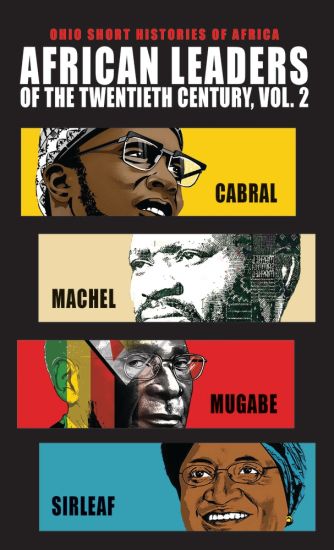
African Leaders of the Twentieth Century, Volume 2

African Leaders of the Twentieth Century, Volume 2

Allen F. Isaacman; Barbara S. Isaacman; Peter Karibe Mendy; Sue Onslow; Martin Plaut; Pamela Scully

OHIO UNIVERSITY PRESS
2022
pokkari
This omnibus edition brings together concise and up-to-date biographies of Amílcar Cabral, Samora Machel, Robert Mugabe, and Ellen Johnson Sirleaf. African Leaders of the Twentieth Century, Volume 2 complements courses in history and political science and is an informative collection for general readers. Amílcar Cabral: A Nationalist and Pan-Africanist Revolutionary, by Peter Karibe Mendy Amílcar Cabral's charismatic and visionary leadership, his pan-Africanist solidarity and internationalist commitment to "every just cause in the world," remain relevant to contemporary struggles for emancipation and self-determination. This concise biography is an ideal introduction to his life and legacy. Mozambique's Samora Machel: A Life Cut Short, by Allen F. Isaacman and Barbara S. Isaacman From his anti-colonial military leadership to the presidency of independent Mozambique, Samora Machel held a reputation as a revolutionary hero to the oppressed. Although killed in a 1987 plane crash, for many Mozambicans his memory lives on as a beacon of hope for the future. Robert Mugabe, by Sue Onslow and Martin Plaut For some, Zimbabwe's Robert Mugabe was a liberation hero who confronted white rule and oversaw the radical redistribution of land. For others, he was a murderous dictator who drove his country to poverty. This concise biography reveals the complexity of the man who led Zimbabwe for its first decades of independence. Ellen Johnson Sirleaf, by Pamela Scully Nobel Peace Prize–winner and two-time Liberian president Ellen Johnson Sirleaf speaks to many of the key themes of the twenty-first century. Among these are the growing power of women in the arenas of international politics and human rights; the ravaging civil wars of the post–Cold War era in which sexual violence is used as a weapon; and the challenges of transitional justice in building postconflict societies.
Writing Transnational History

Writing Transnational History

Fiona Paisley; Pamela Scully

Bloomsbury Academic
2019
nidottu
Over the past two decades, transnational history has become an established term describing approaches to the writing of world or global history that emphasise movement, dynamism and diversity. This book investigates the emergence of the ‘transnational’ as an approach, its limits, and parameters. It focuses particular attention on the contributions of postcolonial and feminist studies in reformulating transnational historiography as a move beyond the national to one focusing on oceans, the movement of people, and the contributions of the margins. It ends with a consideration of developing approaches such as translocalism. The book considers the new kinds of history that need to be written now that the transnational perspective has become widespread. Providing an accessible and engaging chronology of the field, it will be key reading for students of historiography and world history.
Writing Transnational History

Writing Transnational History

Fiona Paisley; Pamela Scully

Bloomsbury Academic
2019
sidottu
Over the past two decades, transnational history has become an established term describing approaches to the writing of world or global history that emphasise movement, dynamism and diversity. This book investigates the emergence of the ‘transnational’ as an approach, its limits, and parameters. It focuses particular attention on the contributions of postcolonial and feminist studies in reformulating transnational historiography as a move beyond the national to one focusing on oceans, the movement of people, and the contributions of the margins. It ends with a consideration of developing approaches such as translocalism. The book considers the new kinds of history that need to be written now that the transnational perspective has become widespread. Providing an accessible and engaging chronology of the field, it will be key reading for students of historiography and world history.
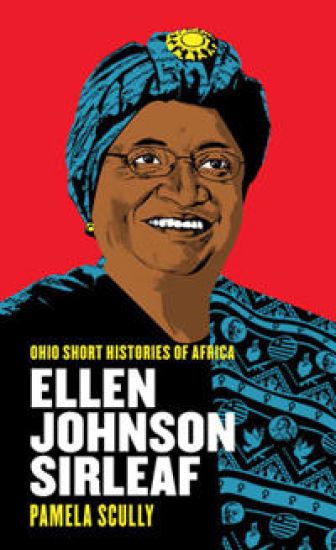
Ellen Johnson Sirleaf

Ellen Johnson Sirleaf

Pamela Scully

Ohio University Press
2016
pokkari
In this timely addition to the Ohio Short Histories of Africa series, Pamela Scully takes us from the 1938 birth of Nobel Peace Prize winner and two-time Liberian president Ellen Johnson through the Ebola epidemic of 2014–15. Charting her childhood and adolescence, the book covers Sirleaf's relationship with her indigenous grandmother and urban parents, her early marriage, her years studying in the United States, and her career in international development and finance, where she developed her skill as a technocrat. The later chapters cover her years in and out of formal Liberian politics, her support for women's rights, and the Ebola outbreak. Sirleaf's story speaks to many of the key themes of the twenty-first century. Among these are the growing power of women in the arenas of international politics and human rights; the ravaging civil wars in which sexual violence is used as a weapon; and the challenges of transitional justice in building postconflict societies. Ellen Johnson Sirleaf is an astute examination of the life of a pioneering feminist politician.
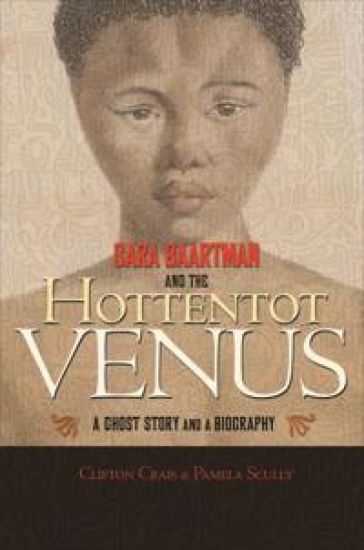
Sara Baartman and the Hottentot Venus

Sara Baartman and the Hottentot Venus

Clifton Crais; Pamela Scully

Princeton University Press
2010
pokkari
Displayed on European stages from 1810 to 1815 as the Hottentot Venus, Sara Baartman was one of the most famous women of her day, and also one of the least known. As the Hottentot Venus, she was seen by Westerners as alluring and primitive, a reflection of their fears and suppressed desires. But who was Sara Baartman? Who was the woman who became the Hottentot Venus? Based on research and interviews that span three continents, Sara Baartman and the Hottentot Venus tells the entwined histories of an illusive life and a famous icon. In doing so, the book raises questions about the possibilities and limits of biography for understanding those who live between and among different cultures. In reconstructing Baartman's life, the book traverses the South African frontier and its genocidal violence, cosmopolitan Cape Town, the ending of the slave trade, the Industrial Revolution, the French Revolution, the Napoleonic Wars, London and Parisian high society, and the rise of racial science. The authors discuss the ramifications of discovering that when Baartman went to London, she was older than originally assumed, and they explore the enduring impact of the Hottentot Venus on ideas about women, race, and sexuality. The book concludes with the politics involved in returning Baartman's remains to her home country, and connects Baartman's story to her descendants in nineteenth- and twentieth-century South Africa. Sara Baartman and the Hottentot Venus offers the authoritative account of one woman's life and reinstates her to the full complexity of her history.