
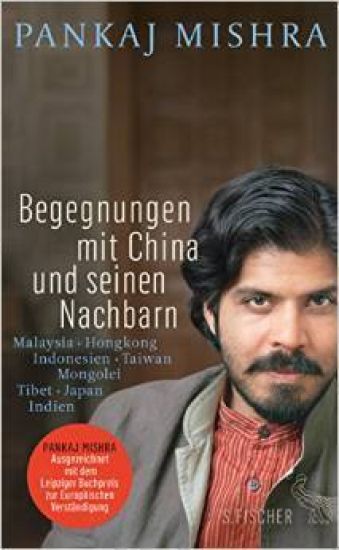
Kirjailija
Pankaj Mishra
Kirjat ja teokset yhdessä paikassa: 48 kirjaa, julkaisuja vuosilta 2001–2028, suosituimpiin kuuluu Kashmir. Vertaile teosten hintoja ja tarkista saatavuus suomalaisista kirjakaupoista.
48 kirjaa
Kirjojen julkaisuvuodet: 2001–2028.
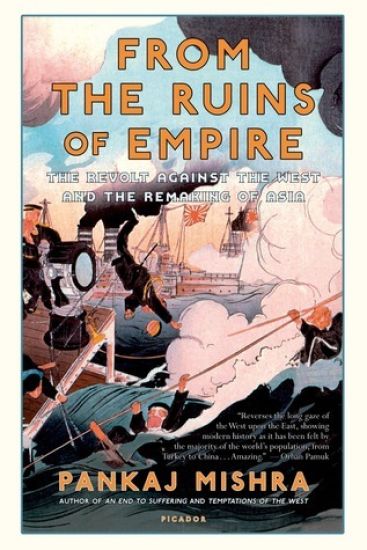
From the Ruins of Empire: The Revolt Against the West and the Remaking of Asia
Pankaj Mishra
Picador USA
2013
nidottu
Pankaj Mishra's From the Ruins of Empire offers a surprising, gripping narrative depicting the thinkers whose ideas shaped contemporary China, India, and the Muslim world. A little more than a century ago, independent thinkers across Asia sought to frame a distinct intellectual tradition that would inspire the continent's rise to dominance. Yet this did not come to pass, and today those thinkers--Tagore, Gandhi, and later Nehru in India; Liang Qichao and Sun Yat-sen in China; Jamal al-Din al-Afghani and Abdurreshi al Ibrahim of the Ottoman Empire--are seen as outsiders within the main anticolonial tradition. But as Mishra demonstrates in this enthralling portrait of like minds, Asia's revolt against the West is not the one led by faith-fired terrorists and thwarted peasants; rather, it is rooted in the ideas of these once renowned intellectuals. Now, when the ascendency of Asia seems possible as never before, From the Ruins of Empire is as necessary as it is timely--a book indispensable to our understanding of the world and our place in it.
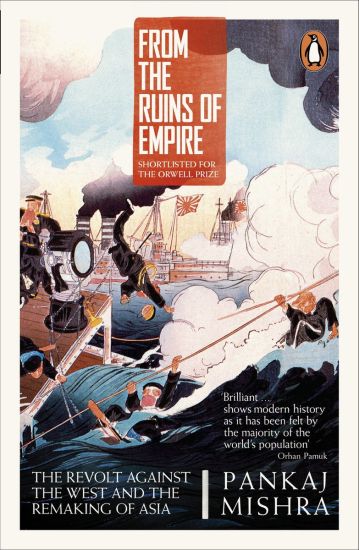
Pankaj Mishra's provocative account of how China, India and the Muslim World are remaking the world in their own image - shortlisted for the Orwell Prize 2013SHORTLISTED FOR THE ORWELL PRIZE 2013Viewed in the West as a time of self-confident progress, the Victorian period was experienced by Asians as a catastrophe. As the British gunned down the last heirs to the Mughal Empire or burned down the Summer Palace in Beijing, it was clear that for Asia to recover a new way of thinking was needed. Pankaj Mishra re-tells the history of the past two centuries, showing how a remarkable, disparate group of thinkers, journalists, radicals and charismatics emerged from the ruins of empire to create an unstoppable Asian renaissance, one whose ideas lie behind everything from the Chinese Communist Party to the Muslim Brotherhood, and have made our world what it is today. Reviews:'Arrestingly original ... this penetrating and disquieting book should be on the reading list of anybody who wants to understand where we are today' John Gray, Independent 'A riveting account that makes new and illuminating connections ... deeply entertaining and deeply humane' Hisham Matar'Fascinating ... a rich and genuinely thought-provoking book' Noel Malcolm, Sunday Telegraph'Provocative, shaming and convincing' Michael Binyon, The Times 'Lively ... engaging ... retains the power to shock' Mark Mazower, Financial Times'Subtle, erudite and entertaining' Economist, New DelhiAbout the author:Pankaj Mishra is the author of Butter Chicken in Ludiana, The Romantics, An End to Suffering and Temptations of the West. He writes principally for the Guardian, The New York Times, London Review of Books and New York Review of Books. He lives in London, Shimla and New York.
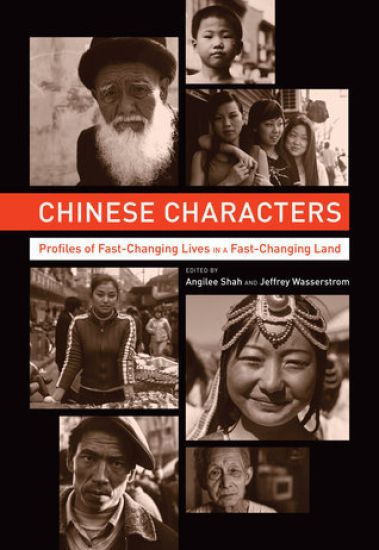
An artist paints landscapes of faraway places that she cannot identify in order to find her place in the global economy. A migrant worker sorts recyclables and thinks deeply about the soul of his country, while a Taoist mystic struggles to keep his traditions alive. An entrepreneur capitalizes on a growing car culture by trying to convince people not to buy cars. And a 90-year-old woman remembers how the oldest neighborhoods of her city used to be. These are the exciting and saddening, humorous and confusing stories of utterly ordinary people who are living through China's extraordinary transformations. The immense variety in the lives of these Chinese characters dispels any lingering sense that China has a monolithic population or is just a place where dissidents fight Communist Party loyalists and laborers create goods for millionaires. "Chinese Characters" is a collection, as Pankaj Mishra writes in his foreword, "to herald a new golden age of journalism about a ceaselessly fascinating country." Contributors include a Pulitzer Prize winning journalist, a Macarthur Fellow, the China correspondent to a major Indian newspaper, and scholars whose depth of understanding is matched only by the humanity with which they treat their subjects. Their stories together create a multi-faceted portrait of a country in motion and an introduction to some of the best writing on China today. With contributions from: Alec Ash, James Carter, Leslie T. Chang, Xujun Eberlein, Harriet Evans, Anna Greenspan, Peter Hessler, Ian Johnson, Ananth Krishnan, Christina Larson, Michelle Dammon Loyalka, James Millward, Evan Osnos, Jeffrey Prescott, and Megan Shank.
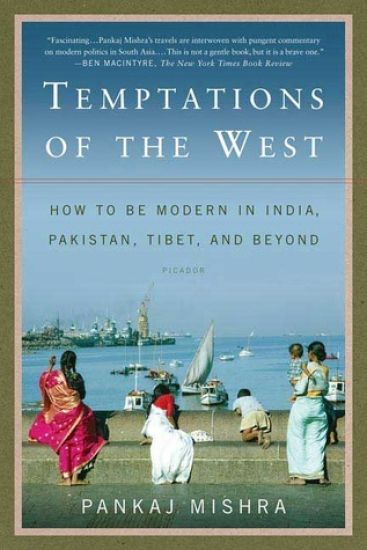
Temptations of the West: How to Be Modern in India, Pakistan, Tibet, and Beyond
Pankaj Mishra
St. Martins Press-3pl
2007
nidottu
A New York Times Book Review Editors' Choice In Temptations of the West, Pankaj Mishra brings literary authority and political insight to bear on journeys through South Asia, and considers the pressures of Western-style modernity and prosperity on the region. Beginning in India, his examination takes him from the realities of Bollywood stardom, to the history of Jawaharlal Nehru's post-independence politics. In Kashmir, he reports on the brutal massacre of thirty-five Sikhs, and its intriguing local aftermath. And in Tibet, he exquisitely parses the situation whereby the atheist Chinese government has discovered that Tibetan Buddhism can be "packaged and sold to tourists." Temptations of the West is essential reading about a conflicted and rapidly changing region of the world.
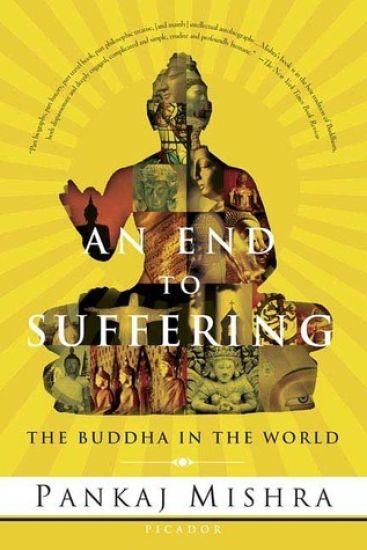
An End to Suffering is a search to understand the Buddha's relevance in a world where class oppression and religious violence are rife, and where poverty and terrorism cast a long, constant shadow. Pankaj Mishra describes his restless journeys into India, Pakistan, and Afghanistan, among Islamists and the emerging Hindu middle class, exploring the myths and places of the Buddha's life. He discusses Western explorers' "discovery" of Buddhism in the nineteenth century. He also considers the impact of Buddhist ideas on such modern politicians as Gandhi and Nelson Mandela. As he reflects on his travels and on his own past, Mishra ultimately reaches an enlightenment of his own by discovering the living meaning of the Buddha's teaching, in this "unusually discerning, beautifully written, and deeply affecting reflection on Buddhism" (Booklist).
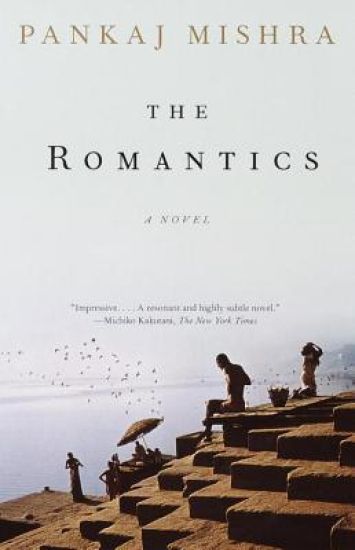
Pankaj Mishra is one of the most promising talents of his generation, and this stunning, universally praised novel of self-discovery heralds a remarkable career. The young Brahman Samar has come to the holy city of Benares to complete his education and take the civil service exam that will determine his future. But in this city redolent of timeworn customs, where pilgrims bathe in the sacred Ganges and breathe in smoke from burning ghats along the shore, Samar is offered entirely different perspectives on his country. Miss West and her circle, indifferent to the reality around them, represent those drawn to India as a respite from the material world. And Rajesh, a sometimes violent, sometimes mystical leader of student malcontents, presents a more jaundiced view. More than merely illustrating the clash of cultures, Mishra presents the universal truth that our desire for the other is our most painful joy.

«Mye har skjedd i verden de siste årene: naturkatastrofer, økonomisk kollaps, politiske jordskjelv og kriger utløst av erobringstrang eller hevnlyst. Men ingen katastrofe kan sammenlignes med Gaza – ingenting har gitt oss en så tung bør av sorg, forvirring og dårlig samvittighet. Og ingenting har gitt oss så mange skammelige bevis på vår mangel på lidenskap og indignasjon, på vår trangsynthet og svake tenkning.» Verden etter Gaza tar krigen i Gaza som fulgte Hamas’ terrorangrep den 7. oktober 2023 som utgangspunkt for en bred revurdering av konkurrerende fortellinger fra forrige århundre: Vestens triumferende beretning om bekjempelsen av totalitarismen og spredningen av liberal kapitalisme og såkalte vestlige verdier, og den håpefulle visjonen om likeverd og frihet fra kolonialisme. I et øyeblikk hvor verdens maktbalanse er i endring, og Vesten ikke lenger kan sies å ha den absolutte autoriteten, er det avgjørende å forstå hvorfor de ulike delene av verden ikke klarer å enes om en felles forståelse av historien. Sentralt i Pankaj Mishras håpefulle, men hardtslående analyse av vår tids største katastrofe, står minnet om Holocaust – hvordan det har formet vestlig politikk og moral i etterkrigstiden, og hvordan frykten for gjentakelse rutinemessig blir påberopt for å rettferdiggjøre Israels behandling av palestinerne.