Kirjojen hintavertailu – 12 903 725 kirjaa ja 27 kauppaa

Kirjailija

Pankaj Tandon

Kirjat ja teokset yhdessä paikassa: 5 kirjaa, julkaisuja vuosilta 1990–2024, suosituimpiin kuuluu Radiation Safety Guide for Nuclear Medicine Professionals. Vertaile teosten hintoja ja tarkista saatavuus suomalaisista kirjakaupoista.

5 kirjaa

Kirjojen julkaisuvuodet: 1990–2024.

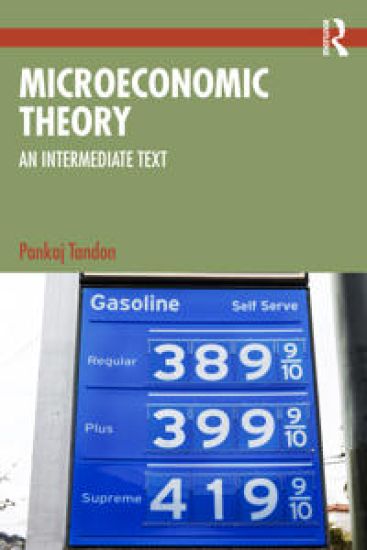
Microeconomic Theory

Microeconomic Theory

Pankaj Tandon

TAYLOR FRANCIS LTD
2024
nidottu
This book provides a comprehensive analysis of the theoretical tools, real-world applications, policy implications and corner solutions of microeconomics. It offers a discussion of all significant topics including applications and extension of consumer theory, theory of the firm, production, cost and supply, partial and general equilibrium, welfare economics, uncertainty and information, and market imperfections as well as a detailed overview of the theory of games. Apart from all the topics receiving both the algebraic and geometric treatment, the other distinguishing features of the book are an emphasis on policy implications and a full treatment of corner solutions. This latter feature has arisen out of the realization that students easily master interior solutions by memorizing the standard first-order conditions but do not necessarily understand the underlying concepts. Complete with several original algebraic derivations and graphical expositions, this book will serve as an indispensable textbook for students of microeconomics. The book will be useful to students, researchers, and teachers of economics, international economics, industrial economics, managerial economics, and agricultural economics. It will also be a useful reference for those studying public policy and law.
Microeconomic Theory

Microeconomic Theory

Pankaj Tandon

TAYLOR FRANCIS LTD
2024
sidottu
This book provides a comprehensive analysis of the theoretical tools, real-world applications, policy implications and corner solutions of microeconomics. It offers a discussion of all significant topics including applications and extension of consumer theory, theory of the firm, production, cost and supply, partial and general equilibrium, welfare economics, uncertainty and information, and market imperfections as well as a detailed overview of the theory of games. Apart from all the topics receiving both the algebraic and geometric treatment, the other distinguishing features of the book are an emphasis on policy implications and a full treatment of corner solutions. This latter feature has arisen out of the realization that students easily master interior solutions by memorizing the standard first-order conditions but do not necessarily understand the underlying concepts. Complete with several original algebraic derivations and graphical expositions, this book will serve as an indispensable textbook for students of microeconomics. The book will be useful to students, researchers, and teachers of economics, international economics, industrial economics, managerial economics, and agricultural economics. It will also be a useful reference for those studying public policy and law.
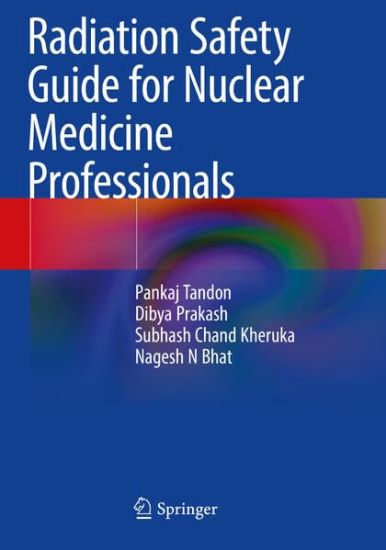
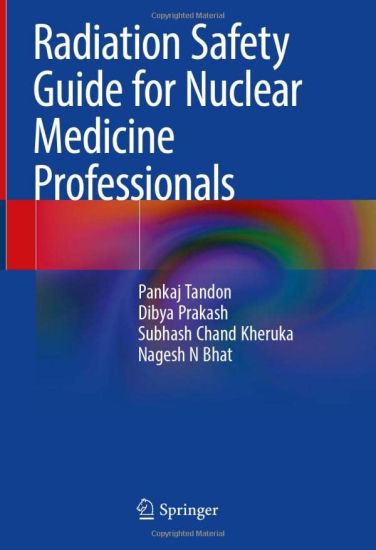
Radiation Safety Guide for Nuclear Medicine Professionals

Radiation Safety Guide for Nuclear Medicine Professionals

Pankaj Tandon; Dibya Prakash; Subhash Chand Kheruka; Nagesh N Bhat

SPRINGER VERLAG, SINGAPORE
2023
nidottu
The book covers all the radiation safety aspects while working with unsealed radionuclides. Radiation safety plays a significant role in routine nuclear medicine practices and is necessary to protect occupational workers, patients, members of the general public and the environment. A fair knowledge of radiation safety is expected from all nuclear medicine professionals. Chapters include basics of radiation physics, biological bases of radiation protection, planning and design of nuclear medicine facilities, cyclotron and high dose therapy facilities, radiation safety considerations in nuclear medicine, cyclotron while preparing radiopharmaceuticals. It also includes the working mechanism of radiation detectors, quality assurance of positron emission tomography (PET) and gamma camera, including single photon emission computed tomography (SPECT), emergency preparedness plan, nuclear medicine and CT dosimetry, transport regulations, the role of national regulatory authorities and radioactive waste management. The last chapter provides probable model questions asked in the radiological safety officer certification examination and includes 250 multiple-choice questions (MCQs), 100 true or false, 60 fill in the blanks, and 40 match the following questions. The book is written in a simple language for a better understanding of the occupational workers of any grade. It serves as reference material for nuclear medicine professionals on radiation safety, related to planning, quality assurance, dosimetry and various regulations pertaining to nuclear medicine. It is a ready reckoner for the students pursuing a degree/diploma in nuclear medicine and preparing for certification courses in radiation safety to understand the subject matter along with options to attempt practice questions.
Radiation Safety Guide for Nuclear Medicine Professionals

Radiation Safety Guide for Nuclear Medicine Professionals

Pankaj Tandon; Dibya Prakash; Subhash Chand Kheruka; Nagesh N Bhat

SPRINGER VERLAG, SINGAPORE
2022
sidottu
The book covers all the radiation safety aspects while working with unsealed radionuclides. Radiation safety plays a significant role in routine nuclear medicine practices and is necessary to protect occupational workers, patients, members of the general public and the environment. A fair knowledge of radiation safety is expected from all nuclear medicine professionals. Chapters include basics of radiation physics, biological bases of radiation protection, planning and design of nuclear medicine facilities, cyclotron and high dose therapy facilities, radiation safety considerations in nuclear medicine, cyclotron while preparing radiopharmaceuticals. It also includes the working mechanism of radiation detectors, quality assurance of positron emission tomography (PET) and gamma camera, including single photon emission computed tomography (SPECT), emergency preparedness plan, nuclear medicine and CT dosimetry, transport regulations, the role of national regulatory authorities and radioactive waste management. The last chapter provides probable model questions asked in the radiological safety officer certification examination and includes 250 multiple-choice questions (MCQs), 100 true or false, 60 fill in the blanks, and 40 match the following questions. The book is written in a simple language for a better understanding of the occupational workers of any grade. It serves as reference material for nuclear medicine professionals on radiation safety, related to planning, quality assurance, dosimetry and various regulations pertaining to nuclear medicine. It is a ready reckoner for the students pursuing a degree/diploma in nuclear medicine and preparing for certification courses in radiation safety to understand the subject matter along with options to attempt practice questions.
Selling Public Enterprises

Selling Public Enterprises

Leroy P. Jones; Pankaj Tandon; Ingo Vogelsang

MIT Press
1990
pokkari
Much has been written about the current trend toward privatization of public enterprises. Selling Public Enterprises is the first book, however, to use economic logic to develop a quantitative approach to making divestiture decisions. Using the standard tools of applied microeconomics, the authors propose a method of valuing state-owned firms both before and after divestiture by the government. Their valuation method offers significant advantages over those commonly in use (such as book value of assets) and can provide governments with a reliable means of evaluating the costs and benefits of reforming state-owned enterprise policies and procedures. Selling Public Enterprises focuses on the pivotal questions of whether the enterprise should be sold, to whom should it be sold, and at what price. It identifies the social value of the enterprise under continued government operation, the social value under private operation, and the private value under private operation as being critical in determining the answers to these questions. In each case "social value" indicates the economic promise of such a venture to both households and firms of the country involved. The authors take up such topics as shadow pricing, the basic framework of welfare aggregation, the valuation of public income, private income and investment income, base flows and stocks, and the effect of sale prices on public and private values. They discuss the possibility of synergies and strategic behavior and present both a valuation algorithm and a sensitivity analysis. In the concluding chapters they address distributional realities and describe various dimensions of divestiture policy such as lifting constraints on enterprise behavior, improving the net benefit of divestiture, and coping with political constraints.