Kirjojen hintavertailu – 12 859 819 kirjaa ja 27 kauppaa

Kirjailija

Paolo Squatriti

Kirjat ja teokset yhdessä paikassa: 8 kirjaa, julkaisuja vuosilta 1998–2024, suosituimpiin kuuluu Weeds and the Carolingians. Vertaile teosten hintoja ja tarkista saatavuus suomalaisista kirjakaupoista.

8 kirjaa

Kirjojen julkaisuvuodet: 1998–2024.

Weeds and the Carolingians

Weeds and the Carolingians

Paolo Squatriti

Cambridge University Press
2024
pokkari
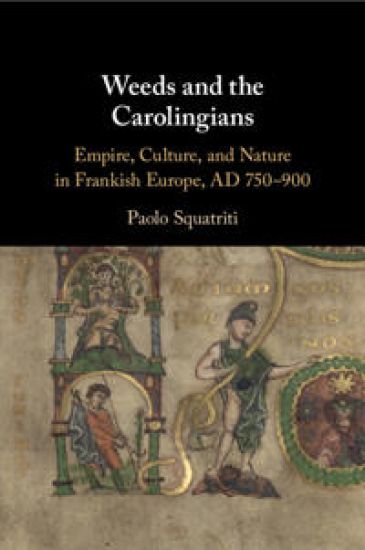
Why did weeds matter in the Carolingian empire? What was their special significance for writers in eighth- and ninth-century Europe and how was this connected with the growth of real weeds? In early medieval Europe, unwanted plants that persistently appeared among crops created extra work, reduced productivity, and challenged theologians who believed God had made all vegetation good. For the first time, in this book weeds emerge as protagonists in early medieval European history, driving human farming strategies and coloring people's imagination. Early medieval Europeans' effort to create agroecosystems that satisfied their needs and cosmologies that confirmed Christian accounts of vegetable creation both had to come to terms with unruly plants. Using diverse kinds of texts, fresh archaeobotanical data, and even mosaics, this interdisciplinary study reveals how early medieval Europeans interacted with their environments.
Weeds and the Carolingians

Weeds and the Carolingians

Paolo Squatriti

Cambridge University Press
2022
sidottu
Why did weeds matter in the Carolingian empire? What was their special significance for writers in eighth- and ninth-century Europe and how was this connected with the growth of real weeds? In early medieval Europe, unwanted plants that persistently appeared among crops created extra work, reduced productivity, and challenged theologians who believed God had made all vegetation good. For the first time, in this book weeds emerge as protagonists in early medieval European history, driving human farming strategies and coloring people's imagination. Early medieval Europeans' effort to create agroecosystems that satisfied their needs and cosmologies that confirmed Christian accounts of vegetable creation both had to come to terms with unruly plants. Using diverse kinds of texts, fresh archaeobotanical data, and even mosaics, this interdisciplinary study reveals how early medieval Europeans interacted with their environments.
Fifty Early Medieval Things

Fifty Early Medieval Things

Deborah Deliyannis; Hendrik Dey; Paolo Squatriti

Cornell University Press
2019
pokkari
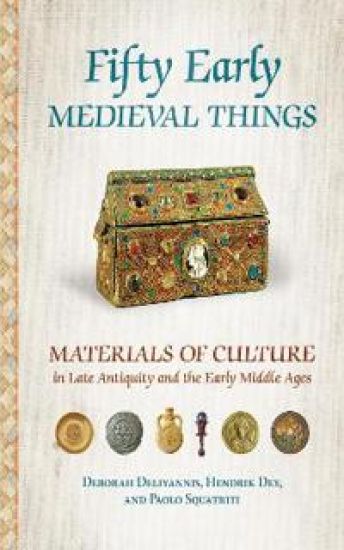
This important book [...] is a helpful guide to thinking with things and teaching with things. Each entry challenges the reader to approach objects as historical actors that can speak to the changes and continuities of life in the late antique and early medieval world.â• Early Medieval Europe Lavishly illustrated and engagingly written, Fifty Early Medieval Things demonstrates how to read objects in ways that make the distant past understandable and approachable. Fifty Early Medieval Things introduces readers to the material culture of late antique and early medieval Europe, north Africa, and western Asia. Ranging from Iran to Ireland and from Sweden to Tunisia, Deborah Deliyannis, Hendrik Dey, and Paolo Squatriti present fifty objects-artifacts, structures, and archaeological features-created between the fourth and eleventh centuries, an ostensibly "Dark Age" whose cultural richness and complexity is often underappreciated. Each thing introduces important themes in the social, political, cultural, religious, and economic history of the postclassical era. Some of the things, like a simple ard (plow) unearthed in Germany, illustrate changing cultural and technological horizons in the immediate aftermath of Rome's collapse; others, like the Arabic coin found in a Viking burial mound, indicate the interconnectedness of cultures in this period. Objects such as the Book of Kells and the palace-city of Anjar in present-day Jordan represent significant artistic and cultural achievements; more quotidian items (a bone comb, an oil lamp, a handful of chestnuts) belong to the material culture of everyday life. In their thing-by-thing descriptions, the authors connect each object to both specific local conditions and to the broader influences that shaped the first millennium AD, and also explore their use in modern scholarly interpretations, with suggestions for further reading.
Fifty Early Medieval Things

Fifty Early Medieval Things

Deborah Deliyannis; Hendrik Dey; Paolo Squatriti

Cornell University Press
2019
sidottu
This important book [...] is a helpful guide to thinking with things and teaching with things. Each entry challenges the reader to approach objects as historical actors that can speak to the changes and continuities of life in the late antique and early medieval world.â• Early Medieval Europe Lavishly illustrated and engagingly written, Fifty Early Medieval Things demonstrates how to read objects in ways that make the distant past understandable and approachable. Fifty Early Medieval Things introduces readers to the material culture of late antique and early medieval Europe, north Africa, and western Asia. Ranging from Iran to Ireland and from Sweden to Tunisia, Deborah Deliyannis, Hendrik Dey, and Paolo Squatriti present fifty objects-artifacts, structures, and archaeological features-created between the fourth and eleventh centuries, an ostensibly "Dark Age" whose cultural richness and complexity is often underappreciated. Each thing introduces important themes in the social, political, cultural, religious, and economic history of the postclassical era. Some of the things, like a simple ard (plow) unearthed in Germany, illustrate changing cultural and technological horizons in the immediate aftermath of Rome's collapse; others, like the Arabic coin found in a Viking burial mound, indicate the interconnectedness of cultures in this period. Objects such as the Book of Kells and the palace-city of Anjar in present-day Jordan represent significant artistic and cultural achievements; more quotidian items (a bone comb, an oil lamp, a handful of chestnuts) belong to the material culture of everyday life. In their thing-by-thing descriptions, the authors connect each object to both specific local conditions and to the broader influences that shaped the first millennium AD, and also explore their use in modern scholarly interpretations, with suggestions for further reading.
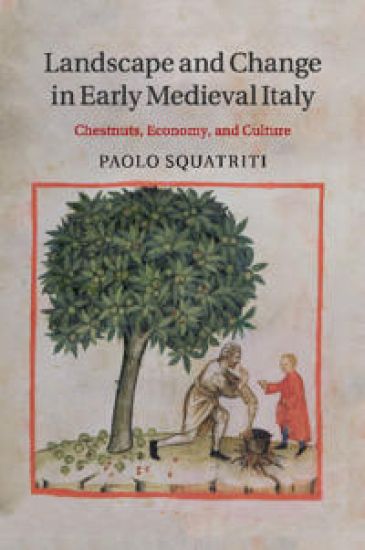
Landscape and Change in Early Medieval Italy

Landscape and Change in Early Medieval Italy

Paolo Squatriti

Cambridge University Press
2017
pokkari
This innovative environmental history of the long-lived European chestnut tree and its woods offers valuable perspectives on the human transition from the Roman to the medieval world in Italy. Integrating evidence from botanical and literary sources, individual charters and case studies of specific communities, the book traces fluctuations in the size and location of Italian chestnut woods to expose how early medieval societies changed their land use between the fourth and eleventh centuries, and in the process changed themselves. As the chestnut tree gained popularity in late antiquity and became a valuable commodity by the end of the first millennium, this study brings to life the economic and cultural transition from a Roman Italy of cities, agricultural surpluses and markets to a medieval Italy of villages and subsistence farming.
Landscape and Change in Early Medieval Italy

Landscape and Change in Early Medieval Italy

Paolo Squatriti

Cambridge University Press
2013
sidottu
This innovative environmental history of the long-lived European chestnut tree and its woods offers valuable perspectives on the human transition from the Roman to the medieval world in Italy. Integrating evidence from botanical and literary sources, individual charters and case studies of specific communities, the book traces fluctuations in the size and location of Italian chestnut woods to expose how early medieval societies changed their land use between the fourth and eleventh centuries, and in the process changed themselves. As the chestnut tree gained popularity in late antiquity and became a valuable commodity by the end of the first millennium, this study brings to life the economic and cultural transition from a Roman Italy of cities, agricultural surpluses and markets to a medieval Italy of villages and subsistence farming.
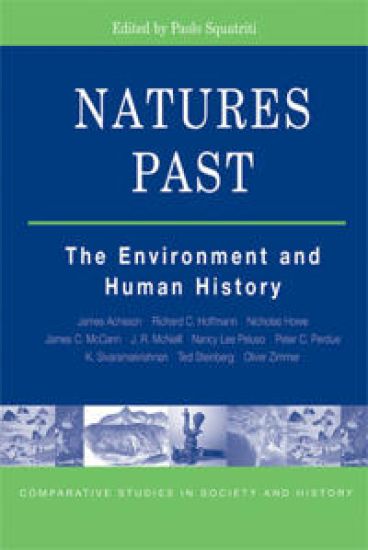
Natures Past

Natures Past

Paolo Squatriti

The University of Michigan Press
2007
nidottu
At the beginning of the twenty-first century, environmental change is a pressing public issue across the globe. Natures Past seeks to lend some historical depth to current debates about man-made modifications of ecological processes and systems and also to explore the global dimensions of the dynamic relationships natural environments establish with people. The ten essays in Natures Past discuss the diverse approaches to environmental history, demonstrating that significant environmental change is not a modern invention and people have long been transforming their natural surroundings, often in unintended ways. Natures Past also shows that humans have not always had antagonistic relationships with nature but have also successfully found new, stable relationships with the natures they inhabit. The essays, comprised of contributions by anthropologists, foresters, historians, and literary scholars, discuss malaria-bearing mosquitoes, Maine lobster fishing, Bornean durian husbandry, and American lawn mowing, among other things, and suggest how ecology, culture, and market interact to change the fate, and the value, of nature in each context. "An elegant collection of essays on environmental history by its finest scholars, demonstrating global, chronological, and interdisciplinary range." —J. Donald Hughes, John Evans Distinguished Professor, Department of History, University of Denver "With topics ranging from the metabolism of medieval cities to recent management trends in the Maine lobster industry, Natures Past is a collection of ten essays that expertly illustrates the cosmopolitan character, the interdisciplinary approaches, and the widely varying subject matter that characterize the subdiscipline of environmental history." —William H. TeBrake, Department of History, University of Maine Paolo Squatriti is Associate Professor of History and Romance Languages and Literatures at the University of Michigan. His previous books are: Working with Water in Medieval Europe: Technology and Resource-Use and Water and Society in Early Medieval Italy AD 400-1000.

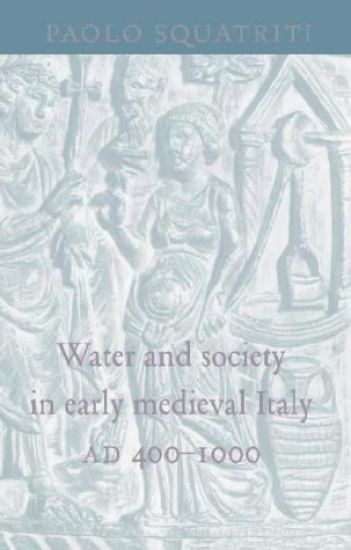
Water and Society in Early Medieval Italy, AD 400–1000

Water and Society in Early Medieval Italy, AD 400–1000

Paolo Squatriti

Cambridge University Press
1998
sidottu
This 1998 book offers an original discussion of an element - water - and its relationship with people. In particular it shows how early medieval Italian societies coped with the problems of having too much or too little water, and analyses their use of it. Such treatment illuminates the workings both of post-classical societies and of the environments in which these societies lived. Domestic usage, bathing, irrigation and drainage, fishing, and milling all receive full coverage. This is an original, interdisciplinary study which proves that even after the 'fall' of Rome, people continued a dialectical relationship with the natural resources that shaped their experiences just as decisively as their efforts redesigned the waterscape. It will be of interest not only to Italianists: historians of technology, agrarian, social, and cultural historians, and environmental historians will all find much that is stimulating.