Kirjojen hintavertailu – 12 903 742 kirjaa ja 27 kauppaa
Kirjailija
Paolo Verme
Kirjat ja teokset yhdessä paikassa: 5 kirjaa, julkaisuja vuosilta 2014–2019, suosituimpiin kuuluu Prices and Welfare. Vertaile teosten hintoja ja tarkista saatavuus suomalaisista kirjakaupoista.
This title was first published in 2001: Exploring the relationship between the recession and labour supply in Kazakhstan during the 1990s, this volume develops an innovative new model of the transitional process in the context of the CIS. It departs from conventional economic models explaining the process of transition, transferring the focus of attention from labour demand to labour supply with a view to clarifying how the transitional recession has affected households and, in turn, how these changes modified the supply of labour. Paolo Verme examines how the dynamic of the reallocation of labour between state and private enterprises has been drastically altered by the growth of self-employment and also takes a much-needed look at the contribution of other factors, offering an original explanation of this most important economic phenomenon.
This book provides a general framework for the use of theoretical contributions in empirical works, addressing the question of what is the effect of a price change on household well-being. This simple question is one of the most relevant and controversial questions in microeconomic theory and one of the main sources of errors in empirical economics. In particular, this book aims to 1) Review the essential microeconomics literature since the first seminal papers by Hicks in the 1930s; 2) Organize and simplify this literature in a way that can be easily used by analysts with different backgrounds providing algebraic, geometric and computational illustrations; 3) identify and measure the essential differences across methods and test how these differences affect empirical results; 4) Provide guidelines for the use of alternative approaches under imperfect information on utility, demand systems, elasticities and more generally incomes and quantities; 5) Provide computational codes in Statafor the application of all methods. The focus of the book is on developing economies and the poor, and the assumptions made will relate primarily to these countries and group of people, presumably the main policy focus of international organizations and national governments.
This title was first published in 2001: Exploring the relationship between the recession and labour supply in Kazakhstan during the 1990s, this volume develops an innovative new model of the transitional process in the context of the CIS. It departs from conventional economic models explaining the process of transition, transferring the focus of attention from labour demand to labour supply with a view to clarifying how the transitional recession has affected households and, in turn, how these changes modified the supply of labour. Paolo Verme examines how the dynamic of the reallocation of labour between state and private enterprises has been drastically altered by the growth of self-employment and also takes a much-needed look at the contribution of other factors, offering an original explanation of this most important economic phenomenon.
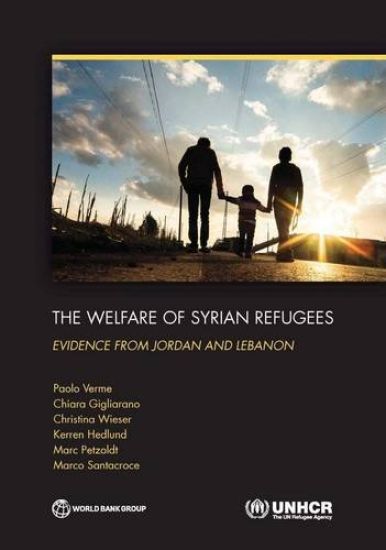
The Syrian refugee crisis, which began in 2011, is one of the most pressing disasters in the world today, with its effects reverberating around the globe. By the end of 2015, more than 7.6 million of the country’s people had been internally displaced and 4.3 million were registered refugees. The number of internally displaced persons and refugees amounts to about half of Syria’s precrisis population. Thousands have died while trying to reach safety. Due to the large humanitarian response, there is now a wealth of available information on refugees’ income and expenses, food and nutrition, health, education,employment, vulnerability, housing, and other measures of well-being. These data have been little explored, as humanitarian organizations face daily challenges that make the full use of existing data very difficult. The Welfare of Syrian Refugees: Evidence from Jordan and Lebanon aims to assess the poverty and vulnerability of these refugees and evaluate existing and alternative policies designed to help them. The authors find that current policies, including cash transfers and food vouchers, are effective in reducing poverty, but fail to lead to—nor are they designed to yield—economic inclusion and self-reliance. Those goals would require a different humanitarian and development paradigm, one that focuseson growth policies for areas affected by refugees where the target population has amix of refugees and hosting populations. This volume is the result of the first comprehensive collaboration between the WorldBank Group and the United Nations High Commissioner for Refugees (UNHCR) andaims to better understand and ultimately improve the well-being of Syrian refugeesliving in Jordan and Lebanon.
This book joins four papers prepared in the framework of the Egypt inequality study financed by the World Bank. The first paper prepared by Sherine Al-Shawarby reviews the studies on inequality in Egypt since the 1950s with the double objective of illustrating the importance attributed to inequality through time and of presenting and compare the main published statistics on inequality. To our knowledge, this is the first time that such a comprehensive review is carried. The second paper prepared by Branko Milanovic turns to the global and spatial dimensions of inequality. The objective here is to put Egypt inequality in the global context and better understand the origin and size of spatial inequalities within Egypt using different forms of measurement across regions and urban and rural areas. The Egyptian society remains deeply divided across space and in terms of welfare and this study unveils some of the hidden features of this inequality. The third paper prepared by Paolo Verme studies facts and perceptions of inequality during the period 2000-2009, the period that preceded the Egyptian revolution. The objective of this part is to provide some initial elements that could explain the apparent mismatch between inequality measured with household surveys and inequality aversion measured by values surveys. No such study has been carried out before in the Middle-East and North-Africa (MENA) region and this seemed a particular important and timely topic to address in the light of the unfolding developments in the Arab region. The fourth paper prepared by Sahar El Tawila, May Gadallah and Enas Ali A. El-Majeed assesses the state of poverty and inequality among the poorest villages of Egypt. The paper attempts to explain the level of inequality in an effort to disentangle those factors that derive from household abilities from those factors that derive from local opportunities. This is the first time that such study is conducted in Egypt. The book should be of interest to any observer of the political and economic evolution of the Arab region in the past few years and to poverty and inequality specialists that wish to have a deeper understanding of the distribution of incomes in Egypt and other countries in the MENA region.