Kirjojen hintavertailu – 12 903 725 kirjaa ja 27 kauppaa

Kirjailija

Partha Dasgupta

Kirjat ja teokset yhdessä paikassa: 13 kirjaa, julkaisuja vuosilta 1995–2026, suosituimpiin kuuluu Discounting for Time and Risk in Energy Policy. Vertaile teosten hintoja ja tarkista saatavuus suomalaisista kirjakaupoista.

13 kirjaa

Kirjojen julkaisuvuodet: 1995–2026.

Discounting for Time and Risk in Energy Policy

Discounting for Time and Risk in Energy Policy

Robert C. Lind; Kenneth J. Arrow; Gordon R. Corey; Partha Dasgupta; Amartya K. Sen; Thomas Stauffer; Joseph E. Stiglitz; J.A. Stockfisch

Resources for the Future Press (RFF Press)
2011
sidottu
This is a collection of theoretical papers, including contributions by Partha Dasgupta and three Nobel prize-winning economists: Kenneth Arrow, Amartya Sen, and Joseph Stiglitz. Originally published in 1982.
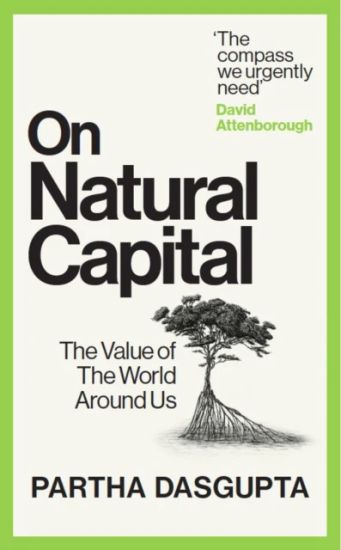
On Natural Capital: The Value of the World Around Us
From the man that the New York Times calls "the most important person you've never heard of," renowned Cambridge University economist Sir Partha Dasgupta, comes a paradigm shifting treatise, asking a simple yet profound question--what if we put a value on nature, just as we put a value on everything else? For just about everything of value in life, there is an economic model. If it matters to us, we have found a way to put a dollar amount on it--to quantify its importance in our lives and society. These models and metrics tell us that our economies are healthy because they are growing. And yet for as long as they have existed, our economic models have served us an incomplete picture; they fail to account for the fact that our growth is driven by a resource that we take for free and treat as infinite: nature. Indeed, for centuries we have been using nature as if it were limitless, but more than ever, we are recognizing that our demands on the natural world are unsustainable. In On Natural Capital, award-winning Cambridge University economist Sir Partha Dasgupta lays out a seminal new approach to economics that asks, what if we were to put a value on nature just as we value everything else? Rooted in mankind's struggle against climate change, Dasgupta's approach examines the existential need to rethink our relationship to nature and see its preservation as an economic imperative. Challenging much of economic thought that has come before, Dasgupta presents an urgent call to transform the focus and structures of global economics with a profound new model--one so radical that only an economist of his stature could make the world take it seriously. On Natural Capital is a bold and groundbreaking book that could, truly, change everything.
On Natural Capital

On Natural Capital

Partha Dasgupta

Ebury Publishing
2025
sidottu

Halvin toimitettuna 26,00 €

'The most important person you've never heard of' - The New York Times'Partha Dasgupta provides the compass we urgently need… by bringing economics and ecology together, we can help save the natural world at what may be the last minute – and in doing so, save ourselves.’ - David Attenborough'This is the best book in economics for a general reader since Adam Smith’s The Wealth of Nations.' - Paul R Ehrlich‘Imagine a football team which measures its success only on the basis of the goals it scores and doesn’t count the goals it concedes. That football team could be losing right through without recognising it…’For as long as they have existed, our economic models have served us an incomplete picture. The models and metrics tells us that our economies are healthy because they are growing. However, this doesn't account for the fact that our growth is driven by a resource that we take for free and treat as infinite: nature. For centuries we have been using it as if it were both, but we know now, more than ever, that our demand on the natural world is unsustainable. It's no longer sufficient to only see part of the picture; it's time that our economic models show us the whole thing. In On Natural Capital, renowned Cambridge economist Sir Partha Dasgupta lays out a seminal and groundbreaking new approach to economics. Challenging everything that has come before, he asks, what if we were to put a value on nature just as we value everything else? An urgent call to transform the focus and structures of global economics, On Natural Capital is a bold and groundbreaking book that could, truly, change everything.
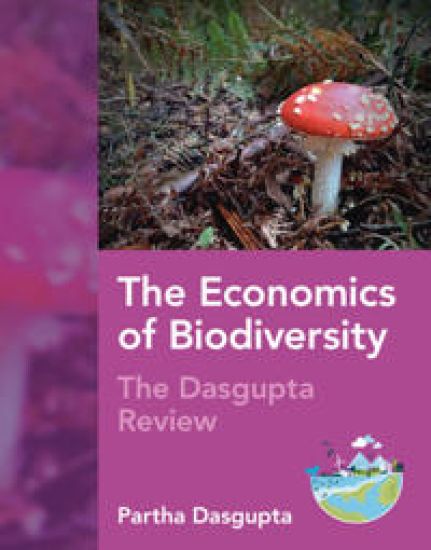
The Economics of Biodiversity

The Economics of Biodiversity

Partha Dasgupta

Cambridge University Press
2024
sidottu
We are part of Nature, not separate from it. We rely on Nature to provide us with food, water and shelter; regulate our climate and disease; maintain nutrient cycles and oxygen production; and provide us with spiritual fulfilment and opportunities for recreation and recuperation, which can enhance our health and well-being. Nature's constituents such as ecosystems and the biodiversity that are embodied in them are therefore assets. Yet Nature is more than an economic good: many recognise its intrinsic worth and argue that it has moral worth too. This landmark report explains the current state of play in relation to biodiversity loss and outlines a sustainable path to deal with this problem, one that will require us to change how we think, act and measure success. The report was originally commissioned and published by HM Treasury.
The Economics of Biodiversity

The Economics of Biodiversity

Partha Dasgupta

Cambridge University Press
2024
pokkari
We are part of Nature, not separate from it. We rely on Nature to provide us with food, water and shelter; regulate our climate and disease; maintain nutrient cycles and oxygen production; and provide us with spiritual fulfilment and opportunities for recreation and recuperation, which can enhance our health and well-being. Nature's constituents such as ecosystems and the biodiversity that are embodied in them are therefore assets. Yet Nature is more than an economic good: many recognise its intrinsic worth and argue that it has moral worth too. This landmark report explains the current state of play in relation to biodiversity loss and outlines a sustainable path to deal with this problem, one that will require us to change how we think, act and measure success. The report was originally commissioned and published by HM Treasury.
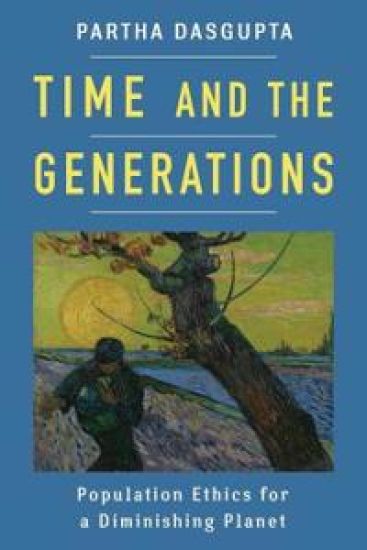
Time and the Generations

Time and the Generations

Partha Dasgupta

Columbia University Press
2019
sidottu
How should we evaluate the ethics of procreation, especially the environmental consequences of reproductive decisions on future generations, in a resource-constrained world? While demographers, moral philosophers, and environmental scientists have separately discussed the implications of population size for sustainability, no one has attempted to synthesize the concerns and values of these approaches. The culmination of a half century of engagement with population ethics, Partha Dasgupta’s masterful Time and the Generations blends economics, philosophy, and ecology to offer an original lens on the difficult topic of optimum global population. After offering careful attention to global inequality and the imbalance of power between men and women, Dasgupta provides tentative answers to two fundamental questions: What level of economic activity can our planet support over the long run, and what does the answer say about optimum population numbers? He develops a population ethics that can be used to evaluate our choices and guide our sense of a sustainable global population and living standards. Structured around a central essay from Dasgupta, the book also features a foreword from Robert Solow; correspondence with Kenneth Arrow; incisive commentaries from Joseph Stiglitz, Eric Maskin, and Scott Barrett; an extended response by the author to them; and a joint paper with Aisha Dasgupta on inequalities in reproductive decisions and the idea of reproductive rights. Taken together, Time and the Generations represents a fascinating dialogue between world-renowned economists on a central issue of our time.
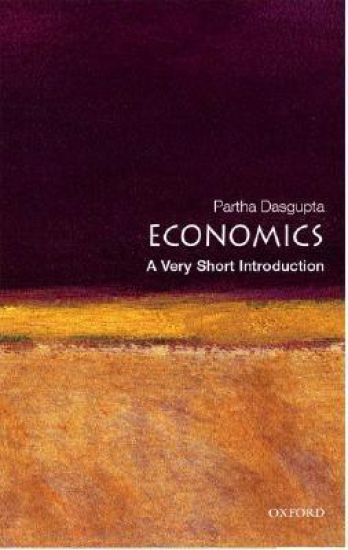
Economics

Economics

Partha Dasgupta

Oxford University Press
2007
nidottu

Halvin toimitettuna 18,90 €

Economics has the capacity to offer us deep insights into some of the most formidable problems of life, and offer solutions to them too. Combining a global approach with examples from everyday life, Partha Dasgupta describes the lives of two children who live very different lives in different parts of the world: in the Mid-West USA and in Ethiopia. He compares the obstacles facing them, and the processes that shape their lives, their families, and their futures. He shows how economics uncovers these processes, finds explanations for them, and how it forms policies and solutions. Along the way, Dasgupta provides an intelligent and accessible introduction to key economic factors and concepts such as individual choices, national policies, efficiency, equity, development, sustainability, dynamic equilibrium, property rights, markets, and public goods. ABOUT THE SERIES: The Very Short Introductions series from Oxford University Press contains hundreds of titles in almost every subject area. These pocket-sized books are the perfect way to get ahead in a new subject quickly. Our expert authors combine facts, analysis, perspective, new ideas, and enthusiasm to make interesting and challenging topics highly readable.
Human Well-Being and the Natural Environment

Human Well-Being and the Natural Environment

Partha Dasgupta

Oxford University Press
2004
nidottu
In Human Well-Being and the Natural Environment, Partha Dasgupta explores ways to measure the quality of life. In developing quality-of-life indices, he pays particular attention to the natural environment, illustrating how it can be incorporated, more generally, into economic reasoning in a seamless manner. Professor Dasgupta puts the theory that he develops to use in extended commentaries on the economics of population, poverty traps, global warming, structural adjustment programmes, and free trade, particularly in relation to poor countries. The result is a treatise that goes beyond quality-of-life measures and offers a comprehensive account of the newly emergent subject of ecological economics. With the publication of this new paperback edition, Professor Dasgupta has taken the opportunity to update and revise his text in a number of ways, including developments to facilitate its current use on a number of gradate courses in environmental and resource economics. The treatment of the welfare economics of imperfect economies has been developed using new findings, and the Appendix has been expanded to include applications of the theory to a number of institutions, and to develop approximate formulae for estimating the value of environmental natural resources.
Human Well-Being and the Natural Environment

Human Well-Being and the Natural Environment

Partha Dasgupta

Oxford University Press
2001
sidottu
This work concerns measurement of the quality of life, and focuses on the ways in which this is now known to be tied to the natural environment. The author develops methods of valuation and evaluation with the aim of measuring, and searching to improve, the quality of our lives.
Environmental and Resource Economics in the World of the Poor

Environmental and Resource Economics in the World of the Poor

Partha Dasgupta

Resources for the Future Press (RFF Press)
1998
nidottu
An eminent economist and social thinker explains his views on why traditional environmental and resource economics has not met the needs of the developing world. The gaps between haves and have-nots are so great, says Partha Dasgupta, that many premises of our analyses are mistaken or irrelevant in other international contexts. Thus, 'the environmental economics to be found in the literature in the North cannot much resonate in the South.' This breach helps explain the exclusion of environmental concerns from economic modeling in poor nations, causing problematic gaps in development economics, in understanding poverty, and in understanding what is, for some populations, a deepening economic and environmental peril. The author establishes important connections between poverty, high fertility, and malnourishment -- and environmental damage and civic disconnection. For example, communal ownership of resurces is common in poor rural areas. Democratic decisionmaking and self-determination could result in more careful use of resources, yet democracy is too rarely found in these areas. Also, high birthrates., resulting from several cultural and economic factors, lock communities in the grip of poverty and resource degradation. In assessing the interrelationships of these factors, Dasgupta makes a thoughtful contribution to development economics, environmental/resource economics, and our sociopolitical understanding of poverty.
An Inquiry into Well-Being and Destitution

An Inquiry into Well-Being and Destitution

Partha Dasgupta

Clarendon Press
1995
nidottu
An interdisciplinary book by one of the most respected scholars in what is broadly development economics but encompasses the most recent insights from philosophical research and empirical work on resource allocation, nutrition science, and anthropology. It has been widely recognized as a seminal work presenting a wide-ranging description of the causes and remedies of poverty and undernourishment, and addressing the current debate over methods of estimating their incidence.