

Kirjailija
Pascale Petit
Kirjat ja teokset yhdessä paikassa: 11 kirjaa, julkaisuja vuosilta 2001–2026, suosituimpiin kuuluu What the Water Gave Me. Vertaile teosten hintoja ja tarkista saatavuus suomalaisista kirjakaupoista.
11 kirjaa
Kirjojen julkaisuvuodet: 2001–2026.
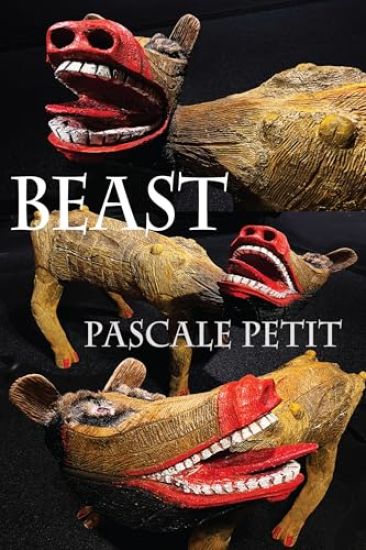
Mythic and familial beasts roam the swamps and moors of Pascale Petit’s Beast. These spirits of the wild haunt the Camargue of Provence, the limestone Causses and gorges of the Languedoc, Indian tiger forests, the Amazon rainforest, and her home by Bodmin Moor in Cornwall. Some of these remote places are vestiges of earth’s pristine habitats, while other wildernesses are encaged in cellars of Paris, along with the world’s last species. Their essence is evoked in lithe and luxurious lines sometimes compressed as a trapped animal. An estranged father reappears as a hunter, while Maman is an orb spider or a grand piano; both are predators. And there are earthly beasts – wild horses and bulls, lammergeiers, bee-eaters and catfish, remnants of a vanishing natural world. Beast asks if survival is possible in an abusive family and on an abused home planet, in the face of climate catastrophe, childhood trauma and war. These poems address difficult challenges, insisting that making art is an act of love and hope, and there are joyful lyrics celebrating the ineffable beauty of endangered species. Beast is a Poetry Book Society Recommendation. Content warning: this book contains descriptions of historical sexual abuse and assault.
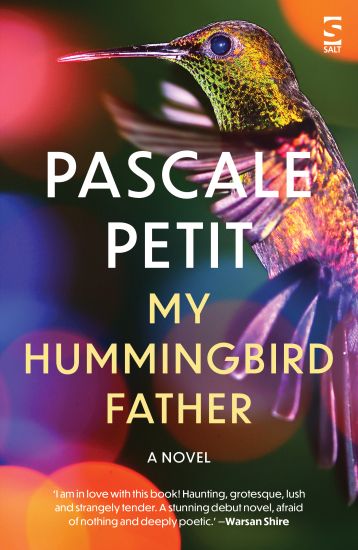
‘It's unsurprisingly poetic, full of lyrical, luscious descriptions of the rainforest and shot through with magic realism. I loved it.’ —Daily Mail ‘The poet’s novel of art and abuse vividly evokes one woman’s quest to uncover long-lost memories.’ —The Guardian ‘Scintillating.’ —Financial Times When artist Dominique receives a letter from her dying father, a reckoning with repressed memories and a pull for romantic and familial love sends shock waves through her life, as she journeys to Paris to face the places and events of her early years. Balanced with visits to the Venezuelan Amazon, where Dominique explores a spiritual and loving longing (meeting a young guide, Juan), a raw and tender unfolding of this love story is a parallel to the uncovering of the shocking truth of Dominique’s birth, and her parents’ relationship. Pascale Petit’s My Hummingbird Father is a beautifully lyrical debut novel in dialogue with Pascale’s Ondaatje and Laurel Prize-winning poetry collection, Mama Amazonica.
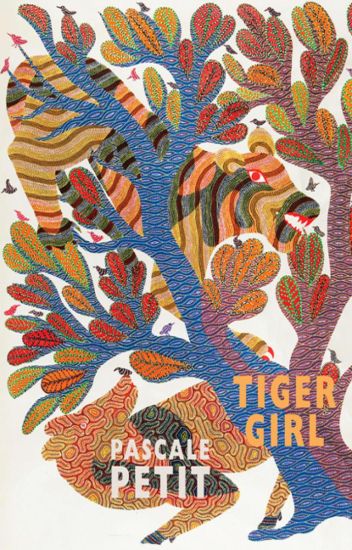
Pascale Petit’s Tiger Girl marks a shift from the Amazonian rainforests of her previous work to explore her grandmother’s Indian heritage and the fauna and flora of subcontinental jungles. Tiger girl is the grandmother, with her tales of wild tigers, but she’s also the endangered predators Petit encountered in Central India. In exuberant and tender ecopoems, the saving grace of love in an otherwise bleak childhood is celebrated through spellbinding visions of nature, alongside haunting images of poaching and species extinction. Tiger Girl is Pascale Petit’s eighth collection, and her second from Bloodaxe, following Mama Amazonica, winner of the Royal Society of Literature’s Ondaatje Prize 2018 – the first time a poetry book won this prize for a work of fiction, non-fiction or poetry best evoking the spirit of a place. It is shortlisted for the 2020 Forward Prize for Best Collection. Four of her earlier collections were shortlisted for the T. S. Eliot Prize.
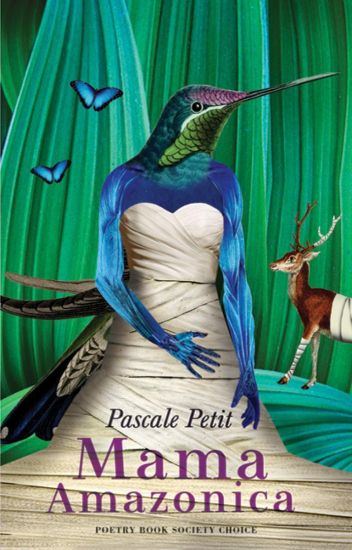
Mama Amazonica is set in a psychiatric ward and in the Amazon rainforest, an asylum for animals on the brink of extinction. It reveals the story of Pascale Petit's mentally ill mother and the consequences of abuse. The mother transforms into a giant Victoria amazonica waterlily, and a bestiary of untameable creatures - a jaguar girl, a wolverine, a hummingbird - as she marries her rapist and gives birth to his children. From heartbreaking trauma, there emerge luxuriant and tender portraits of a woman battling for survival, in poems that echo the plight of others under duress, and of our companion species. Petit does not flinch from the violence but offers hope by celebrating the beauty of the wild, whether in the mind or the natural world. Mama Amazonica is Pascale Petit's seventh collection, and her first from Bloodaxe. Four of Pascale Petit's previous six collections have been shortlisted for the T. S. Eliot Prize. Winner of the inaugural Laurel Prize in 2020, Mama Amazonica won the Royal Society of Literature's Ondaatje Prize 2018 - the first time a poetry book has won this prize for a work of fiction, non-fiction or poetry best evoking the spirit of a place, was shortlisted for the Roehampton Poetry Prize 2018, and was the Poetry Book Society Choice for autumn 2017.
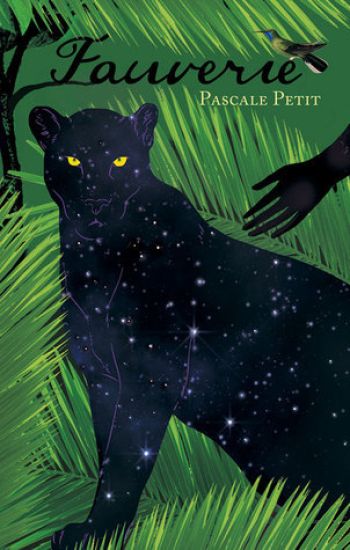
ON THE 2014 T S ELIOT PRIZE SHORTLISTIn this new book Petit returns to Paris and begins to obsessively revisit the zoo, the Fauverie, and remembers her father, a violent and unpredictable man, who she visited when he was on his deathbed in Paris some years ago. The zoo animals become totemic, emblems of this traumatic relationship. The poems are unusually raw and unashamedly confessional. They are immersed in visceral details: in the blood, fur, claws, teeth, horns, hides, of the animals she sees, and how they echo the decay she observes in her father's body and spirit as he dies. The beauty of the natural world is also cathartic and reclaims this book from being a purely dark vision.
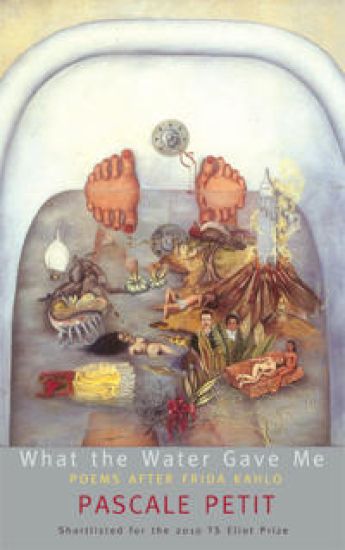
Shortlisted for the 2011 Wales Book of the Year Shortlisted for the 2010 TS Eliot Prize Book of the Year, The Observer What the Water Gave Me contains fifty-two poems in the voice of the Mexican painter Frida Kahlo. Some of the poems are close interpretations of Kahlo's work, while others are parallels or version homages where Petit draws on her experience as a visual artist to create alternative ‘paintings’ with words. More than just a verse biography, this collection explores how Kahlo transformed trauma into art after the artist’s near-fatal bus accident. Petit, with her vivid style, her feel for nature and her understanding of pain and redemption, fully inhabits Kahlo’s world. Each poem is an evocation of ‘how art works on the pain spectrum’, laced with splashes of ferocious colour.
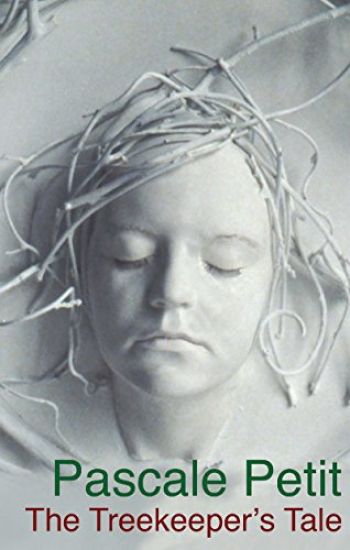
Already well known for the fierce confessional imagery of her first three books, The Treekeeper's Tale points towards another facet of the poet's gift, an intense feeling for the natural world, allied with a personal response to historical incidents and to other lands. The title section of this four-part collection adopts the giant coast redwood trees in California as a particular talisman. Lyrical, resonant, strange and imaginative, these poems echo in the mind and leave an indelible impression of the mysterious atmosphere of the redwood forests. The second section, 'Afterlives', takes us on journeys to the past, as in the burial of a Siberian priestess, and on trips to other places including China, Nepal and Kazakhstan. The colourful paintings of the German expressionist Franz Marc, such as the famous red and blue horses series, provide the key to the third section, War Horse, where dramatic imagery of the horses blends and contrasts with the tragic fate of Europe during World War One. The final part, 'The Chrysanthemum Lantern', features sensitive translations from Chinese originals. Pascale Petit was born in Paris, grew up in France and Wales and lives in London. In 2004 the Poetry Book Society and Arts Council named her as one of the Next Generation Poets. She has published four full-length poetry collections; both The Zoo Father (2001) and The Huntress (2005), were both shortlisted for the T. S. Eliot Prize and were both Books of the Year in the Times Literary Supplement. Pascale Petit trained as a sculptor at the Royal College of Art and tutors for Tate Modern, The Poetry School and Oxford University. She is currently the Royal Literary Fund Fellow at Middlesex University.
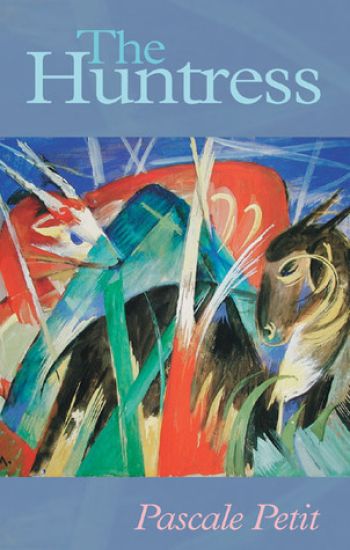
Shortlisted for the T. S. Eliot PrizeAn outstanding new volume from this popular poet, follow-up to the best-selling The Zoo Father. Pascale Petit's last collection, The Zoo Father, was shortlisted for the T. S. Eliot and Forward Prizes, and was a Poetry Book Society Recommendation. She was also selected as one of the Poetry Society's Next Generation Poets. In Pascale Petit's highly-charged third collection, a daughter is haunted by her mentally ill mother, and a painful childhood is re-imagined through a series of remarkable and passionate transformations. The feared mother is a rattlesnake, an Aztec goddess, a Tibetan singing bowl, a stalagmite, a praying mantis, a ghost orchid. These culminate in a long central poem where the daughter escapes her huntress as a cosmic stag. Underlying these poems is an intense mystical vision that lifts the dark material of the subject matter above the merely personal. A powerful follow-up to the highly acclaimed The Zoo Father. "No other British poet I am aware of can match the powerful mythic imagination of Pascale Petit. The mother figure in her new collection The Huntress appears as a ghost orchid, a rattlesnake, as geological forms and feathered Amerindian goddesses, all deeply imagined in perfect dreamlight focus. Baroque sinuosity seems a matter of fevered family relations, with a haunting mystical quality interfused." Les Murray, Times Literary Supplement Books of the Year"Pascale Petit's latest full length collection, The Huntress, exhibits the same intriguing blend of candour and estrangement that made The Zoo Father such a compelling read… Alongside Petit's talent in translating magical realism into verse, interestingly there's a sharpness to her work, a certain filmic quality that pulls the reader up short." MagmaPascale Petit was born in Paris, grew up in France and Wales and lives in London. In 2004 the Poetry Book Society and Arts Council named her as one of the Next Generation Poets. She has published four full-length poetry collections; her two previous collections, The Zoo Father (Seren, 2001) and The Huntress (Seren, 2005), were both shortlisted for the T. S. Eliot Prize and were both Books of the Year in the Times Literary Supplement. The Zoo Father was a Poetry Book Society Recommendation and a poem from the book was also shortlisted for a Forward Prize for Best Single Poem. Her poems have been translated into many languages; a Spanish/English bilingual edition is published in Mexico. Pascale Petit trained as a sculptor at the Royal College of Art and tutors for Tate Modern, The Poetry School and Oxford University. She is currently the Royal Literary Fund Fellow at Middlesex University.

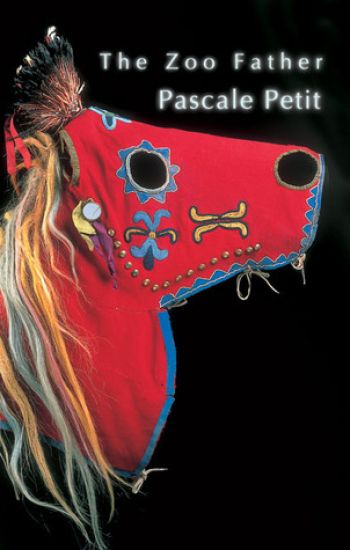
Second collection from the poet of powerful emotions and vivid imagery, The Zoo Father underlines the author's reputation as a questing poet capable of outstanding imagistic flourishes and surprising associations. This extraordinary and powerful volume is comprised of two sections, the first about with the poet's relationship with her father, the second with her mother. Section One is heavily imbued with imagery of the poet's travels in South America and her researches in the cultures and ecology of the Venezuelan. Pain, anger, bewilderment are refracted through a rich, often sensual imagery of fauna, hallucinatory drugs and tribal beliefs. This gives the poems their originality, and prevents subject matter of childhood abandonment and abuse becoming too harrowing. The imagery adapted from shamanistic beliefs is especially memorable. Section Two is set in southern France, in an almost equally exotic location of vineyards and 'dinosaur plateaux'. It concerns the poet's family holidays in "the vineyard" and her rediscovery and subsequent repossession of that place. Once again, the poems delineate a primary relationship (with the poet's mother), with the lushness of the imagery putting into surprising context the development of that relationship.