Kirjojen hintavertailu – 12 903 724 kirjaa ja 27 kauppaa

Kirjailija

Pat Rogers

Kirjat ja teokset yhdessä paikassa: 31 kirjaa, julkaisuja vuosilta 1993–2025, suosituimpiin kuuluu Documenting Eighteenth Century Satire. Vertaile teosten hintoja ja tarkista saatavuus suomalaisista kirjakaupoista.

31 kirjaa

Kirjojen julkaisuvuodet: 1993–2025.

The Life and Times of Thomas, Lord Coningsby

The Life and Times of Thomas, Lord Coningsby

Pat Rogers

CONTINUUM PUBLISHING CORPORATION
2011
sidottu
This book throws fresh light on British and Irish politics at the start of the eighteenth century. It tells for the first time the story of a powerful and eccentric peer, Thomas Coningsby, who played a key role in Ireland as the kings saviour at the Battle of the Boyne and as one of the top administrators of the Protestant ascendancy. It describes his tumultuous career in local and national politics in England, along with his hectic familial and private life, marked by his combative behaviour towards neighbours and tenants in Herefordshire, where he feuded with the Harley clan and the Duke of Chandos. The book describes his bitter quarrels with political rivals and shows how these were enlisted by the greatest poet of the age, Alexander Pope, to form a devastating critique of the Whig revenge against their discredited rivals. Based on extensive use of unpublished archives, including the numerous cache of letters to and from Coningsby; lawsuits; legal documents such as wills and marriage settlements; as well as newspapers, pamphlets and printed sources.
The Wiley-Blackwell Encyclopedia of Eighteenth-Century Writers and Writing 1660 - 1789

The Wiley-Blackwell Encyclopedia of Eighteenth-Century Writers and Writing 1660 - 1789

Paul Baines; Julian Ferraro; Pat Rogers

Wiley-Blackwell (an imprint of John Wiley Sons Ltd)
2011
sidottu
The Wiley-Blackwell Encyclopedia of Eighteenth-Century Writers and Writing1660-1789 features coverage of the lives and works of almost 500 notable writers based in the British Isles from the return of the British monarchy in 1660 until the French Revolution of 1789. Broad coverage of writers and texts presents a new picture of 18th-century British authorshipTakes advantage of newly expanded eighteenth-century canon to include significantly more women writers and labouring-class writers than have traditionally been studiedDraws on the latest scholarship to more accurately reflect the literary achievements of the long eighteenth century
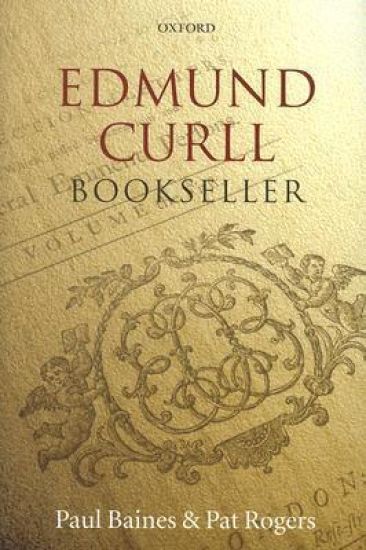
Edmund Curll, Bookseller

Edmund Curll, Bookseller

Paul Baines; Pat Rogers

Oxford University Press
2007
sidottu
Edmund Curll was a notorious figure among the publishers of the early eighteenth century: for his boldness, his lack of scruple, his publication of work without author's consent, and his taste for erotic and scandalous publications. He was in legal trouble on several occasions for piracy and copyright infringement, unauthorised publication of the works of peers, and for seditious, blasphemous, and obscene publications. He stood in the pillory in 1728 for seditious libel. Above all, he was the constant target of the greatest poet and satirist of his age, Alexander Pope, whose work he pirated whenever he could and who responded with direct physical revenge (an emetic slipped into a drink) and persistent malign caricature. The war between Pope and Curll typifies some of the main cultural battles being waged between creativity and business. The story has normally been told from the poet's point of view, though more recently Curll has been celebrated as a kind of literary freedom-fighter; this book, the first full biography of Curll since Ralph Straus's The Unspeakable Curll (1927), seeks to give a balanced and thoroughly-researched account of Curll's career in publishing between 1706 and 1747, untangling the mistakes and misrepresentations that have accrued over the years and restoring a clear sense of perspective to Curll's dealings in the literary marketplace. It examines the full range of Curll's output, including his notable antiquarian series, and uses extensive archive material to detail Curll's legal and other troubles. For the first time, what is known about this strange, interesting, and awkward figure is authoritatively told.
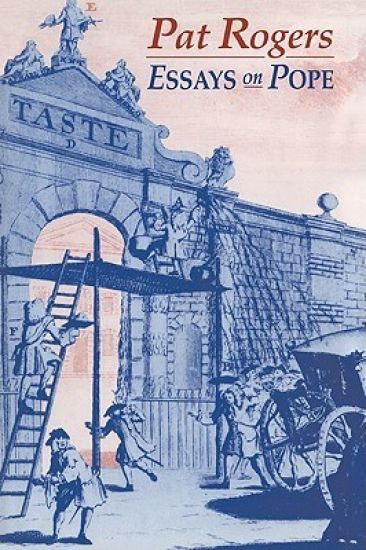
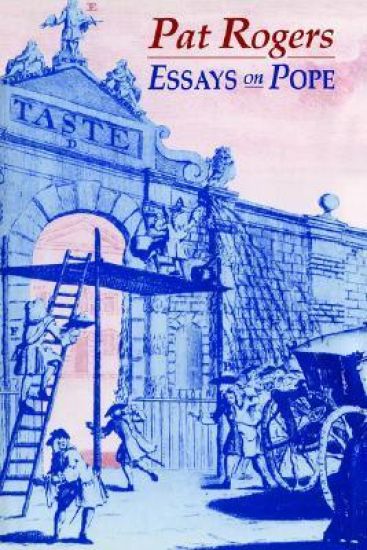
Essays on Pope

Essays on Pope

Pat Rogers

Cambridge University Press
2006
pokkari
Leading literary historian and eighteenth-century specialist Pat Rogers has long been recognized as an authority on the poet Alexander Pope. This volume addresses the many facets of Pope's world and work, and represents Rogers's important contribution over the years to Pope studies. A substantial new essay on Pope and the antiquarians is presented alongside considerably revised versions of essays published in scholarly journals, which together cover most of Pope's major work, including the Pastorals, Windsor Forest, Rape of the Lock, Epistle to Arbuthnot and The Dunciad. There are general essays on form and style, Pope's social context, his dealings with the Burlington circle, and his battles with his publisher. Essays on Pope gathers for the first time the best writing on this celebrated author by one of our foremost critics, and is an indispensable resource for scholars of eighteenth-century literature.
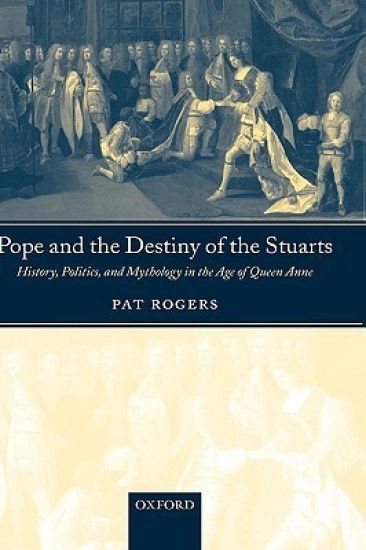
Pope and the Destiny of the Stuarts

Pope and the Destiny of the Stuarts

Pat Rogers

Oxford University Press
2005
sidottu
This radical new look at the literary and political climate of England during the reign of Queen Anne examines the work of the greatest poet of the age, Alexander Pope. Pope and the Destiny of the Stuarts provides the fullest contextual account to date of Windsor-Forest (1713), widely seen as a key text in the evolution of early eighteenth-century poetry. It examines the poem's topical and political aspects and offers a reconfiguration of Pope's early career, demonstrating that this was a pivotal period, marking a critical watershed in both his personal and literary development. The book gives a complete account of Pope's life and work in his early twenties, and supplies a new political interpretation, including a careful analysis of possible Jacobite colourings. Attention is directed towards a range of literary, historical, ideological, and artistic issues. The book draws on classical studies (the role of Virgil and Ovid especially), Renaissance scholarship, literary history, political history, and artistic contexts. The key ideas and techniques of Windsor-Forest are related to Pope's other early works, including the Pastorals and, centrally, The Rape of the Lock. Rogers goes on to reassess the poet's dealings with the Scriblerus group. He shows previously unnoted textual connections with the work of Swift, Gay, Parnell, and also Prior, and casts fresh light on the tortuous process of composition and revision of Windsor-Forest, with a description of the manuscript and an account of the publishing and textual history, while numerous allusions are traced for the first time. Pope and the Destiny of the Stuarts will be of interest to scholars and students of eighteenth-century literature, history, and politics.
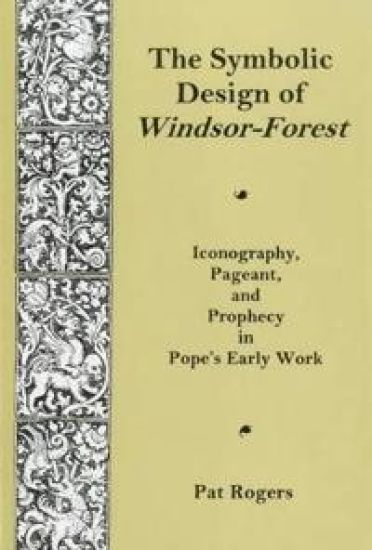
Symbolic Design Of Windsor Forest

Symbolic Design Of Windsor Forest

Pat Rogers; Marvin Rosenberg

University of Delaware Press
2004
sidottu
This is the first detailed exploration of one of the earliest major poems by Alexander Pope, Windsor-Forest (1713). The book reveals how Pope used the artistic conventions of the Stuart court, such as masque, architecture, allegorical painting, and heraldry to create the last great Renaissance poem in English. A coherent symbolic design is constructed around the themes of the river and the forest. Pope organizes the structure and style of the poem to create a prophetic version of nationhood, drawing on such sources as the plays of Ben Jonson, the Whitehall paintings of Rubens, the architecture of Inigo Jones, the panegyric work of Dryden, and the topographical poetry of Drayton. The political dimensions of the poem are considered in relation to the foundation of the South Sea Company in 1711, with its foreshadowing of imperial issues to come. The book will spark further interest in a poem that has been gaining increasing attention recently from writers such as E. P. Thompson and Laura Brown. It shows the centrality of Windsor-Forest in Pope's own career, and the centrality of Pope in the debates of his time. Pat Rogers is DeBartolo Professor in the Liberal Arts at the University of South Florida.
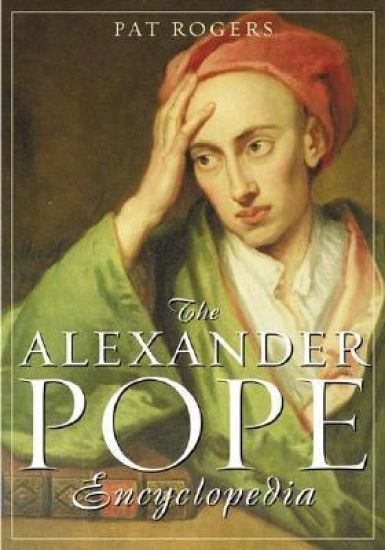
The Alexander Pope Encyclopedia

The Alexander Pope Encyclopedia

Pat Rogers

Greenwood Press
2004
sidottu
Alexander Pope (1688-1744) was the most important English poet of the 18th century, as well as an essayist, satirist, and critic. Many of his sayings are still quoted today. His Essay on Criticism shaped the aesthetic views of English Neoclassicism, while his Essay on Man reflected the moral views of the Enlightenment. He participated fully in the critical debates of his time and was one of the few poets who supported himself through his writing. This reference conveniently summarizes his life and works. Included are several-hundred alphabetically arranged entries on Pope's works, subjects that interested him, historical events that impacted Pope's life and work, cultural terms and categories, Pope's family members and acquaintances, major scholars and critics, and various other topics related to his writings. The entries reflect current scholarship and cite works for further reading. The encyclopedia also provides a chronology and concludes with a selected, general bibliography. Because of Pope's central importance to the Enlightenment, this book is also a useful companion to 18th-century literary and intellectual culture.
The Samuel Johnson Encyclopedia

The Samuel Johnson Encyclopedia

Pat Rogers

Greenwood Press
1996
sidottu
This is the first-ever attempt to present all the significant facts about Samuel Johnson in a single volume. The 650 alphabetically arranged entries cover every aspect of Johnson's life, career, and personality. The volume describes each of his works in detail, examining such matters as composition, publication, and reception. It gives up-to-date accounts of his attitude on key themes and concepts and explores his central ideas on literary, moral, political, social, and religious questions. It provides biographies of all persons with whom Johnson had any sort of real contact and gives a detailed picture of the Club and its members. This is a one-stop aid that will enable students and readers of Johnson to locate almost any fact about him quickly and easily. Samuel Johnson was one of the most important literary figures of the 18th century, which was sometimes known as the Age of Johnson. He authored a pioneering dictionary of the English language, edited Shakespeare, composed poetry and drama, and wrote numerous prose works on moral, philosophical, religious, political, and domestic concerns. Immortalized through Boswell's biography, he is as well-known for his traits and habits (including his witty and combative manner of conversation) as for his prodigious achievements in the world of letters. This encyclopedia is a comprehensive guide to Johnson and his milieu. This pioneering volume contains more than 650 alphabetically arranged entries on every aspect of Johnson's life, career, and personality. It describes each of his works in detail, examining such matters as composition, publication, and reception. It gives up-to-date accounts of his attitude on key themes and concepts, and explores his central ideas on literary, moral, political, social, and religious questions. It provides biographies of all the persons with whom Johnson had any sort of real contact, ranging from his close friends in the world of the arts and publishing, to his domestic intimates and servants, his extended family, and even his cat. A full system of cross-referencing allows readers to locate subjects and entries with ease. This is a one-stop aid which will enable students and readers of Johnson to locate almost any fact about him quickly and easily, and will provide guidance for any more detailed research which may be called for.
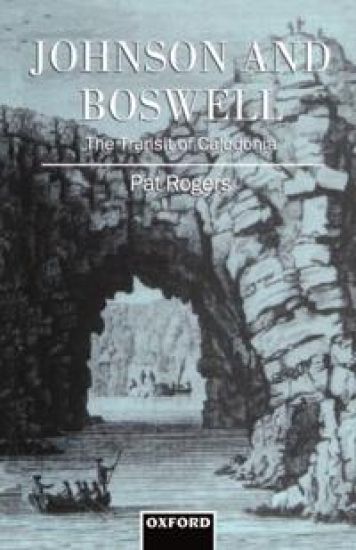
Johnson and Boswell: The Transit of Caledonia
This is the first comprehensive treatment of Johnson and Boswell in relation to Scotland, as revealed in their accounts of their trip to the Hebrides in 1773, the Journey to the Western Islands and the Journal of a Tour to the Hebrides. Locating the Scottish journey both within the context of travel writing in the decade of Cook's Pacific voyages, and in an intellectual, cultural, and literary context, Pat Rogers's new interpretation of the writers' famous accounts describes the `Grand Detour' which the travellers made in opposition to the standard Grand Tour expectations. Johnson and Boswell: The Transit of Caledonia suggests a reason why Johnson undertook his long-planned visit in old age, and explores the relation between his Journey and the letters he wrote to Hester Thrale. Boswell's complex motives in making the tour are also explored, including his divided views concerning his Scottish identity, and his desire at a concealed level to replay the heroic venture of Prince Charles Edward thirty years before. Setting the journey in the context of anti-Scottish feeling in the period, the book relates the themes and motives of the two narratives to the background of the Scottish Enlightenment on such issues as emigration and primitivism, and offers fresh reading of the major survey by Johnson and Boswell of Scotland after the Jacobite risings.
Essays on Pope

Essays on Pope

Pat Rogers

Cambridge University Press
1993
sidottu
Leading literary historian and eighteenth-century specialist Pat Rogers has long been recognised as an authority on the poet Alexander Pope. This volume addresses the many facets of Pope’s world and work, and represents Rogers’s important contribution over the years to Pope studies. A substantial new essay on Pope and the antiquarians is presented alongside considerably revised versions of essays published in scholarly journals, which together cover most of Pope’s major work, including the Pastorals, Windsor Forest, Rape of the Lock, Epistle to Arbuthnot, and the Dunciad. There are general essays on form and style, Pope’s social context, his dealings with the Burlington circle, and his battles with his publisher. Essays on Pope gathers for the first time the best writing on this celebrated author by one of our foremost critics, and is an indispensable resource for scholars of eighteenth-century literature.