Kirjailija
Patanjali
Kirjat ja teokset yhdessä paikassa: 33 kirjaa, julkaisuja vuosilta 1999–2026, suosituimpiin kuuluu PATANJALI YOGA SUTRAS : 2026 års moderna svenska översättning!. Vertaile teosten hintoja ja tarkista saatavuus suomalaisista kirjakaupoista.
Nimi esiintyy myös muodoissa: Patañjali
33 kirjaa
Kirjojen julkaisuvuodet: 1999–2026.
The Yoga Sutras of Patanjali (Translated with a Preface by William Q. Judge)
Patanjali
Digireads.com
2017
pokkari
The Yoga Sutras of Patanjali (annotated)
Patanjali
Createspace Independent Publishing Platform
2015
nidottu
Halvin toimitettuna 12,40 €
The Yoga Sutras of Patanjali was the most translated ancient Indian text in the medieval era, having been translated into about forty Indian languages and two non-Indian languages: Old Javanese and Arabic. The Hindu text fell into obscurity for nearly 700 years from the 12th to 19th century, and made a comeback in late 19th century due to the efforts of Swami Vivekananda. It gained prominence again as a comeback classic in the 20th century. The Yoga Sutras of Patanjali are 196 Indian sutras (aphorisms). The Yoga Sutras were compiled prior to 400 CE by Sage Patanjali, taking materials about yoga from older traditions. The Yoga Sutras of Patanjali was the most translated ancient Indian text in the medieval era, having been translated into about forty Indian languages and two non-Indian languages: Old Javanese and Arabic. David Gordon White points to a period of when the text fell into relative obscurity for nearly 700 years from the 12th to 19th century, and made a comeback in late 19th century due to the efforts of Swami Vivekananda, the Theosophical Society and others. It gained prominence again as a comeback classic in the 20th century. Before the 20th century, history indicates the Indian yoga scene was dominated by the Bhagavad Gita, Yoga Vasistha, texts attributed to Yajnavalkya and Hiranyagarbha, as well as literature on hatha yoga, tantric yoga and pashupata yoga rather than the Yoga Sutras of Patanjali. In the 20th century the western practitioners of yoga elevated the Yoga Sutras to a status it never knew previously. Hindu orthodox tradition holds the Yoga Sutras of Patanjali to be the foundational text of classical Yoga philosophy. However, the appropriation - and misappropriation - of the Yoga Sutras and its influence on later systematizations of yoga has been questioned by scholars such as David Gordon White.
"Yoga Sutras" from Pata jali. Collection of Aphorisms on the practice and philosophy of Yoga - 2nd century BCE.
The Yoga Aphorisms of Patanjali: An Interpretation
William Q. Judge; Patanjali
Literary Licensing, LLC
2011
nidottu
De Yogasoetra van Pata jali is de belangrijkste tekst van de yogatraditie. Ze bestaat uit moeilijk te begrijpen spreuken. In vergelijking met de vorige editie van dit werk is de vertaling toegankelijker gemaakt. Enkele onnauwkeurigheden zijn verbeterd. Aan het yogadenken ligt een oude organische filosofie ten grondslag. Die filosofie wordt Samkhya genoemd. Ze leert dat de werkelijkheid besloten ligt in een kiem. Wanneer die kiem zich ontvouwt ontstaat niets nieuws. Wat eerst onzichtbaar was wordt dan zichtbaar. Dat is alles. Zo wordt wat een mens ten diepste wil zichtbaar door zijn handelen. Al handelend openbaart de mens wat hij in wezen is. Door zijn gedachte dat leven niets anders is dan onbewuste roerselen die tot bewustzijn komen, is Pata jali de voorloper van de dieptepsychologie. In zijn achtvoudige yogapad leert hij mensen zich van hun innerlijke belemmeringen te ontdoen om zo innerlijke vrijheid te vinden.
The Yoga Aphorisms of Patanjali: An Interpretation
William Q. Judge; Patanjali
Literary Licensing, LLC
2011
sidottu
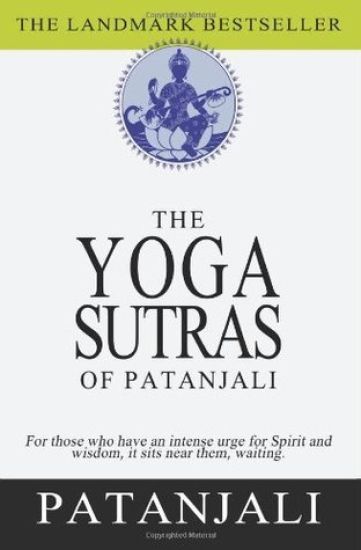
The Yoga Sutras of Patanjali
Charles Johnston; Patanjali
Createspace Independent Publishing Platform
2010
nidottu
This valuable book provides a complete manual for the study and practice of Raja Yoga, the path of concentration and meditation. These timeless teachings are a treasure to be read and referred to again and again by seekers treading the spiritual path. The classic Sutras (thought-threads), at least 4,000 years old, cover the yogic teachings on ethics, meditation, and physical postures, and provide directions for dealing with situations in daily life. (Text refers to a previous edition)