
Kirjailija
Patricia Bizzell
Kirjat ja teokset yhdessä paikassa: 7 kirjaa, julkaisuja vuosilta 1992–2026, suosituimpiin kuuluu Rhetorics of Fear and Rage. Vertaile teosten hintoja ja tarkista saatavuus suomalaisista kirjakaupoista.
7 kirjaa
Kirjojen julkaisuvuodet: 1992–2026.
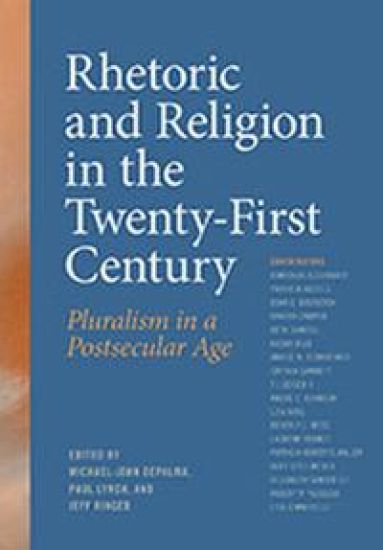
Rhetoric and Religion in the Twenty-First Century
Jonathan Alexander; Patricia Bizzell; John Brereton; Martin Camper; Beth Daniell; Rasha Diab; Janice W. Fernheimer; Cynthia Gannett; TJ Geiger; Andre E. Johnson; Lisa King; Beverly Moss; Laurent Pernot; Patricia Roberts-Miller; Kurt Spellmeyer; Elizabeth Vander Lei; Robert P. Yagelski; Lisa Zimmerelli
SOUTHERN ILLINOIS UNIVERSITY PRESS
2023
nidottu
Expanding the scope of religious rhetoric/B> Over the past twenty-five years, the intersection of rhetoric and religion has become one of the most dynamic areas of inquiry in rhetoric and writing studies. One of few volumes to include multiple traditions in one conversation, Rhetoric and Religion in the Twenty-First Century engages with religious discourses and issues that continue to shape public life in the United States. This collection of essays centralizes the study of religious persuasion and pluralism, considers religion’s place in U. S. society, and expands the study of rhetoric and religion in generative ways. The volume showcases a wide range of religious traditions and challenges the very concepts of rhetoric and religion. The book’s eight essays explore African American, Buddhist, Christian, Indigenous, Islamic, and Jewish rhetoric and discuss the intersection of religion with feminism, race, and queer rhetoric—along with offering reflections on how to approach religious traditions through research and teaching. In addition, the volume includes seven short interludes in which some of the field’s most accomplished scholars recount their experiences engaging with religious rhetorics and invite readers to engage these exigent lines of inquiry. By featuring these diverse religious perspectives, Rhetoric and Religion in the Twenty-First Century complicates the field’s emphasis on Western, Hellenistic, and Christian ideologies. The collection also offers teachers of writing and rhetoric a range of valuable approaches for preparing today’s students for public citizenship in our religiously diverse global context.

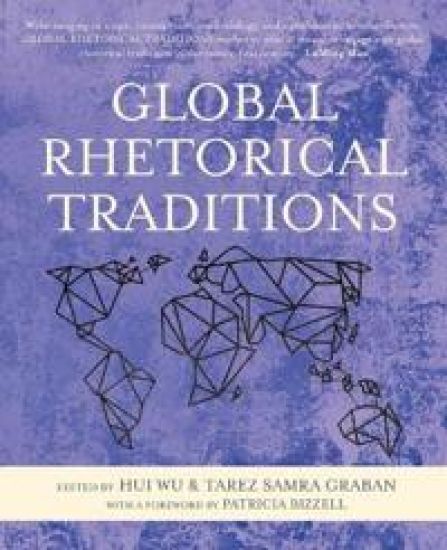
GLOBAL RHETORICAL TRADITIONS is unique in design and scope. It presents translated primary sources on global rhetorical instruction and practices of Asia, Africa, the Near East, the Middle East, Polynesia, and precolonial Europe. Each chapter represents a different rhetorical region and includes an introduction, critical commentary, translated primary sources, a glossary of rhetorical terms, and a comprehensive bibliography. The general introduction helps contextualize the project, justify its organization and coverage, and draw attention to the various features, characteristics, and/or philosophies of the rhetorics included. The book's significance lies in its contributions to studying and teaching global rhetorical traditions by offering representative research methods and primary sources in a single volume. It can be read as scholarship, as reference, and as textbook."When a reviewer sees a manuscript like this, she should think, "Why hasn't anyone done this before?" That was exactly my response to Global Rhetorical Traditions: Why hasn't anyone put together a comprehensive collection of global rhetorical contributions? Hui Wu and Tarez Samra Graban make clear that they are whom we've been waiting for." -Cheryl Glenn"Bringing together a diverse range of sub-editors who expertly explain and analyze rhetorics and traditions from Africa, India, Russia, Polynesia, Turkey, and more, this is just the book my graduate students in rhetoric have been looking for and one my undergrads, in the multi-identity, multi-cultural context in which I teach will simply love. I know, cuz I do." -Vershawn Ashanti Young"A global counterpart to Bizzell, Herzberg, and Reames's The Rhetorical Tradition, this meticulously edited volume expands not only the spectrum of transnational and comparative rhetorics but also the methodologies required for analyses. A stellar contribution to our scholarship, GRT will become a foundational source for study and a well-charted map guiding future research." -Richard Leo Enos"With the use of translations of exemplary texts and robust analyses and interpretations, this volume re-casts our sense of origin and impact in rhetorical arenas over time." -Jacqueline Jones Royster". . . a groundbreaking reference for a better appreciation and understanding of non-European cultures and their rhetorical nature. I am sure that it will appeal to a large audience among all scholars of Comparative Rhetoric, Comparative Literature, Comparative Poetics, and World Literature." -Hany RashwanThe book is one of the most important anthologies of the last two generations and is a must-read for scholars and teachers of rhetoric. The volume is trustworthy, carefully crafted, and, simply, phenomenal. I recommend it highly.-Kathleen Ethel Welch Wide-ranging in scope, innovative in methodology, and significant in its contribution, Global Rhetorical Traditions teaches us what it means to engage with global rhetorical traditions in the twenty-first century.-LuMing MaoHui Wu is Professor of English and Chair of the Department of Literature and Languages at the University of Texas at Tyler. Tarez Samra Graban is Associate Professor of English at Florida State University. Contributors: Raed Alsawaier, Leonora Anyango, Maha Baddar, Shuv Raj Rana Bhat, Gregory Coles, Trey Conner, Rasha Diab, Richard Doyle, Robert Eddy, Lahcen Ezzaher, Tarez Samra Graban, Shreelina Ghosh, Elif Guler, ku'ualoha ho'omanawanui, Steven B. Katz, Andrew Kirkpatrick, Uma Krishnan, Haixia Lan, Keith Lloyd, Anne Melfi, Georganne Nordstrom, Lana Oweidat, Maria Prikhodko, Ellen Quandahl, Jim Ridolfo, Brian J. Stone, Jeffrey Walker, and Hui Wu.
GLOBAL RHETORICAL TRADITIONS is unique in design and scope. It presents translated primary sources on global rhetorical instruction and practices of Asia, Africa, the Near East, the Middle East, Polynesia, and precolonial Europe. Each chapter represents a different rhetorical region and includes an introduction, critical commentary, translated primary sources, a glossary of rhetorical terms, and a comprehensive bibliography. The general introduction helps contextualize the project, justify its organization and coverage, and draw attention to the various features, characteristics, and/or philosophies of the rhetorics included. The book's significance lies in its contributions to studying and teaching global rhetorical traditions by offering representative research methods and primary sources in a single volume. It can be read as scholarship, as reference, and as textbook."When a reviewer sees a manuscript like this, she should think, "Why hasn't anyone done this before?" That was exactly my response to Global Rhetorical Traditions: Why hasn't anyone put together a comprehensive collection of global rhetorical contributions? Hui Wu and Tarez Samra Graban make clear that they are whom we've been waiting for." -Cheryl Glenn"Bringing together a diverse range of sub-editors who expertly explain and analyze rhetorics and traditions from Africa, India, Russia, Polynesia, Turkey, and more, this is just the book my graduate students in rhetoric have been looking for and one my undergrads, in the multi-identity, multi-cultural context in which I teach will simply love. I know, cuz I do." -Vershawn Ashanti Young"A global counterpart to Bizzell, Herzberg, and Reames's The Rhetorical Tradition, this meticulously edited volume expands not only the spectrum of transnational and comparative rhetorics but also the methodologies required for analyses. A stellar contribution to our scholarship, GRT will become a foundational source for study and a well-charted map guiding future research." -Richard Leo Enos"With the use of translations of exemplary texts and robust analyses and interpretations, this volume re-casts our sense of origin and impact in rhetorical arenas over time." -Jacqueline Jones Royster". . . a groundbreaking reference for a better appreciation and understanding of non-European cultures and their rhetorical nature. I am sure that it will appeal to a large audience among all scholars of Comparative Rhetoric, Comparative Literature, Comparative Poetics, and World Literature." -Hany RashwanThe book is one of the most important anthologies of the last two generations and is a must-read for scholars and teachers of rhetoric. The volume is trustworthy, carefully crafted, and, simply, phenomenal. I recommend it highly.-Kathleen Ethel Welch Wide-ranging in scope, innovative in methodology, and significant in its contribution, Global Rhetorical Traditions teaches us what it means to engage with global rhetorical traditions in the twenty-first century.-LuMing MaoHui Wu is Professor of English and Chair of the Department of Literature and Languages at the University of Texas at Tyler. Tarez Samra Graban is Associate Professor of English at Florida State University. Contributors: Raed Alsawaier, Leonora Anyango, Maha Baddar, Shuv Raj Rana Bhat, Gregory Coles, Trey Conner, Rasha Diab, Richard Doyle, Robert Eddy, Lahcen Ezzaher, Tarez Samra Graban, Shreelina Ghosh, Elif Guler, ku'ualoha ho'omanawanui, Steven B. Katz, Andrew Kirkpatrick, Uma Krishnan, Haixia Lan, Keith Lloyd, Anne Melfi, Georganne Nordstrom, Lana Oweidat, Maria Prikhodko, Ellen Quandahl, Jim Ridolfo, Brian J. Stone, Jeffrey Walker, and Hui Wu.
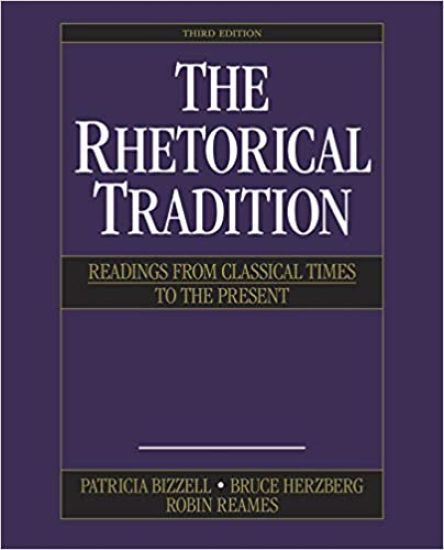
The Rhetorical Tradition: Readings from Classical Times to the Present
Patricia Bizzell; Bruce Herzberg; Robin Reames
Bedford Books
2020
sidottu
The Rhetorical Tradition, the first comprehensive anthology of primary texts covering the history of rhetoric, examines rhetorical theory from classical antiquity through today. Extensive editorial support makes it an essential text for the beginning student as well as the professional scholar.
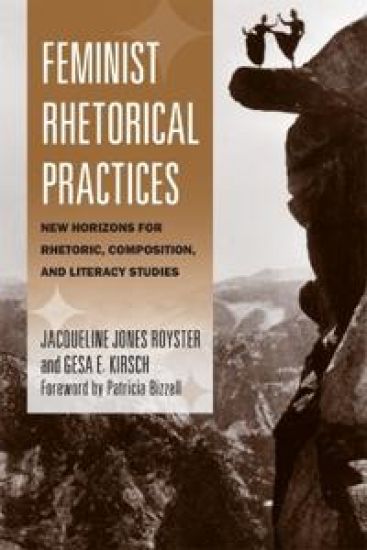
Feminist Rhetorical Practices
Jacqueline Royster; Gesa Kirsch; Patricia Bizzell
Southern Illinois University Press
2012
nidottu
From two leading scholars in the field comes this landmark assessment of the shifting terrain of feminist rhetorical practices in recent decades. Jacqueline Jones Royster and Gesa E. Kirsch contend the field of rhetorical studies is being transformed through the work of feminist rhetoricians who have brought about notable changes in who the subjects of rhetorical study can be, how their practices can be critiqued, and how the effectiveness and value of the inquiry frameworks can be articulated. To contextualise a new and changed landscape for narratives in the history of rhetoric, Royster and Kirsch present four critical terms of engagement—critical imagination, strategic contemplation, social circulation, and globalisation—as the foundation for a new analytical model for understanding, interpreting, and evaluating feminist rhetorical inquiry and the study and teaching of rhetoric in general. This model draws directly on the wealth of knowledge and understanding gained from feminist rhetorical practices, especially sensitivity toward meaningfully and respectfully rendering the work, lives, cultures, and traditions of historical and contemporary women in rhetorical scholarship. Proposing ambitious new standards for viewing and valuing excellence in feminist rhetorical practice, Royster and Kirsch advocate an ethos of respect and humility in the analysis of communities and specific rhetorical performances neglected in rhetorical history, recasting rhetorical studies as a global phenomenon rather than a western one. They also reflect on their own personal and professional development as researchers as they highlight innovative feminist research over the past thirty years to articulate how feminist work is changing the field and pointing to the active participation of women in various discourse arenas and to the practices and genres they use. Valuable to new and established scholars of rhetoric, Feminist Rhetorical Practice: New Horizons for Rhetoric, Composition, and Literacy Studies is essential for understanding the theoretical, methodological, and ethical impacts of feminist rhetorical studies on the wider field.
Academic Discourse and Critical Consciousness
Patricia Bizzell
University of Pittsburgh Press
1992
nidottu
This collection of essays traces the attempts of one writing teacher to understand theoretically - and to respond pedagogically - to what happens when students from diverse backgrounds learn to use language in college. Bizzell begins from the assumption that democratic education requires us to attempt to educate all students, including those whose social or ethnic backgrounds may have offered them little experience with academic discourse. Over the ten-year period chronicled in these essays, she has seen herself primarily as an advocate for such students, sometimes called “basic writers.” Bizzell’s views on education for “critical consciousness,” widely discussed in the writing field, are represented in most of the essays in this volume. But in the last few chapters, and in the intellectual autobiography written as the introduction to the volume, she calls her previous work into question on the grounds that her self-appointment as an advocate for basic writers may have been presumptous, and her hopes for the politically liberating effects of academic discourse misplaced. She concludes by calling for a theory of discourse that acknowledges the need to argue for values and pedagogy that can assist these arguements to proceed more inclusively than ever before. The essays in this volume constitute the main body of work in which Bizzell developed her influential and often cited ideas. Organized chronologically, they present a picture of how she has grappled with major issues in composition studies over the past decade. In the process, she sketches a trajectory for the development of composition studies as an academic discipline.